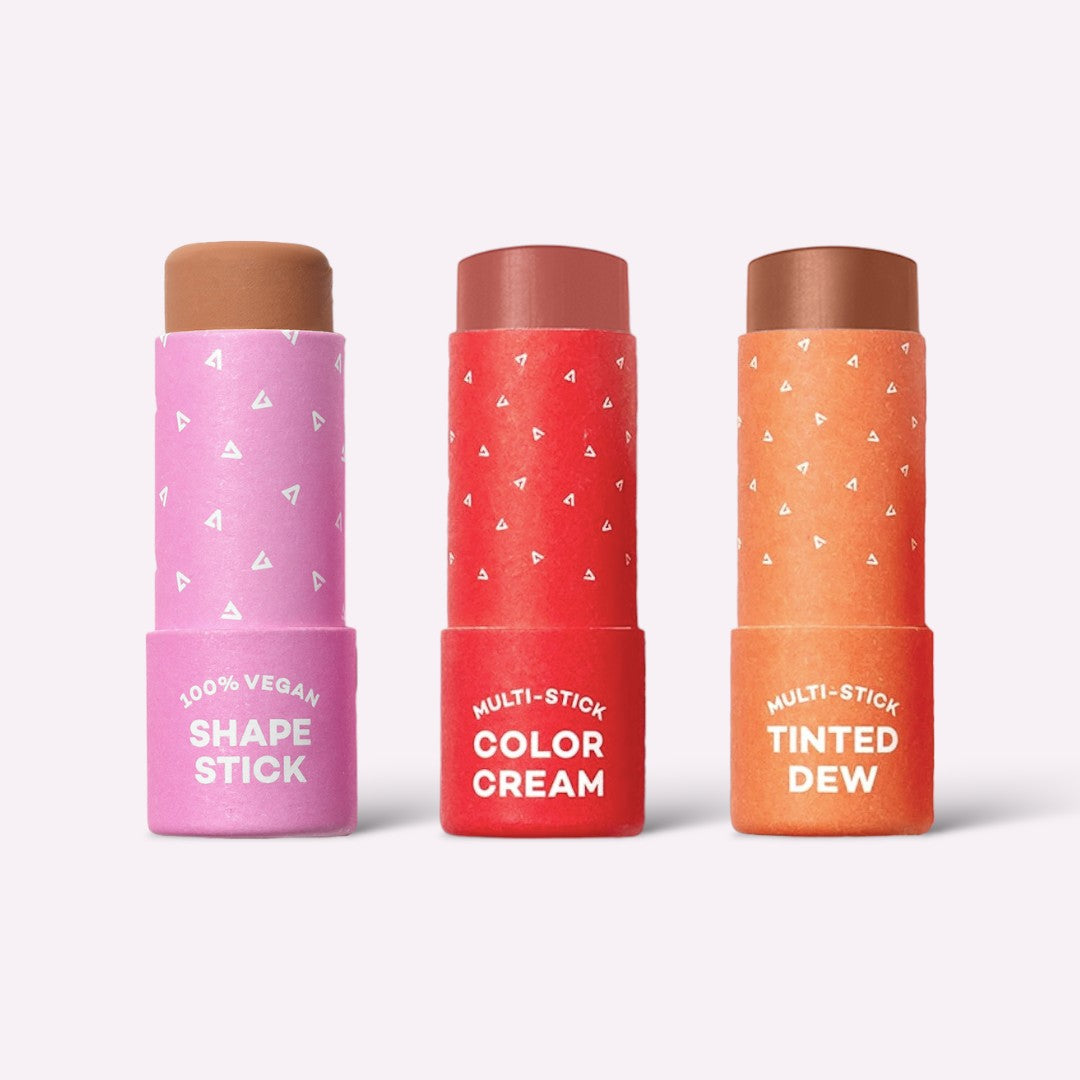
When you have sensitive skin, the best blush is usually a simple one. I'm talking about a minimalist, fragrance-free cream formula, packed with soothing ingredients like jojoba oil or shea butter. Brands like Axiology that build their products around being hypoallergenic and non-comedogenic are fantastic places to start for that perfect, irritation-free glow.
Why Finding the Right Blush Matters
If you've ever dealt with redness, itching, or surprise breakouts after trying a new makeup product, you know the struggle. It can feel like a massive gamble just to add a little color to your cheeks, but I promise, it doesn't have to be. Your skin isn't "difficult"—it just has standards.
This is about more than just dodging a bad reaction; it’s about choosing products that actually support your skin's health. The global face blush market is huge—valued at USD 4.17 billion in 2024—but so many of us with sensitive skin feel completely left out. In fact, dermatological surveys show that 20-30% of us have reactions to common culprits like synthetic fragrances, harsh dyes, and certain preservatives lurking in mainstream blushes. You can dig into the face blush market trends yourself over at 360iResearch.com.
Your Path to a Radiant, Calm Glow
Think of this guide as your personal road map. We're going to cover everything you need to know, breaking it all down into simple, manageable steps.
Here’s what we’ll get into:
- Different Blush Formulas: We’ll look at creams, powders, and stains and figure out how each one plays with sensitive complexions.
- Decoding Ingredient Lists: You'll learn how to spot both the good guys and the bad guys on an ingredient list so you can make choices with confidence.
- Trustworthy Certifications: What do labels like "hypoallergenic" and "cruelty-free" actually mean for you and your skin? We'll clear it up.
- Sustainable and Safe Choices: We'll highlight how brands like Axiology are creating makeup that’s both skin-loving and planet-friendly, proving you really don't have to compromise.
Think of this guide as your personal beauty detective kit. It gives you the tools to see past the flashy marketing and understand what’s actually in the products you’re putting on your face.
At the end of the day, this whole journey is about empowering you. It's about getting that healthy, luminous look without a side of worry. Once you understand the basics of what makes a blush right for sensitive skin, you can build a makeup routine that feels just as good as it looks.
Let’s start by diving into the different types of blush formulas and finding the perfect match for you.
Choosing the Right Blush Formula for Your Skin
Finding the right blush when you have sensitive skin feels a bit like picking out a sweater. Some feel scratchy and irritating (looking at you, cheap wool), while others are soft, breathable, and feel like a second skin. Blush formulas are surprisingly similar. Nailing the texture is the first step to getting that perfect, happy-cheek glow without any drama.
You'll generally run into three main types: powder, cream, and liquid. Each one has a totally different vibe and interacts with skin in its own way. It's not about finding the "best" one, but about finding the best one for you.
The Classic Powder Blush
Powder blush is the one most of us grew up with. It's usually pretty straightforward to apply, buildable, and a rockstar at soaking up extra oil. This makes it a solid choice if your sensitive skin leans oily or combination. A quick sweep gives you a sheer hint of color, or you can layer it up for more impact.
But—and this is a big but for sensitive types—not all powders are created equal. Some formulas rely on talc, which can be super drying and might highlight texture or feel tight on eczema-prone skin. The trick is to look for finely milled powders with moisturizing goodies like jojoba oil or shea butter. These give the powder a creamier feel that won't parch your skin.
This little guide can help you figure out where to start.
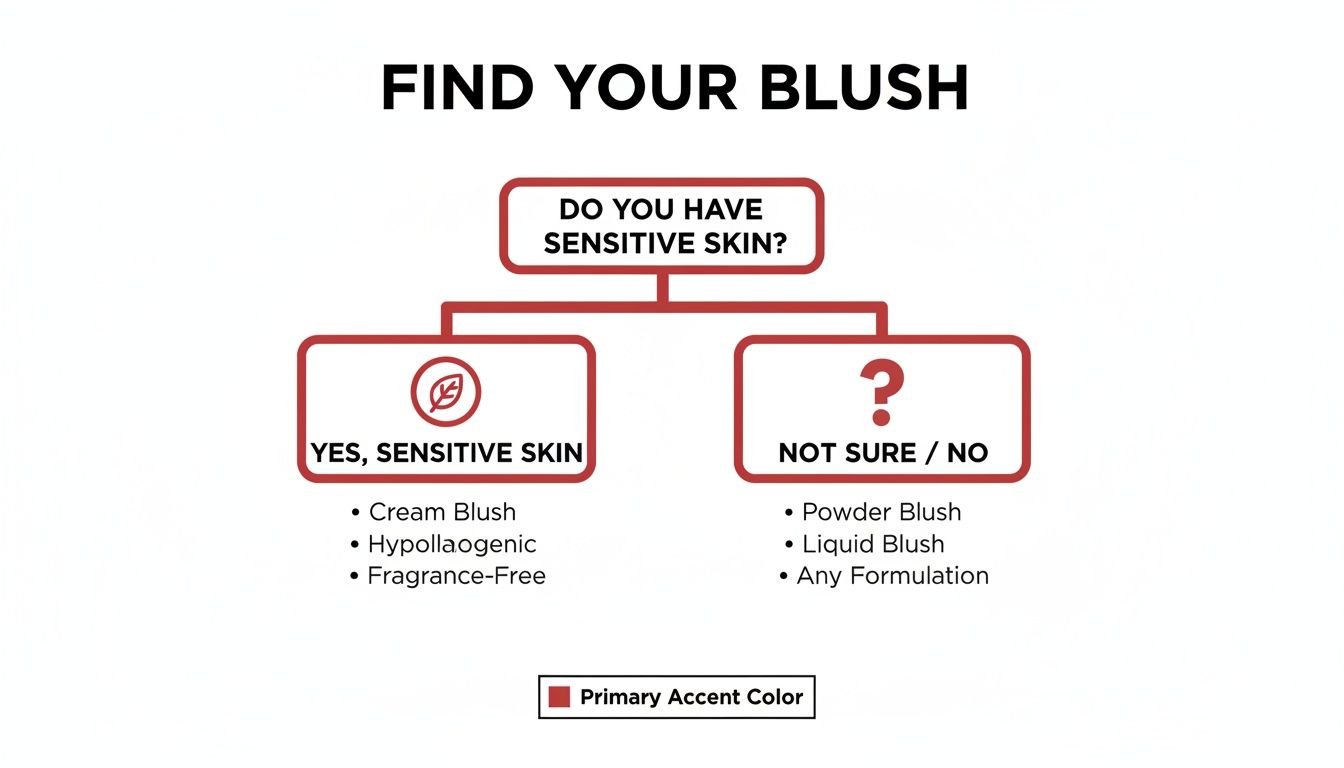
As you can see, both cream and powder blushes get a green light for sensitive skin. It really just comes down to whether your skin is begging for hydration (go cream!) or needs a little help with shine (powder to the rescue!).
The Hydrating Cream Blush
Cream blushes are a game-changer for so many people with reactive skin, and it's easy to see why. Their buttery textures are often packed with nourishing oils that glide on, giving your skin a drink of moisture instead of sucking it dry. If you have dry, mature, or easily irritated skin, this is probably your jam.
They melt into the skin for a dewy, natural finish that won’t cake or settle into fine lines. And if you deal with something like rosacea, a gentle cream blush adds color without the friction you might get from buffing in a powder with a brush.
A cream blush’s superpower is its ability to become one with your skin. It creates that seamless, lit-from-within look that doesn't just sit on the surface.
The only thing to watch for is making sure the formula is non-comedogenic (a fancy way of saying it won’t clog your pores). Simple, clean ingredient lists are your best bet here. To learn more about what makes makeup play nice with reactive skin, check out our full guide to hypoallergenic makeup for sensitive skin.
Blush Formulas Compared for Sensitive Skin
To make things even clearer, here’s a quick comparison of the main blush formulas. Think of it as a cheat sheet to help you pick the right texture for your skin's unique needs.
| Formula Type | Best For (Skin Type) | Potential Pitfalls for Sensitive Skin | Key Benefit |
|---|---|---|---|
| Cream | Dry, Mature, Normal, Combination | Heavy oils can be comedogenic for some | Hydrating and gives a dewy, skin-like finish |
| Powder | Oily, Combination | Can be drying; talc can be an irritant | Absorbs oil and offers a buildable, matte finish |
| Liquid/Stain | All skin types (with caution) | Can contain drying alcohols or fragrances | Long-lasting, sheer, and weightless feel |
This table shows there’s a great option for everyone. The key is knowing what to look for—and what to avoid—in the ingredient list.
The Modern Liquid and Stain Blushes
Liquid blushes and stains are awesome for a sheer, long-lasting tint that looks like you’re naturally blushing. They sink into the skin for a finish that just won’t quit, making them perfect for hot weather or long days. Most are water-based and feel like nothing at all.
The catch? They can dry down fast. To help them set, some formulas use alcohol, which is a major no-go for sensitive skin. It’s incredibly drying and can cause a world of irritation. If you’re eyeing a liquid blush, you have to be a detective and scan that ingredient list. For more tips for using products on sensitive skin, especially when it comes to being gentle, it’s worth reading up.
Making the Final Choice for Your Skin
Feeling a little overwhelmed? Don't be. Here’s a super simple breakdown to help you decide.
- For Dry or Eczema-Prone Skin: A cream blush is your soulmate. Its hydrating formula will feel amazing and give you a glow without clinging to dry spots.
- For Oily or Acne-Prone Skin: A talc-free powder blush is a great way to manage shine. A non-comedogenic cream blush can also work beautifully if you’re after a dewier look.
- For Rosacea-Prone Skin: A fragrance-free cream blush is usually the gentlest path forward. You can pat it on with minimal blending, which helps avoid flare-ups.
- For Mature Skin: Cream and liquid blushes are fantastic because they don’t settle into fine lines and can make skin look plump and youthful.
At the end of the day, the right blush is the one that makes your skin feel good and makes you feel amazing. Don’t be afraid to play around, but always start with a formula that puts your skin’s needs first.
The Irritant Blacklist: Ingredients to Avoid in Your Blush
Trying to decipher a cosmetic ingredient label can feel like you’re reading a foreign language. But when you have sensitive skin, becoming a skilled translator is kind of a superpower.
Certain ingredients, while totally common in mainstream blushes, can be like uninvited party guests on your skin—crashing the scene and causing redness, itching, and general chaos. Learning to spot these troublemakers is the single most important step you can take. It’s how you see past the pretty packaging and make choices based on what’s actually inside.
The Problem with Synthetic Fragrance
If there's one ingredient to put at the top of your "avoid at all costs" list, it's synthetic fragrance. Think of it as a mystery box of chemicals. Companies aren't required to disclose the specific compounds used to create a scent, so they just lump everything under the vague term "fragrance" or "parfum."
This one little word can hide dozens, or even hundreds, of chemicals that are known allergens. For reactive skin, this is basically a recipe for disaster, often leading to rashes, redness, and hives.
When you see "fragrance" on a label, you're not getting one ingredient; you're getting a secret blend of potentially irritating chemicals. Choosing products that are truly fragrance-free is the safest bet for calm, happy skin.
If you want to dive deeper, you can learn more about why it's so important to pick fragrance-free beauty products and how to spot those hidden scents.
Preservatives and Binders to Watch For
Some ingredients are added to keep products fresh or help them apply smoothly, but they can be major culprits for sensitive complexions.
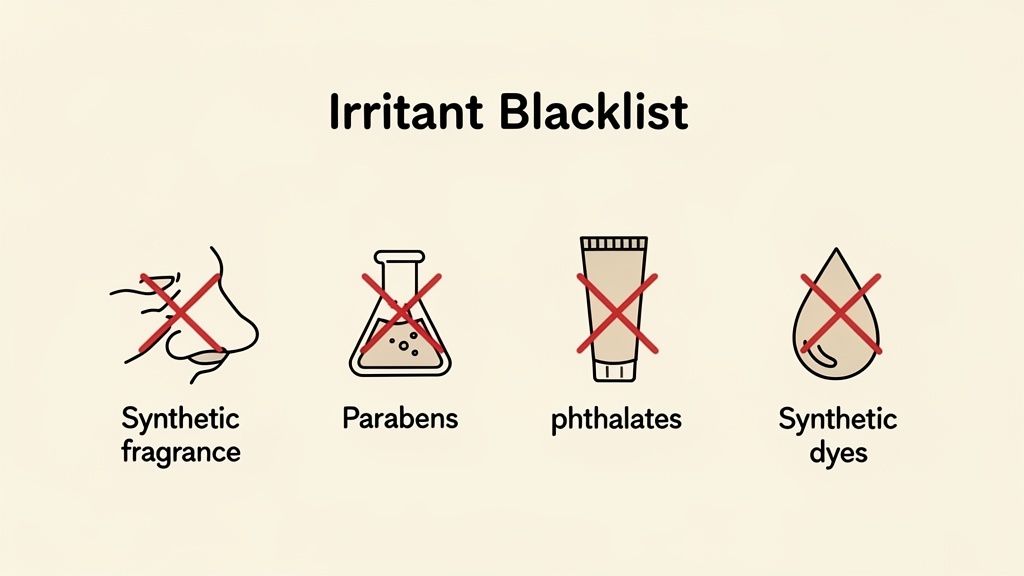
- Parabens (like methylparaben, propylparaben): These are used to stop bacteria and mold from growing, but they're also known skin irritants that can mess with hormonal balance. No thanks.
- Phthalates: Often used to make fragrances last longer, these plasticizing chemicals are another common trigger for allergic reactions.
- Talc: While not an issue for everyone, talc can be super drying. The bigger worry is that it can sometimes be contaminated with asbestos, a known carcinogen. Talc-free formulas are a much gentler way to go.
These ingredients work, but there are so many safer, skin-friendly alternatives out there. Brands that are serious about clean beauty know this and choose the good stuff instead.
Dyes and Alcohols That Cause Flare-Ups
That gorgeous pop of color in your blush has to come from somewhere, right? But not all colorants are created equal. The same goes for certain alcohols that are added for a quick-drying feel but can strip your skin's natural moisture barrier.
Synthetic Dyes Many super-vibrant blushes get their intense pigment from synthetic dyes, usually listed as "FD&C" or "D&C" followed by a color and number (think: FD&C Red No. 40). These are often derived from petroleum and are frequently linked to skin sensitivity.
Drying Alcohols Keep an eye out for ingredients like SD alcohol, denatured alcohol, or isopropyl alcohol high up on the ingredient list. They can be incredibly harsh, leaving your skin feeling dry, tight, and irritated. This is especially important to check for in liquid and stain formulas.
Keeping this blacklist in mind will help you walk up to any makeup counter with confidence. You’ll be able to quickly spot the potential troublemakers and pick a blush that gives you beautiful color without wrecking your skin's peace. It turns shopping from a game of chance into an act of self-care.
The Green List: Nourishing Ingredients That Soothe Skin
Alright, we’ve talked about what to avoid. Now for the fun part: what you should actively look for.
The best blushes for sensitive skin do more than just add a pop of color—they’re basically skincare in a stick. Think of these ingredients as the "green list," your cheat sheet for botanicals that play nice with reactive skin.
Choosing a blush packed with these heroes means your makeup routine is actually an extension of your skincare. You’re not just covering up; you’re treating your skin to something genuinely good with every swipe.
Plant-Based Oils and Butters
At the heart of any truly soothing blush, you'll find natural butters and oils. These are the good guys. They’re brilliant because they mimic your skin’s own natural moisture, creating a soft barrier that locks in hydration and keeps irritants out. They're especially key in cream blush formulas, giving them that signature dewy, hydrating feel.
Look out for these on the label:
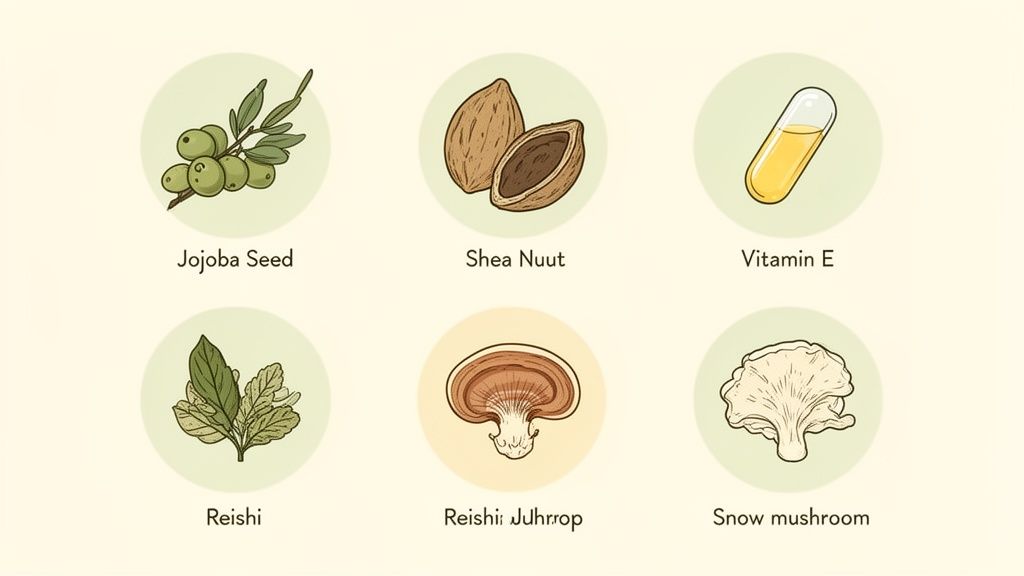
- Jojoba Seed Oil: This is a fan favorite for a reason. Its structure is incredibly close to our skin's natural sebum, so it sinks in beautifully without clogging pores or leaving you feeling greasy.
- Shea Butter: A total superstar for conditioning and soothing dry or irritated skin. It’s packed with fatty acids and vitamins that your skin just drinks up.
- Grape Seed Oil: A lightweight oil loaded with antioxidants that help shield your skin from environmental stress.
These ingredients make sure your blush glides on without a fight and stays comfortable all day. No more of that tight, dry feeling some makeup can leave behind.
Innovative Mushroom Extracts
Beyond the usual oils, some of the most exciting ingredients for gentle makeup are coming from the world of fungi. Seriously. Adaptogenic mushrooms have been calming things down in traditional medicine for centuries, and now they're finally getting the spotlight in cosmetics.
Think of reishi mushroom as a peacekeeper for your skin. It helps dial down the alarm signals that lead to inflammation, effectively reducing visible redness and irritation before it starts.
This isn’t just a trend; it’s a science-backed shift. Brands are finally waking up to the fact that so many of us have sensitive skin. With allergy triggers affecting roughly 25% of users in North America and Europe, the demand for better formulas is real.
Dermatology data shows that swapping in natural ingredients can slash irritation by as much as 50%. Innovative additions like reishi mushrooms, which we use in Axiology's formulas, have been proven to calm inflammation in 78% of trials. It’s a game-changer.
Antioxidants and Vitamins
Finally, antioxidants and vitamins are like the bodyguards for your skin cells. They defend against damage from pollution and other daily stressors that can send sensitive skin into a tailspin.
- Vitamin E (Tocopherol): A classic for a reason. It's a powerful antioxidant that also helps moisturize and strengthen your skin's protective barrier.
- Elderberry Extract: This botanical gem is brimming with vitamins and antioxidants that help keep skin calm and resilient.
When you see these ingredients on a label, you know the product was made with skin health in mind, not just color.
And while we're on the topic of calming inflammation, sometimes it helps to work from the inside out, too. Exploring options like turmeric supplements for internal anti-inflammatory support can be a great complement to a gentle, topical routine. By sticking to this "green list," you’re actively choosing a calm, happy complexion.
How to Apply Blush Without Irritating Your Skin
So you’ve found the perfect, gentle blush—congrats! That’s half the battle. Now comes the application, which can make or break the experience for reactive skin. The right touch minimizes friction and ensures your carefully chosen product delivers a healthy glow, not an ounce of irritation.
Think of it this way: your sensitive skin is like a delicate piece of silk. You wouldn't scrub it with a Brillo pad, so why go at it with a harsh brush or aggressive technique? A gentle hand is everything.
Start with a Calm Canvas
Before even thinking about color, you need to make sure your skin is prepped and happy. Slapping blush onto a dry, tight complexion is a recipe for highlighting texture and can feel seriously uncomfortable as the day wears on.
Always start with your go-to gentle cleanser and follow it up with a soothing, fragrance-free moisturizer. This creates a smooth, hydrated barrier for the blush to glide over, which stops it from clinging to dry patches and means you won't have to blend so aggressively.
The Ultimate Safety Check: Patch Testing
Okay, this is non-negotiable. Before you fully commit to a new blush, you absolutely have to patch test. This is your single best defense against a full-face meltdown, and it's a simple step that can save you a world of hurt.
Here’s the right way to do it:
- Choose a Discreet Spot: Dab a tiny bit of the blush somewhere out of sight, like behind your ear or on the inside of your wrist. These spots are sensitive enough to show a reaction but easy to hide if they do.
- Wait and Watch: Now, the hard part—patience. Leave the product on for at least 24 hours without washing it off. This gives your skin plenty of time to show any signs of a delayed reaction.
- Check for Reactions: After a day, take a close look at the spot. Are you seeing anything unusual?
Keep an eye out for any redness, itching, swelling, or tiny bumps. If you spot any of these red flags, that blush is not for you. Don't risk it—it's time to find a new favorite.
This little test takes all the guesswork out of the process, ensuring every new product you bring into your routine is a true friend to your sensitive skin.
Your Tools Matter: Application Techniques
The tools you use are just as crucial as the blush formula itself. Stiff, scratchy brushes can create micro-abrasions, causing redness and irritation before the color even has a chance to set.
- Soft Synthetic Brushes: Always go for brushes with ultra-soft, synthetic bristles. They’re less porous than natural hair, which makes them way easier to clean and less likely to hold onto bacteria that could cause a flare-up.
- Clean Fingers: Honestly, for cream blushes, your own fingertips are often the best tool in the box. The warmth from your skin helps melt the product, letting it blend in seamlessly with minimal rubbing. Just make sure your hands are freshly washed!
When it's time to apply, use a gentle stippling or tapping motion instead of swirling. This deposits the color beautifully without stressing out your skin. For a full tutorial on getting that perfect, dewy finish, check out our guide on how to apply cream blush. By pairing gentle products with gentle techniques, you'll get that perfect, healthy-looking flush, minus the fear.
Understanding Certifications and Sustainable Choices
Let's be real: choosing the best blush for sensitive skin is about more than just the ingredients list. It’s also about trusting the promises a brand makes. Think of a certification on a package as a shortcut—a reliable stamp of approval that tells you if a product is going to play nice with your skin and align with your values.
It can feel like you need a secret decoder ring to understand all the labels out there, but they’re actually your best friend in the beauty aisle. They’re the guideposts that help you quickly spot products that put safety, ethics, and skin health first.
Decoding Key Certifications
When you're scanning product descriptions, you’ll see certain terms pop up again and again. They might sound like marketing jargon, but these certifications carry real weight, especially for those of us with reactive complexions.
Here are the big ones to look for:
- Hypoallergenic: This is your sign that a product was specifically formulated to minimize the risk of an allergic reaction. Brands with this label are actively skipping common troublemakers like synthetic fragrances and harsh dyes.
- Dermatologist-Tested: This means a dermatologist actually supervised a study where the product was tested on real human skin to check for irritation. It's a solid indicator that a product is generally safe.
- Vegan: For a product to be certified vegan, it has to be completely free of animal products or by-products. This is obviously huge for ethical shoppers, but it’s also great for sensitive skin, since it means you’re avoiding potential animal-derived irritants like carmine or lanolin.
- Cruelty-Free: This is a guarantee that the product and its ingredients were not tested on animals at any point. While it’s a purely ethical stance, it often goes hand-in-hand with cleaner, more conscious formulas.
These labels aren't just for show; they signal a brand’s commitment to making products that are both kind and effective.
The Connection Between Sustainability and Sensitive Skin
A brand’s commitment to your well-being often goes beyond the formula and extends to the packaging it comes in. This is where sustainability enters the conversation, and it’s a bigger deal for sensitive skin than you might think. Smart packaging choices can actually reduce your exposure to potential irritants found in plastics.
For example, when a brand opts for plastic-free packaging, they’re not just doing a solid for the planet. They’re also making sure your blush isn't housed in materials that could potentially leach weird chemicals.
Choosing brands with sustainable practices is like casting a vote for a cleaner, kinder beauty industry. It’s a holistic approach where what’s good for the Earth is almost always what’s gentlest on your skin.
This forward-thinking mindset is changing the game. In North America alone, which accounts for 32% of the blush market's revenue, a whopping 60% of buyers are now actively looking for fragrance-free formulas because of issues like eczema. Brands are listening, responding with not just cleaner ingredients but also more responsible packaging.
Take Axiology's approach: we use biodegradable paper that cuts our plastic waste by 100%. That’s a move that resonates with the 72% of consumers who say sustainability is a top priority. You can dive deeper into these market shifts and the impact of ethical sourcing on blush market trends.
Ultimately, when your beauty routine aligns with your values, it just feels better. Choosing a product from a brand like Axiology means you're getting more than just a gorgeous blush. You're supporting a philosophy that champions kindness—to your skin, to animals, and to our planet. It’s how you get that radiant glow without compromising on what truly matters.
A Few Lingering Questions About Blush for Sensitive Skin
I get it. When your skin is reactive, diving into the world of makeup can feel like navigating a minefield. To help clear things up and get you blushing confidently, I’ve pulled together some of the most common questions I hear about finding and using the best blush for sensitive skin.
Can I Wear Blush if I Have Rosacea or Eczema?
Yes, you absolutely can. The trick is all in the formula and ingredients you choose. If you're dealing with rosacea, a cream or gel blush without any fragrance is usually your gentlest bet. Shimmer can sometimes kick up irritation, so I'd stick with a satin or matte finish. Applying with clean fingers also helps minimize any friction that might cause a flare-up.
For my friends with eczema, a hydrating cream blush can be a total game-changer. Look for formulas packed with nourishing goodies like shea butter or jojoba oil. These can actually help soothe and moisturize those dry patches instead of making them stand out. And, as always, the golden rule stands: patch-test any new product before it goes all over your face.
Are "Natural" or "Organic" Blushes Always Safer?
This is a fantastic question, and the short answer is: not necessarily. While products with "natural" or "organic" on the label can be a great place to start, they aren't automatically a free pass for sensitive skin. Some people are actually sensitive to certain natural ingredients, especially essential oils, which can be just as irritating as their synthetic fragrance counterparts.
The real key isn't whether an ingredient is natural or synthetic—it's whether it's a known irritant. A short, easy-to-understand ingredient list from a brand that gets sensitive skin is always your most reliable guide.
So instead of just looking for those buzzwords, focus on what’s not in the product. A blush that’s free from the usual suspects—fragrance, parabens, harsh dyes—is always going to be the safer choice.
What Makes Axiology Different for Sensitive Skin?
At Axiology, our whole philosophy is built around being kind—to your skin and to our planet. We deliberately formulate all our products without the stuff known to cause irritation, like synthetic fragrances, alcohol, phthalates, or parabens. Our approach is super minimalist; we focus on just a few high-quality, plant-derived ingredients that actually nourish your skin.
Our Balmies, for example, have just 10 simple ingredients, and each one is chosen because it’s gentle and good for you. Plus, our commitment to being plastic-free means you don't have to worry about potential chemicals that can sometimes leach from plastic packaging. It's a gentler choice, inside and out.
How Do I Make Blush Last Longer Without a Harsh Primer?
You really don't need those heavy-duty, alcohol-based primers or setting sprays to get your blush to stick around. It’s all in the prep and how you apply it.
- Start with Hydrated Skin: Always, always apply blush to a well-moisturized face. A good, gentle moisturizer creates a smooth canvas and gives the pigment something to cling to.
- Layer Your Formulas: For some serious staying power, try layering. Apply a cream blush first and let it set for a minute. Then, take a talc-free powder blush in a similar shade and lightly dust it right on top to lock it all in.
- Use a Gentle Setting Powder: If you need a little extra security, a light dusting of a translucent mineral powder just over the blush area works wonders. It sets the color without drying out your whole face.
Ready to find a blush that actually loves your skin back? At Axiology, we create beautiful, multi-use color with just a handful of gentle, plant-powered ingredients. Discover our collection of plastic-free, vegan Balmies and find your perfect, irritation-free glow today at https://www.axiologybeauty.com.