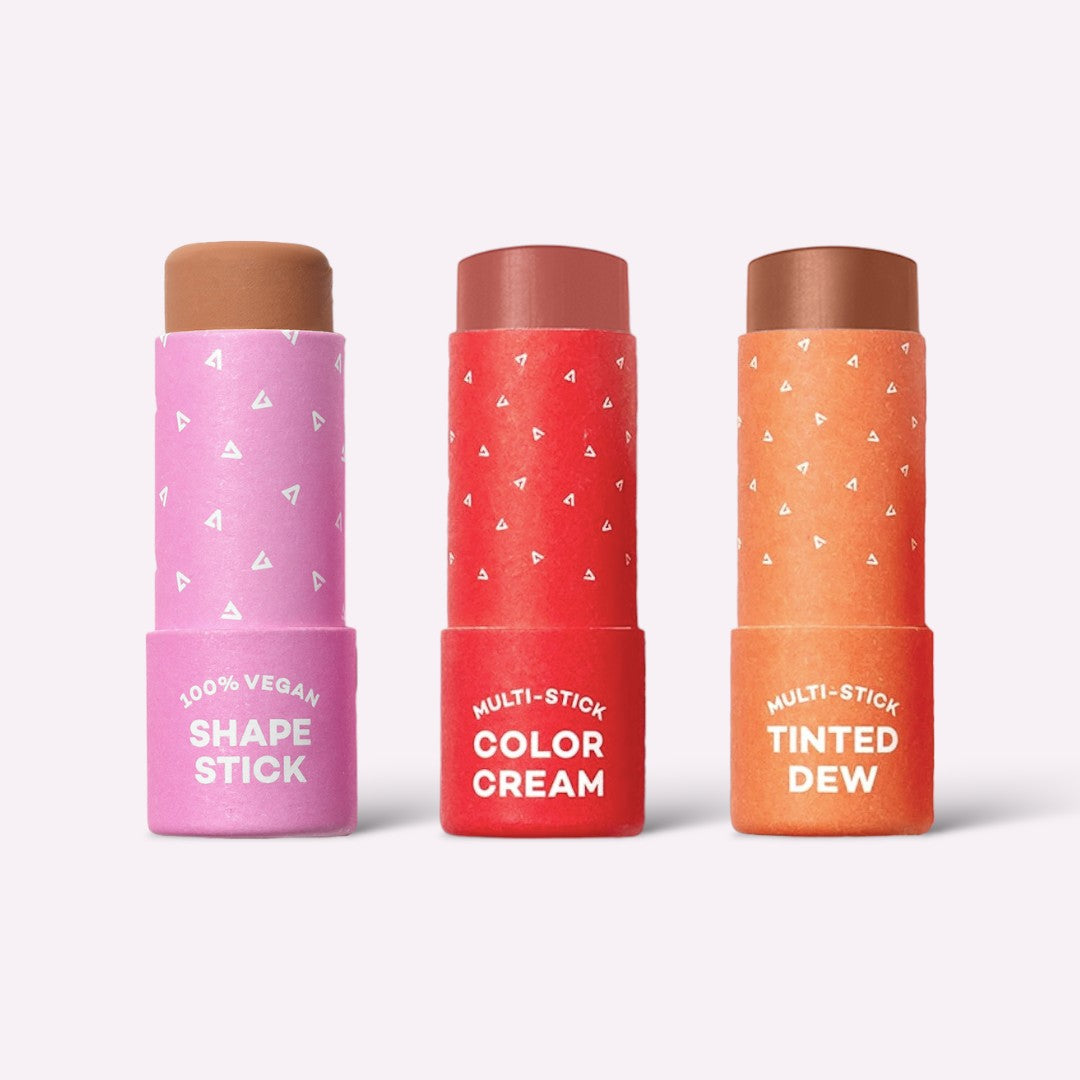
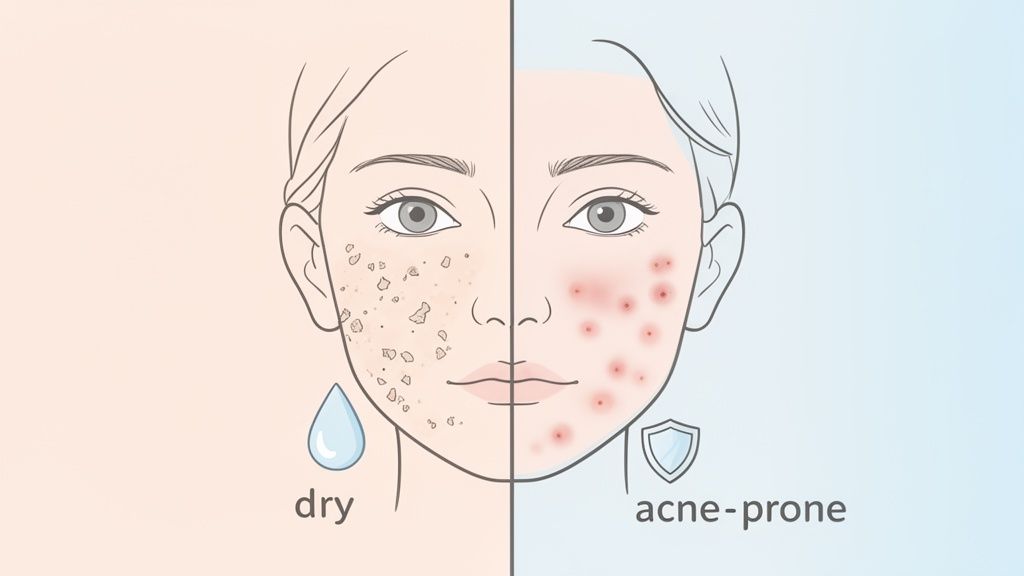
Let's be real: finding the right foundation when your skin is both dry and breaking out feels like a losing battle. It's a frustrating cycle. Products made for acne tend to be drying, which just makes flaky patches look worse. Then, the hydrating formulas you try feel heavy and end up causing new blemishes.
The goal is to find a happy medium—something that gives you moisture without clogging your pores.
This is where a couple of key terms really matter. First, non-comedogenic. This is a non-negotiable for acne-prone skin, as it means the product is specifically formulated to not clog pores. Second, look for humectants like glycerin or hyaluronic acid. These ingredients are champions at pulling moisture into the skin, which helps create a smoother, happier canvas for your makeup. If you want to dive deeper, we have a whole guide to non-comedogenic makeup products.
What to Look for in a Foundation
Thankfully, the idea of a "good foundation" has changed a lot. We've moved away from the days of thick, heavy, matte masks and into an era of skincare-infused makeup that actually does something good for your skin. The global cosmetics foundation market was valued at about USD 12.5 billion in 2023, and it's still growing, largely because we're all demanding more from our products. Today, around 52% of new foundations contain skin-loving active ingredients, which is a trend we're happy to see.
The core challenge is finding a foundation that provides enough moisture to prevent flakiness but is light enough to let your skin breathe and not provoke breakouts. The goal is harmony, not compromise.
For an extra boost, prepping your skin with something like a collagen face serum can make a huge difference. It hydrates and improves texture, creating a much better base for foundation to glide over smoothly and last all day.
Quick Guide to Choosing Your Foundation
To make things a bit simpler, here’s a quick-glance table of what to look for—and what to avoid—when you’re on the hunt for your holy grail foundation.
| Feature/Ingredient | Why It Matters | Examples |
|---|---|---|
| Hydrating Agents | Counteracts dryness and stops foundation from clinging to flaky patches. | Hyaluronic Acid, Glycerin, Squalane |
| Non-Comedogenic | This is crucial for preventing new breakouts by ensuring the formula won't clog pores. | Labeled "Non-Comedogenic" or "Oil-Free" |
| Calming Actives | Soothes the redness and inflammation that comes with both acne and sensitive skin. | Niacinamide, Reishi Mushroom, Aloe Vera |
| Buildable Coverage | Lets you customize your look—light for good skin days, more to cover breakouts. | Serum Foundations, Lightweight Liquid Formulas |
Think of this as your cheat sheet. The right formula will feel like a second skin, giving you coverage where you need it while actively soothing and hydrating.
Decoding Foundation Formulas and Ingredients
Choosing the right foundation when you have dry, acne-prone skin means you have to become a bit of an ingredient detective. Seriously. The stuff inside the bottle is way more important than the brand name on the outside. The right formula can soothe your skin and give it a drink of water, while the wrong one can kick off that super frustrating cycle of dryness and breakouts all over again.
First up, let’s talk about the base of a foundation. A lot of formulas use silicones, like dimethicone, as their main ingredient. Silicones sometimes get a bad rap, but for the most part, they’re non-comedogenic. They create this wonderfully smooth, breathable barrier on your skin that helps lock in moisture without actually clogging your pores, making them a pretty safe bet for most sensitive skin types.
Hydrators vs. Pore Cloggers
When your skin feels like a desert, it's screaming for moisture. But not all hydrating ingredients are good news for acne-prone complexions. It’s a delicate balance, and you need to know the difference between the good guys (hydrators) and the potential troublemakers (oils that clog).
Here are the ingredients you want to see on the label:
- Hyaluronic Acid and Glycerin: These are humectants, which is a fancy way of saying they pull water into the skin. They deliver that deep hydration without any heavy oils that might cause congestion.
- Squalane: This is a fantastic lightweight, non-comedogenic emollient that actually mimics your skin's natural oils. It moisturizes and softens dry patches without feeling greasy or triggering a breakout.
- Ceramides: Think of these as the cement for your skin's natural barrier. They help lock in moisture and protect you from all the environmental stuff that can cause irritation.
On the flip side, some ingredients are notorious for clogging pores, even if they feel moisturizing at first. Heavy oils like coconut oil (often listed as cocos nucifera oil) and certain synthetic esters like isopropyl myristate are known to be highly comedogenic. Always, always check the ingredient list for these—even products labeled "oil-free" can sneak in pore-clogging culprits.
The real secret is finding formulas that hydrate with humectants and non-comedogenic emollients, not heavy, suffocating oils. This way, your skin gets the moisture it needs without sacrificing its need to breathe.
When Foundation Becomes Skincare
The line between makeup and skincare is getting blurrier these days, and that's great news for anyone dealing with dry, breakout-prone skin. Foundations are now packed with active ingredients that actually treat your skin while giving you coverage. It’s a total game-changer.
One of the best actives to look for is Niacinamide (Vitamin B3). It’s a true multitasker: it calms inflammation and redness, helps regulate oil production, and strengthens the skin barrier. Basically, it tackles both acne and dryness at the same time.
Another powerhouse category is soothing botanicals. Ingredients like Reishi and Snow Mushroom are becoming super popular for their amazing hydrating and anti-inflammatory benefits. For instance, our Fungdation is built around these mushrooms to actively calm irritation and boost your skin's health every time you wear it. Digging into the power of these kinds of ingredients can help you find a product that does so much more than just cover things up. You can learn more about why we love these in our guide to natural ingredients for makeup.
By scanning the ingredient list for these helpful hydrators and calming actives, you can pick a foundation that not only looks amazing but also genuinely supports the health of your very unique skin.
Comparing Foundation Types for Your Skin
Finding the right foundation when you have dry, acne-prone skin is about so much more than just nailing the shade—it’s about the entire formula. The format you choose, whether it's a whisper-light serum or a creamy liquid, completely changes how it looks, feels, and interacts with your skin.
Each type offers a different blend of hydration, coverage, and finish. Getting familiar with them is the key to moving past the marketing hype and finding a texture that actually makes your skin happy.
Serum Foundations: A Lightweight Option
Serum foundations have exploded in popularity, and it's easy to see why. They're usually water-based and loaded with skincare goodies like hyaluronic acid. The texture is super thin and fluid, feeling like nothing on the skin while giving a sheer, buildable wash of color.
- Best For: Anyone who wants a natural, dewy finish that just evens things out without screaming "I'm wearing makeup!" They're fantastic at hydrating dry patches, making them look plump instead of flaky.
- Real-World Scenario: This is your go-to for daily wear. Think "my skin but better." It won't completely cover major redness or active breakouts, but it will give your whole complexion a fresh, luminous look that doesn't settle into fine lines.
Hydrating Liquid Foundations: The Versatile Choice
This is probably the most common foundation type out there, but the formulas can be wildly different. For our tricky skin type, you need to beeline for liquids labeled "hydrating" or "luminous"—and always double-check that they're non-comedogenic. The good ones often contain emollients like squalane or humectants like glycerin to add moisture and give a smooth finish.
Coverage can be anywhere from medium to full, giving you more options than a serum. The catch? The wrong formula can feel heavy or look cakey if you're not careful. It’s all about finding that sweet spot between coverage and a breathable feel.
Fun fact: many foundations marketed specifically for acne contain ingredients like salicylic acid, which can cling to and emphasize dry spots. Consumer tests consistently show that serum-like liquid formulas with ingredients like hyaluronic acid, niacinamide, and squalane are way better at creating a flawless, dewy finish on dry yet sensitive skin. You can read more about these foundation findings on goodhousekeeping.com.
Cream and Cream-to-Powder Foundations
Cream foundations, usually in stick or compact form, pack the most punch when it comes to coverage. While that sounds great for hiding blemishes, they can be tough to work with on dry skin. Their thicker consistency needs a lot of careful blending to avoid looking heavy or clinging to texture.
And cream-to-powder formulas? Generally, it's a hard pass. They're made to soak up oil and create a matte finish, which will almost certainly spotlight any dryness and flakiness.
To help you sift through ingredient lists on the fly, this decision tree is a super helpful visual guide.
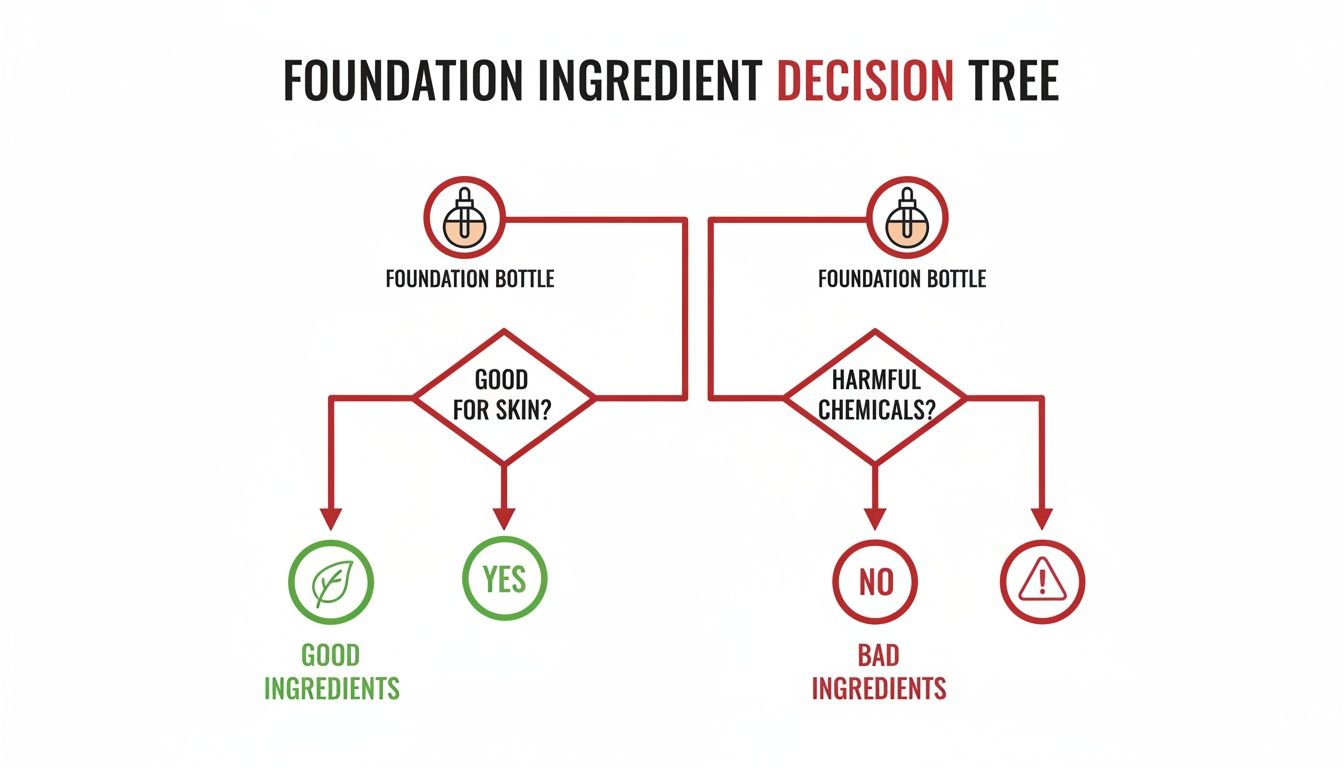
Think of it as a cheat sheet for scanning a product label, pointing you toward skin-safe choices that will hydrate and protect, not irritate.
To make it even simpler, here's a quick breakdown of how the main foundation types stack up against each other for dry, acne-prone skin.
Foundation Format Comparison for Dry Acne Prone Skin
| Foundation Type | Hydration Level | Coverage | Best For | Potential Drawbacks |
|---|---|---|---|---|
| Serum Foundation | High | Sheer to Light | Daily wear, a "no-makeup" look, and prioritizing hydration. | Won't cover significant blemishes or redness. |
| Hydrating Liquid | Medium to High | Light to Full | Versatile daily use; when you need to build up coverage in certain areas. | The wrong formula can feel heavy or look cakey. |
| Cream Foundation | Low to Medium | Medium to Full | Spot concealing or when you need maximum coverage for an event. | Can easily emphasize texture and dry patches if not blended perfectly. |
| Cream-to-Powder | Very Low | Medium | Oily skin types; not recommended for dry or combination-dry skin. | Almost guaranteed to cling to dry flakes and look patchy. |
Ultimately, the best format comes down to your personal preference and what your skin needs on any given day. Some people even keep a couple of different types on hand—a lightweight serum for good skin days and a hydrating liquid for when they need a little more help.
Getting Your Application Technique Just Right
Even the most perfect foundation can end up looking flaky or feeling heavy if it isn’t applied the right way. Your technique is honestly just as important as the formula, maybe even more so. The secret to a seamless finish that doesn't upset your skin's delicate balance? It starts way before you even touch the foundation bottle.
Think of your face as a canvas. You wouldn't start a painting on a rough, dusty surface, right? The same idea applies here. Good skin prep is the absolute, non-negotiable first step. It creates a smooth base that stops foundation from clinging to dry spots or making blemishes angry.
Your Pre-Foundation Checklist
First things first: cleanse your face and follow up with a lightweight, non-comedogenic moisturizer. This step is a game-changer. It hydrates all those thirsty dry areas, creating a plump, even surface for makeup. Give it a few minutes to really sink in before you do anything else.
Next up, consider a hydrating primer. A good one acts like a buffer between your skin and your makeup, smoothing over fine lines and creating an even texture. This little step helps your foundation glide on like a dream and keeps it from settling into dry patches as the day goes on.
The whole point of skin prep is to build a hydrated, smooth barrier. This doesn't just make your foundation look a thousand times better; it also protects sensitive, acne-prone skin from direct contact with makeup pigments, which can cut down on potential irritation.
And before you commit to a full face of a new foundation, always do a patch test. Seriously. Dab a tiny amount on a hidden spot, like your jawline or behind your ear, and give it 24 hours. It’s a simple move that could save you from a major breakout or an allergic reaction.
The Right Tools for the Job
How you apply your foundation can completely change the final look and how your skin feels about it. Each tool has its perks, especially when you're dealing with both active breakouts and flaky patches at the same time.
-
Your Fingers: Using clean fingers is often the gentlest route. The warmth from your skin helps melt the product, making it blend in seamlessly. This method is amazing for a natural, skin-like finish, but just be careful not to drag or pull the skin, especially over sensitive spots.
-
A Damp Sponge: A damp beauty sponge is a dry skin savior. It presses foundation into the skin with a gentle bouncing motion, which builds coverage without kicking up flaky patches. Plus, it sheers out the product just enough to prevent that dreaded cakey look.
-
A Soft Brush: If you’re a brush person, grab one with soft, dense bristles. The key is to use stippling or patting motions instead of swirling or buffing. Buffing can aggravate breakouts and lift up all those little dry flakes you just worked so hard to smooth down.
The golden rule here is to start with a tiny bit of product and build coverage only where you really need it. A sheer layer all over, with a second light layer patted over any red areas, looks so much more natural and feels way more comfortable. This approach makes your skin look perfected, not covered up, keeping it calm and happy all day long.
The Shift Towards Clean and Sustainable Formulas
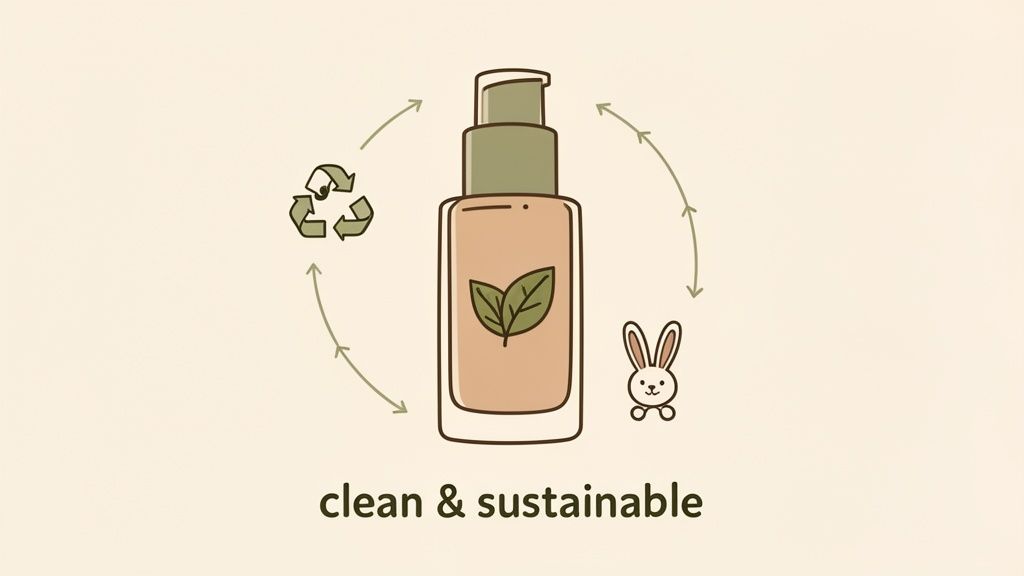
Let's be real, the conversation around the best foundation for dry acne prone skin is way bigger than just shade matching these days. People are starting to look at the ingredient list, wondering what's really in their products and how those things affect their skin—and the planet. This new wave of conscious consumerism is fueling a huge shift toward clean, vegan, and sustainable beauty.
And this isn't just about feeling good ethically; it's incredibly practical, especially if you have sensitive or reactive skin. Clean beauty is all about ditching the junk—common irritants like synthetic fragrances, parabens, and harsh sulfates that are often behind inflammation and breakouts. For skin that’s already juggling dryness and acne, cutting out these potential troublemakers is a game-changer for finding some peace.
Why Clean Formulas Really Matter for Sensitive Skin
Think of choosing a clean foundation as a form of preventative care. When a product doesn't have a novel-length list of questionable chemicals, there are just fewer things that can possibly tick your skin off. Vegan formulas go a step further by cutting out all animal-derived ingredients, like beeswax or carmine, which can sometimes be comedogenic or trigger allergies.
This careful approach to ingredients directly helps dry, acne-prone skin in a few key ways:
- Less Irritation: Without aggressive synthetic fragrances and preservatives, your skin’s barrier isn't constantly under attack. This means less redness and sensitivity.
- Lower Risk of Clogged Pores: Clean beauty tends to skip the heavy, pore-clogging fillers and animal byproducts. Instead, you'll find lightweight, plant-based alternatives that let your skin actually breathe.
- Focus on Skin-Nourishing Goodness: Brands in the clean space often pack their products with beneficial botanicals and antioxidants that actively soothe and support your skin.
Honestly, choosing clean beauty is basically a risk-reduction strategy for your skin. When you opt for formulas with fewer potential irritants, you’re creating a much healthier environment for your skin to heal and thrive, even when you're wearing makeup.
Sustainability as a Mark of Quality
This whole conscious beauty thing also extends to packaging and production. The brands that prioritize sustainability are often using eco-friendly materials like recycled paper or glass, trying to minimize the plastic waste that’s so rampant in the industry. This dedication usually points to a deeper commitment to quality all around.
For us as consumers, it means the brand's attention to detail is holistic. They care about the entire lifecycle of their product—from where they get their ingredients to what happens to the container when you're done with it. It’s an ethos that lines up perfectly if you're looking for gentle, effective makeup. You can check out a list of companies doing it right in our guide to the best clean beauty brands.
At the end of the day, the move toward clean and sustainable formulas is a huge win for anyone with complicated skin. It reframes foundation—it's not just a cover-up anymore, but an extension of a thoughtful skincare routine that respects both your skin and the planet.
Foundation FAQs Unpacked
Let's be real: trying to find the right foundation when you're dealing with both dryness and breakouts can feel impossible. There's so much conflicting advice out there. To cut through the noise, we're tackling some of the biggest questions to help you find the best foundation for dry acne prone skin with confidence.
Is Oil-Free Always the Right Move for Acne-Prone Skin?
Not really. "Oil-free" has become one of those big, flashy marketing terms, but the truth is a little more complicated. It’s not about the absence of oil, it’s about the type of oil.
A lot of newer, smarter formulas use amazing plant oils like squalane that are actually good for your skin. They can hydrate and calm dry patches without ever thinking about clogging a pore. The real trick is to steer clear of the heavy hitters known to cause breakouts (like coconut oil) and always, always look for products that say they're non-comedogenic.
Can I Actually Wear Full-Coverage Foundation?
You can, but you have to be clever about it. Most old-school, full-coverage foundations are super thick and matte—a recipe for disaster on dry skin. They’ll grab onto every dry flake and settle into lines, giving you that dreaded cakey look.
A much better way to go is to pick a foundation that's lightweight but buildable. Start with a really sheer layer all over your face. Then, with a light touch, go back and add a little more just on the spots that need it, like around a blemish or on red areas. The result is so much more natural and skin-like.
The point isn't to hide your skin under a mask; it's to make it look its best. Building coverage where you need it lets you even things out while still letting your skin show through. It feels better and looks way more modern.
What Skincare Ingredients Should I Look For in a Foundation?
Your foundation should be working for you, not against you. Think of it as the last step in your morning skincare routine.
Look for formulas packed with ingredients that are actively helping your skin.
- Humectants: Things like Hyaluronic Acid and Glycerin are champions at pulling moisture into the skin, fighting that tight, dry feeling from the inside.
- Calming Actives: Niacinamide is an absolute hero. It helps calm down redness and gets oil production in check without being harsh.
- Soothing Botanicals: Natural mushroom extracts like Reishi or Snow Mushroom are incredible for dialing down inflammation and helping your skin build up its strength.
How Do I Keep My Foundation from Looking Flaky?
Nine times out of ten, flakiness comes down to skin prep. Your foundation is only as good as the canvas you put it on.
First things first: always start with a hydrating, non-comedogenic moisturizer. Give it a minute or two to really sink in. Then, follow up with a hydrating primer to create a smooth surface. When it's time for foundation, use a damp beauty sponge and press it into your skin. No rubbing or dragging—that just kicks up flakes. And please, skip the heavy setting powders. A light spritz of a hydrating setting spray will lock everything in place and leave you with a fresh, dewy glow that lasts.
At Axiology, we think makeup should do more than cover up—it should care for your skin. Our Fungdation is built on that idea, using skin-loving reishi and snow mushroom to calm, hydrate, and perfect. Check out our clean, vegan formulas at https://www.axiologybeauty.com.