When you have dry, sensitive skin, the best foundation isn't just about color and coverage. It’s a delicate balance of deep hydration and super-gentle ingredients, usually found in a creamy or liquid formula. Think of it as the final, perfecting step of your skincare routine.
The top contenders are always packed with skin-soothers like hyaluronic acid and squalane. Just as important is what they don't have: common troublemakers like harsh alcohols and synthetic fragrances that can leave your skin feeling tight, itchy, or just plain angry.
Your Search for the Perfect Foundation Ends Here
If you've ever felt like Goldilocks trying to find a foundation that calms, hydrates, and actually looks good on your skin, you know the struggle is real. So many products promise a dewy glow but end up looking cakey on dry patches. Others claim they’re “gentle” but secretly trigger redness and irritation. Let’s break that cycle. For good.
We’re going to look past the flashy marketing and get down to what really matters. This is about learning your skin's unique language, decoding those intimidating ingredient lists, and mastering application tricks that leave you with a flawless, comfortable finish all day long. This isn't just about covering things up; it's a roadmap to actively nurturing your skin every single time you wear makeup.
Understanding the Demand for Gentle Formulas
You’re definitely not alone in this. More and more people are looking for products that cater to their specific skin needs, and the numbers don't lie. The market for dehydrated skin products is blowing up, with the dry skin segment expected to grab 41.7% of the market share by 2025.
What’s driving this? A big part of it is that our skin is getting pickier. Nearly 47% of people report having bad reactions to harsh, chemical-heavy formulas. It’s a huge signal that we’re all craving gentle, hydrating foundations that won’t cause a fuss. You can read more about these market trends for dehydrated skin products on Future Market Insights.
Think of your ideal foundation as a peace treaty for your skin—it provides beautiful coverage while respecting your skin's delicate boundaries, ensuring it stays calm and happy.
We’re going to lay out the core principles for choosing your next foundation with total confidence. We’ll also show you how thoughtfully designed formulas like Axiology's Fungdation are made to meet these exact needs. This guide will set you up for a calmer, happier complexion without ever having to compromise on coverage again.
What’s Actually Going on With Your Dry, Sensitive Skin?
To find a foundation that actually works, we first need to get real about what "dry" and "sensitive" truly mean. They're two different issues that, unfortunately, love to hang out together. This tag-team creates a special kind of challenge when you’re on the hunt for the best foundation for dry sensitive skin.
Picture dry skin as a garden with thirsty, cracked soil. It just doesn't have enough of the natural oils it needs to hold onto water, which weakens its protective barrier. This is what causes that tight feeling, annoying flaky patches, and a generally dull look. Slap a super-matte or drying foundation on top, and it's like a sponge sucking up the last bit of moisture, making everything look and feel worse.
Sensitive skin, on the other hand, is like a car alarm that goes off if a leaf falls on it. Its job is to protect you, but it's way too reactive, freaking out over things that other skin types wouldn't even notice. This means common stuff like synthetic fragrances, harsh chemicals, or even rubbing your skin too hard can set it off, leaving you with redness, stinging, or itchiness.
The Double Whammy Effect
When your skin is both dry and sensitive, the weak moisture barrier from the dryness makes it super easy for irritants to sneak in and trigger that over-the-top reaction. It's a vicious cycle: the dryness wrecks your skin's defenses, which makes it more sensitive, and the sensitivity reactions can damage the barrier even more, leading to—you guessed it—more dryness.
This is exactly why so many foundations have probably been a bust for you. They were likely designed to fix one problem, but not both.
A foundation made for "dry" skin might be loaded with perfume, setting off your sensitivity. Meanwhile, one for "sensitive" skin might not have that rich, hydrating texture your dry skin is begging for, leaving it feeling tight and looking patchy.
How to Decode Your Skin’s SOS Signals
Getting to know your skin’s specific quirks is the first step to finding a product that will play nice. Keep an eye out for these tell-tale signs:
- The Post-Wash Pinch: Does your face feel uncomfortably tight just minutes after you’ve washed it? That's a classic sign of a compromised moisture barrier.
- Flake City: Do you spot little flaky patches, especially around your nose, brows, or chin, that foundation just loves to cling to?
- Red Alert: Does your skin get red or stingy the second you try a new product?
- The Itch Factor: Do certain fabrics or products make your skin feel itchy all day long?
Figuring out what your dry, sensitive skin needs goes beyond makeup. It’s about being mindful of everything that touches your skin. Just like you’re searching for the right foundation, think about how other things, like laundry soap, affect your skin. For a deeper dive, you could check out articles on choosing the best laundry detergents for sensitive skin. Once you understand these signals, you'll be way better equipped to find formulas that give your skin the comfort and hydration it's been craving.
Decoding Foundation Ingredients for Your Skin Type
Think of a foundation’s ingredient list as its personality profile. It tells you everything you need to know about how it’ll behave on your skin. For anyone hunting down the best foundation for dry sensitive skin, learning to scan this list is basically a superpower. It’s how you spot the good guys and avoid the troublemakers.
When your skin is both parched and picky, you’re asking your foundation to do two big things at once: hydrate like crazy and keep everything calm. This isn’t just about slapping on some color to hide redness or flaky patches; it's about picking ingredients that actually help your skin barrier get stronger over time.
This double-duty need is why you’re seeing a big shift in makeup aisles. Liquid and cream foundations are taking over, now holding about 63% of the market. Their textures are just perfect for delivering moisture without kicking up a fuss. And brands are listening—nearly 45% of beauty companies have recently rolled out hybrid skincare-foundation products, mixing the goodness of serums and moisturizers right into their formulas.
The Hydrating Heroes Your Skin Craves
First things first: your skin is thirsty. So, you want to look for ingredients that are like a big, refreshing drink of water for your face. These are the all-stars you want to see showing up early on the ingredient list.
- Hyaluronic Acid: This stuff is a true moisture magnet. It can hold up to 1,000 times its weight in water, pulling hydration into the skin to plump things up and smooth out those little lines that dehydration loves to create.
- Glycerin: An oldie but a goodie. Glycerin is a classic humectant, meaning it draws moisture from the air right into your skin's outer layer. It also helps beef up your skin’s natural moisture barrier, keeping it happy and soft.
- Squalane: A super lightweight oil that feels more like a serum, Squalane mimics your skin’s own natural oils. It’s brilliant at locking in moisture without ever feeling greasy or clogging pores, making it a dream for sensitive types.
Other friends to look for include nourishing plant oils like avocado oil and powerful antioxidants like elderberry extract. Axiology’s Fungdation, for example, is packed with these kinds of skin-loving ingredients, so it’s nurturing your skin while giving you that flawless finish.
Potential Irritants to Put on Your "No" List
Just as important as what’s in your foundation is what’s not. Sensitive skin is like a fussy toddler—it has a very low tolerance for certain things and isn't shy about showing its displeasure.
When you have sensitive skin, your goal is to keep things simple and calm. Avoiding known irritants is like choosing a quiet, peaceful road instead of a noisy, chaotic highway—it gets you to your destination without any unnecessary stress.
Here are the top offenders to watch out for:
- Synthetic Fragrances: Often listed simply as "parfum" or "fragrance," these are one of the biggest culprits behind skin reactions. If you’ve ever experienced sudden redness, itching, or a rash after using a new product, fragrance was the likely suspect.
- Drying Alcohols: Be wary of ingredients like SD alcohol, denatured alcohol, or isopropyl alcohol. These can strip your skin of its natural oils, leaving it even drier and more vulnerable to irritation. Not all alcohols are bad, but these specific types are best avoided for your skin type.
To make this super simple, here's a little cheat sheet to help you quickly scan ingredient lists at a glance.
Foundation Ingredient Cheat Sheet for Dry, Sensitive Skin
| Ingredient Category | Look for These (Skin Saviors) | Avoid These (Potential Irritants) |
|---|---|---|
| Hydrators | Hyaluronic Acid, Glycerin, Squalane, Snow Mushroom | Drying Alcohols (SD Alcohol, Alcohol Denat.) |
| Oils & Butters | Jojoba Oil, Avocado Oil, Shea Butter, Kokum Butter | Mineral Oil, Lanolin (can be sensitizing for some) |
| Soothing Agents | Reishi Mushroom, Aloe Vera, Elderberry Extract, Chamomile | Synthetic Fragrances ("Parfum"), Essential Oils (can vary) |
| Antioxidants | Vitamin E (Tocopherol), Grapeseed Oil, Plum Oil | Artificial Colorants (D&C, FD&C dyes) |
This table isn't exhaustive, but it's a great starting point for becoming a more confident label-reader. The more you practice, the easier it gets to spot the heroes and dodge the villains.
Understanding the difference between what your skin needs versus what it fears is everything. This simple visual breaks down the core priorities for both dry and sensitive skin.
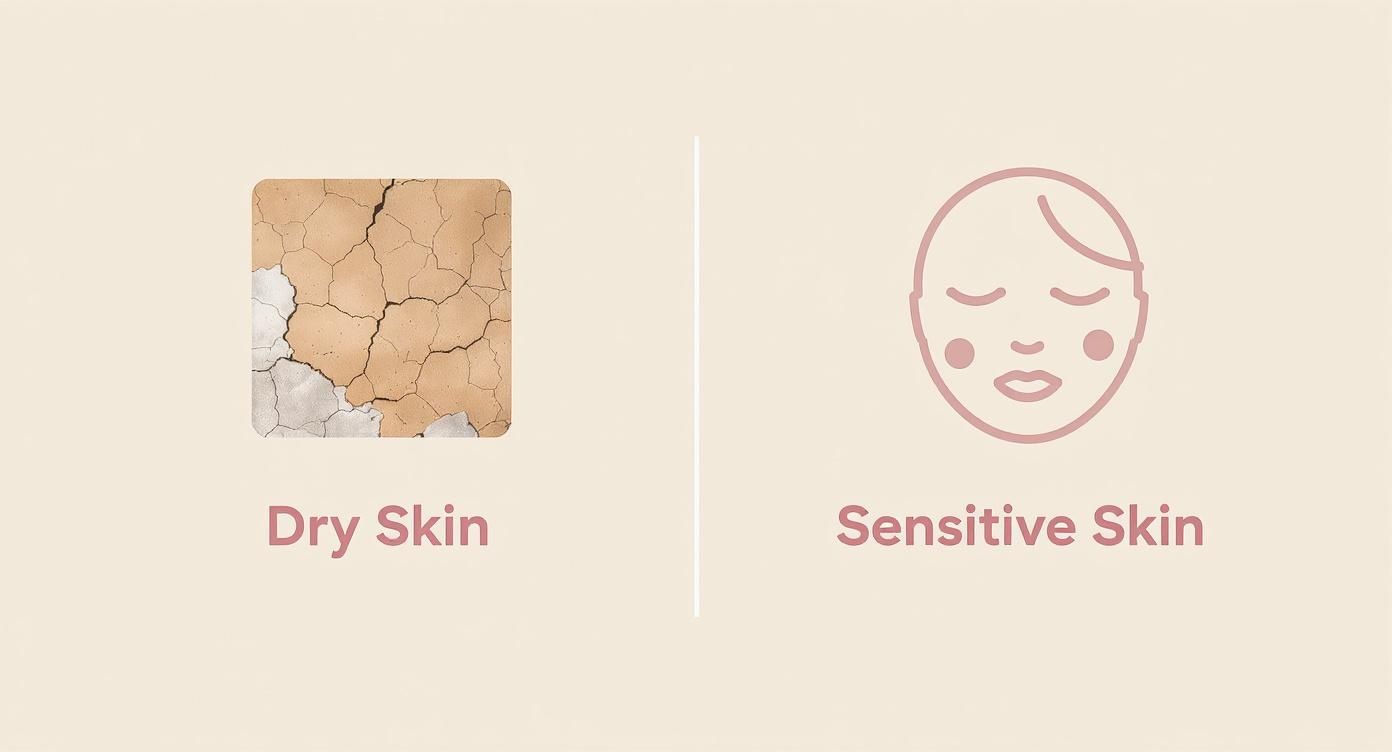
As you can see, while dry skin is screaming for moisture, sensitive skin just wants to be left in peace with gentle, non-reactive ingredients. Want to dive deeper? Check out our guide on hypoallergenic makeup for sensitive skin.
Getting a Flawless (and Gentle!) Application Down
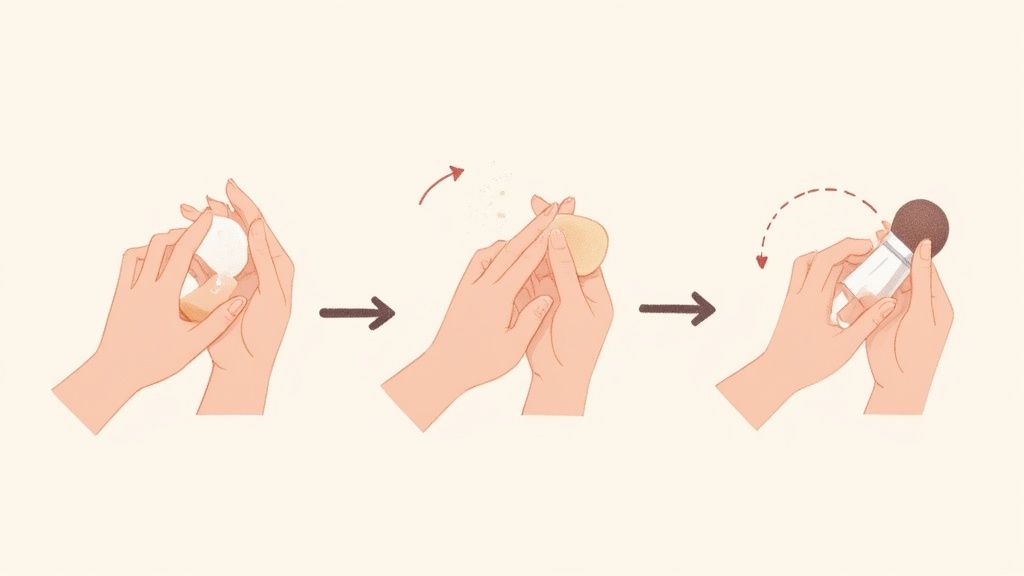
Here's the thing: even the absolute best foundation for dry sensitive skin can look patchy or feel tight if you don't apply it just right. The real secret to that seamless, skin-like finish happens long before you even uncap the bottle.
Think of your skin as a canvas. You wouldn't start painting on a dry, cracked surface, right? Same principle.
Your prep work is non-negotiable for keeping foundation from clinging to dry spots. This means starting with a gentle, non-stripping cleanser, then layering on your favorite hydrating serums and a seriously nourishing moisturizer. Give each layer a moment to sink in to create a plump, happy base for your makeup.
Once your skin is prepped and ready, the tools and techniques you use will make all the difference. The goal is to work with your delicate skin, not against it.
Choose Your Tool Wisely
How you put on your foundation is just as critical as the formula itself. Every tool gives you a different finish and, more importantly, a different level of gentleness for easily irritated skin.
- Your Fingertips: Never underestimate the power of your own hands! The warmth from your fingers helps melt the foundation into your skin for a super natural, seamless look. Just remember to use a gentle tapping or pressing motion—rubbing can create friction and flare-ups.
- A Damp Makeup Sponge: This one's a fan-favorite for a good reason. A damp sponge gives you a dewy, almost airbrushed effect and really helps press the product into the skin so it doesn't just sit on top of flaky patches. To get the full scoop, check out our guide on how to apply foundation with a sponge.
- A Soft, Dense Brush: If brushes are your thing, look for one with soft, synthetic bristles. Instead of sweeping or buffing, try a "stippling" motion. That means gently bouncing and pressing the brush to deposit pigment without kicking up any irritation.
The big takeaway here? Avoid any harsh rubbing or dragging motions. For sensitive skin, gentle pressing and tapping will always give you a better result that looks like a second skin, not a mask.
Perfect Your Application Technique
Got your tool? Great. Now it's time to apply. A "less is more" mindset is your best friend here.
- Start Small: Squeeze a tiny, pea-sized amount of foundation onto the back of your hand. This warms up the product a bit and gives you way more control over how much you use.
- Focus on the Center: Start applying foundation to the middle of your face—think around your nose and on your cheeks. This is usually where redness and discoloration like to hang out.
- Blend Outwards: Gently press and blend the foundation outwards toward your hairline and jawline. This technique concentrates the coverage where you need it most and lets it fade out naturally at the edges, so you don't get that dreaded makeup line.
- Build if Necessary: If you need a little more coverage on a blemish or a red spot, go back in with a tiny bit more product, focusing just on that area. Layering like this keeps the finish from looking heavy or cakey.
How to Find Your Perfect Shade and Patch Test Safely
Alright, you’ve picked a fantastic, skin-loving formula and nailed your application technique. Huge wins! But there are two final hurdles that can truly make or break your entire foundation experience: finding your exact shade match and ensuring it won’t tick off your sensitive skin.
Getting these right is what makes your investment in the best foundation for dry sensitive skin actually worth it.
Nail Your Shade by Finding Your Undertone
An amazing shade match is so much more than just figuring out if you're "light" or "dark." The real secret lies in your skin's undertone—that subtle, natural color just beneath the surface. The cool part? It never changes, even if you get a tan.
Most of us fall into one of three undertone camps. A quick peek at the veins on the inside of your wrist is a surprisingly effective way to get a major clue:
- Cool Undertones: Your veins look mostly blue or purple. Silver jewelry probably looks amazing on you, and your skin might have a slightly pinkish, rosy quality.
- Warm Undertones: Your veins appear greenish. You're likely the person who gets all the compliments when wearing gold jewelry, and your skin has a golden, peachy, or yellowish cast.
- Neutral Undertones: You see a mix of blue and green, or it’s just plain hard to tell. You’re lucky—both silver and gold jewelry probably look great on you.
Once you have a hunch about your undertone, please, please forget swatching foundation on your hand. The skin there is a totally different color and texture than your face! Instead, swipe a few promising shades in small stripes along your jawline. Let them sit and dry down for a minute or two. The one that basically vanishes into your skin? That's your winner.
For a deeper dive, check out our full guide on how to choose the right foundation shade.
The whole point of foundation isn't to look like you're caked in makeup. It's to look like you just happen to have naturally incredible skin. A perfect shade match is the key to pulling off that invisible magic trick.
The Non-Negotiable Patch Test for Sensitive Skin
This part is crucial. Before you go all in and apply a new product to your entire face, a patch test is your absolute best friend and first line of defense against a potential meltdown. Seriously, don't skip this.
Pick a discreet little spot, like right behind your ear or on the side of your neck. Dab a small amount of the foundation there and just leave it alone for 24 to 48 hours.
Keep an eye out for any signs of trouble—we're talking redness, itching, burning, or little bumps. If your skin stays calm and happy, you've very likely found a formula that gets along with you.
Taking this extra step is a small price to pay for peace of mind. It’s no surprise that as more people look for gentle products, the global market for moisturizing foundations hit a massive USD 17,850.5 million in 2024. Liquid formulas are leading the charge, mainly because they’re known for being so hydrating and kind to the skin.
Your Foundation Questions Answered
Finding the right foundation when you have dry, sensitive skin can feel like a puzzle. You know the big pieces—hydrating ingredients, gentle formulas—but a ton of smaller questions always seem to pop up. We get it.
This is where we tackle the most common concerns we hear, giving you clear, expert answers so you can feel completely confident about what you’re putting on your skin. Let’s clear up the confusion and get you that flawless, comfortable finish you’ve been looking for.
Can I Wear Powder Foundation if I Have Dry Skin?
This is a tricky one, but the answer isn’t a hard no. Most traditional pressed or loose powders are made to soak up oil, which is the last thing you want when your skin is already parched. They have a knack for clinging to dry patches, making texture more obvious and leaving you with a cakey look.
However, the beauty world has come a long way. Some newer formulas, like super finely-milled mineral powders or those specifically labeled as "hydrating powders," can actually work. If you’re set on trying one, your skin prep has to be intensive. Think rich moisturizers and a hydrating primer to create the smoothest canvas possible.
Honestly, though? For most of us with dry, sensitive skin, a liquid or cream formula will always be a safer, more reliable bet for a radiant finish.
How Do I Stop My Foundation From Clinging to Dry Patches?
This is all about what you do before the makeup even comes out. The goal is to create a smooth, hydrated surface so the foundation has nothing to grab onto.
Start with gentle exfoliation once or twice a week to carefully buff away any dead, flaky skin cells. Right before you apply foundation, layer on the hydration:
- Step 1: Pat a hyaluronic acid serum onto damp skin to pull in moisture.
- Step 2: Follow up with a ceramide-rich moisturizer to lock it all in and support your skin barrier.
- Step 3: Give it all at least five minutes to sink in. Seriously, don't rush this part.
When you’re ready for makeup, use a damp beauty sponge. Gently press and bounce the product onto your skin. This stippling motion deposits the foundation evenly without rubbing or irritating any delicate spots, leaving you with a seamless look.
Think of it like painting a wall. You wouldn't paint over peeling, flaky spots without sanding and priming first. Your skin needs that same thoughtful preparation for a smooth, lasting result.
Is Foundation with SPF Enough Sun Protection?
While it’s a great bonus to have SPF in your foundation, it should never be your one-and-done for sun protection. Here’s why: to get the actual sun protection factor (SPF) advertised on the bottle, you’d need to apply a very thick layer—about a quarter of a teaspoon just for your face.
Let’s be real, no one is applying that much foundation. It would look heavy and totally unnatural. That means you’re probably only getting a tiny fraction of the protection you think you are.
The best move is to always apply a separate, broad-spectrum sunscreen of at least SPF 30 as the last step in your skincare routine. Let it set for a few minutes before you even think about foundation. This ensures you’re fully and properly protected.
What Is the Difference Between a Dewy and a Satin Finish?
Both dewy and satin finishes are fantastic choices for dry, sensitive skin because they skip the flat, drying effect of a matte formula. The difference really comes down to the level of glow and what you prefer.
A dewy finish is super luminous and reflects a lot of light. It gives your skin a radiant, healthy, almost-moist look that’s perfect for faking a youthful glow.
A satin finish is that perfect middle ground. It gives you a soft, healthy-looking glow that looks like real skin, just better. It's not as shiny as dewy, but it's definitely not flat. A formula like Axiology's Fungdation, for example, nails this beautiful, skin-like satin finish.
Ready to find a foundation that checks all the boxes for dry, sensitive skin? Discover how Axiology combines skin-nurturing ingredients with a flawless satin finish to give your complexion the comfort and coverage it deserves.