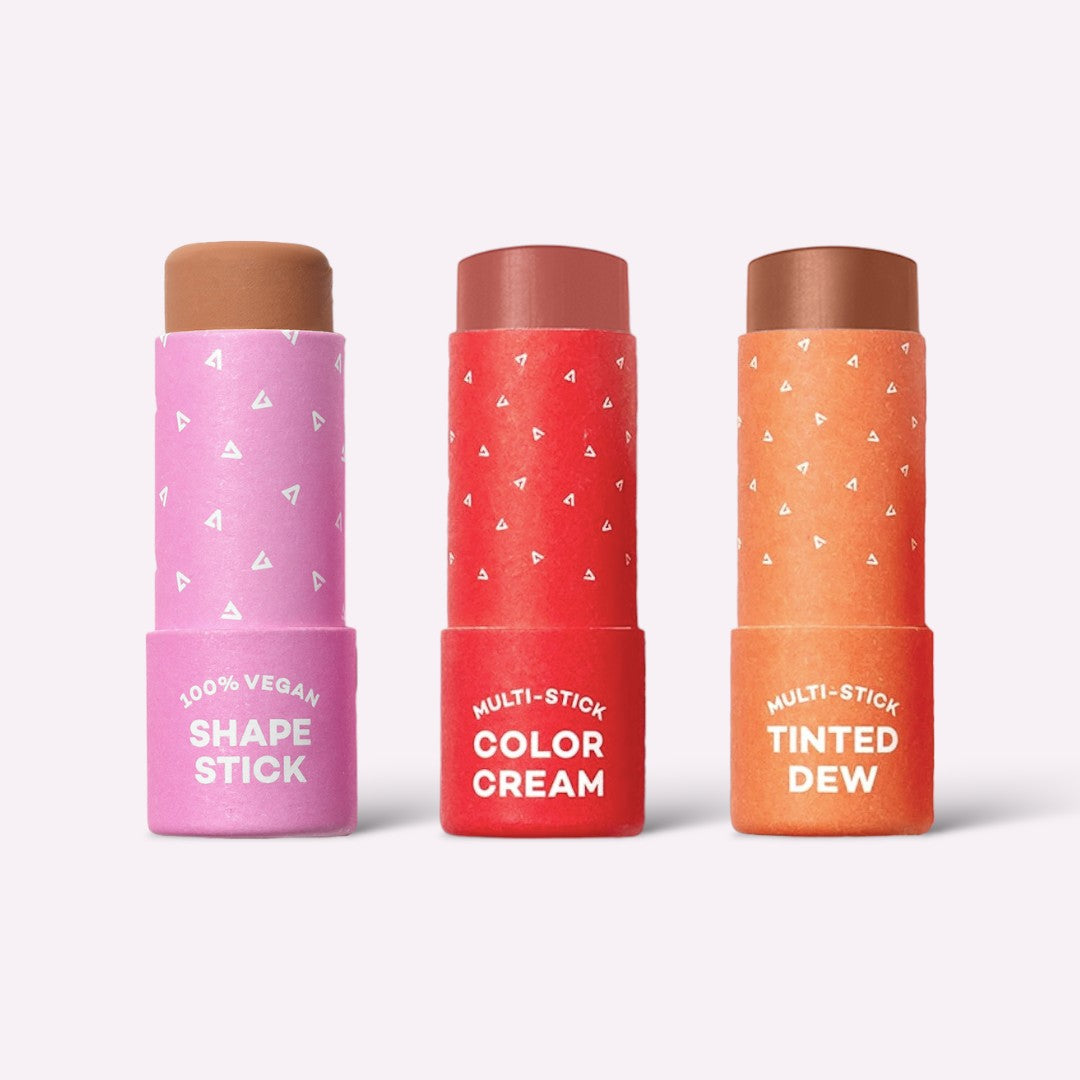
Let’s get one thing straight: the term “chemical free makeup” is a bit of a myth. A catchy marketing phrase, for sure, but not exactly scientifically accurate.
Here's why: everything is a chemical. Water? Chemical. The plant-based oils in your favorite face serum? Also chemicals. So, when people go searching for “chemical free,” they’re not actually trying to defy the laws of physics. They're on the hunt for makeup made without the specific synthetic ingredients that are raising red flags for health and the environment.
So What Does "Chemical Free Makeup" Actually Mean?
Think of "chemical free makeup" less as a literal definition and more as a shortcut. It’s a way of saying, "I want cleaner, safer, more transparent beauty products, please." It signals a move away from those super-long, impossible-to-pronounce ingredient lists and toward formulas you can actually recognize and feel good about putting on your skin.
This whole movement is really about questioning the old way of doing things. For decades, certain synthetic ingredients were just the standard—they made lipstick last all day or gave foundation that silky-smooth feel. But as we all get a little smarter about what we're buying, the demand for effective alternatives that don't rely on these questionable ingredients is growing.
When you choose makeup that’s labeled "clean" or "non-toxic," you’re doing more than just buying a new lipstick. You're casting a vote with your dollars for a beauty industry that cares about our well-being and the planet's health. It’s a small act that sends a huge message.
The Real Goal Behind the Search
What shoppers are really after is makeup that’s free from potentially harmful or irritating stuff. The goal isn’t to find a product with zero chemicals—it’s to find one formulated with intention, care, and a whole lot of transparency. This means skipping ingredients that are known to cause irritation or have murky long-term effects. If you want to go deeper, we have a whole guide on non-toxic makeup that breaks it all down.
This push for conscious consumerism is making waves. The global market for natural and organic cosmetics is expected to more than double, jumping from about USD 45.61 billion in 2025 to a whopping USD 103.23 billion by 2034. People are clearly ready for a change.
If you’re curious about how different cultures approach beauty, it's fascinating to delve into the core philosophies of different beauty traditions, since ingredient choices often come down to cultural values. At the end of the day, the search for “chemical free makeup” is really a quest for peace of mind. It’s about building a beauty routine that feels good, looks good, and aligns with what you believe in.
What Ingredients Are We Really Trying to Avoid?
Let's be real: trying to memorize a massive list of scientific names is a surefire way to get overwhelmed. The goal isn't to become a cosmetic chemist overnight. It’s about recognizing a few key players that consistently show up on "free-from" lists so you can become a confident label-reader.
Think of it like grocery shopping. Mass-produced foods often contain preservatives and artificial additives to extend shelf life or enhance texture, but in your own kitchen, you might opt for fresher, whole-food alternatives. It’s the same logic for makeup. This shift is huge, and it's driven by shoppers like you. Surveys consistently show that most of us are reading ingredient labels, specifically looking for claims like paraben-free or sulfate-free.
The data backs this up. Products that are free from multiple controversial ingredients are flying off the shelves way faster than those that only avoid one. It's clear evidence of a demand for cleaner, more thoughtful formulas. You can dig into more of the data on the clean beauty market's growth and see what's driving it.
The chart below cuts through the noise, showing the difference between a fuzzy marketing term and what we're actually aiming for.
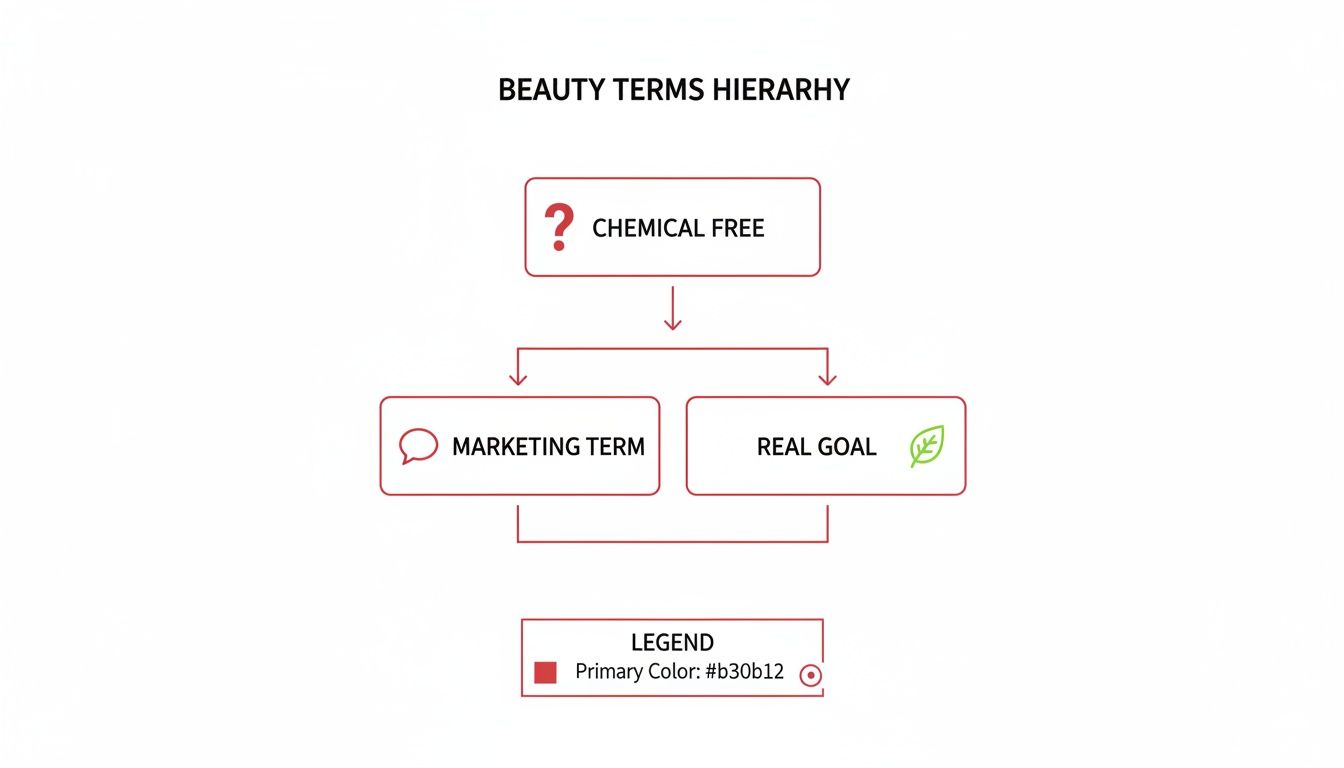
While "chemical-free" might be an impossible, silly phrase, it points to something very real: a genuine desire for safer products made with ingredients we can trust.
A Quick Guide to Common Ingredients to Avoid
To make things easier, we've broken down some of the most common synthetic ingredients that conscious consumers choose to skip. This table explains what they are, what they do, and why they're often flagged in the world of clean beauty.
| Ingredient Family | Common Examples | Typical Use in Makeup | Reason for Concern |
|---|---|---|---|
| Parabens | methylparaben, propylparaben, butylparaben | Preservatives that prevent mold and bacteria growth. | Concerns about potential endocrine (hormone) disruption. |
| Sulfates (SLS/SLES) | Sodium Lauryl Sulfate, Sodium Laureth Sulfate | Foaming agents in cleansers; create a rich lather. | Can strip the skin’s natural oils, leading to dryness and irritation. |
| Phthalates | DBP, DEHP (often hidden in "fragrance") | Plasticizers; make formulas flexible and help scents last. | Linked to potential endocrine disruption and reproductive health issues. |
| Silicones | dimethicone, cyclomethicone | Create a silky, smooth feel in primers and foundations. | Not biodegradable; can trap debris in pores for some skin types. |
| Talc | Hydrous magnesium silicate | A filler used in powders for its absorbent, soft texture. | Risk of contamination with asbestos, a known carcinogen, from mining. |
Remember, this isn't about fear. It's about empowerment. Knowing what to look for helps you choose products that align with your personal wellness and environmental values.
The Big Four Categories to Watch For
Let's dive a little deeper into the "why" behind avoiding some of these common ingredients.
1. The Usual Suspects: Preservatives
Preservatives are non-negotiable for preventing nasty bacteria and mold from taking over your makeup. But not all of them are created equal.
Parabens (like methylparaben and propylparaben) have been the industry go-to for decades because they're incredibly effective at keeping products shelf-stable. The conversation shifted when studies suggested they can mimic estrogen in the body, raising questions about potential hormonal disruption. It’s why so many of us now look for products preserved with gentler alternatives like vitamin E (tocopherol) or plant extracts.
2. The Lather-Makers: Foaming Agents
These are the ingredients that give cleansers that satisfying foamy lather.
Sulfates (like Sodium Lauryl Sulfate, or SLS) are super-effective detergents. But their strength is also their weakness. They can be a little too good at their job, stripping the skin of its natural, protective oils. This can lead to dryness, irritation, and sensitivity, especially if your skin is already on the delicate side.
3. The Texture-Perfectors: Fillers & Plasticizers
This group includes ingredients that give products that dreamy, smooth texture or help formulas stay flexible.
Phthalates often act as plasticizers, making lipstick less prone to cracking or helping nail polish avoid chipping. The problem? You’ll rarely see "phthalate" on a label. They’re usually tucked away under the loophole term "fragrance." The concern is similar to parabens—their potential to mess with our endocrine system.
When you see "fragrance" or "parfum" on an ingredient list without any further explanation, think of it as a potential Trojan horse. This one word can legally hide dozens of unlisted chemicals, including phthalates, making it a major red flag for anyone seeking true transparency.
Silicones (like dimethicone) are behind that signature silky, glide-on feeling in primers and foundations. They work by forming a barrier over the skin, which can be an issue for some people as it might trap sweat and debris in pores. From an environmental standpoint, they aren't biodegradable, which is another reason conscious consumers often skip them.
Talc, a soft mineral frequently used in face powders and eyeshadows, has a more serious concern. Because of where it's mined, it can sometimes be contaminated with asbestos, a known carcinogen. While cosmetic-grade talc is meant to be purified, many people prefer to sidestep the risk entirely by choosing products with alternatives like arrowroot powder or rice starch.
How to Read a Makeup Label with Confidence
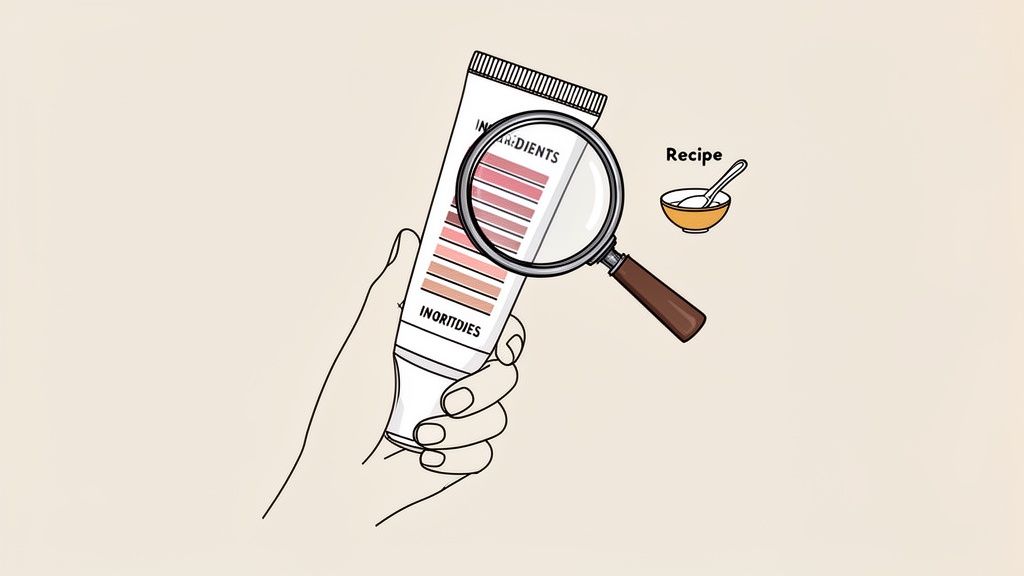
Does a long, science-y list of ingredients make your eyes glaze over? You’re not the only one. But here’s a little secret: reading a makeup label is way more like reading a recipe than prepping for a chemistry final.
It all comes down to one simple rule: ingredients are listed in order of how much is in the product, from most to least.
That means the first few ingredients are doing most of the work, just like flour and sugar in a cookie recipe. See something you recognize and love, like shea butter or jojoba oil, right at the top? That’s an amazing sign. It tells you the product is built on a foundation of good, nourishing stuff.
On the flip side, if a brand is shouting about some "miracle" botanical but you find it hiding at the very end of the list, it’s probably just in there for show. This one trick helps you instantly see what a product is really made of.
Decoding the Label Language
Beyond the ingredient order, a few key terms and symbols can give you the inside scoop. Learning to spot them will make you a much smarter shopper, helping you find truly chemical free makeup that actually lives up to the hype.
Here's what to keep an eye out for:
-
The "Fragrance" Loophole: The word "fragrance" or "parfum" on a label can be a major red flag. It’s a catch-all term that legally lets brands hide dozens of unlisted chemicals, including potential irritants and phthalates. Instead, look for products scented with essential oils or that are simply fragrance-free.
-
Recognizable Ingredients: You don't need to be a chemist, but spotting things you actually recognize is empowering. Getting familiar with the benefits of specific natural ingredients for makeup helps you quickly identify high-quality formulas.
-
Expiration Symbols: Look for a tiny icon of an open jar with a number like "6M" or "12M" inside. This is the Period After Opening (PAO) symbol, and it tells you how many months the product is good for after you’ve opened it.
Understanding Certifications and Seals
Seals and certifications are basically cheat sheets that tell you a brand has met specific, third-party standards. But be careful—not all claims are legit. Vague marketing terms like "natural" or "clean" aren't regulated, so they can mean whatever a brand wants them to mean.
Meaningful certifications are a guarantee. They prove a brand went through a tough verification process to back up its claims. It’s the difference between an empty marketing promise and real, trustworthy assurance.
Look for these official seals to know you're getting the real deal:
- Leaping Bunny Certified: This is the gold standard for cruelty-free. It guarantees no animal testing happened at any point in the product’s development.
- USDA Organic: This seal means that at least 95% of the product's ingredients are certified organic—grown without synthetic pesticides or fertilizers.
- EWG Verified: This mark from the Environmental Working Group shows a product meets their strictest standards for health and transparency.
While we're talking makeup, the skill of digging into what's in your products is useful everywhere. For a different but related take, you might find this guide on how to read nutrition labels pretty interesting, too.
Moving Beyond Ingredients to Ethical Beauty
Choosing makeup with cleaner ingredients is awesome, but it's often just the first step on a bigger journey. For many of us, the push for a non-toxic routine is part of a larger shift—a move toward beauty that’s kind, conscious, and responsible in every way possible.
It’s about making sure the products we love don't come at a cost to animals or our planet. It’s about asking the big question: what was the true price of creating this product?
This is where the ideas of vegan and cruelty-free come into play. They might sound similar, but they promise very different things, and both are at the heart of the ethical beauty movement.
The Importance of Vegan and Cruelty-Free
Let's break it down. A product that’s cruelty-free means it was developed without any animal testing, from start to finish. This certification, often shown with the Leaping Bunny logo, is your guarantee that no animals were harmed for the sake of your lipstick.
A vegan product takes things a step further. It means the formula contains absolutely no animal-derived ingredients or byproducts. That means saying no to common cosmetic ingredients like beeswax, carmine (a red pigment made from crushed insects), and lanolin (which comes from sheep's wool). If you want to dive deeper, our guide to finding amazing cruelty-free makeup brands is a great place to start.
This focus on ethical sourcing is no longer a niche concern; it's a massive force reshaping the beauty industry. The global vegan cosmetics market is expected to hit an incredible USD 109.75 billion by 2032 as more and more people demand products that align with their values. You can check out more stats on the impressive growth of the cruelty-free market to see just how much consumer demand is changing the game.
Thinking Outside the Tube: Packaging and the Planet
The conversation around ethical beauty doesn't end with what's inside the bottle. It has to include the packaging that holds it. For decades, the beauty industry has been a huge contributor to the single-use plastic problem.
Every plastic tube, compact, and bottle has a ridiculously long lifespan, usually ending up in a landfill or the ocean, where it can take hundreds of years to break down. This heavy reality has sparked a powerful movement toward sustainability, pushing brands to completely rethink their packaging.
Choosing products with sustainable packaging is a direct way to shrink your own environmental footprint. It turns a simple purchase into a statement of support for a healthier planet and a more responsible beauty industry.
Thankfully, innovative brands are leading the charge with earth-friendly alternatives. These solutions prove that beautiful, functional makeup doesn't have to trash the planet.
- Recycled and Recyclable Materials: Using post-consumer recycled (PCR) paper, aluminum, and glass cuts down on the need for brand-new materials.
- Compostable Components: Some brands are now creating packaging that can be composted right at home, returning to the earth without leaving a trace.
- Refillable Systems: This genius model lets you buy a beautiful, durable case once and then just purchase refills, which slashes waste.
- Zero-Waste Design: This means creating solid products—like our Balmies in paper tubes—that require little to no plastic packaging at all.
When you support brands that prioritize both ethical formulas and sustainable packaging, you're voting for a more beautiful future for all of us.
A Practical Plan for Building Your Clean Makeup Bag
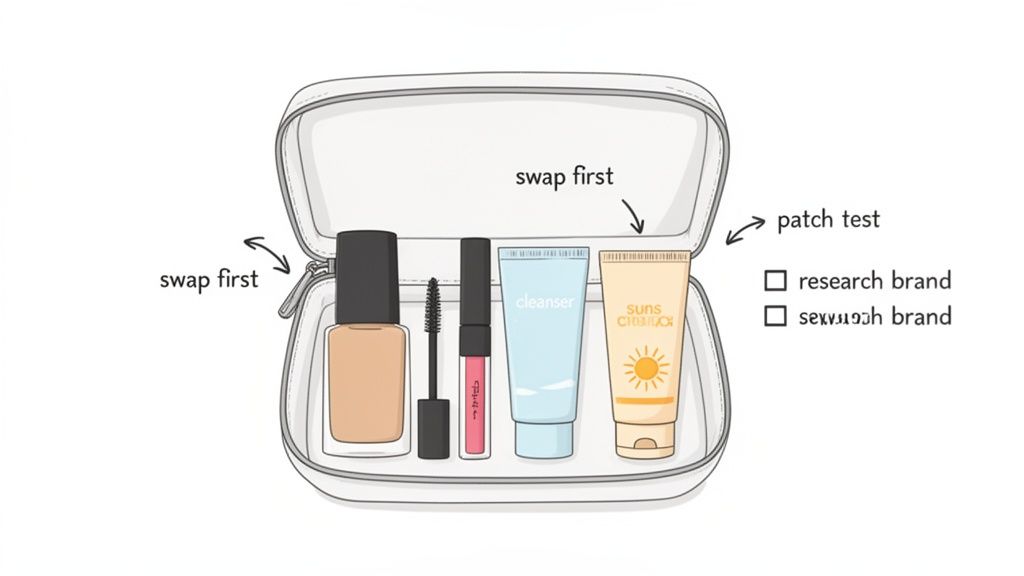
Ready to go clean with your makeup? I get it. The idea of ditching your entire collection and starting from scratch sounds… expensive and overwhelming. But it doesn't have to be some grand, all-or-nothing mission.
The secret is to think of it as a slow and steady replacement game. Instead of a massive purge, just swap out products as you use them up. This way is so much kinder to your wallet and gives you the breathing room to actually find things you love. The goal is progress, not perfection overnight.
A non-toxic lifestyle isn't about avoiding every single toxin—that’s impossible. It's about reducing your overall exposure where you can, allowing your body to handle the rest with ease. Mindful choices over time make the biggest impact.
By making one small switch at a time, what felt like a huge task becomes a simple, sustainable habit. You’ll be building a collection of chemical free makeup without even really trying.
Start with High-Impact Swaps
To get the most bang for your buck, start with the products that spend the most time on your skin or cover the biggest area. Making a change here gives you the biggest immediate payoff.
Here’s a good priority list to get you started:
- Foundation and Concealer: These guys hang out on your skin all day long. Swapping them out first seriously cuts down on your daily exposure to ingredients you'd rather avoid.
- Lip Products (Lipstick, Gloss, Balm): Let’s be real, you end up eating a little bit of whatever you put on your lips. Moving to a cleaner formula is just a smart, simple health upgrade.
- Mascara and Eyeliner: The skin around your eyes is super thin, delicate, and quick to absorb things. Cleaner formulas can make a world of difference in avoiding irritation in such a sensitive spot.
Your Three-Step Action Plan
Okay, so you know where you want to start. Now what? Follow this simple roadmap to find and test your new go-tos. This little process helps make sure you end up with products you’ll actually use and love.
- Step 1: Research and Discover. Use resources like the EWG Skin Deep® database to check out safety ratings. I also love reading blogs and reviews from trusted clean beauty folks for real-world takes on how products actually perform.
- Step 2: Find Reliable Brands. Look for companies that are open about where their ingredients come from and how they make their products. Certifications like Leaping Bunny (cruelty-free) and a real commitment to sustainable packaging are huge green flags.
- Step 3: Always Patch Test. Everyone’s skin is different. Before you commit to slathering that new foundation all over your face, test it on a small, hidden spot first—like your inner wrist or behind your ear—just to be sure your skin is happy with the new formula.
Your Questions About Clean Makeup Answered
Diving into the world of clean beauty can feel like learning a new language. As you start squinting at ingredient lists and questioning old favorites, a bunch of questions are bound to pop up. Is it safe? Does it actually work? Will it break the bank?
Let's clear the air. We’ll tackle some of the most common concerns head-on so you can shop with total confidence.
Is Natural Makeup the Same as Clean Makeup?
Nope, not even close. And honestly, this is one of the most important things to get straight. "Natural" is a marketing buzzword that sounds great but has zero official regulation behind it. A product can slap "natural" on the label and still be packed with synthetic preservatives or artificial fragrances you’re trying to avoid.
True clean makeup, on the other hand, is all about what it leaves out. It’s a philosophy centered on being non-toxic, intentionally formulated without a specific list of sketchy ingredients. So instead of just taking the word "natural" at face value, your best bet is always to flip the bottle over and read the full ingredient list. That's where the truth is.
Will Makeup Without Preservatives Spoil Faster?
This is such a good question, because it gets right to the heart of product safety. The short answer is that all makeup needs some kind of preservative system. Without it, you’d get a science experiment of gross mold and bacteria growing in your products—and nobody wants that anywhere near their face.
Clean beauty brands don't skip this crucial step; they just find smarter, safer ways to do it without ingredients like parabens. They often turn to powerful, plant-derived ingredients to keep products fresh.
You'll often see preservatives in clean beauty like these:
- Vitamin E (Tocopherol): A powerhouse antioxidant that also helps keep the product from going bad.
- Rosemary Extract: Pulls double duty with its natural antimicrobial and antioxidant powers.
- Grapefruit Seed Extract: Known for its ability to stop microorganisms from growing.
Always keep an eye out for the Period After Opening (PAO) symbol on your products. It looks like a tiny open jar with a number like "12M" inside. That tells you exactly how many months the product is good for after you've opened it.
Does Clean Makeup Perform as Well as Conventional Brands?
Heck yes, it does. Look, in the early days, some "natural" formulas had a reputation for being a bit weak on pigment or not lasting through the day. But the clean beauty world has had a major glow-up since then. Today’s best brands are creating makeup with incredible color payoff, gorgeous textures, and serious staying power.
The old myth that you have to trade performance for safety is officially busted. Modern clean makeup uses high-performance botanicals and minerals that easily rival—and often totally outshine—their conventional counterparts.
You really don't have to choose between ingredients you trust and a look you love anymore. From velvety foundations to bold, vibrant lip colors, clean makeup delivers without compromise.
Is It More Expensive to Switch to Clean Makeup?
It can be, but it doesn't have to be. Sometimes, a higher price tag reflects the cost of sourcing high-quality, ethical ingredients or investing in sustainable packaging, which can be more expensive to produce.
But the market has exploded with amazing options for every budget. A great way to get more bang for your buck is to embrace multi-use products. Think of a single color stick that works for your lips, cheeks, and eyes. It simplifies your routine, creates way less waste, and almost always costs less than buying three separate products.
Ready to build a beauty routine that’s as kind to the planet as it is to your skin? Explore Axiology and discover our plastic-free, 10-ingredient makeup that proves you never have to compromise on your values. https://www.axiologybeauty.com