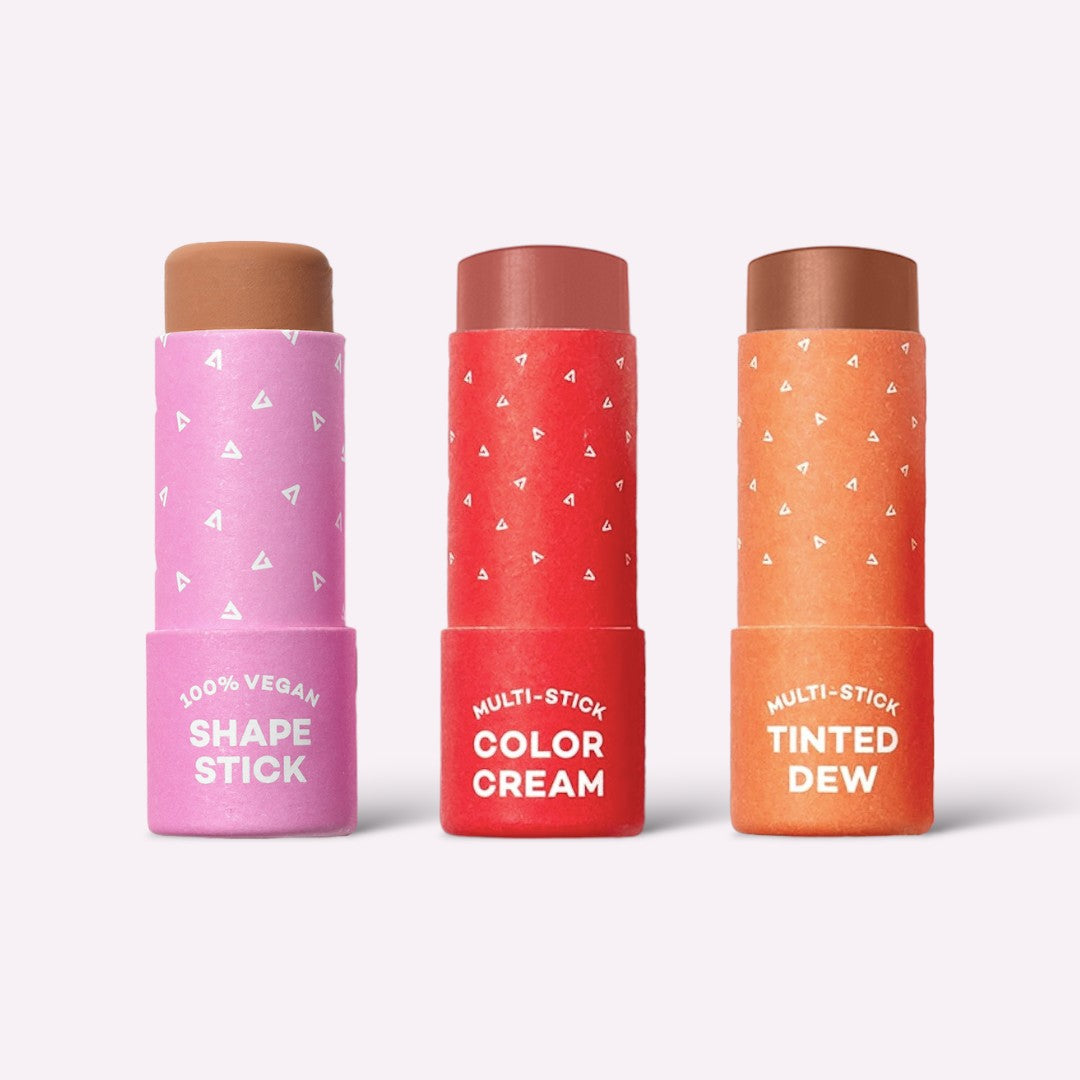
Let’s get one thing straight: the term chemical-free makeup is a bit of a myth. In the world of science, everything is a chemical—from the water we drink to the air we breathe.
When people say they’re looking for “chemical-free” makeup, what they’re really after is makeup made without harmful or toxic synthetic chemicals. The goal isn’t to avoid chemistry; it’s to find products that are safe, gentle, and actually good for your skin.
So, What Does "Chemical-Free Makeup" Really Mean?
Hearing the phrase “chemical-free” conjures images of something totally pure and natural, right? But that’s not really how it works. The key is to stop seeing all chemicals as the enemy and start learning the difference between the good guys and the bad guys.
Think about it like your diet. You wouldn’t say you want a “food-free” diet. Instead, you know to steer clear of processed junk loaded with artificial flavors, weird preservatives, and dyes you can’t pronounce. You naturally reach for whole foods—fruits, veggies, whole grains—that make you feel good from the inside out.
It’s the exact same idea with makeup. The clean beauty movement isn’t about some impossible quest to eliminate chemicals. It's about making a conscious choice to swap cosmetics filled with potential irritants for formulas built on ingredients that support and nourish your skin.
This really boils down to three things:
- Ditching the Nasties: Actively avoiding synthetic ingredients linked to things like skin irritation, hormone disruption, and other health worries.
- Embracing Plant Power: Choosing products packed with nourishing oils, butters, and extracts that do more than just add color.
- Becoming a Label Detective: Getting comfortable reading an ingredient list so you can spot the red flags and the green lights with confidence.
From a Niche Concern to a Global Movement
This thoughtful approach to beauty isn't just for a small group of people anymore—it’s a massive global shift. Shoppers are demanding safer, cleaner, and more sustainable options, and the entire cosmetics industry is having to keep up.
In fact, the global natural cosmetics market is expected to balloon by an incredible USD 68.99 billion between 2025 and 2029. This explosive growth is driven by people like you who are consciously ditching questionable synthetics for better alternatives.
This trend shows a collective hunger for transparency and health. You’ll see a lot of terms thrown around—"natural," "clean," "non-toxic"—to describe this philosophy. To really get a handle on it all, it helps to start breaking down sustainability buzzwords and figuring out what they actually mean for the products you buy.
At its heart, the “chemical-free makeup” movement is about empowerment. It’s about taking back control over what you put on your skin, understanding its impact, and choosing products that line up with your health and your values.
Ultimately, it’s about looking past the marketing hype to make choices that feel right for you. It’s about seeing makeup as an extension of your skincare—a daily ritual that nurtures your skin for that long-term, healthy glow.
The Ingredient Watchlist: Common Chemicals to Avoid
Let's be real: trying to understand makeup ingredient lists can feel like you need a degree in chemistry. But you don't. The secret is just knowing which common culprits to look out for in conventional products.
Think of this as your "most wanted" list for building a cleaner, healthier makeup bag. When you're looking for "chemical-free makeup," you're really just trying to avoid a handful of specific synthetic compounds known to cause irritation or bigger health concerns. These are often added to make a product last longer or feel smoother, but for a growing number of us, the potential downsides just aren't worth it.
The idea is simple: move away from potentially sketchy additives and embrace ingredients that actually love your skin back.

So, let's dive into the specifics of what to keep an eye out for.
The Preservative Problem: Parabens
You’ve probably heard about these guys. Parabens (like methylparaben or propylparaben) are synthetic preservatives that stop bacteria and mold from growing in your makeup, which sounds good in theory. The problem? They can act like the hormone estrogen in the body.
Because they mimic hormones, they’re considered endocrine disruptors. When they’re absorbed through your skin every day, they have the potential to mess with your body's natural hormone function. While the science is still evolving, many people choose to play it safe and avoid them completely.
Pro tip: Scan an ingredient list for any word ending in "-paraben." It's a dead giveaway that a product doesn't fit into a non-toxic routine.
The Plastic Softeners: Phthalates
Phthalates are chemicals used to make plastics more flexible. In cosmetics, they're the secret ingredient that makes fragrances stick around longer and keeps nail polish from chipping. The tricky part is you'll almost never see "phthalate" on a label. It's usually hiding under the catch-all term "fragrance" or "parfum."
Like parabens, phthalates are also on the list of potential endocrine disruptors. Since they're in everything from vinyl flooring to lotion, cutting back where you can is a smart move. Choosing products scented with essential oils or botanical extracts is an easy way to dodge them.
The Lathering Agents: Sulfates
Remember that rich, foamy lather in face washes? That's usually thanks to sulfates like Sodium Lauryl Sulfate (SLS). In makeup, they sometimes pop up in foundation to help spread the pigment evenly.
The issue is that sulfates are super harsh. They're great at cleaning, but they're so effective they strip your skin of its natural, protective oils. This can lead to a whole host of problems:
- Dryness and irritation, especially if you have sensitive skin.
- A compromised skin barrier, leaving you vulnerable to environmental gunk.
- Clogged pores, because your skin might go into oil-production overdrive to compensate.
Sulfate-free formulas work with your skin's natural balance, not against it.
The Mystery Mix: Synthetic Fragrances
If there’s one major red flag on an ingredient list, it's the word "fragrance" or "parfum." This single term can legally hide a cocktail of hundreds of different chemicals—including the phthalates we just talked about.
Companies don't have to tell you what's in their fragrance blend because it's protected as a "trade secret." This lack of transparency means you have no idea what you're actually putting on your face. It’s no wonder these mystery chemicals are such common triggers for allergies and skin sensitivity.
Always go for products that are either fragrance-free or scented only with clearly listed natural ingredients like essential oils. This one simple swap can dramatically reduce your exposure to questionable chemicals and put you back in control.
Harmful vs. Safe Makeup Ingredient Swaps
Feeling a little overwhelmed? Don't be. Making the switch is easier than it sounds. It's all about trading out the harsh synthetics for gentle, plant-based alternatives.
Here’s a quick cheat sheet to help you spot the good guys and avoid the bad ones when you're shopping.
| Harmful Chemical to Avoid | Potential Health Concern | Safe Alternative Ingredient |
|---|---|---|
| Parabens (e.g., Propylparaben) | Endocrine disruption, skin irritation | Vitamin E (Tocopherol), Grapefruit Seed Extract |
| Phthalates (often in "Fragrance") | Endocrine disruption, reproductive concerns | Essential Oils, Plant Extracts |
| Sulfates (SLS & SLES) | Skin irritation, dryness, stripped natural oils | Coco-Glucoside, Decyl Glucoside |
| Synthetic Fragrance ("Parfum") | Allergies, respiratory issues, skin sensitivity | Fruit Extracts, Vanilla Planifolia Oil |
| Formaldehyde-releasing agents | Carcinogenic, skin allergies | Leucidal Liquid (Radish Root Ferment) |
Making these simple swaps doesn't just reduce your exposure to potentially harmful chemicals; it also means you're treating your skin to nourishing, beneficial ingredients straight from nature. It’s a total win-win.
How to Become an Ingredient Detective and Read Makeup Labels
Navigating the world of clean beauty means becoming your own best advocate. That journey starts with flipping over the bottle and understanding what’s actually inside your products.
Learning to read a makeup label is the single most powerful tool you can have. It turns that long, confusing list of scientific-sounding names into a clear roadmap, helping you confidently pick products that feel right for you and your health.
This isn't about memorizing every single chemical compound out there. It’s about spotting a few key patterns that tell you, almost instantly, whether a product is a friend or foe to your skin.
Cracking the Code of the INCI List
Every cosmetic product has what’s called an INCI list (International Nomenclature of Cosmetic Ingredients). This is just the standardized way brands have to list what’s inside, and knowing how it works is your first big step.
The most important trick is the "Top Five Rule." Ingredients are always listed in order of concentration, from most to least. This means the first five or so ingredients usually make up 80% or more of the entire formula.
So, if you see nourishing oils and butters right at the top, that’s a fantastic sign. If you see water, alcohol, and silicones leading the pack, you know the product is mostly inexpensive filler.
Think of it like a food recipe. If the first ingredients are sugar and flour, you know you're getting a cake. If they're kale and quinoa, you know you're getting a salad. The top of the list tells you the real story.
Unmasking Misleading Marketing Terms
The beauty industry is full of buzzy words that sound amazing but often mean very little. Brands love to throw around terms like "natural" or "eco-friendly" without any real regulation behind them—a sneaky practice called greenwashing.
This is exactly why you have to ignore the pretty packaging on the front and get serious about the ingredients list on the back.
Here’s how to tell marketing fluff from a meaningful claim:
- Unregulated Terms: Words like "Natural," "Clean," and "Green" have no legal definition. A product can call itself "natural" even if it only has one plant-derived ingredient swimming in a sea of synthetics.
- Meaningful Certifications: Look for official third-party seals. These little logos mean an independent organization has actually verified a brand's claims, holding them to a much higher standard.
Spotting these symbols is a reliable shortcut to finding genuinely non-toxic makeup.
Key Certifications to Look For
When you're scanning a product, keep an eye out for these trusted logos. They do the detective work so you don’t have to.
| Certification Logo | What It Guarantees | Why It Matters |
|---|---|---|
| Leaping Bunny | The product and its ingredients were not tested on animals at any stage. | This is the gold standard for cruelty-free certification, ensuring no animal harm. |
| USDA Organic | At least 95% of the ingredients are certified organic, grown without synthetic pesticides. | This seal guarantees ingredient purity and strict farming standards. |
| EWG Verified | The product meets the Environmental Working Group's toughest standards for health and safety. | It confirms the product is free from EWG's massive list of chemicals of concern. |
And people are catching on. The demand for this kind of transparency is exploding. Over 68% of consumers are now actively looking for clean skincare and makeup, and sales of paraben-free products are growing 80% faster than the rest of the beauty market. It’s a huge shift driven by our collective desire for safer products.
To get even better at reading labels, it helps to dig into what's inside some of the most popular products out there, like taking a detailed look at botanical ingredients used by other brands. This kind of knowledge helps you see past the marketing hype and make choices that truly benefit your skin.
Spotlighting the Heroes of Clean Makeup

Now that we’ve covered what to steer clear of, let's talk about the good stuff. It's time to celebrate the powerful, plant-based ingredients that make clean makeup so amazing.
Moving towards chemicals free makeup isn't just about ditching the bad; it’s about embracing the great. It’s about choosing formulas packed with ingredients that actively feed and support your skin. This is where your makeup routine starts to feel more like a skincare ritual.
Instead of just covering things up, these ingredients get to work protecting, hydrating, and renewing your skin all day long. Let’s meet a few of the superstars of the clean beauty world.
The Great Balancer: Jojoba Oil
Imagine an oil so smart it can actually mimic your skin's own natural moisture. That’s pretty much the magic of Jojoba Oil. Its structure is incredibly similar to the sebum your skin already produces, which is why it's so good at bringing everything back into balance.
If your skin is on the oily side, Jojoba Oil can signal that it's already hydrated, helping to calm down excess oil production. For dry skin, it offers deep, lasting moisture without clogging up your pores. This clever trick makes it a total MVP in foundations, balms, and lip products.
The Deeply Nourishing Shield: Shea Butter
Harvested from the nut of the African shea tree, Shea Butter is a rich, creamy moisturizer that acts like a protective shield for your skin. It’s loaded with fatty acids and vitamins A and E, making it a powerhouse for softening dry, chapped skin.
Think of it as a cozy blanket for your skin barrier. It locks in moisture and defends against harsh weather and environmental yuck. Plus, its anti-inflammatory properties are great for soothing irritation, which is why it’s a go-to for sensitive skin formulas.
When you choose makeup with ingredients like Shea Butter, you're not just putting on color—you're applying a layer of deep, restorative care that lasts all day. That’s the whole point of makeup that’s actually good for you.
The Antioxidant Guardians: Botanical Extracts
Botanical extracts are basically super-concentrated plant goodness, delivering a potent dose of benefits. Think of them as your skin's personal bodyguards, fighting off environmental stressors like pollution and UV damage that can make skin age faster.
Some of the most popular and effective extracts include:
- Green Tea Extract: A total powerhouse of antioxidants called catechins that soothe inflammation and protect your skin cells.
- Rosemary Extract: Not just a great natural preservative, but also a calming agent that helps reduce redness and puffiness.
- Sea Buckthorn Extract: Jam-packed with vitamins C and E, this extract promotes hydration, elasticity, and skin cell regeneration.
These extracts turn a simple lipstick or blush into a daily dose of wellness for your skin.
The Vibrant Earthly Hues: Mineral Pigments
So, how does clean makeup get those gorgeous, vibrant colors without resorting to synthetic dyes? The answer comes straight from the earth. Mineral pigments like iron oxides, mica, and titanium dioxide provide rich, natural color that’s super gentle on the skin.
Unlike synthetic dyes, which can cause irritation and allergies for a lot of people, mineral pigments are known for being non-reactive. They sit on top of the skin instead of being absorbed, which minimizes the risk of clogged pores or sensitivity. It’s the perfect way to create beautiful, buildable color in everything from eyeshadows to blushes.
By opting for makeup formulated with these natural heroes, you’re choosing a philosophy where beauty and skin health are one and the same.
How to Detox Your Makeup Bag Without Freaking Out

So, you’re ready to clean up your beauty routine? Awesome. But the thought of doing a complete overhaul can feel… intense. Let's be real, nobody wants a stressful or expensive project.
First thing's first: forget the "all or nothing" mindset.
A slow, mindful approach is so much more sustainable. Think of it less like a dramatic purge and more like a gentle declutter. This way, you protect your wallet and actually give yourself time to find new products you genuinely love. It's a journey, not a race.
The key is to start small and be strategic. By replacing things one by one, you can make a huge difference without feeling totally overwhelmed.
Start With the Heavy Hitters
The most logical place to begin is with the products that cover the most skin or hang around the longest. These are the ones with the biggest potential for absorption, so swapping them first gives you the biggest bang for your buck.
Here’s a simple priority list to get you started:
- Foundation and Concealer: These literally cover your entire face and are usually worn for hours on end. Switching to a clean formula is a powerful first move.
- Lipstick and Lip Balm: Anything on your lips eventually gets ingested. Choosing a non-toxic lipstick or balm is kind of a no-brainer.
- Cream Blush and Bronzer: Just like foundation, these are applied to large areas and are meant to last all day.
Don’t stress about your mascara or eyeliner right away. Yes, they’re important, but they cover a much smaller area, making them a lower priority when you're just starting out.
Adopt the 'One In, One Out' Rule
One of the best (and most budget-friendly) ways to clean up your makeup bag is the 'one in, one out' method. It’s super simple: you don't buy a new, clean product until you've used up its conventional counterpart.
This little trick prevents waste and keeps you from overspending. When your old foundation runs out, you replace it with a clean option. Once your favorite lipstick is gone, you find a new fave from a brand that gets you.
This gradual swap-out transforms a huge, daunting task into a series of small, manageable steps. It’s a marathon, not a sprint. You get to thoughtfully build a makeup collection that’s not just beautiful, but actually good for your skin.
This mindful approach might also inspire a more minimalist routine. You may find that investing in high-quality, versatile items simplifies everything. (P.S. check out our guide on the perks of multi-use makeup products to see how you can do more with less).
Finding Your Way in the Clean Beauty World
As you start shopping, you’re joining a massive global movement. The organic cosmetics market is projected to grow from USD 22.6 billion in 2025 to USD 37.2 billion by 2035. That’s huge! It shows a worldwide shift toward clean-label products that put our health and the planet first. You can read more about this growing organic cosmetics market on FutureMarketInsights.com.
To make your transition even smoother, keep these tips in mind:
- Seek Out Samples: So many clean beauty brands offer sample sizes or discovery kits. It's the perfect way to test shades and formulas before committing to the full-size product.
- Embrace Different Textures: Natural formulas are often packed with oils and butters, so they might feel different from what you’re used to. They usually feel more hydrating and just melt into your skin. Give yourself a minute to adjust.
- Trust the Experts: Use resources like the EWG's Skin Deep database or apps like Clearya to check product safety ratings while you're shopping.
Just follow this simple roadmap, and you can detox your makeup bag with confidence, creating a curated stash of products that make you feel amazing, inside and out.
Axiology: Where Clean Makeup Gets Real
It's one thing to talk about clean ingredients, but it’s a whole other thing to see a brand actually live and breathe it. Axiology isn't just jumping on the clean beauty bandwagon; we’re pretty much driving it. Our whole philosophy goes beyond just being "free from" all the bad stuff. We're all about being intentionally formulated with a handful of pure, powerful, and skin-loving ingredients.
This all comes to life with our famous "10 ingredients or less" rule. Let’s be real, most ingredient lists are a mile long and totally confusing. We prove you don't need a complicated chemistry experiment to get incredible color and wear. Our minimalist approach means every single ingredient is there for a reason—to make your skin happy.
More Than Just Makeup, It's Skincare in Disguise
Think of our products as the final step in your skincare routine. They don't just sit on top of your skin to add color; they actively nourish it all day long. This is where the magic of our carefully chosen ingredients really comes through.
Take our multi-use Balmies, for instance. These little crayons are workhorses, delivering gorgeous, long-lasting color for your lips, cheeks, and eyes. But the real secret is what's inside:
- Avocado Oil: It's packed with vitamins and fatty acids for deep hydration that leaves your skin feeling amazing.
- Kokum Butter: A serious emollient that helps regenerate skin cells and keeps things firm, all without clogging pores.
- Elderberry Extract: This antioxidant powerhouse helps shield your skin from all the environmental junk it deals with daily.
By picking ingredients like these, we make sure our products aren't just safe, they're genuinely good for you. Every swipe is a little dose of skin-renewing goodness.
Good for You, Good for the Planet
Our obsession with doing things right doesn't stop at our formulas. We're leading the charge in sustainability, proving that you can have beautiful makeup without trashing the planet. Our commitment to being 100% plastic-free is a huge deal in an industry that creates so much waste. Our Balmies are famously wrapped in paper and tucked into a recyclable carrying case, showing that you can be thoughtful from start to finish.
Axiology sets the bar by making sure everything—from how we source ingredients to our packaging—is tied back to our core values: health, ethics, and environmental responsibility. We're the go-to for anyone who wants to make a real change with their makeup bag.
For anyone looking for makeup that actually aligns with their values, Axiology is the answer. We're living proof that you never have to compromise on performance, ethics, or your health to enjoy vibrant, beautiful makeup. It’s not just clean beauty; it’s conscientious beauty.
Your Questions About "Chemical-Free" Makeup, Answered
Making the switch to clean beauty can feel like learning a new language, and it’s totally normal to have a ton of questions. What does "chemical-free" even mean? Does this stuff actually work? Let's clear the air.
This is your go-to guide for straightforward answers. We want you to feel amazing about the products you’re using and know exactly what you’re putting on your skin.
Is This Makeup Really 100% Free of Chemicals?
Let’s get one thing straight: in the world of science, absolutely nothing is "chemical-free." And that’s a good thing! Water is a chemical (H₂O), and so is the amazing coconut oil in your favorite balm.
When you see the phrase "chemical-free makeup," think of it as industry shorthand. What it really means is that a product is made without harmful, toxic, or sketchy synthetic chemicals. The point isn't to ditch chemistry—it's to choose makeup formulated with safe, skin-loving ingredients.
Does Natural Makeup Expire Faster?
Sometimes, yes—but that's not the whole story. Clean beauty brands often skip harsh synthetic preservatives like parabens, opting for gentler, natural alternatives like vitamin E or plant extracts. This can mean a slightly shorter shelf life.
But the industry has gotten incredibly smart. Many brands now use really effective, innovative natural preservation systems. Just look for the Period After Opening (PAO) symbol on the packaging. It’s a little open jar icon with a number like "6M" or "12M" telling you how many months it’s good for after you open it.
Can I Still Get Great Color and Lasting Wear?
Oh, absolutely. The clean beauty game has changed. Gone are the days of patchy, faded colors. Modern formulas use incredible mineral pigments and vibrant plant-based colorants that are seriously impressive.
The feel might be a little different at first—often creamier and more hydrating thanks to all the nourishing oils and butters—but the performance is there. Today’s best clean makeup doesn’t just compete with conventional options; it often blows them out of the water.
And if you're serious about getting that natural glow, think about supporting your skin from the inside out, too. Holistic wellness practices can make a huge difference. For example, looking into infrared sauna skin benefits shows how certain therapies can boost collagen and give you healthier skin from within, making your makeup look even better.
Ready to see what clean beauty is really about? Axiology makes high-performance, plastic-free makeup with 10 ingredients or less. We’re proof you don't have to sacrifice color, quality, or your values. Check out our nourishing, multi-use products and feel the difference at https://www.axiologybeauty.com.