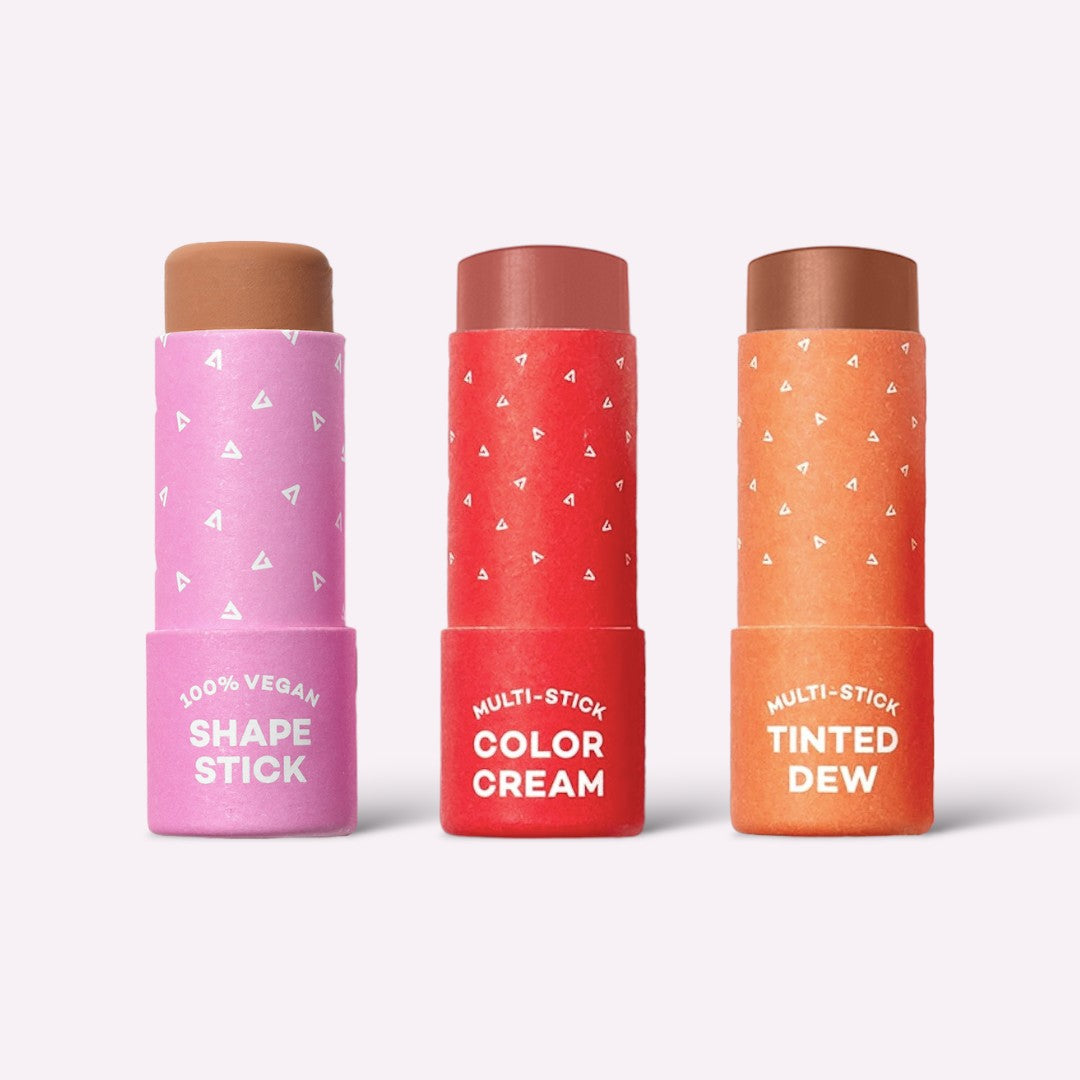
Trying to find a good concealer for sensitive skin can feel like a total shot in the dark. I get it. The goal is to find something that gives you flawless, calm coverage by putting gentle, skin-loving ingredients first. Think of it less like regular makeup and more like a skincare-makeup hybrid that's actually designed to soothe and protect.
Why Finding a Concealer That Calms Your Skin Matters
If you've ever dealt with a concealer that left you with redness, itching, or even breakouts, you're definitely not alone. It's a super common frustration. But you don't have to keep searching for a product that helps, not harms. This guide is here to help you find a concealer that doesn’t just cover things up, but actively makes your sensitive skin feel better.

We'll look at how the right product can be both a cosmetic staple and a skincare ally. Let’s make this your last stop on the hunt for irritation-free coverage. The journey to happy skin really just starts with understanding what it needs and picking products that are made with care.
Your Path to Irritation-Free Coverage
This is about more than just matching a shade; it’s about knowing what you’re putting on your skin. Once you learn what to look for—and what to run from—you can confidently pick a concealer that makes you feel beautiful without wrecking your skin's health. We’ll break down a few key things to get you there:
- Understanding Skin Reactions: We’ll get into the nitty-gritty of why sensitive skin throws a fit over certain makeup ingredients.
- Gentle Ingredient Spotting: You'll learn which ingredients are your skin's best friends and which are its sworn enemies.
- Application Without Irritation: Discover some simple techniques for getting gorgeous coverage while keeping friction and flare-ups to a minimum.
This whole approach is a cornerstone of the world of hypoallergenic makeup for sensitive skin, where the focus is all about minimal, clean, and effective formulas.
For sensitive skin, a concealer should do more than just hide blemishes—it should actively contribute to a calmer, healthier complexion. The goal is to find a formula that feels as good as it looks, providing peace of mind with every application.
Brands like Axiology are leading this charge with clean, minimal-ingredient formulas that give you beautiful results without the drama. By focusing on vegan, cruelty-free solutions, they offer options that feel good for your skin and your conscience. By the end of this guide, you'll have everything you need to choose a concealer for sensitive skin that leaves you feeling confident, comfortable, and totally radiant.
Understanding Why Your Skin Reacts to Makeup
To find the perfect concealer for your sensitive skin, we first need to get to the bottom of why your complexion is reacting in the first place. Think of your skin as having a natural protective shield, often called the moisture barrier. This barrier is your skin’s bouncer, keeping environmental stressors and potential irritants out.
For those of us with sensitive skin, this shield is often a bit weaker or has a few cracks in it. It's like having a fortress with a few gaps in its walls. When you apply certain kinds of makeup, irritating ingredients can sneak right through those gaps, triggering inflammation, redness, and that all-too-familiar discomfort.
This reaction isn't random. It’s a direct response to specific ingredients that throw your skin's delicate balance out of whack. Figuring out what those triggers are is the first step toward becoming your skin's best advocate.
The Main Culprits in Conventional Concealers
Let's be real, a lot of concealers out there are packed with ingredients that can be way too harsh for a compromised skin barrier. They might give you great coverage for a few hours, but they can also cause underlying irritation that just gets worse over time.
Here are the most common offenders to keep an eye out for:
- Synthetic Fragrances: Often listed simply as "parfum" or "fragrance," these are basically mystery cocktails of chemicals that are notorious for causing allergic reactions and irritation.
- Harsh Preservatives: Ingredients like parabens and formaldehyde-releasers are used to make products last longer on the shelf, but they can be major troublemakers for sensitive complexions.
- Drying Alcohols: Certain alcohols (like SD alcohol or denatured alcohol) can strip your skin of its natural oils. This weakens your moisture barrier even more, leading to dryness and irritation.
Once you learn how to spot these on an ingredient list, you can stop the guessing game and start making choices that truly support your skin. This is especially critical if you're managing a condition like eczema, where the right makeup can be the difference between a good skin day and a flare-up. You can dive deeper in our guide on selecting makeup for eczema-prone skin.
Why Your Skin's Reaction Matters in the Beauty Market
The demand for gentle, skin-loving makeup isn't just a niche concern anymore—it’s a major force shaping the beauty industry. The global skin concealer market hit an estimated USD 3.46 billion in 2024, and a huge part of that growth is coming from people with sensitive skin.
This shift is driven by shoppers who are tired of irritating products and are actively seeking out gentle, nourishing ingredients that soothe their skin.
This trend just confirms what many of us have known all along: a top-notch concealer for sensitive skin has to prioritize skin health just as much as it does cosmetic performance. We're all getting savvier about ingredient transparency and looking for those hypoallergenic certifications.
And it’s not just about what you put on your face. Broadening your understanding of other potential irritants can be a game-changer for managing sensitive skin. For instance, you might find it helpful to learn about the best fabrics for sensitive skin, because what touches your skin—all day long—really matters.
Choosing the right concealer is a key piece of the puzzle, part of a bigger, more holistic approach to keeping your skin calm, clear, and happy every single day.
The Ultimate Ingredient Checklist for Soothing Concealers
Reading ingredient labels can feel like you need a secret decoder ring, right? But finding a fantastic concealer for sensitive skin really just comes down to knowing which heroes to look for. Instead of just dodging the bad guys, let’s focus on the good stuff—the ingredients that actively soothe, hydrate, and protect your skin.
Think of these ingredients as your skin's personal dream team. They work together to make sure the product not only covers what you want it to but also keeps your skin happy and healthy underneath. Once you know what to spot, you can shop with total confidence.
The Soothers: Calming Redness and Irritation
First up are "The Soothers." These are the gentle giants of the ingredient world. Their main job is to calm down inflammation and take the edge off any redness, which is a total game-changer for reactive skin.
- Aloe Vera: This plant is an absolute powerhouse. It delivers a rush of hydration and has amazing anti-inflammatory properties, giving you that instant cool, calming feeling.
- Chamomile: You know how it calms you down in a cup of tea? Chamomile (often listed as Bisabolol) does the same for your skin, easing discomfort on contact.
- Calendula: This gentle flower is famous for its ability to soothe and help repair stressed-out skin, making it a perfect friend to have in your concealer.
The Hydrators: Locking in That Good Moisture
Next, let's talk about "The Hydrators." These are non-negotiable because sensitive skin is often on the dry side and gets dehydrated easily. They create a little shield that locks in moisture without feeling heavy or clogging your pores.
Look for nourishing oils and butters that vibe with your skin’s natural oils:
- Squalane: A super lightweight, non-greasy oil that gives incredible moisture and helps bring back that soft, supple feeling to your skin.
- Avocado Oil: Packed with vitamins and fatty acids, this oil is like a green smoothie for your face. It deeply nourishes and prevents that dry, cakey look nobody wants.
- Shea Butter: A classic for a reason. It conditions and protects, leaving your skin feeling smooth and comfortable all day long.
Honestly, the secret is finding a concealer with a solid balance of both soothing and hydrating ingredients. It means the formula will wear comfortably while actually supporting your skin, keeping it from settling into fine lines or making dry patches worse.
The Protectors: Gentle Coverage Without the Drama
Finally, meet "The Protectors." These are the ingredients that provide the actual pigment. For sensitive skin, mineral-based pigments are the absolute gold standard. Why? Because they sit on top of the skin instead of sinking in, which seriously lowers the risk of a reaction.
- Zinc Oxide: This isn't just for sunscreen! Zinc oxide offers gentle, non-irritating coverage and even has some natural anti-inflammatory perks.
- Titanium Dioxide: Another mineral that gives excellent, even coverage and a little UV protection without upsetting your skin.
- Iron Oxides: These are natural, earthy pigments used to create all the different shades. They're considered one of the safest ways to add color for any skin type.
This infographic really shows how a weakened skin barrier can let irritants sneak in and cause trouble.
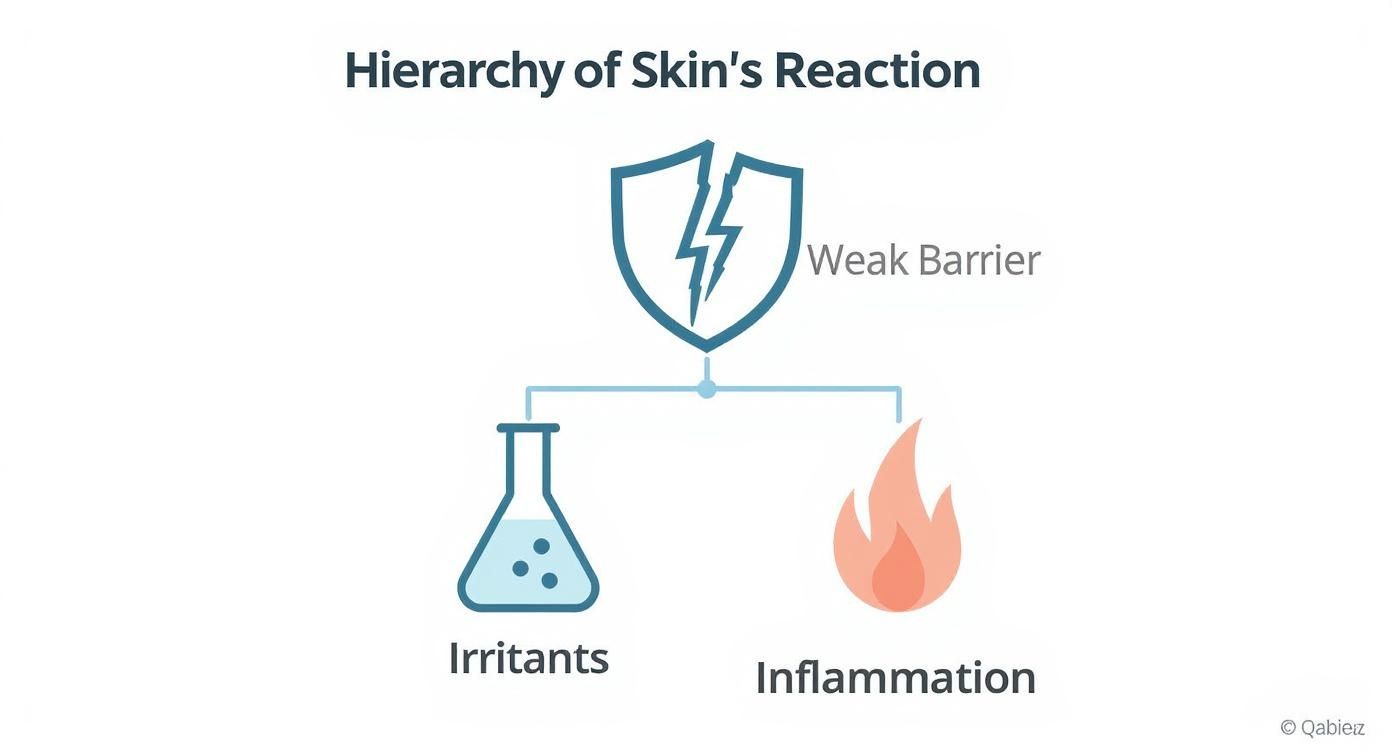
When you see it laid out like that, it's clear why choosing concealers with protective, calming ingredients is so important for keeping skin happy.
Concealer Ingredients: Safe vs. Sorry
Sometimes, what's not in your concealer is just as important as what is. Here's a quick cheat sheet to help you tell the skin-friendly heroes from the potential villains on an ingredient list.
| Ingredient to Avoid | Potential Reaction | Gentle Alternative to Look For | Benefit for Sensitive Skin |
|---|---|---|---|
| Synthetic Fragrance | Redness, itching, allergic reactions | Essential Oils (used sparingly) or Fragrance-Free Formulas | Drastically reduces the risk of irritation and flare-ups |
| Parabens (e.g., methylparaben) | Can disrupt hormones and cause skin sensitivity | Phenoxyethanol or Natural Preservatives (like Vitamin E) | Provides safe preservation without potential irritation |
| Chemical Sunscreens (e.g., oxybenzone) | Can cause stinging, burning, and allergic contact dermatitis | Mineral Sunscreens (Zinc Oxide, Titanium Dioxide) | Offers physical, non-irritating sun protection |
| Alcohol (SD Alcohol, Denatured) | Strips natural oils, causing dryness and irritation | Fatty Alcohols (like Cetyl Alcohol) | Hydrates and conditions the skin instead of drying it out |
Spotting these swaps can make all the difference between a concealer that causes problems and one that becomes your holy grail.
People are way more aware of skin health these days, and it's pushing brands to do better. There's a growing demand for makeup that works for conditions like rosacea and eczema, and companies are finally creating formulas that are part skincare, part makeup. It’s a shift that helps everyone, especially those of us who used to struggle to find makeup that didn't cause a flare-up. One of the biggest wins has been the move toward clean, minimal formulas, which you can read more about in our guide to fragrance-free beauty products.
How to Apply Concealer Without Irritation
So, you’ve found the perfect concealer for sensitive skin. That’s a massive win, but how you put it on is just as important as the formula itself. The wrong technique can tug on delicate skin, create friction, and pretty much undo all the hard work you put into finding a gentle product in the first place.
Mastering a soft-touch approach is the key to keeping your skin calm while getting that flawless coverage you’re after.

Think of it like painting on a super delicate canvas. You wouldn't go at it with a scratchy brush and aggressive strokes, right? You’d use soft tools and a light hand. The same idea applies here—anything else is just asking for redness and irritation.
Start with a Calm and Prepped Canvas
Before a single drop of concealer touches your face, your skin needs to be ready. Slapping makeup onto dry, angry skin is a recipe for disaster; it’ll only cling to texture and probably make things even more sensitive.
Start with a lightweight, soothing moisturizer made for sensitive skin. Look for calming ingredients like aloe or chamomile to dial down any redness you're already dealing with. This creates a smooth, hydrated barrier that helps the concealer glide on instead of catching on dry spots.
Choose Your Tools Wisely
The tools you use can make or break your irritation-free mission. Brushes can be great, but sometimes the bristles are just too much for really reactive skin.
For the absolute gentlest touch, give these a try:
- Your Fingertips: The natural warmth from your fingers is amazing for melting the product right into your skin for a seamless, natural look. Just make sure your hands are clean!
- A Soft, Damp Sponge: A makeup sponge gives you that airbrushed effect and is incredibly gentle. Damping it keeps the sponge from soaking up all your product and helps it blend like a dream.
The goal is to avoid anything that drags or pulls. Friction is the enemy of a happy complexion, so a light dabbing or patting motion will always be better than rubbing or swiping.
Master the Pat Dont Rub Technique
This is the golden rule when you’re working with a concealer for sensitive skin. Rubbing creates friction, which is a one-way ticket to redness and irritation. The "pat, don't rub" method lets you build up coverage exactly where you need it without stressing out your skin.
Here's how to nail it:
- Dot the Product: Place a few tiny dots of concealer on the areas you want to cover—under your eyes, around your nose, or on a blemish.
- Gently Pat and Press: Use your ring finger (it has the lightest touch) or a damp sponge to gently tap the concealer into your skin.
- Blend the Edges: Keep up that light patting motion to melt the edges of the concealer into your foundation or bare skin. No harsh lines allowed.
This technique isn’t just gentler; it actually gives you better, more targeted coverage.
Pro Tips for a Flawless Finish
Want to take your application to the next level? If you’re dealing with a lot of redness from something like rosacea or a breakout, try a thin layer of a green color corrector before your concealer. Green cancels out red, which means you'll need way less concealer to get the job done.
And finally, set your look so it lasts all day without drying you out. Skip the heavy, mattifying powders. Instead, grab a finely milled, lightweight mineral setting powder and dust it on sparingly with a big, fluffy brush. It'll lock everything in place without looking cakey or parching your sensitive skin.
When you have sensitive skin, trying a new makeup product can feel like walking through a minefield. You just never know what might set things off. That's why finding a brand that gets it is such a relief. At Axiology, our whole philosophy is built on one simple, powerful idea: fewer ingredients mean happier skin.
This isn't just a catchy tagline; it's a promise. We intentionally formulate our products with 10 ingredients or less, which seriously cuts down the odds of a bad reaction. Think of it like a VIP party for your face—we only invite the most essential, skin-loving, and non-irritating guests. This minimalist approach is our first line of defense in creating a go-to concealer for sensitive skin.
The Power of Plant-Based Simplicity
Our ingredient lists look more like something you'd find at a high-end spa than in a typical makeup bag. Instead of synthetic fillers and mystery chemicals, we pack our formulas with nourishing, plant-based ingredients your skin will actually recognize—and love. This way, our products don't just cover up; they care for your complexion.
A couple of our star players include:
- Avocado Oil: This stuff is a true hydration hero. It's loaded with vitamins and fatty acids that moisturize deeply without ever feeling heavy or greasy, which means no dreaded cakey finish.
- Grapeseed Oil: A super lightweight oil known for its antioxidant powers. It helps strengthen your skin's natural barrier, keeping it calm, cool, and collected.
These ingredients work together to give you smooth, blendable coverage that feels amazing all day. They provide that hit of hydration sensitive skin is always thirsty for, so the concealer won't settle into fine lines or cling to dry patches.
By being super intentional about what goes in—and, more importantly, what stays out—Axiology has become a safe haven for reactive skin. Our formulas are proof that you don't have to choose between performance and purity.
What We Purposefully Leave Out
The real magic behind our sensitive-skin-friendly formulas is in what you won't find on the ingredient list. We're sticklers for avoiding the common troublemakers known to cause redness, itching, and breakouts. It’s all about giving you peace of mind with every swipe.
You will never find these guys in our products:
- Synthetic Fragrances: A top cause of allergic reactions in cosmetics. Nope, not here.
- Alcohol: We skip the drying alcohols that can strip your skin and mess with its moisture barrier.
- Parabens: These controversial preservatives are out. We use safer, gentler alternatives.
- Gluten and Soy: We steer clear of these common allergens to make our products work for as many people as possible.
This careful, thoughtful approach makes us more than just a makeup brand; we want to be a trusted partner in your skincare journey. Every product is vegan, cruelty-free, and ethically made, proving you can get gorgeous, flawless coverage without compromising your skin's health or your values.
Your Burning Questions About Concealer for Sensitive Skin
Diving into the world of makeup when your skin is sensitive can feel like navigating a minefield. Even when you find a product you think will work, you might still have a million questions about how to actually use it. Let's clear up some of the most common ones so you can feel totally confident about your concealer game.
Can I Use Concealer to Cover Acne on Sensitive Skin?
Yes, you absolutely can—but it’s all about the right product and the right touch. The number one rule? Always grab a non-comedogenic formula. This just means it’s made specifically not to clog your pores, which is a huge deal for preventing future breakouts. Bonus points if you find a concealer with soothing ingredients like aloe or chamomile to help calm down any redness.
When you go to apply it, use a clean finger or a tiny brush and gently tap the product onto the blemish. Whatever you do, don't rub or swipe. That’s a surefire way to spread bacteria and make the irritation worse.
What’s the Difference Between Hypoallergenic and Non-Comedogenic?
This is such a great question because these two terms get thrown around together all the time, but they mean totally different things.
- Hypoallergenic: Think of this as "low-risk for allergic reactions." These products skip the common culprits that make sensitive skin angry, like synthetic fragrances, certain dyes, and harsh preservatives.
- Non-Comedogenic: This one is all about your pores. A non-comedogenic product has been tested to make sure it won’t block them, making it a dream for anyone with acne-prone or oily skin.
If your sensitive skin also likes to break out, the holy grail is finding a product that is both hypoallergenic and non-comedogenic. It’s your best defense against both irritation and future blemishes.
How Should I Patch-Test a New Concealer?
Patch-testing is your new best friend, seriously. It’s the easiest, most foolproof way to see if your skin will have a meltdown before you put a new product all over your face.
Just dab a small amount of the concealer on a discreet spot, like behind your ear or on the inside of your wrist. Now, you wait. Give it at least 24 to 48 hours. If you don’t see any redness, itching, burning, or other drama, you can feel way more confident about using it on your face.
Is a Cream or Liquid Concealer Better for My Skin?
This often comes down to your skin's personal preferences, but here's a good rule of thumb. Cream concealers are usually a slam dunk for dry or sensitive skin. Their formulas tend to be richer with nourishing oils and butters, which means extra hydration.
Liquid concealers, on the other hand, can sometimes contain drying alcohols to get that thin, fluid consistency, which might be too harsh. But this isn't a hard-and-fast rule! The most important thing is to always, always check the ingredient list. A really well-made liquid can be just as gentle as a cream.
Ready to find a concealer that actually loves your skin back? Discover the gentle, effective, and beautifully minimalist formulas at Axiology. Explore our collection of clean, vegan makeup designed with your sensitive skin in mind at our website.