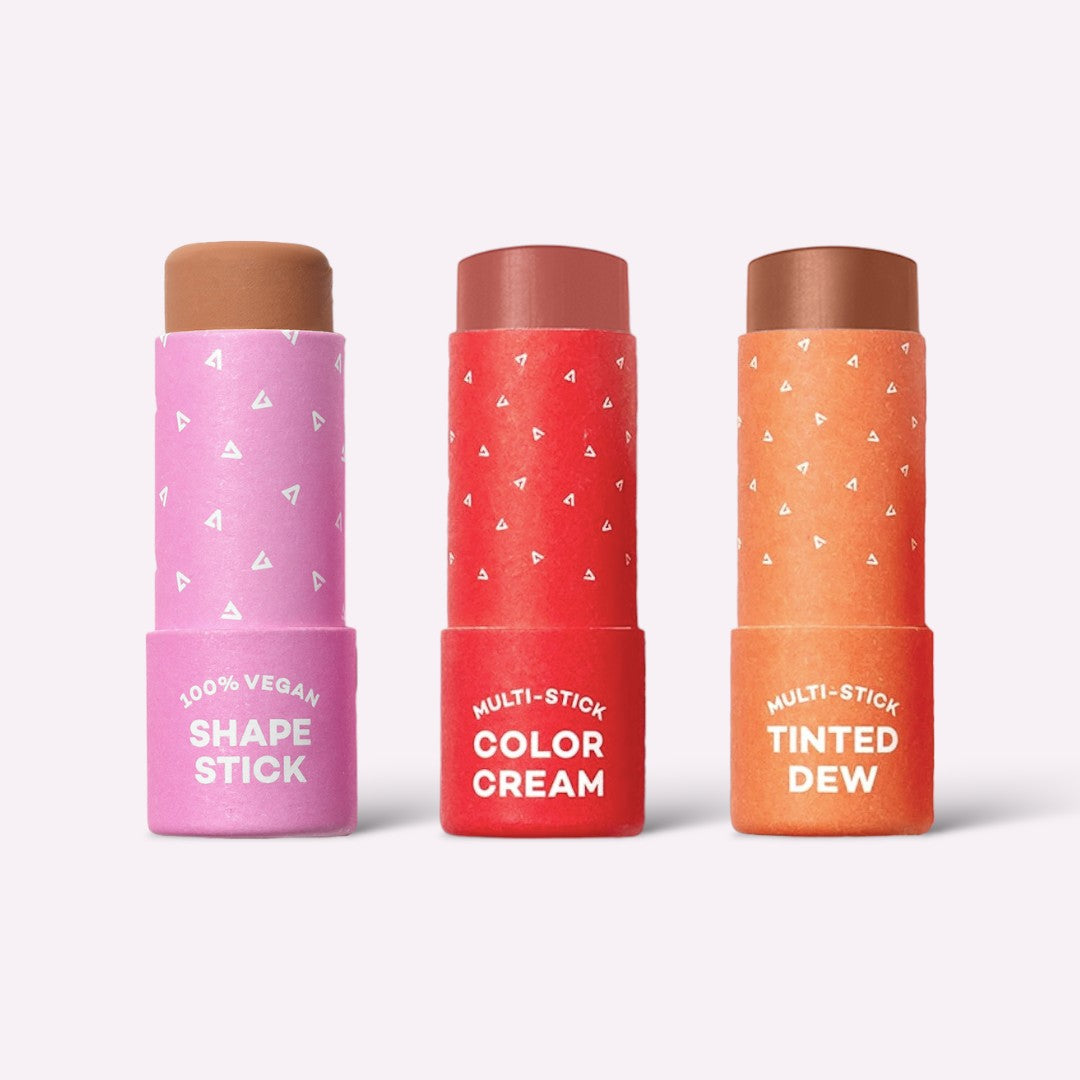
So, what are environmentally friendly beauty products, really? In a nutshell, they’re products made with the least possible harm to our planet. This means thinking about everything from ingredient sourcing and biodegradable packaging all the way to the product's end-of-life. It's a conscious approach that puts sustainability first, from start to finish.
What Makes a Beauty Product Truly Eco-Friendly
The term "eco-friendly" gets tossed around a lot in the beauty aisle, but what does it actually mean for what's in your makeup bag? It's about looking at the complete story of a product, not just one shiny part of it.
Think of it like farm-to-table dining, but for your skincare and makeup. The story begins with how the ingredients are grown and ends with what happens to the container long after you’ve used the last drop. A truly sustainable product takes its impact into account at every single stage.
The Lifecycle of a Conscious Product
To get what "environmentally friendly" is all about, we need to zoom out. You’ve probably seen terms like 'clean,' 'natural,' and 'vegan' everywhere. While they're important pieces of the puzzle, they don't automatically mean a product is sustainable.
- Clean Beauty: This is all about non-toxic ingredients, which is great! But it doesn't always consider where those ingredients came from or the waste left behind by the packaging.
- Natural Beauty: This means using ingredients from nature. But "natural" doesn't guarantee the ingredients were harvested ethically or in a way that protects the environment.
- Vegan Beauty: A huge win for animals, this ensures no animal-derived ingredients are used. But it doesn't inherently address issues like plastic packaging or high water consumption.
This is where looking at the bigger picture comes in.
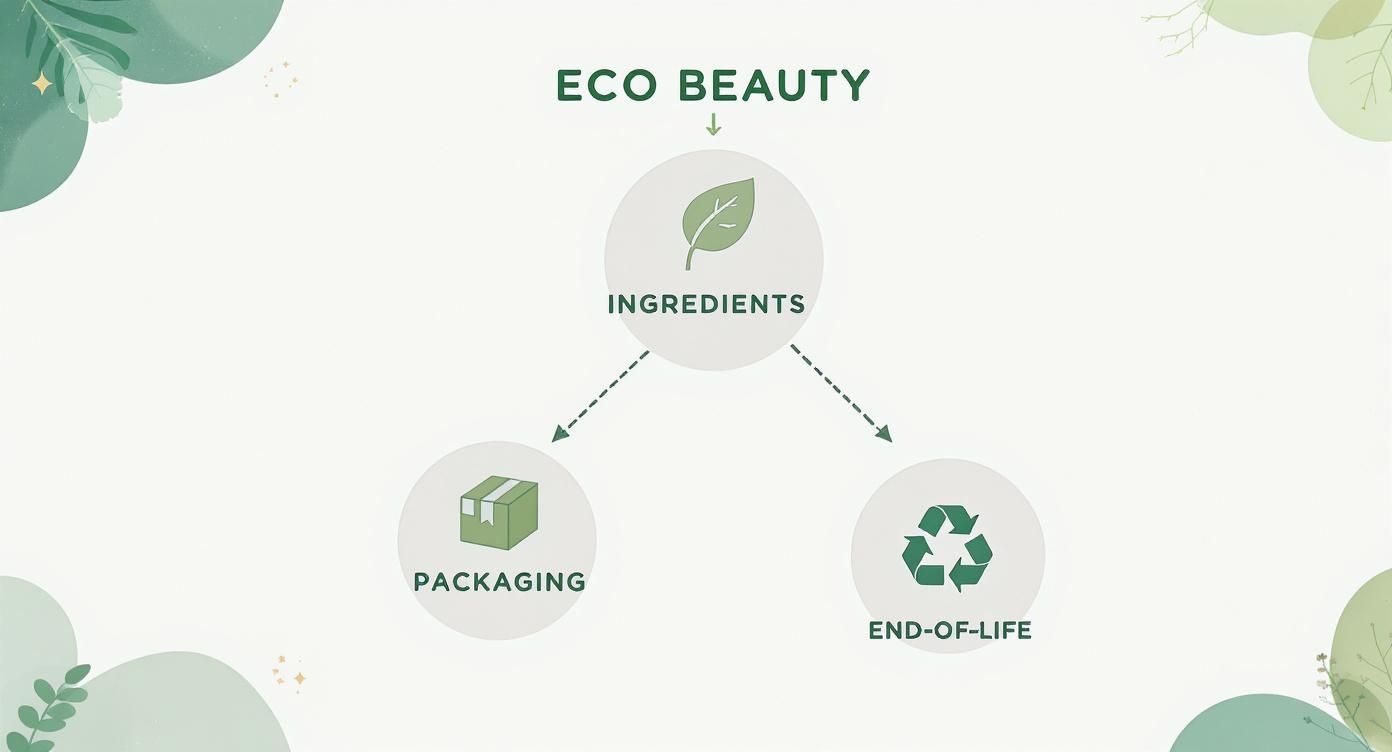
As you can see, real sustainability is a mix of thoughtful ingredients, smart packaging, and a responsible plan for disposal. It’s about creating a circular system instead of a one-way ticket to the landfill.
Beyond the Buzzwords
Moving past the marketing noise means we need to start asking better questions. Instead of just asking, "Is this product natural?" we can dig a little deeper.
"How were these ingredients sourced?" "What is this packaging made of?" "What am I supposed to do with this when it's empty?"
This way of thinking is part of a bigger movement toward mindful consumption, sometimes called slow beauty. If you're curious, you can learn more by exploring our guide on what slow beauty is and why it’s more important than ever. It's all about choosing with intention, valuing quality over quantity, and backing brands that are open about their whole process.
A product's environmental footprint isn't just its formula; it's the sum of its journey from creation to decomposition. A biodegradable lipstick in a plastic tube is only solving half the problem.
At the end of the day, genuine eco-friendly beauty comes down to a commitment to do less harm. It’s about brands taking responsibility for their impact and giving you the power to make choices that feel right. This guide will give you the tools to see past the green-washed labels and spot the brands truly working to protect our planet.
Decoding Ingredients and Sourcing
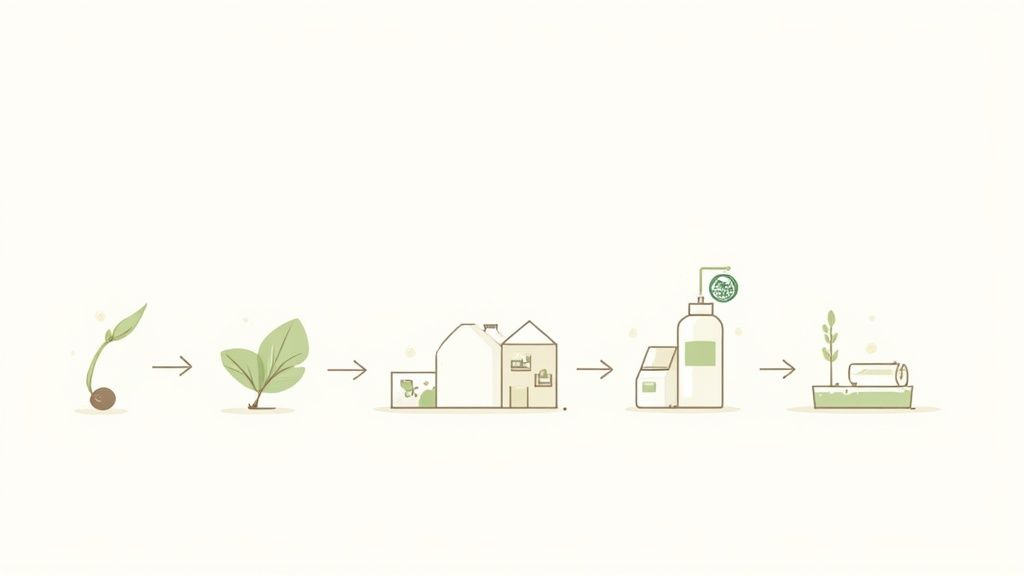
To really get what makes a beauty product eco-friendly, you have to look beyond the cute packaging and get right to the heart of it all: the ingredients. What a product is made of, where those things came from, and how they were gathered tells the real story of its impact.
Think of it like shopping at the farmer's market. A farmer who rotates crops, ditches harsh pesticides, and cares for the soil is growing food that’s better for you and the planet. Ethical sourcing in beauty works the same way. It’s about making sure the stuff we put on our skin comes from practices that protect nature and treat people fairly.
This way of thinking is totally changing the game. The worldwide demand for natural and organic cosmetics hit $41.65 billion in 2024 and is projected to skyrocket to $103.23 billion by 2034. That’s a huge shift, and it shows that tons of us are consciously picking what we believe are healthier, kinder options. You can dive deeper into these trends in this in-depth industry report.
Natural vs. Sustainable Is Not The Same
Here’s one of the biggest myths in the eco-beauty world: that "natural" automatically means "sustainable." It just doesn't. While plant-based ingredients are often fantastic, their sustainability is all about how they’re grown and harvested.
For example, an ingredient can be 100% natural but sourced through destructive deforestation that wipes out ecosystems and harms wildlife. This is exactly why we have to dig a little deeper. It’s not just about what the ingredient is, but the story of how it got to you.
The real measure of an ingredient’s eco-friendliness is its entire lifecycle. A sustainably formulated lab-created ingredient can have a smaller environmental footprint than a "natural" one sourced irresponsibly.
This is where cool new ingredients come in. Brands that are serious about sustainability are exploring amazing alternatives. Take Axiology’s Fungdation, which uses skin-loving reishi and snow mushrooms. These aren't stripped from the wild; they're cultivated. That means we get all their natural goodness without depleting nature's resources. Win-win.
Becoming an Ingredient Detective
Reading an ingredient label can feel like trying to crack a secret code. But once you know what to look for—and what to run from—it gets way easier.
Some ingredients are notorious for their negative impact. Take palm oil. It’s hiding in an estimated 70% of beauty products and is a major cause of deforestation in Southeast Asia, destroying the habitats of animals like the Sumatran tiger. It’s a huge problem.
That’s why so many conscious brands are saying "no thanks." You can learn more about this complicated ingredient and why we decided to ditch it by reading about why we are palm-oil-free and how you can help.
Ready to evaluate products like a pro? This quick guide should help.
Quick Guide to Ingredient Sourcing
Use this checklist to quickly evaluate the sustainability and ethics behind a product's ingredient list.
| Sourcing Aspect | What to Look For | Potential Red Flags |
|---|---|---|
| Transparency | Brands that openly share where their ingredients come from and how they're harvested. Look for supplier stories. | Vague marketing terms like "earth-friendly" without any specifics. |
| Known Problem Ingredients | "Palm-oil-free" claims or certifications like RSPO (Roundtable on Sustainable Palm Oil) if palm oil is used. | The word "palm" or its many derivatives (e.g., Palmitate) on the label with no sourcing info. |
| Certifications | Official seals like USDA Organic, ECOCERT, Fair Trade, or Leaping Bunny (for cruelty-free). | Unofficial, made-up logos that look official but aren't backed by a real organization. |
| Local vs. Global | Locally sourced ingredients that reduce the carbon footprint from transportation. | Ingredients sourced from biodiversity hotspots without any mention of conservation efforts. |
By keeping an eye on these details, you can start to spot which brands are genuinely committed to doing things right. The goal is to feel empowered, knowing your choices are helping build a healthier planet from the ground up.
Choosing Sustainable Packaging and Reducing Waste
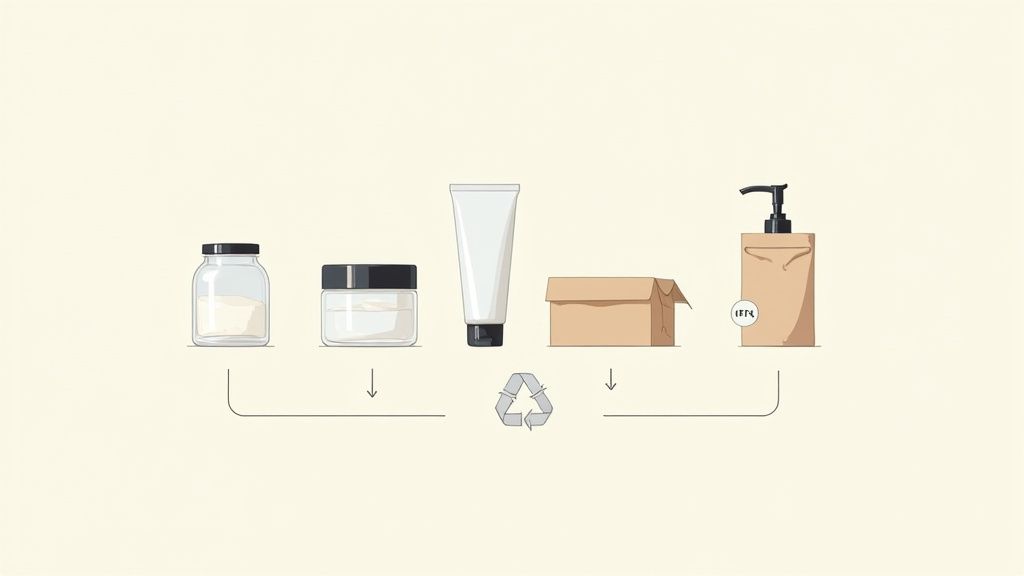
If ingredients are the heart of a clean beauty product, the packaging is its face. It’s the first thing you see and, unfortunately, the last thing left behind.
Think about this for a second: the beauty industry churns out around 120 billion units of packaging every single year. And a jaw-dropping 95% of it gets tossed after being used just once. That mountain of trash is the most visible, tangible part of the industry's environmental footprint. Yikes.
The good news? Conscious brands are finally moving past the old "reduce, reuse, recycle" mantra. They’re getting creative with smarter packaging that completely changes a product's impact from start to finish. Knowing what to look for means you can choose products that don’t just make you look good, but actually do good.
Moving Beyond Single-Use Plastic
Ditching virgin plastic is probably the biggest shift happening in sustainable packaging right now. Sure, plastic is cheap and lasts forever (which is the whole problem), but the environmental cost is massive. Smart brands are getting serious about alternatives.
Here are the materials leading the charge:
- Post-Consumer Recycled (PCR) Materials: This is just a fancy way of saying "made from old plastic." Using PCR gives existing plastic a second life, cuts down on the need to make new plastic from fossil fuels, and uses way less energy.
- Glass and Aluminum: Both of these are recycling superstars because you can recycle them over and over again without them losing their quality. Glass has that luxe, weighty feel and is great for protecting what’s inside. Aluminum is lightweight, tough, and takes less energy to recycle.
- Paper and Cardboard: Perfect for the box a product comes in, paper from responsibly managed forests is a fantastic choice. It’s biodegradable and easily recyclable.
A crucial step is to think about a product's 'end-of-life' before you even buy it. Just ask yourself one simple question: "What's going to happen to this container when I'm done with it?" This tiny mental shift changes your focus from temporary convenience to long-term impact.
This is exactly why we committed to being 100% plastic-free at Axiology. Our lipstick and balm tubes are made from sleek aluminum. Our multi-use Balmie crayons are wrapped in paper that you just tear away as you go. It’s a beautifully simple idea that means no plastic waste is left behind.
The Challenge of Hard-to-Recycle Components
Here’s where it gets tricky. Even when brands have good intentions, some parts are a total nightmare for recycling. I’m talking about the complex pumps on foundation bottles, mixed-material concealer tubes, or those tiny mascara wands and caps.
These little pieces often contain different kinds of plastic, metal springs, and other bits and bobs all fused together. Your local recycling facility can’t process them, so they get filtered out as "contaminants" and head straight for the landfill.
This is where specialized recycling programs are so important. Services like Terracycle partner with brands to collect these complicated items and break them down properly so the raw materials can be used again. If a brand offers a take-back program or works with a service like this, it’s a huge green flag that they’re truly committed.
The Rise of Compostable and Refillable Options
Now we’re talking about the future. The most forward-thinking brands are designing packaging that can either go back to the earth or be used forever.
Compostable Packaging is made from plant-based materials that are designed to break down completely in a compost bin, just like a banana peel. It becomes nutrient-rich soil instead of trash, mimicking nature's own cycle.
Refillable Systems are another total game-changer. You buy the beautiful, durable case once, and then you just purchase refills—which usually come in super minimal, low-waste packaging. This slashes the resources and energy needed to make a whole new container every time.
By choosing brands that offer these solutions, you’re becoming part of a circular economy—a system where materials are kept in use instead of being used once and thrown out. Honestly, making thoughtful choices about packaging is one of the most direct ways you can shrink your environmental footprint and push the whole beauty industry toward a healthier future.
Understanding Certifications and Spotting Greenwashing
Walking down the beauty aisle can feel like wandering through a forest of eco-claims, with every brand shouting about how green they are. It gets overwhelming, fast.
This guide is here to help you cut through the noise. We'll break down what seals like USDA Organic, ECOCERT, Leaping Bunny, and B Corp actually mean, and more importantly, show you how to spot greenwashing from a mile away.
And if you want a deeper dive, check out our guide on Breaking Down Sustainability Buzzwords.
Think of a certification seal as more than just a little logo on the box. It’s a badge of authenticity, a promise that the product has met a specific set of rigorous standards, kind of like how a food label vouches for quality.
But here’s the catch: not all badges are created equal. Some are legit, while others are basically homemade stickers with zero oversight.
Key Certification Inspections
So, what are these watchdogs actually looking for? It's pretty intense.
- USDA Organic requires that at least 95% of a product's ingredients are certified organic. They also strictly prohibit GMOs, synthetic pesticides, and fertilizers.
- ECOCERT gets its hands dirty with on-site reviews of everything from soil health and water management to ensuring fair labor practices throughout the supply chain.
- Leaping Bunny is your guarantee that no animal testing occurred at any phase of product development, from the raw ingredients to the final tube of lipstick.
- B Corp takes a holistic approach, auditing a company's entire social and environmental performance—we're talking everything from worker relations to company governance.
With these benchmarks in mind, let’s flip the coin and talk about the telltale signs of flimsy sustainability promises.
Spotting Underspecified Claims
Vague, feel-good terms are often used to hide weak practices. Words like “earth-friendly” or “clean” sound great, but they don't mean much without some context to back them up.
Here’s what to keep an eye out for:
- Unofficial logos that are designed to look suspiciously like real certifications.
- Buzzwords thrown around without any transparency on sourcing or processing.
- Label mismatches, where the bold claims on the front of the package don't quite line up with the ingredient list on the back.
“Greenwashing undermines trust and makes it harder for conscious consumers to separate substance from spin.”
Table of Certified vs. Greenwashed Labels
Here’s a quick snapshot of what to look for versus what should raise a red flag.
| Label Type | Real Guarantees | Red Flags |
|---|---|---|
| USDA Organic | At least 95% organic ingredients, verified by a certifying body. | A "natural" or "organic" sticker with no official certifier named. |
| ECOCERT | A fully inspected supply chain, from farm to bottle. | Vague, DIY-looking logos without any mention of third-party audits. |
| Leaping Bunny | A guarantee of no animal testing, ever. | Claims like "finished product not tested on animals" (what about ingredients?). |
| B Corp | A comprehensive, business-wide ethics score from B Lab. | Self-reported "ethical" claims without a link to an official B Lab audit. |
This little cheat sheet helps clarify who’s actually playing by the rules.
A Field Guide to Verification
Ready to do a little detective work? It's easier than you think.
- Visit the certifier’s official website. Most have a searchable database of certified brands.
- Check the logo details. Compare the logo on the product to the official one on the certifier's style guide.
- Look for audit dates or annual reports. Legit brands are often proud to share this info.
- Be wary of seals with no online footprint. If a quick search turns up nothing, it's probably not real.
When a brand is cagey about its audit details, take that as a serious warning sign.
Example of Label Verification
Let's say you pick up a lip balm tube that proudly calls itself “eco-friendly.” A simple leaf icon doesn't mean much without a certifier's name next to it. The best brands are making it even easier by embedding QR codes that link directly to their official certification registries. Total transparency.
Common Greenwashing Tactics
- Misleading Imagery: Using lots of green colors and leaf motifs to imply "natural" without any substance.
- Hidden Clauses: Tiny disclaimers in fine print that completely contradict the big claims on the front.
- Irrelevant Claims: Highlighting one tiny eco-friendly feature while ignoring major flaws (like being packaged in tons of plastic).
- Outdated Logos: Using old certification seals that are no longer valid.
Understanding these tricks is like spotting a magician’s misdirection. Stay curious, read every detail, and trust your gut.
Why Genuine Seals Matter
A real certification means an impartial third party has audited every single step. It's the difference between supporting truly sustainable practices and just falling for clever marketing.
The market for this stuff is huge. The sustainable beauty and skincare space was valued at USD 190.7 billion in 2024 and is expected to hit USD 433.2 billion by 2032. Even the organic skincare slice is projected to be worth USD 21.8 billion by 2026, growing at an 11.6% CAGR. Learn more about sustainable beauty market findings
With that much money on the line, you can bet some brands will try to cut corners.
Actionable Tips to Stay Vigilant
- Read labels all the way through, paying attention to ingredient order and origin.
- Use helpful tools like the EWG Skin Deep database to decode complex formulas.
- Support brands that offer take-back or refill programs.
- If you spot a suspicious logo or a sketchy claim, report it to watchdog groups.
Armed with these tactics, you’ll be able to tell which environmentally friendly beauty products are genuinely upholding their promises.
Choose with both care and reason.
How to Build Your Eco-Friendly Beauty Routine
Okay, so we've talked a lot about what makes a product "eco-friendly." Now for the fun part: putting that knowledge to work.
Building a greener beauty routine isn't about a dramatic, all-or-nothing purge of your bathroom cabinet. Honestly, that's just wasteful and super overwhelming.
A much saner approach? Think of it as a gradual, mindful upgrade. The best way to start is by replacing products one by one as you run out. This keeps things manageable for your wallet and your sanity, making the switch feel smooth instead of stressful.
Start with a Simple Audit
First things first, take a gentle look at what you already own. You don't need a crazy spreadsheet or anything. Just spend a few minutes checking out your daily go-tos. This little audit will help you see your habits and figure out the easiest, most impactful swaps.
Grab the products you use every day—your moisturizer, foundation, cleanser, mascara. Now, look at them with fresh eyes and ask yourself:
- Packaging: Is it plastic? Can I actually recycle it where I live? Is there a plastic-free version out there?
- Ingredients: Do I recognize what's on this list? Does the brand say anything about where they get their ingredients?
- Usefulness: Is this a one-trick pony, or could a multi-use product do the same job (and then some)?
This isn't about feeling guilty. It's about getting a clear starting point so you can make changes that really count.
Identify Your First Sustainable Swaps
Once you've taken stock, it's time to decide what to replace first. A great strategy is to focus on the things you use all the time, like your face wash or daily moisturizer. Swapping these creates a consistent, positive change right off the bat.
Another smart move is to target items with the worst packaging. That single-use plastic toner bottle or the foundation pump you can't recycle? Prime candidates for an upgrade.
This is where the demand for cleaner beauty is making a real difference. The market was valued at a whopping USD 8.25 billion in 2023 and is expected to hit USD 21.29 billion by 2030. Why? Because people want products that are better for them and the planet. With nearly 63% of shoppers actively seeking out natural ingredients, brands have no choice but to offer better options. You can dive deeper into the clean beauty market growth on grandviewresearch.com.
The goal is progress, not perfection. Swapping just one plastic bottle for a glass jar or a solid bar is a tangible victory that reduces your waste immediately. Celebrate these small wins.
Embrace the Power of Skinimalism
As you start making swaps, consider adopting a "skinimalism" mindset. It's basically a minimalist approach: use fewer, better, more versatile products. It's the ultimate way to cut down on consumption and waste.
Instead of a ten-step routine, you might discover that a great cleanser, a hydrating serum, and a multitasking moisturizer are all you really need. Keep an eye out for products that can pull double or even triple duty.
Axiology's Balmies, for instance, can be used on your lips, cheeks, and eyes. This one little plastic-free crayon replaces three separate products. That saves you money, simplifies your routine, and slashes packaging waste. By choosing harder-working items, you're consciously buying and wasting less—which is what a sustainable beauty philosophy is all about.
Your Burning Questions About Sustainable Beauty
Diving into the world of environmentally friendly beauty can bring up a lot of questions. Totally normal. Let's clear up some of the common ones so you can feel good about your choices.
Are Eco-Friendly Products Always More Expensive?
Sometimes, yes. High-quality sustainable brands often cost a bit more because they’re investing in things like ethically sourced ingredients and fair wages for workers. But that’s not the whole story.
The good news is that affordable eco-friendly lines are popping up everywhere, so you can find great options no matter your budget. It’s a bit like choosing to cook at home versus eating out every night—a few smart swaps can make a big difference.
- Look for multi-use products. A crayon for your lips, cheeks, and eyes means buying one thing instead of three.
- Shop sales and bundles. Brands often have deals that make it easier to stock up.
- Embrace skinimalism. Buying fewer, better products is a win for your wallet and the planet.
Plus, simple shifts, like choosing a refillable cleanser, can save you a surprising amount over time. Some local refill stations can even cut your product costs by up to 30%.
Do Natural Products Actually Work As Well?
Oh, absolutely. Green chemistry has come a long way, and today's best plant-based ingredients are seriously powerful.
Effectiveness isn't about whether an ingredient is "natural" or "synthetic"—it's all about the quality of the formulation. A well-made natural product will outperform a poorly made synthetic one any day.
Take Axiology’s Fungdation, for example. It uses reishi and snow mushrooms to help renew your skin while giving you lightweight, beautiful coverage. People who use it rave about its smooth, buildable finish and the natural glow it gives them, all without any harsh stuff.
“Natural ingredients can match or surpass synthetics when sourced responsibly.”
- Plant-derived ceramides are amazing at boosting moisture, just like their synthetic cousins.
- The biofermented hyaluronic acid found in many green products works just as well as the lab-made versions.
- Pro-tip: Grab trial sizes to test out a product's performance before you commit to the full-size version.
What’s The Best First Step To A Greener Routine?
Look at your packaging. It’s the most obvious source of waste in any beauty routine, and it’s the easiest place to start.
Making a single switch, like trading your plastic toner bottle for one made of aluminum or paper, is a huge win. It might feel small, but these little changes really do add up to less waste and a lower carbon footprint.
- Start by checking labels for recycling symbols.
- Look into a brand’s take-back or refill programs.
- Keep a small box to collect your empties until you can drop them off at a collection point.
It’s also a good idea to see what refill markets are available in your area. Local recycling rules can be a bit confusing, so a quick search on your city’s website can save you a headache later.
How Do I Dispose Of Beauty Packaging The Right Way?
This is a big one. First, always give your containers a good rinse to get rid of any leftover product.
For your curbside bin, double-check your local guidelines to see what plastics and materials they actually accept. Tricky items like pumps, droppers, and mixed-material tubes usually can’t go in there and need special handling.
That’s where programs like TerraCycle or a brand's own take-back service come in. They’ll make sure those hard-to-recycle bits don't end up in a landfill. And don't forget—compostable packaging goes in your green bin, not with the recycling!
| Item Type | Disposal Method | Quick Tip |
|---|---|---|
| Plastic Bottle | Rinse and recycle curbside | Pop the caps off first |
| Glass Jar | Recycle or find a local refill spot | It’s okay to leave the label on |
| Pump Dispenser | Use a TerraCycle program | Separate the pump from the bottle |
| Compostable Tube | Toss it in your compost bin | Make sure your bin gets hot enough |
Getting disposal right closes the sustainability loop. It’s a small effort that ensures your clean beauty choices are truly helping the planet.
Are Sustainable Products Accessible To Everyone?
It's a work in progress, but many eco-conscious brands are making accessibility a priority.
You can now find features like large-print labels, tactile markers to help identify products by touch, and websites designed to work well with screen readers.
- Check a brand’s website for an accessibility statement.
- Look for high-contrast packaging or clear braille labels.
- Don’t hesitate to contact customer support if you have questions about ADA compliance.
Here at Axiology, we also offer accessible tutorials with audio descriptions to make sure everyone can use our products with confidence.
Does "Vegan" Automatically Mean "Eco-Friendly"?
Nope. "Vegan" simply means a product contains no animal-derived ingredients. It doesn’t tell you anything about the packaging, carbon footprint, or sourcing practices.
The sad truth is, a vegan product can still come wrapped in tons of plastic that ends up harming marine animals. For a product to be truly kind, it needs to be both vegan and sustainable. Look for brands that pair their vegan formulas with things like post-consumer recycled or compostable packaging.
We hope this helps you feel ready to navigate the world of sustainable beauty!
Ready to find products that are kind to animals, your skin, and the planet? Discover Axiology’s vegan, plastic-free, and biodegradable makeup—including the world’s first mushroom-powered foundation.
Shop now at Axiology.