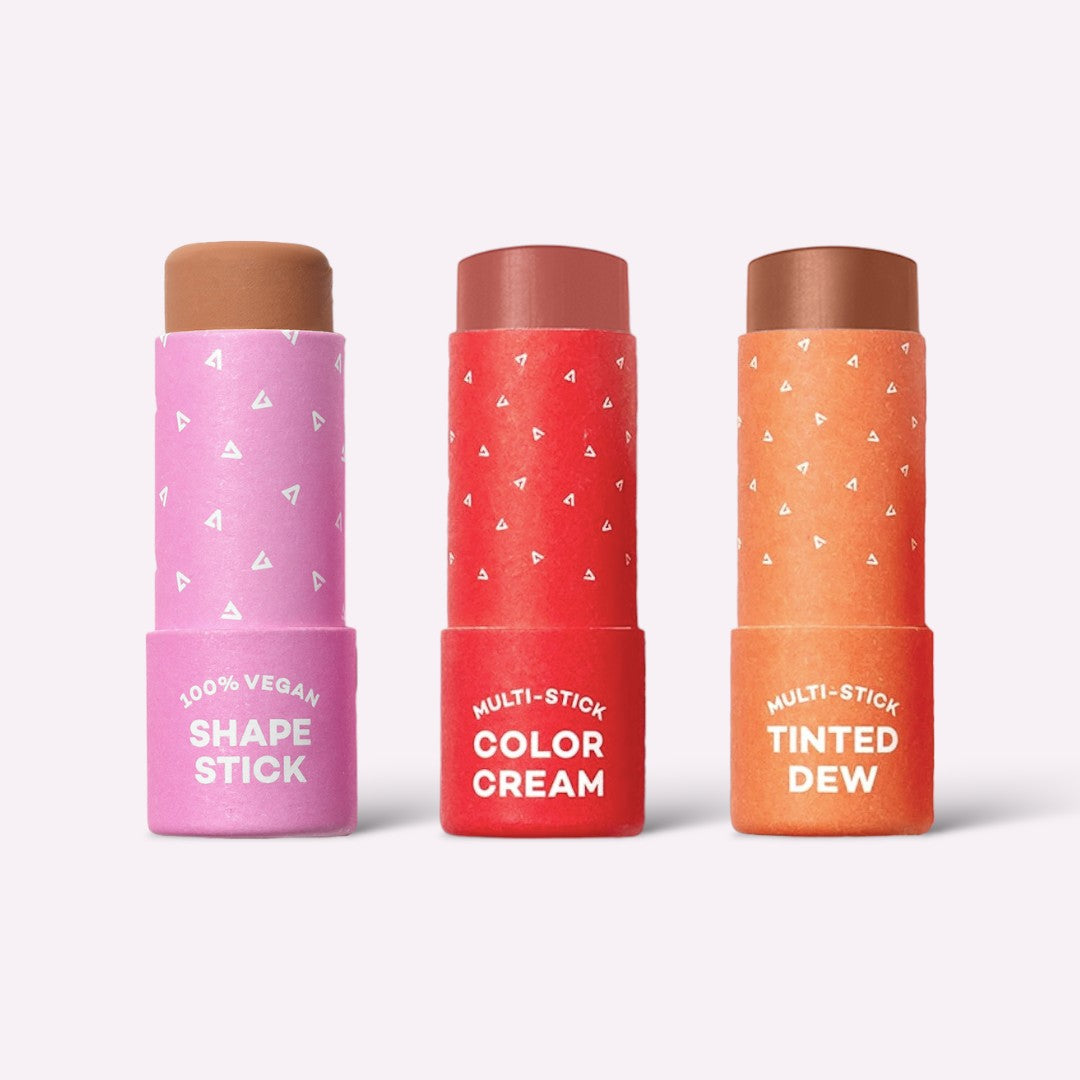
When you hear "ethical beauty," what comes to mind? For a lot of us, it’s about products that are kind—kind to animals, kind to people, and kind to the planet. It’s a beauty brand that looks beyond the bottom line and commits to doing the right thing, from the moment an ingredient is grown to the day you toss the empty container in the recycling bin.
This isn’t just about making great lipstick; it’s about making sure the whole process is responsible, transparent, and caring.
What Makes a Beauty Brand Truly Ethical?
The word ‘ethical’ is everywhere in the beauty aisle these days, but it’s so much more than a buzzword slapped on a label. Real ethical commitment is baked into a brand's DNA. It guides every single choice they make, from the ingredients they choose to the box they ship your order in.
Think of it like this: every dollar you spend is a vote. When you buy from a truly ethical brand, you’re voting for fair wages for farm workers, an end to animal testing, and a healthier planet for all of us. It’s a brand that isn’t afraid to ask the hard questions. Are our raw materials sourced without destroying forests? Is our packaging designed to disappear back into the earth instead of sitting in a landfill? Are our formulas safe for your skin and the ocean?
The Core Pillars of Ethical Beauty
So, how can you tell the difference between a genuinely ethical brand and one that’s just talking the talk? It really comes down to four key areas. Think of these as the foundation of any truly conscious company. We’ll get into the nitty-gritty of each one later, but here’s a quick overview.
To make this easier to remember, we've put together a quick-glance table that breaks down the four pillars. This is your cheat sheet for understanding what really matters when you're shopping for beauty you can feel good about.
The Four Pillars of Ethical Beauty
| Pillar | What It Really Means | Why It Matters for You |
|---|---|---|
| Cruelty-Free & Vegan | Absolutely no animal testing at any point, and no animal-derived ingredients in the formulas. Simple as that. | Your beauty routine doesn't cause harm to animals. It's a direct way to stand against unnecessary suffering. |
| Sustainable Sourcing | Ingredients are harvested in a way that doesn't deplete natural resources, and everyone in the supply chain is treated and paid fairly. | Your purchase supports healthy ecosystems and fair labor practices, not exploitation of people or the planet. |
| Planet-First Packaging | Using materials that are recycled, recyclable, refillable, or compostable to minimize the brand's environmental footprint. | You get to enjoy your products without contributing to the massive plastic waste problem plaguing our oceans and landfills. |
| Ingredient Integrity | Formulas are made with safe, non-toxic ingredients. It's about honesty and prioritizing your health and the environment's. | You can trust what you're putting on your skin is actually good for you and won't harm the environment when it washes down the drain. |
These pillars aren't just a checklist; they represent a fundamental commitment to doing business better.
A huge part of ingredient integrity is knowing what to look out for on a label. Being aware of common skincare ingredients you should avoid is one of the most powerful things you can do as a shopper.
The EU has set a pretty high bar for safety, banning over 1,600 cosmetic ingredients. Compare that to the U.S., which has only banned around 11. The EU follows a "precautionary principle"—if there's any doubt about an ingredient's safety, they just don't use it.
And this isn't some fringe movement, either. The demand for clean, conscious beauty is exploding. The global natural and organic cosmetics market hit USD 40.8 billion in 2024 and is on track to reach a whopping USD 68.8 billion by 2034.
What's driving this? You are. A massive 68% of shoppers are actively looking for products with clean ingredients, and 47% say they’re willing to spend more on sustainable options. It’s proof that doing good and doing well in business can absolutely go hand-in-hand. For anyone who loves digging into market trends, you can explore more in this detailed industry analysis on gminsights.com.
Decoding Cruelty-Free and Vegan Labels
Diving into the world of ethical beauty can feel a little like learning a new language. You'll see two terms pop up constantly: cruelty-free and vegan. They sound like they mean the same thing, and while both are about animal welfare, they actually tackle two totally different parts of how a product gets made.
Think of it like this: a nutrition label on food has an allergen warning (like animal testing) and a separate ingredient list (like animal byproducts). A product can easily be one without being the other, and that's a super important distinction for anyone trying to shop with their conscience.
This handy little chart helps break down the decision-making process when you're checking out a brand.
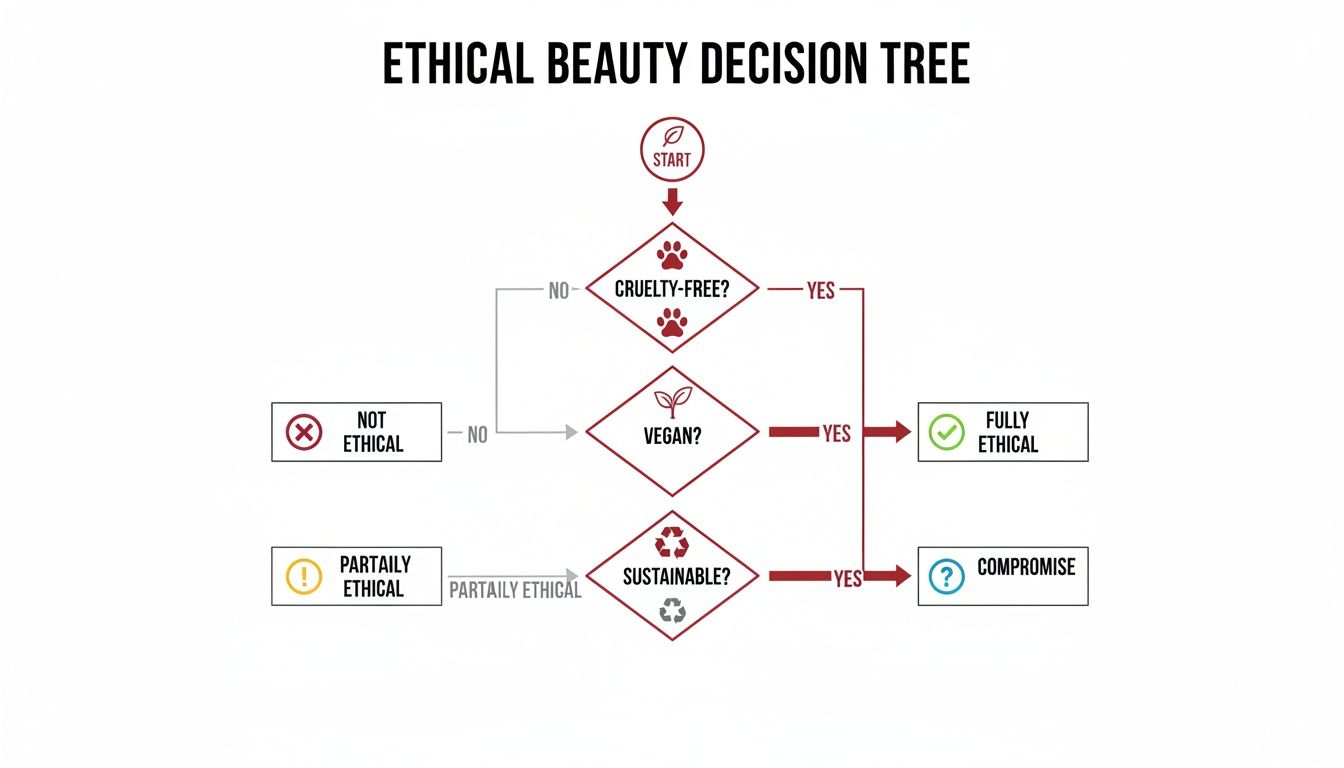
As you can see, a true commitment to ethical beauty means looking at everything—from animal testing policies and ingredient choices all the way to a brand's environmental footprint.
What Cruelty-Free Really Means
At its heart, cruelty-free means that a product and its ingredients were never tested on animals, at any point. Not the final lipstick, not the individual ingredients from suppliers, and not by some third party doing it on the brand's behalf. It’s a promise that no animal was harmed for your makeup.
But here’s where it gets a bit murky. Some brands use confusing language or even create their own bunny logos to look legit without any real oversight. To cut through that marketing fluff, you need to look for official, third-party certifications.
- Leaping Bunny: This is the gold standard. Leaping Bunny makes brands prove their entire supply chain is free from animal testing and they have to agree to ongoing audits to keep the logo.
- PETA's Beauty Without Bunnies: This program is another trusted source that certifies brands as cruelty-free.
One huge loophole to watch out for is where a brand sells its products. A company might claim it doesn't test on animals, but if it sells in mainland China—where post-market animal testing can still be required by law—it isn't truly cruelty-free. The most dedicated brands often choose to stay out of these big markets just to stick to their principles.
The Difference with Vegan Beauty
While cruelty-free is all about the process (testing), vegan is all about the ingredients. A vegan beauty product has zero animal-derived ingredients or byproducts. This goes way beyond the obvious stuff like animal fat and includes ingredients you might never suspect.
A product can be certified cruelty-free but still contain beeswax, honey, or carmine (a red pigment made from crushed bugs). On the flip side, a product could be totally vegan but made by a company that still tests its other products on animals.
This is exactly why seeing both "cruelty-free" and "vegan" certifications is so important if you want to avoid all forms of animal exploitation. Look for logos from trusted groups like The Vegan Society or PETA's vegan certification to be sure. Having both is a true sign of an ethical beauty brand.
And this isn't just a niche concern—it’s a massive market force. The cruelty-free makeup market, where brands like Axiology are leading the way with their vegan, no-animal-testing products, is set to grow from USD 7.31 billion in 2026 to over USD 9.43 billion shortly after. This boom is all thanks to people like you demanding transparency and ethics from the brands they buy.
By learning to spot these key differences and recognizing the official certifications, you can shop with confidence, knowing your choices match your values. To go even deeper, check out our guide on the best cruelty-free makeup brands.
Looking Beyond the Bottle at Packaging and Supply Chains
A brand's commitment doesn't stop once they've nailed the formula. Not even close.
The real story of a product's ethics is told in its journey—from the fields where ingredients are harvested all the way to the packaging you’re holding. This lifecycle is where a company’s true colors really show.
Think of a supply chain as a product's ancestry. When a brand is transparent, they're basically handing you the birth certificate for your lipstick, showing every single step it took to get to you. This kind of honesty is the only way to really know if claims about ethical sourcing and fair labor are legit.
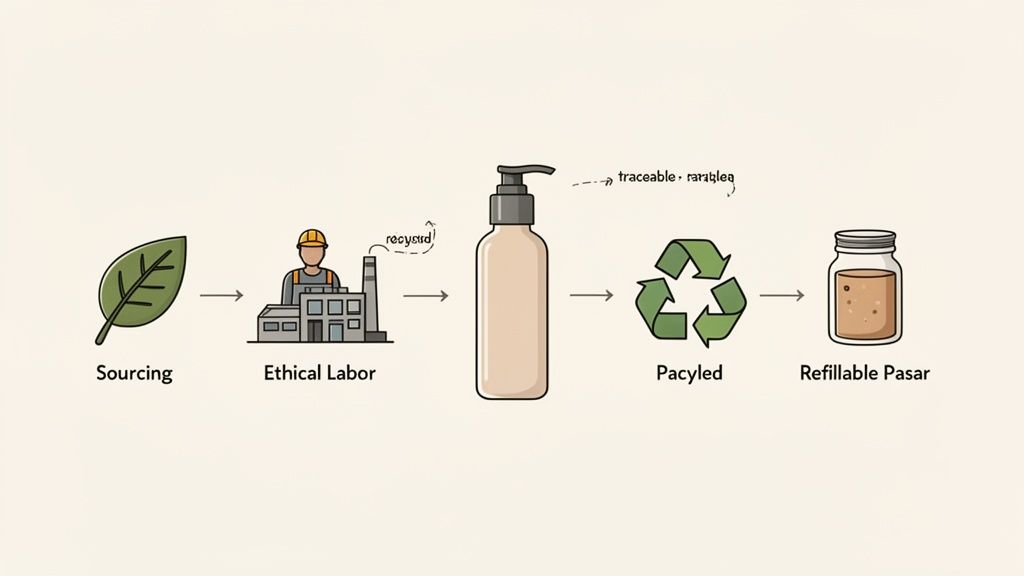
Tracing the Supply Chain for True Ethics
Supply chain transparency means a brand knows—and is willing to share—exactly where its ingredients come from and how they were gathered. This is a massive deal for some of the most common cosmetic ingredients out there. Take mica, the mineral that gives your highlighter its sparkle. It’s been notoriously linked to child labor in unregulated mines. It's a grim reality.
A truly ethical brand will tackle this head-on. They’ll either use synthetic mica or only work with suppliers who are certified by fair-labor organizations. They make sure the people harvesting ingredients like shea butter or argan oil are paid a living wage and work in safe conditions. It’s about human dignity, not just making pretty things.
When a brand talks about an 'ethical supply chain,' they are making a promise that no person or community was exploited to create your beauty product. It’s a commitment to global fairness.
This push for transparency is changing everything. The market for sustainable beauty is exploding, valued at USD 190.7 billion in 2024 and projected to soar to USD 433.2 billion by 2034. A huge driver of this is us—the consumers. Over 90% of Gen Z actually considers a brand's societal impact before they buy. You can check out more stats on this market shift on insightaceanalytic.com.
The Beauty Industry's Packaging Problem
Okay, let's talk about the container itself. The global beauty industry churns out more than 120 billion units of packaging every year. Let that sink in. Most of it is plastic that winds up in landfills or, even worse, our oceans. An ethical brand has to face this problem.
This means moving away from the old-school, single-use model and embracing what’s called a circular economy—where materials are designed to be reused, recycled, or returned to the earth.
This isn’t just about slapping a recycling symbol on a plastic bottle. It’s a total overhaul in how brands think about design. The good news is that truly ethical beauty brands are leading the charge with some seriously creative solutions, proving that you don’t have to choose between luxury and sustainability.
Innovations in Sustainable Packaging
Forward-thinking brands are proving that gorgeous packaging doesn't have to be wasteful. They're getting creative with new materials and systems that are seriously cutting down their environmental footprint.
Here are a few of the game-changing innovations to look out for:
- Zero-Waste and Plastic-Free: This is the holy grail. We’re super proud of our efforts here at Axiology, with our paper-wrapped Balmie crayons and infinitely recyclable aluminum tubes. It’s about ditching plastic entirely.
- Refillable Systems: More and more brands are offering products with refills. You buy the beautiful, durable case once and then just purchase the product refills in minimal packaging. It’s a simple switch that drastically cuts down on waste.
- Post-Consumer Recycled (PCR) Materials: Using PCR plastic or glass means the packaging is made from materials that have already been recycled. It gives existing waste a second life and cuts down on the need to extract new resources.
- Compostable and Biodegradable Materials: Some brands are getting wild with packaging made from things like corn starch or mushroom roots. This stuff is designed to break down in a compost pile, leaving nothing behind.
When you choose brands that are serious about these kinds of packaging solutions, you’re directly tackling the beauty industry’s massive waste problem. To dig a little deeper, you can learn more about the future of sustainable cosmetics packaging and all the cool alternatives out there. Supporting these brands sends a clear message: we’re ready for a better, more sustainable future.
How to Build Your Ethical Beauty Routine
Making the move to an ethical beauty routine can feel totally overwhelming, but it doesn't have to be an all-or-nothing mission. Forget the stressful overhaul. Instead, think of it as a gradual and honestly, pretty rewarding journey. The goal is to make conscious choices that feel good to you, one product at a time.
This slow-and-steady approach is way more manageable and sustainable in the long run. By slowly bringing ethical beauty brands into your daily life, you give yourself the space to figure out what truly works for your skin, your values, and your wallet.
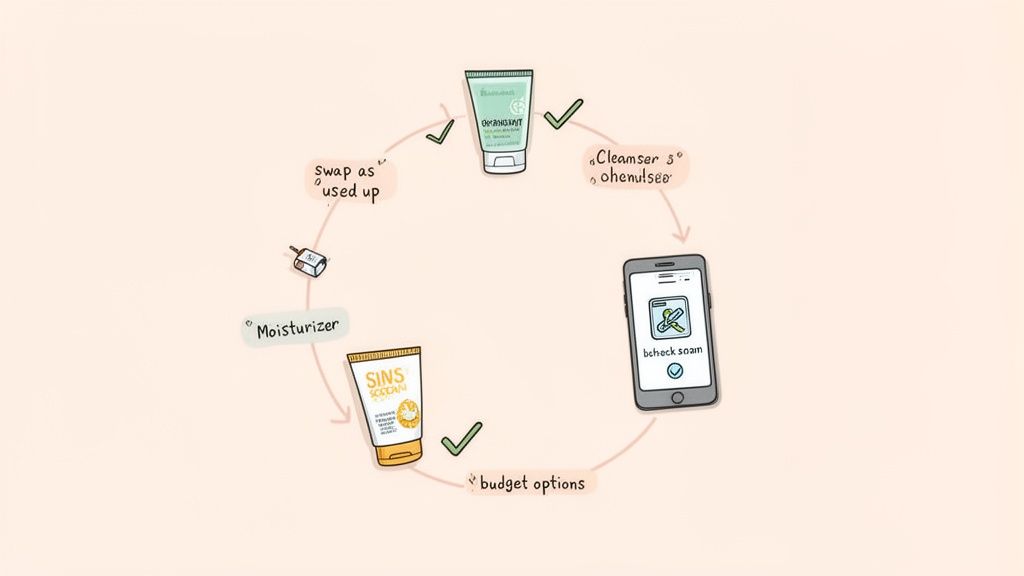
Start With a Simple Audit
Before you even think about buying something new, take a quick look at what you already have. What are your daily essentials—the products you grab every single day without fail? This is probably your cleanser, moisturizer, foundation, or mascara.
These high-use items are the perfect place to start your ethical swaps. Why? Because replacing them makes the biggest immediate difference in your routine and consumption habits. There’s zero need to toss everything at once; that just creates a ton of waste. A great rule of thumb is the "one in, one out" method.
The Empowering "One In, One Out" Method: It's simple. Just wait until you finish a product, like your daily face wash, and then replace it with a well-researched, ethical alternative. This approach is budget-friendly, prevents waste, and makes the transition feel completely seamless.
This gradual replacement strategy turns what feels like a huge project into a series of small, achievable wins. It also respects your budget, making sure you only spend money when you actually need to.
Your Go-To Vetting Checklist
When you're ready to find that replacement, it’s easy to get lost in a sea of claims and logos. Use this simple checklist to quickly vet ethical beauty brands and make confident choices without spending hours going down a research rabbit hole.
-
Check for Key Certifications: Look for official, third-party logos. The Leaping Bunny seal is the gold standard for cruelty-free, while certifications from The Vegan Society or PETA confirm a product has no animal-derived ingredients. These are your most reliable shortcuts to know a brand is legit.
-
Scan the Ingredient List: You don't have to be a chemist. Just look for transparency. Does the brand clearly list all its ingredients? Are they dodging controversial stuff like parabens, sulfates, and hidden "fragrance"?
-
Examine the Packaging: Is the container made from glass, aluminum, or post-consumer recycled (PCR) plastic? Does the brand offer refills or have a take-back program? This shows a real commitment to cutting down on waste that goes beyond just what's inside the bottle.
-
Visit Their Website: A truly ethical company will be proud to share its values. Look for an "About Us" or "Our Mission" page that gets into the details of their ethical sourcing, fair labor practices, and sustainability efforts. If they’re super quiet about it, that’s usually a red flag.
Helpful Tools and Resources
You don't have to do all the detective work on your own. There are some awesome apps and websites designed to help you check a brand's credentials in seconds, right from the store aisle.
- Think Dirty App: This app lets you scan a product’s barcode and get an easy-to-understand rating on its ingredient safety. It flags potentially sketchy ingredients and helps you find cleaner alternatives.
- EWG Skin Deep Database: Run by the Environmental Working Group, this massive online database provides safety ratings for tens of thousands of products and ingredients. It's a fantastic resource for when you want to do a deep dive.
- Leaping Bunny's Cruelty-Free App: If your number one concern is animal welfare, this app is your best friend. It gives you a comprehensive, searchable list of all brands certified under their tough-as-nails cruelty-free program.
Using these tools helps you see past the marketing fluff and make decisions based on real data. Building an ethical routine is a personal journey, and every small, informed choice helps create a more beautiful and compassionate industry. For more ideas on simplifying your routine while staying ethical, check out the benefits of multi-use beauty products, which can save you money and reduce packaging waste.
Axiology as a Blueprint for Ethical Beauty
Checklists and principles are great, but seeing a brand put ethics into practice is where it all clicks. To really get what unwavering commitment looks like, let's take a look at Axiology. This is a brand that doesn’t just check the boxes for ethical beauty—they're actively helping to write the playbook.
This isn't just a brand shout-out; it's a real-world example of all the criteria we've been talking about. Axiology founder Ericka Rodriguez started the company to create vegan, cruelty-free, and clean makeup that was also truly kind to the planet. That single mission has shaped every single decision, making the brand a perfect blueprint for what we should expect from ethical beauty brands.
A Hard Line on Animal Welfare
From day one, Axiology put animal welfare at its core by being both cruelty-free and vegan. No compromises. This is a huge deal, because it sets the bar incredibly high. Plenty of brands stop at "cruelty-free," which means they don't test on animals but might still use stuff like beeswax or carmine (a dye made from crushed bugs). Yuck.
Axiology, on the other hand, is 100% vegan. No animal-derived ingredients, ever. Period. They're certified by PETA as both vegan and cruelty-free, which gives us the third-party proof we need to trust what they say. It shows they're thinking about the whole picture of animal rights—not just testing, but sourcing, too.
By refusing to compromise on either vegan or cruelty-free standards, Axiology provides a clear example of ethical integrity. Their PETA certification isn't just a logo; it's a promise that no animal was exploited at any stage of product creation.
Like many truly ethical brands, this commitment also affects where they sell. Axiology steers clear of countries where animal testing could be required, proving their principles are worth more than potential profits.
Leading the Charge Against Plastic
Maybe one of Axiology’s biggest game-changers in the ethical space is its all-out war on plastic. The beauty industry is a huge contributor to plastic waste, churning out over 120 billion units of packaging every single year. Axiology’s response? Design products to be as close to zero-waste as humanly possible.
Their innovation really shines in their star products:
- Balmies: These are brilliant multi-use crayons for your lips, cheeks, and eyes that are completely tube-free. They come wrapped in paper and live in a little recyclable carrying case made from recycled paper waste. This design completely eliminates the need for plastic tubes, caps, and twist-up mechanisms.
- Multi-Sticks and Lipsticks: These are housed in super-chic aluminum tubes. Not only do they look great, but aluminum is also infinitely recyclable. It can be melted down and reused again and again without losing quality, making it a way better choice than plastic.
This laser focus on planet-first packaging hits on a core pillar of ethical beauty. Instead of just hoping we recycle properly, Axiology designs waste out of the equation from the very start.
Clean Ingredients with a Conscience
Axiology's ethics run deep, right down to their formulas. They focus on clean, effective, and thoughtfully sourced ingredients and have a long "no" list of questionable chemicals (like parabens, sulfates, and synthetic fragrances). Instead, their formulas are built around a handful of powerful, earth-derived ingredients.
A perfect example is their Fungdation, the world's first foundation stick packed with skin-loving mushrooms like reishi and snow mushroom. It’s not just about what they leave out, but what they purposefully put in.
Key Ingredients and Their Ethical Significance
| Ingredient | Role in Axiology Products | Ethical Connection |
|---|---|---|
| Reishi & Snow Mushroom | Provides skin-renewing and hydrating benefits in foundation. | Showcases the use of natural, potent botanicals instead of synthetic fillers. |
| Avocado Oil | Delivers moisture and antioxidants to lips and skin. | A clean, plant-based alternative to petroleum-derived ingredients. |
| Elderberry Extract | Acts as a natural preservative and antioxidant. | Replaces synthetic preservatives with a safe, effective, natural option. |
| Kokum Butter | Creates a creamy, nourishing texture in balms and lipsticks. | Sourced responsibly to ensure a high-quality, ethical base for their products. |
By building their brand on transparent, vegan ingredients and trailblazing sustainable packaging, Axiology serves as a powerful case study. They prove that it’s totally possible for a beauty brand to be luxurious, effective, and deeply ethical—all at the same time. They're the benchmark for consumers who want to support companies that truly walk the talk.
Got Questions About Ethical Beauty? We've Got Answers.
Stepping into the world of ethical beauty can feel a little confusing at first. Beyond just reading an ingredient list, you start running into marketing buzzwords and tricky claims. It's totally normal to have questions!
Think of this as your cheat sheet for cutting through the noise. We’re tackling the big questions about greenwashing, price tags, and what all these different terms actually mean, so you can shop like a pro.
How Can I Spot Greenwashing from Beauty Brands?
Ugh, greenwashing. It’s a sneaky marketing trick where a brand talks a big game about being eco-friendly but doesn't actually do the work to back it up. They want you to feel good about buying their product without them having to make real, meaningful changes. Learning to spot it is your superpower.
Start by looking for claims that are super vague. Phrases like “eco-friendly,” “earth-conscious,” or “all-natural” sound nice, but they’re essentially meaningless without proof. A huge red flag is when a brand hypes up one tiny green feature—like a recyclable cap—while totally ignoring bigger issues, like the fact that they test on animals.
The best way to fight greenwashing? Demand proof. Don't just take a brand's word for it. Look for legit third-party certifications like Leaping Bunny for cruelty-free products or The Vegan Society for vegan formulas.
At the end of the day, a truly ethical brand won't be shy about its practices. They’ll be proud to tell you about their supply chain, from how they source ingredients to how they package their goods. If a company gets cagey when you ask questions, it’s probably for a reason.
Are Ethical Beauty Products Always More Expensive?
This is a big one, and the short answer is no! It's a common myth that you have to shell out a ton of cash to be an ethical consumer. Yes, some products cost more because they use high-quality ingredients, pay their workers fair wages, and invest in sustainable packaging. But that’s not the whole picture anymore.
The ethical beauty space has exploded, and now there are awesome options at every price point. You can find plenty of certified cruelty-free brands right in the drugstore aisle, making it easier than ever to shop your values on a budget. Plus, lots of ethical brands are all about multi-use products. Think about it: one balm for your lips, cheeks, and eyes means you buy less stuff, save money, and create less waste. Win-win-win.
Try to see it less as an expense and more as an investment. You’re investing in your skin with better ingredients, in people with fair labor practices, and in the planet with more sustainable choices. Honestly, buying fewer, better things often saves you money in the long run.
What Is the Difference Between Clean and Ethical Beauty?
"Clean" and "ethical" get thrown around a lot, sometimes even together, but they actually mean different things. Nailing down the distinction is key to finding products that truly align with what you care about.
"Clean" beauty is all about ingredient safety. The main goal is to make products without potentially harmful stuff like parabens, sulfates, and phthalates. It's focused on your personal health—making sure what you put on your body is non-toxic.
"Ethical" beauty is the whole package. It includes the non-toxic principles of clean beauty but zooms way out to look at the bigger picture. An ethical brand asks:
- Are animals harmed? Products must be 100% cruelty-free and vegan.
- What’s the environmental impact? Packaging should be sustainable, and ingredients sourced responsibly.
- How are people treated? Everyone in the supply chain deserves to be paid a fair wage and treated with respect.
Here’s the thing: a brand can be "clean" but still test on animals or use a ton of plastic. A truly ethical brand, however, takes a holistic approach. For them, clean ingredients are just the starting point of a much bigger commitment to being kind to people, animals, and our planet.
Ready to explore a brand that embodies every pillar of ethical beauty? At Axiology, we create 100% vegan, cruelty-free, and plastic-free makeup that’s as kind to your skin as it is to the earth. Discover our multi-use Balmies and mushroom-infused Fungdation at https://www.axiologybeauty.com.