A foundation shade finder is a nifty little digital tool that uses quizzes or your phone's camera to suggest the best makeup shade for your skin. The goal is to ditch the guesswork and get you a flawless, natural-looking match without ever having to leave your couch.
Stop Guessing and Find Your Perfect Foundation Match
We’ve all been there: a drawer full of foundations that are just a little bit… off. This guide is here to end that cycle for good.
We'll show you how a foundation shade finder can become your new best friend in beauty, but only if you know how to use it right. It's about so much more than just matching a surface color; it’s about getting to know your skin's unique personality.

Think of this as your roadmap to that perfect, second-skin finish. Forget mismatched jawlines or makeup that looks totally different in the sunlight. By the end of this, you'll feel way more confident using a little tech to find your true match.
What Really Matters for an Accurate Match
Before you dive into an online tool, a little prep work can make all the difference. Even the smartest AI can’t read your mind, so giving it the right info is key.
Your success really comes down to a few things you can control:
- Figuring Out Your Undertone: This is that subtle, underlying color of your skin—is it cool (pink/red), warm (golden/yellow), or neutral (a bit of both)? This is the real secret to a shade that looks like it belongs on your face.
- Knowing Your Skin Type: The perfect color in a formula that doesn't work for you is a total bust. Whether you’re oily, dry, or combo, you'll need a different finish (like matte vs. dewy) to look your best.
- Using Good, Natural Light: Bad lighting is the number one enemy of a good shade match. Artificial lights can cast weird yellow or blue tones, completely messing up the camera’s analysis and leading to a recommendation that's way off.
The single most important thing is finding your undertone. If a foundation matches your surface tone but clashes with your undertone, it will always look slightly wrong—either too orange or a little ashen.
To get started with a super easy-to-use tool, check out the Axiology Selfie Shade Match. It walks you through the whole thing with simple steps. Combine that with what you’re learning here, and you’re pretty much guaranteed to find the one.
How to Read Your Skin Tone and Undertone
Before you let an online shade finder do its thing, you need to get fluent in your skin’s own language. This goes way beyond just calling your skin "light" or "dark." To really nail your perfect match, you have to understand two things: your skin tone (the color you see on the surface) and your undertone (the subtle color just beneath it).
Think of skin tone as what you see in the mirror. It can change a bit with the seasons—maybe you’re a little darker in the summer and lighter in the winter. We usually group these into a few general categories.
- Fair: Very light skin that might burn easily in the sun.
- Light: A common tone that’s still on the sensitive side with sun exposure.
- Medium: A versatile, middle-of-the-road tan or olive complexion.
- Tan: Sun-kissed, caramel-colored skin that tans without much fuss.
- Deep: Rich brown to ebony tones.
Knowing your general category is a great starting point, but your undertone is the real game-changer. This is the constant, subtle hue that never changes, and it’s the secret to finding a foundation that looks like it was made for you.
Decoding Your Undertone
Your undertone is what keeps a foundation from looking too orange, too pink, or just plain off. There are three main types, and you can figure yours out right now with a few easy tests.
The Vein Test is a classic for a reason. Just look at the veins on the inside of your wrist in natural daylight.
- If they look mostly blue or purple, you probably have a cool undertone.
- If they seem green or olive, you’re likely looking at a warm undertone.
- Can’t really tell, or see a mix of both? You’re probably neutral.
The Jewelry Test is another handy trick. Which metal makes your skin pop? Silver and platinum usually flatter cool undertones, while gold really complements warm undertones. If you look amazing in both, you’ve hit the neutral jackpot.
Pro Tip: Your undertone is everything. A "medium" foundation for a warm undertone will have golden or peachy notes. That same "medium" shade for a cool undertone will lean more pink or red. This little detail makes all the difference.
Putting It All Together
Okay, so you’ve figured out your skin tone and your undertone. Now you have the magic formula. You might be "light with cool undertones" or "tan with warm undertones." This is exactly the information an online foundation finder needs to sift through dozens of shades and give you a spot-on recommendation. Getting this part wrong is why so many foundations just don't look right. Now you've got the knowledge to make any tool work for you.
Using a Foundation Shade Finder Like a Pro
Okay, you've figured out your skin tone and undertone—now comes the fun part. It's time to put that knowledge to work with an online shade finder. These aren't just simple quizzes anymore; they've become seriously smart assistants for your makeup bag. This shift toward personalized beauty tech isn't just a fleeting trend.
In fact, the foundation shade finder market was valued at a cool USD 1.2 billion in 2024. It’s set to keep growing as more of us look for makeup that’s truly made for us. You can dive into the data about this growing market if you're curious about how beauty tech is changing the game.
Navigating Different Types of Tools
When you start looking, you'll notice a couple of different kinds of finders. Some are straightforward questionnaires asking about how you tan or which jewelry looks best on you to guess your undertone. Others, though, use impressive AI to scan a photo or live video of your face, matching you directly with their foundation library.
Honestly, for the most spot-on results, AI-powered tools like the Axiology Selfie Shade Match are usually the way to go. They pick up on the subtle variations in your complexion that a quiz can easily miss.
To get the best match from these AI tools, a little prep goes a long way:
- Go bare-faced: Start with a clean, moisturized face. No makeup!
- Chase the daylight: Natural light is your best friend. Stand facing a window where the light is bright but indirect. Steer clear of harsh overhead lights or shadows, which can completely throw off the color reading.
- Get a steady shot: Hold your phone at eye level and keep it still. A blurry photo is the fastest way to get a wonky recommendation.
This little infographic is a great reminder of how simple things, like your vein color or go-to jewelry, can help you double-check what the tool suggests.
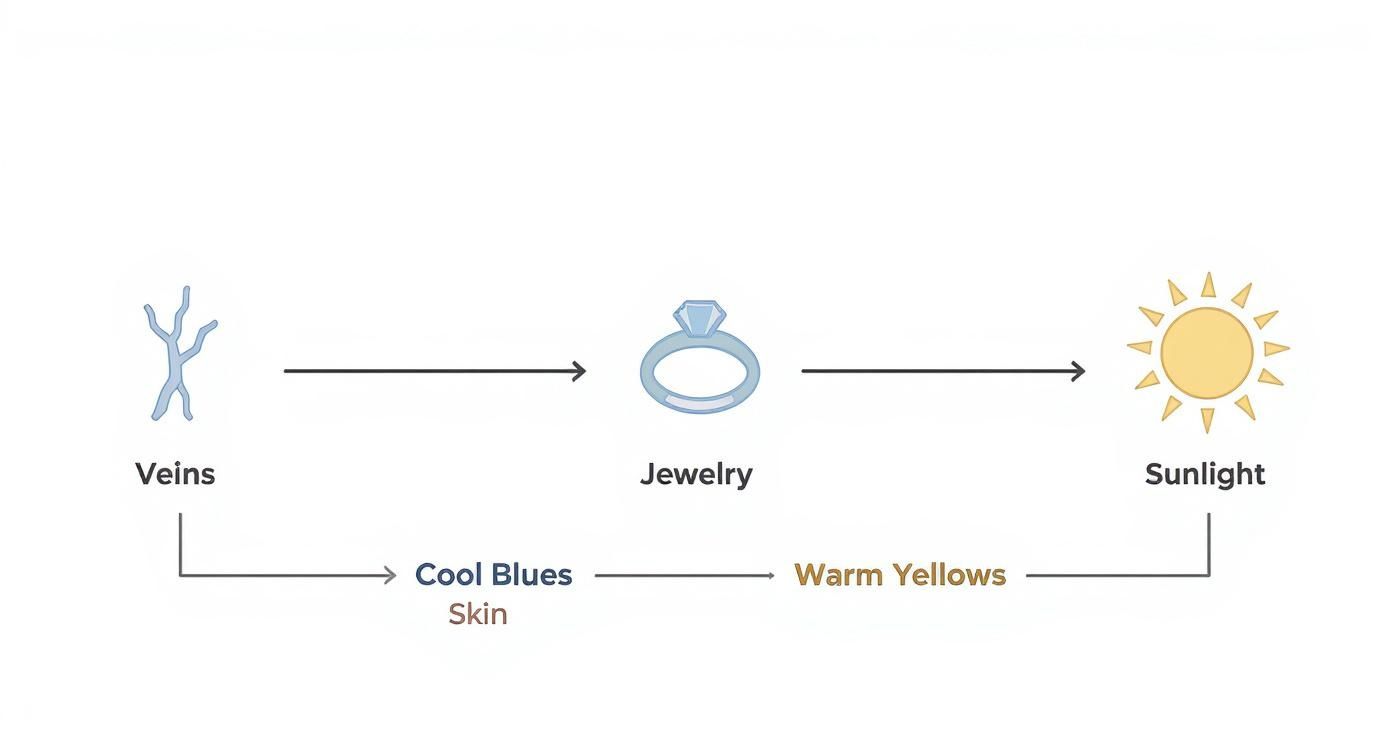
It’s always a good idea to have a sense of whether you’re cool, warm, or neutral before you even open the app. It makes the whole process smoother.
The point of a shade finder isn't just to spit out a number. It’s about translating your unique skin into a product that melts right in, making you look like the best version of yourself—not like you're wearing a mask.
At the end of the day, these tools are here to make your life easier. They combine what you already know about your skin with smart tech to cut through the noise. No more guessing games, wasted money, or drawers full of almost right shades. Just bring good lighting and your skin knowledge, and you'll nail it.
Don't Forget to Match the Formula to Your Skin Type
Finding your perfect color with a foundation shade finder is a huge win, but the formula is what makes you love wearing it all day long. Honestly, the right shade in the wrong formula can be a disaster—it can highlight texture you’d rather hide or just feel plain uncomfortable on your skin. The goal is a seamless match in both color and feel.
Think about it this way: if you have oily skin, a foundation with a matte or satin-matte finish will be your new best friend. These formulas are specifically designed to control that extra shine and usually have oil-absorbing properties, keeping you looking fresh instead of greasy by midday.
On the flip side, if your skin is on the drier side, you’ll want to look for descriptions like “hydrating,” “luminous,” or “dewy.” These foundations are packed with moisturizing ingredients that give your skin a plump, radiant glow, and they won't cling to dry patches or look flat.
Finding Your Ideal Formula
Combination skin can feel tricky, but it also gives you more options. A satin-finish liquid foundation that offers a balanced look—not too matte, not too shiny—is often a great middle ground. And if you have sensitive or acne-prone skin, it’s always a good idea to check out our guide on non-comedogenic makeup products to make sure your foundation won’t clog your pores.
The type of foundation also plays a huge role in the final look and feel:
- Liquid Foundations: These are the most versatile. You can find everything from sheer to full coverage with pretty much any finish you can imagine.
- Cream Foundations: Great for buildable coverage and they often have a moisturizing feel, making them a solid choice for normal to dry skin.
- Powder Foundations: An excellent choice for oily skin and quick touch-ups. They provide a soft, matte finish that helps blur the appearance of pores.
It's interesting to see how preferences are shifting. While liquid and cream foundations have always been popular, search interest in powder foundations has recently surged, peaking in November 2024 as more brands expanded their shade ranges to meet demand. You can learn more about these market trends and see how formulas are evolving.
Thinking about this stuff before you even hit the shade finder helps narrow down your choices, ensuring the perfect color comes in a formula you’ll absolutely love to wear.
How to Test and Confirm Your Final Shade Choice
An online shade finder can get you about 90% of the way there, which is amazing, but the final verdict always comes down to trying it on your actual skin. This is the moment of truth—where the digital suggestion meets the real world.
The absolute golden rule of testing? Never, ever swatch foundation on your hand or wrist. I know it’s tempting, but the skin there is almost always a totally different color and texture than your face. It's the fastest way to end up with a mismatched shade. Your jawline is the perfect spot because you can see how the shade merges with both your face and your neck for a truly seamless look.
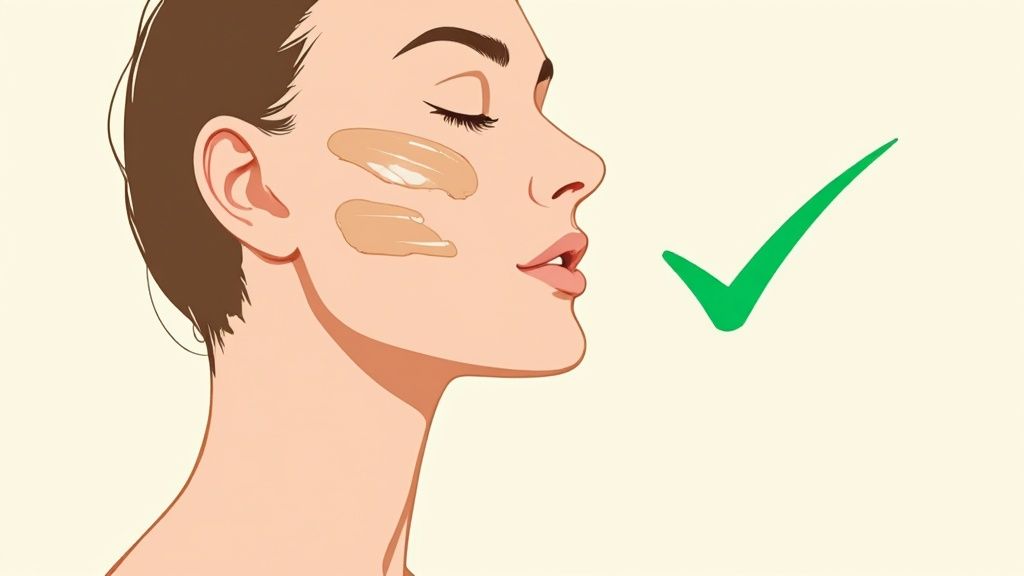
The Disappearing Swatch Test
Ready to find the one? Apply a few thin stripes of your top two or three potential shades right on your jawline, leaving a little space between them. Instead of rubbing them in, just gently pat them onto the skin.
The winning shade is the one that basically disappears. If you find yourself blending like crazy to make it work, it's not your match. The right foundation should look like it has melted right into your complexion, no harsh lines in sight.
A perfect foundation match should be undetectable. It shouldn't look like a mask or even makeup, but rather like your best possible skin. If you can clearly see where the foundation starts and your skin ends, it's the wrong shade.
The Final Checks Before Committing
Once a shade looks like a winner, hold off on making the final call under your bathroom lights. Artificial lighting can be deceiving. The best way to see the color truly is to step outside or stand near a window to check it in natural daylight.
Give the swatch a little time to settle in, about 15-20 minutes. Some foundations can oxidize, which means they darken slightly as they mix with the air and the natural oils on your skin. This final check ensures the color you see is the color you’ll have all day.
If you’ve noticed this happening with other foundations, our guide on how to prevent makeup from oxidizing has some great tips. Taking a few extra minutes for these final steps will save you from the disappointment of yet another "almost right" bottle.
Common Questions About Finding Your Foundation Shade
Even with the best tools, a few questions always seem to pop up. Trust me, I've heard them all. Getting these little details sorted out is the difference between a pretty good match and a truly perfect one.
What If I Am Between Two Shades?
This happens all the time. When you're stuck between two options, my advice is almost always to go with the lighter one. It’s a cinch to warm up a slightly-too-light foundation with a bit of bronzer, but trying to lighten a shade that's too dark? That’s a much tougher fix.
Another pro move, especially if your skin tone changes with the seasons, is to just buy both. You can mix them together for a completely custom color that’s spot-on year-round.
How Much Does Lighting Really Affect the Result?
Lighting is, and I can't stress this enough, everything. Trying to use a shade finder under typical indoor lighting is a recipe for disaster. Those lights usually cast a yellow or blueish hue, which can totally throw off the camera and lead to a bad recommendation.
For a true-to-life analysis of your complexion, you have to use natural, indirect daylight. Find a spot facing a window, but make sure you’re not in a direct, harsh sunbeam. This one simple step is honestly the most important thing you can do for an accurate match.
Why Does My Foundation Look Different After a Few Hours?
Ah yes, the dreaded oxidation. It’s a real thing! It happens when the pigments in your foundation mix with the natural oils on your skin and the air, causing the color to darken throughout the day.
This is exactly why you can't skip the test drive. Always try a sample and wear it for a full day before committing to a full-size bottle.
Ready to put all this expert knowledge to use? Find your perfect, skin-loving match with the Axiology Selfie Shade Match tool today. It's time to experience a foundation that actually looks and feels like your own skin, but better.