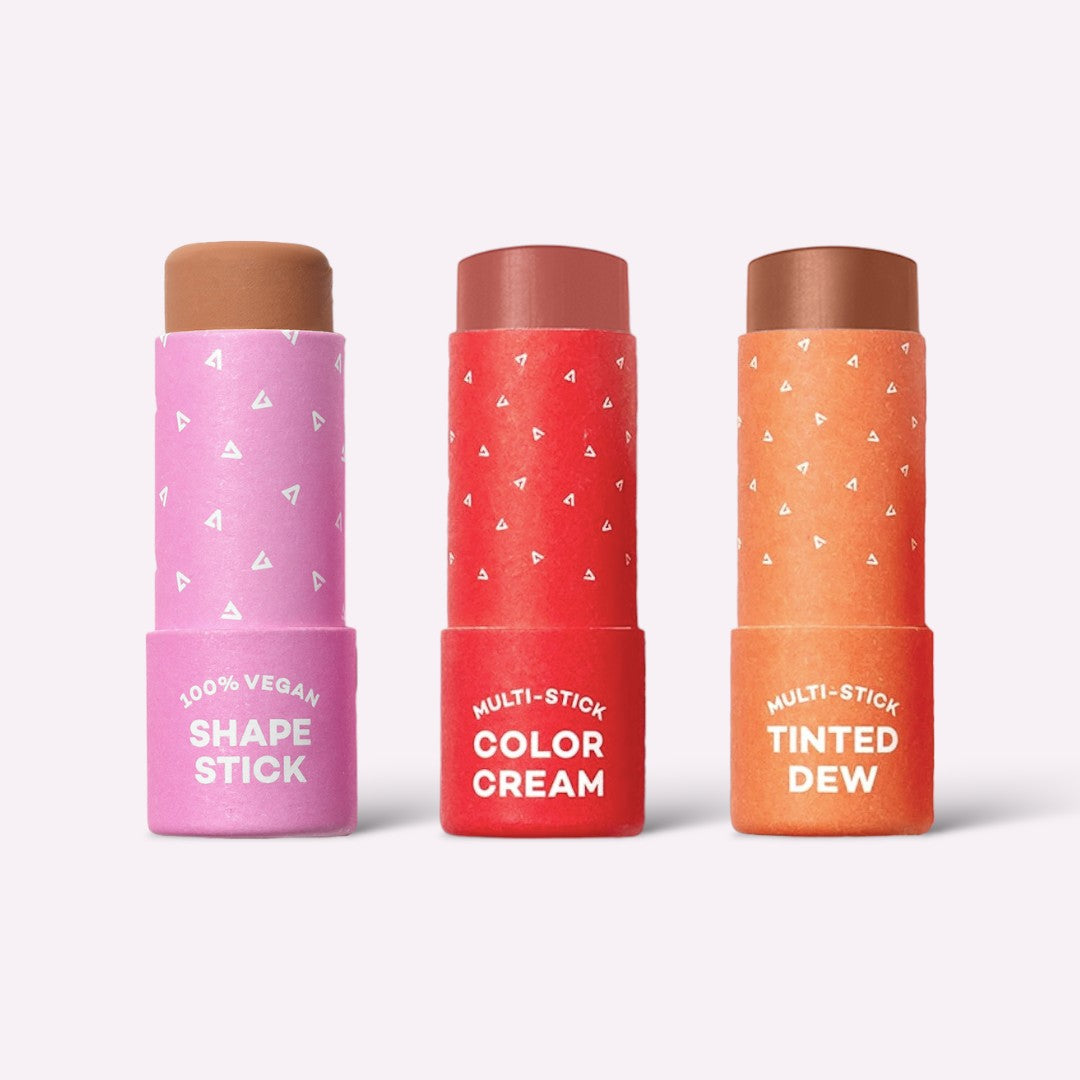
Let’s talk about the tiny, sneaky pieces of plastic lurking in products like scrubs, foundations, and lipsticks. Think of them as a kind of permanent glitter—added for shimmer, a smooth texture, or to exfoliate skin, but once they wash down the drain, they never, ever disappear.
What Are Microplastics in Your Makeup Bag?
You know that satisfyingly smooth feeling from your favorite face scrub? Or the way your go-to lipstick just glides on so perfectly? It’s easy to assume these magical effects come from natural ingredients, but very often, the secret ingredient is just plastic. These tiny synthetic polymers, all smaller than 5 millimeters, are the hidden workhorses in a surprising number of beauty formulas.
But not all of these plastic bits are created equal. They fall into two main camps based on where they come from, and understanding the difference is key to seeing the full picture of plastic pollution.
Primary vs. Secondary Microplastics
The biggest distinction to make is between primary and secondary microplastics. While both are bad news for the environment, their journeys start in very different places.
-
Primary Microplastics: These are the plastics that are intentionally made to be tiny right from the start. They’re manufactured for a specific job and added directly into products. The classic example is the plastic microbeads that used to be in every exfoliating face wash. Other forms include glitter (yep, plastic) and microscopic polymer powders used to give products a silky texture.
-
Secondary Microplastics: These are the little fragments that come from larger plastic items breaking down over time. Picture a plastic water bottle left in the sun, slowly becoming brittle and shattering into countless smaller and smaller pieces. While this is a massive environmental problem, these aren't the plastics being deliberately formulated into your cosmetics.
When we're talking about the beauty industry, the focus is almost entirely on primary microplastics. Brands add them on purpose to get those specific results and textures we’ve all come to expect.
Why Are They Even Used in Cosmetics?
So, why on earth would a brand intentionally put plastic in a face cream or foundation? The reasons are purely functional and, frankly, often about cost. These plastic particles are incredibly versatile and can be engineered to do a whole range of jobs.
At a molecular level, these plastic polymers can be designed to provide slip, absorb oil, or scatter light, making them a cheap and effective tool for formulators. They are the invisible architects behind many popular product textures and finishes.
This versatility is why they've become so widespread. The global market for microplastics was valued at USD 4.91 billion and is projected to nearly double to USD 9.9 billion by 2035, with personal care products being a huge slice of that pie. You can dig into more of the data on this growing market over at MetatechInsights.com.
Here’s a quick look at what these plastics are actually doing in our products:
- Exfoliation: Those little microbeads in scrubs are there to physically buff away dead skin cells.
- Film-Forming: Liquid polymers create a smooth, long-lasting layer on the skin, which is the secret behind many long-wear foundations and waterproof mascaras.
- Adding Sparkle: Most of the glitter you see in highlighters and eyeshadows is just finely milled plastic.
- Improving Texture: Tiny powders act as fillers, giving creams and lotions that silky, luxurious feel.
- Absorbing Oil: Porous plastic particles are great at soaking up oil, which helps control shine in mattifying products.
Essentially, these plastic ingredients deliver an immediate sensory payoff—a smoother application, a brighter shimmer, or a cleaner feel. The problem, of course, is that their journey doesn't end when you wash your face. They are literally designed to be washed away, traveling from our sinks directly into our ecosystems and becoming a permanent, unwelcome part of the environment.
Common Microplastics Found in Cosmetic Products
To help you spot these ingredients on a label, we put together this quick reference table. It’s not an exhaustive list, but it covers some of the most common offenders you’ll find in beauty products today.
| Microplastic Name or Abbreviation | Common Function in Cosmetics | Example Products |
|---|---|---|
| Polyethylene (PE) | Exfoliant, film-former, viscosity control | Face scrubs, body washes, eyeliners |
| Polypropylene (PP) | Exfoliant, bulking agent | Scrubs, skin cleansers |
| Polymethyl Methacrylate (PMMA) | Filler for a smooth, matte finish | Foundations, primers, powders, nail polish |
| Nylon-12, Nylon-6 | Bulking agent, texture enhancer for a silky feel | Face powders, foundations, lotions |
| Polyethylene Terephthalate (PET) | Often used for plastic-based glitter | Eyeshadows, highlighters, body lotions, nail polish |
| Acrylates Copolymer (AC) | Film-former, binder, thickening agent | Hairspray, mascara, liquid foundation, nail polish |
| Polyurethane (PU) | Film-former for long-lasting wear | Mascara, liquid lipstick, hair styling products |
Knowing what to look for is half the battle. When in doubt, a quick search for these names on an ingredient list can tell you a lot about what’s really inside the bottle.
The Unseen Journey from Your Sink to the Sea
When you rinse off that shimmery highlighter or wash away a long-wear foundation, the product seems to just disappear. But those tiny plastic particles are just starting an invisible—and incredibly damaging—journey that begins in your bathroom and ends in the deepest parts of our oceans.
Here's the problem: these microplastics are too small to be captured by standard wastewater treatment plants. They slip right through the filters designed for larger contaminants, pouring directly into rivers, lakes, and eventually, the sea. It's a direct pipeline from our beauty routines to global waterways.
This simple infographic shows just how destructive that path is.
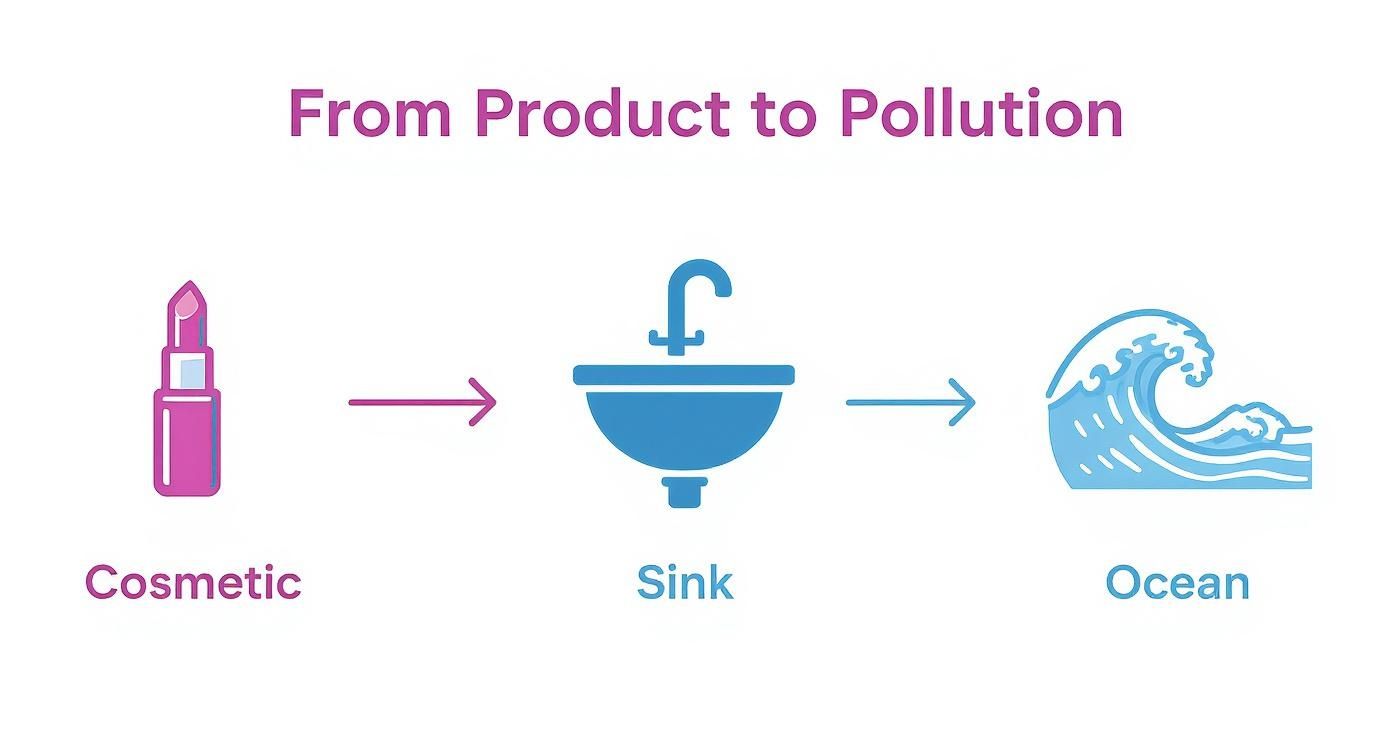
The pollution chain is alarmingly short, a stark reminder of how our daily choices directly impact marine environments. And once they’re in the water, these plastics don't biodegrade. They just accumulate, creating a permanent plastic smog in our aquatic ecosystems.
The Trojan Horse Effect on Marine Life
Once they reach the ocean, microplastics from cosmetics become even more dangerous. Think of each particle as a tiny, floating sponge. They are chemically primed to attract and absorb persistent organic pollutants (POPs) from the water—nasty stuff like pesticides and industrial chemicals that are already hanging around.
This creates what scientists call the "Trojan Horse" effect. The plastic particles are a physical hazard on their own, but they also become concentrated carriers of toxic chemicals.
These toxin-coated microplastics are easily mistaken for food by small marine organisms like plankton and krill. This is the critical first step in a process that introduces both plastic and its toxic payload into the aquatic food web.
From there, the contamination works its way up. Small fish eat the plankton, larger fish eat the smaller fish, and so on. At each step, the concentration of plastic and absorbed toxins can increase in a process known as biomagnification.
From the Ocean to Our Plates
This journey from sink to sea ultimately circles back to us. When we eat seafood like fish, oysters, or mussels, we may also be ingesting the microplastics—and the toxins they carry—that these animals have accumulated.
The implications for human health are still being researched, but the early findings are pretty concerning. Studies have detected microplastics in human blood, lungs, and even placental tissue, confirming these particles can get inside our bodies. While the full impact isn't understood yet, the presence of foreign plastic particles raises serious questions about potential inflammation and long-term health effects.
Here’s a quick breakdown of how it happens:
- Release: Microplastics from cosmetics are washed down the drain.
- Contamination: They bypass water treatment plants and enter oceans.
- Absorption: The particles act like magnets for environmental toxins.
- Ingestion: Marine life consumes the toxin-coated plastics, mistaking them for food.
- Biomagnification: Contaminants become more concentrated up the food chain.
- Human Exposure: We consume contaminated seafood, potentially ingesting microplastics ourselves.
This cycle turns a simple cosmetic choice into a complex environmental and health crisis. The issue isn't just about plastic waste; it's about creating a system that delivers pollutants directly into our food supply. And it's not just cosmetics; it’s important to consider the broader environmental impact of waste from other industries to really grasp the scope of modern pollution.
Choosing products without these ingredients is a powerful first step. But it's also about supporting brands that consider the entire lifecycle of their products, packaging included. You can learn more about how brands are innovating with eco-friendly packaging in cosmetics in our dedicated guide here. By being mindful of both what’s inside the bottle and what the bottle is made of, we can truly start to break this harmful cycle.
How Scientists Detect These Invisible Ingredients
So, how do we find something microscopic in a complex, creamy lotion or a huge ocean water sample? It’s a massive challenge. Since microplastics in cosmetics are totally invisible, scientists need some seriously specialized tools to uncover them. This work is the key to holding brands accountable for their "plastic-free" claims and helping regulators actually enforce product bans.
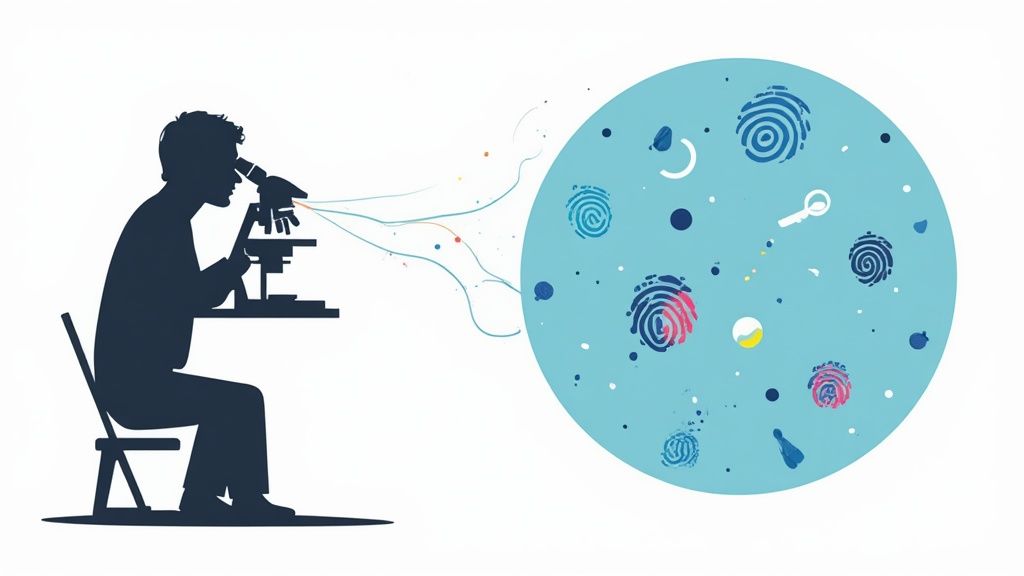
Think of it like being a detective at a molecular crime scene. You can't just glance at a product and see the plastic; you have to find a way to identify its unique chemical signature. This is where advanced science comes in, pulling back the curtain on what’s really inside our favorite formulas.
Uncovering Molecular Fingerprints
The most powerful way to detect microplastics is with a technique called spectroscopy. Basically, spectroscopy works by shining light on a sample and measuring how that light interacts with the molecules inside. Every type of plastic—like polyethylene or nylon—has a unique "molecular fingerprint" that can be identified this way.
Two common methods used for this are:
- Fourier-Transform Infrared (FTIR) Spectroscopy: This technique uses infrared light to make the bonds within plastic molecules vibrate. By measuring this vibration, scientists can identify the exact type of polymer present, kind of like identifying a person by their unique fingerprint.
- Raman Spectroscopy: This method uses a laser to scatter light off the sample. The way the light scatters gives another kind of unique chemical signature, allowing researchers to pinpoint different plastics with incredible accuracy, even when they’re all mixed up with other ingredients.
These technologies are the gold standard for checking if a cosmetic product is truly free of synthetic polymers. They provide the concrete proof needed to move beyond marketing fluff and get to the scientific truth.
By analyzing the chemical structure of a sample, spectroscopy allows us to definitively answer the question: Is this particle plastic? This level of certainty is what empowers consumers, regulators, and ethical brands to drive real change in the beauty industry.
The growing demand for this kind of verification has fueled a pretty significant market. The global microplastic detection industry was valued at USD 4.76 billion and is projected to hit USD 9.52 billion by 2033, with Europe leading the charge thanks to strict regulations. The cosmetics sector is a major driver of this growth as brands scramble to comply with new ingredient bans. You can discover more insights about the microplastic detection market and its rapid expansion.
The Detection Process Step-by-Step
Finding these particles isn’t as simple as putting a dab of lotion under a microscope. It’s a multi-step process that takes patience and precision to isolate the tiny plastic bits from everything else in the product.
- Sample Preparation: First, the cosmetic product has to be broken down. Scientists use chemicals to dissolve the fats, oils, and waxes that make up the bulk of the formula, leaving behind any solid, indigestible particles.
- Filtration: Next, the remaining liquid is passed through a series of incredibly fine filters. This step separates the potential microplastic particles from all the dissolved stuff.
- Visual Identification: The filtered particles are then examined under a high-powered microscope. Here, scientists look for anything with the physical characteristics of plastics—uniform shapes, synthetic colors, or specific textures.
- Spectroscopic Analysis: Finally, the suspected particles are analyzed using FTIR or Raman spectroscopy. This is the final step that confirms their chemical identity, proving whether they are plastic and, if so, what kind.
This meticulous process is the backbone of environmental research and product safety testing. It gives us the hard data needed to understand the true scope of microplastic pollution, from the ingredients in a single bottle of foundation to the contamination levels in our oceans. Without this scientific detective work, the hidden problem of microplastics in cosmetics would stay completely invisible.
Navigating Global Microplastic Regulations
You’ve probably seen headlines about microbead bans and thought, “Great, problem solved!” While those laws were a huge step in the right direction, the real story is a lot more complicated. The global regulatory landscape is a patchwork quilt of rules with some pretty big holes, leaving plenty of plastic ingredients legally on the market and in our makeup bags.
Think of it this way: the first laws were like a filter designed to catch big rocks, but they let all the fine sand slip right through. They stopped the most obvious offenders—the "rocks" of the microplastic world—but left the sneakier "sand" to continue flowing down our drains.
The Landmark Bans and What They Actually Cover
The most famous of these laws is the U.S. Microbead-Free Waters Act of 2015. This was a big deal. It banned the manufacturing and sale of rinse-off cosmetics that used intentionally added plastic microbeads for exfoliation. It was a clear win against the gritty little particles in face scrubs and body washes that were causing so much trouble.
The European Union, UK, and Canada quickly followed with similar rules. These bans successfully kicked solid plastic exfoliants out of a lot of products, which proves that when governments act together, they can make a real difference. But here's the catch: the scope of these laws was super narrow, creating a massive loophole that many brands are still using today.
The Rinse-Off vs. Leave-On Loophole
The critical flaw in most of this early legislation is the difference between "rinse-off" and "leave-on" products. The bans almost exclusively targeted things like cleansers and toothpastes—products where the plastic bits were clearly meant to be washed away immediately.
This leaves a huge category of cosmetics totally unregulated. We're talking about:
- Foundations and concealers that rely on liquid polymers for that silky-smooth finish.
- Sunscreens and lotions that use plastics to create a water-resistant film on your skin.
- Lipsticks and mascaras that are formulated with plastics to make them last all day.
These "leave-on" products can still legally contain a whole slew of liquid and semi-solid plastic polymers. They might not be solid "beads," but they eventually wash off when you cleanse your face or take a shower, making the same trip down the drain to our oceans. This loophole means a product can be 100% compliant with microbead laws and still be loaded with synthetic polymers.
By focusing only on solid exfoliating beads in rinse-off products, early regulations addressed the symptom, not the cause. The continued use of liquid plastic polymers in leave-on cosmetics shows that the problem of microplastics in cosmetics is far from solved.
This ongoing mess is finally pushing regulators to think bigger. Even though plastic fillers are cheap, the environmental blowback is forcing a change. The European Union, for example, has set a goal to cut microplastic pollution by 30% by 2030. This is leading to stricter rules that are pushing brands in major markets to innovate. You can read more about the evolving microplastics market dynamics and see how these regulations are shaking things up.
Ultimately, we can't just trust that the government bans have made our beauty routines plastic-free. The laws were a crucial first step, but they don't tell the whole story. Real change means we have to look past the headlines and start reading ingredient labels to understand what is—and isn't—being regulated.
Your Guide to a Microplastic-Free Beauty Routine
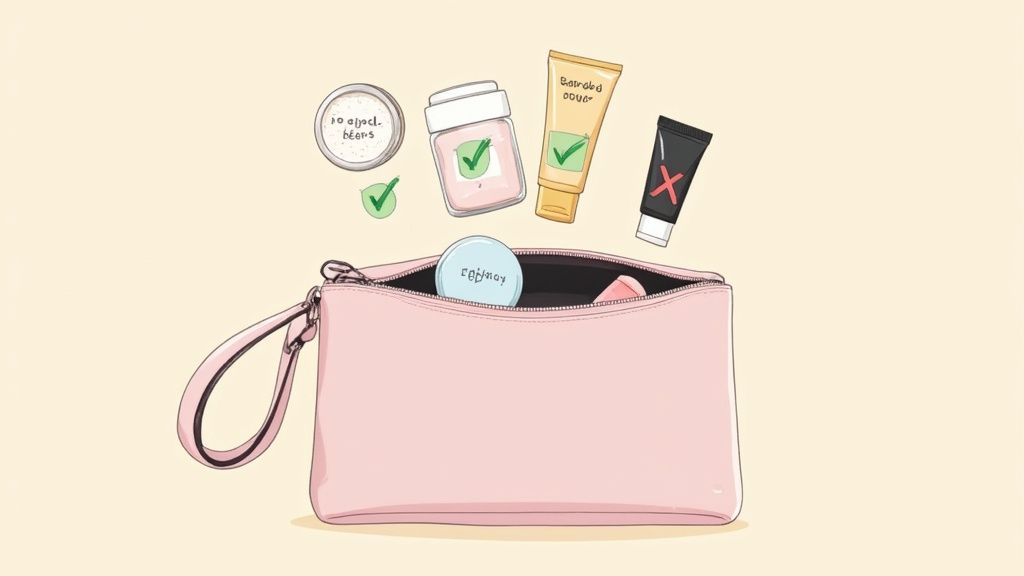
Ready to clean up your makeup bag? The thought of ditching microplastics in cosmetics can feel a little overwhelming, but it’s so much easier once you know what you’re looking for. Think of this as your practical guide to making conscious, informed choices every time you shop.
The first step is becoming a label detective. Since buzzwords like "natural" or "eco-friendly" aren't really regulated, the ingredient list is where the truth lives. You don’t need a chemistry degree—just a few key names to keep on your radar.
Spotting Plastics on the Ingredient List
Here’s a cheat sheet for your next shopping trip. While there are tons of plastic polymers used in beauty products, some pop up way more than others. Keep an eye out for these usual suspects:
- Polyethylene (PE): You’ll often find this used for exfoliation (as in, microbeads) or as a film-former to make products feel smooth.
- Acrylates Copolymer: A super common liquid plastic that works as a binder or thickener in everything from mascara to foundation.
- Polymethyl Methacrylate (PMMA): This one helps create that smooth, matte finish in powders and primers.
- Nylon-12: Gives products a silky, luxurious slip.
- Polyethylene Terephthalate (PET): This is the main ingredient in most cosmetic glitter. Sparkly, but straight-up plastic.
If you spot any of these names on a label, you’re looking at a product made with plastic. It's really that simple.
Let Technology Do the Work
Let’s be real, squinting at every label can be a pain. Luckily, there are apps designed to do the heavy lifting for you. Tools like Beat the Microbead or Yuka let you scan a product’s barcode for an instant ingredient analysis, flagging any sneaky plastics or other chemicals you might want to avoid.
These apps are basically your personal shopping assistant for building a truly microplastic-free routine. No more guesswork.
The most effective way to drive change in the beauty industry is to vote with your wallet. By actively choosing products without synthetic polymers, you send a clear message to brands that consumer demand is shifting towards safer, more sustainable formulations.
Sustainable Swaps for Common Cosmetic Microplastics
The best part? Nature gives us incredible alternatives that deliver the same (or better!) results without wrecking the environment. Brands committed to avoiding microplastics are already using these ingredients to create amazing, high-performance products. If you're looking for some inspiration, our guide to plastic-free beauty products is a great place to start.
Here’s a quick look at some simple, eco-friendly swaps that prove you don't need plastic to create beautiful cosmetics.
Sustainable Swaps for Common Cosmetic Microplastics
| Plastic Ingredient to Avoid | Its Function in Cosmetics | Eco-Friendly Alternative |
|---|---|---|
| Polyethylene (in scrubs) | Exfoliation | Jojoba beads, bamboo powder, coffee grounds |
| Acrylates Copolymer | Film-former, binder | Natural gums (like xanthan gum), plant waxes |
| PMMA (for texture) | Filler, texture enhancer | Silica, mica, corn starch, arrowroot powder |
| PET (glitter) | Adds sparkle and shimmer | Biodegradable glitter made from minerals or cellulose |
By choosing products that use these sustainable alternatives, you can enjoy all the benefits of your favorite cosmetics without contributing to plastic pollution. It's all about making small, mindful switches that add up to a huge impact for both your health and the planet.
How Responsible Brands Are Leading the Change
While the whole plastic pollution problem can feel pretty overwhelming, there’s a major shift happening in the beauty industry. And it’s good news.
Forward-thinking brands are stepping up to prove that gorgeous, high-performance makeup doesn't need synthetic polymers. This isn't just some fleeting trend; it’s a complete rethink of what "clean beauty" should actually mean.
These innovators are going way beyond buzzwords and marketing fluff. Instead, they’re building their entire companies around being good to the planet. So, instead of reaching for cheap, easy plastic fillers, they're finding incredible, sustainable, and biodegradable ingredients that work beautifully—without the environmental price tag.
Honestly, this change is being powered by people like you. As shoppers get smarter about the hidden plastics lurking in their products, they're voting with their wallets and actively seeking out brands that actually care.
The Rise of Biodegradable Alternatives
So, how are they doing it? It all comes down to ingredient innovation. Responsible brands are looking to nature for brilliant, eco-friendly solutions to replace the usual microplastics in cosmetics.
Think finely milled jojoba beads or bamboo powder instead of plastic microbeads for exfoliation. Or natural silica and plant-based waxes instead of synthetic polymers for that silky-smooth texture.
This shift in demand is creating a huge economic wave. The global market for biodegradable microbeads was valued at USD 5.18 billion and is expected to explode to USD 11.33 billion by 2035. That kind of growth is a direct result of consumers choosing better products and governments finally putting their foot down with stricter regulations. You can get into the nitty-gritty of the numbers in this biodegradable microbeads market analysis.
This momentum is setting a new standard for the industry. Ethical formulation isn't just a "nice-to-have" anymore; it's becoming a must for any brand that wants to stick around.
True sustainability in beauty is about more than just a recyclable bottle. It starts with the ingredients themselves—making sure they're safe for our bodies and designed to go back to the earth without messing things up.
By championing these alternatives, good companies are showing that "ethical" and "effective" aren't mutually exclusive. They’re creating products that are not only microplastic-free but also vegan, cruelty-free, and packaged with the planet in mind. They aren't just selling makeup; they're building a community of people who care about their impact.
If you’re looking to support this movement, the best next step is to explore brands that are actually walking the walk. You can find a whole list of companies making a real difference in our guide to sustainable beauty brands. It’s an optimistic shift that shows an industry changing for the better, one thoughtful, plastic-free product at a time.
Answering Your Questions About Microplastics
Even after diving into the world of microplastics in cosmetics, a few questions always seem to surface. Let’s tackle some of the most common ones to clear up any lingering confusion about these sneaky ingredients.
Are All Microplastics Banned in Cosmetics?
Nope, not even close. Most laws, like the U.S. Microbead-Free Waters Act, zeroed in on the obvious culprits: solid plastic microbeads in rinse-off products like face scrubs. But that leaves a massive loophole for "leave-on" products like foundation, lotion, and lipstick.
These products can still be packed with liquid or semi-solid plastic polymers that act as fillers, binders, or film-formers. Since they aren't technically solid "beads," they get a free pass from most current bans, even though they still end up washing down the drain and contributing to plastic pollution.
If a Product Says "Natural," Is It Microplastic-Free?
Not necessarily. You have to be careful here, because terms like "natural" and "eco-friendly" are mostly just marketing fluff. They aren’t regulated, which means a brand can slap them on a label without meeting any real standard. The only way to know for sure is to become an ingredient detective.
The most reliable method is checking the ingredients yourself. Keep an eye out for names like polyethylene, polypropylene, nylon, or acrylates copolymer. If that feels like too much work, you can use third-party apps designed to scan ingredient lists or look for trusted certifications.
What Is the Difference Between Microbeads and Microplastics?
This is a great question, and it’s a classic point of confusion. The easiest way to think about it is that all microbeads are microplastics, but not all microplastics are microbeads.
- Microplastics: This is the big-picture term. It covers any tiny plastic particle smaller than 5 millimeters. It’s the umbrella that all the other types fall under.
- Microbeads: This is a very specific type of primary microplastic. They are the tiny, solid plastic balls that were deliberately made and added to products—most famously, as the scrubby bits in face wash.
Other microplastics in your makeup bag could be liquid polymers, plastic-based glitter, or random little plastic fragments, none of which are actually "microbeads."
At Axiology, we believe in total transparency. That’s why our products are always formulated without any synthetic plastics, period. Explore our collection of 100% vegan, cruelty-free, and plastic-free makeup to build a beauty routine that feels good for your skin and the planet. Discover the difference.