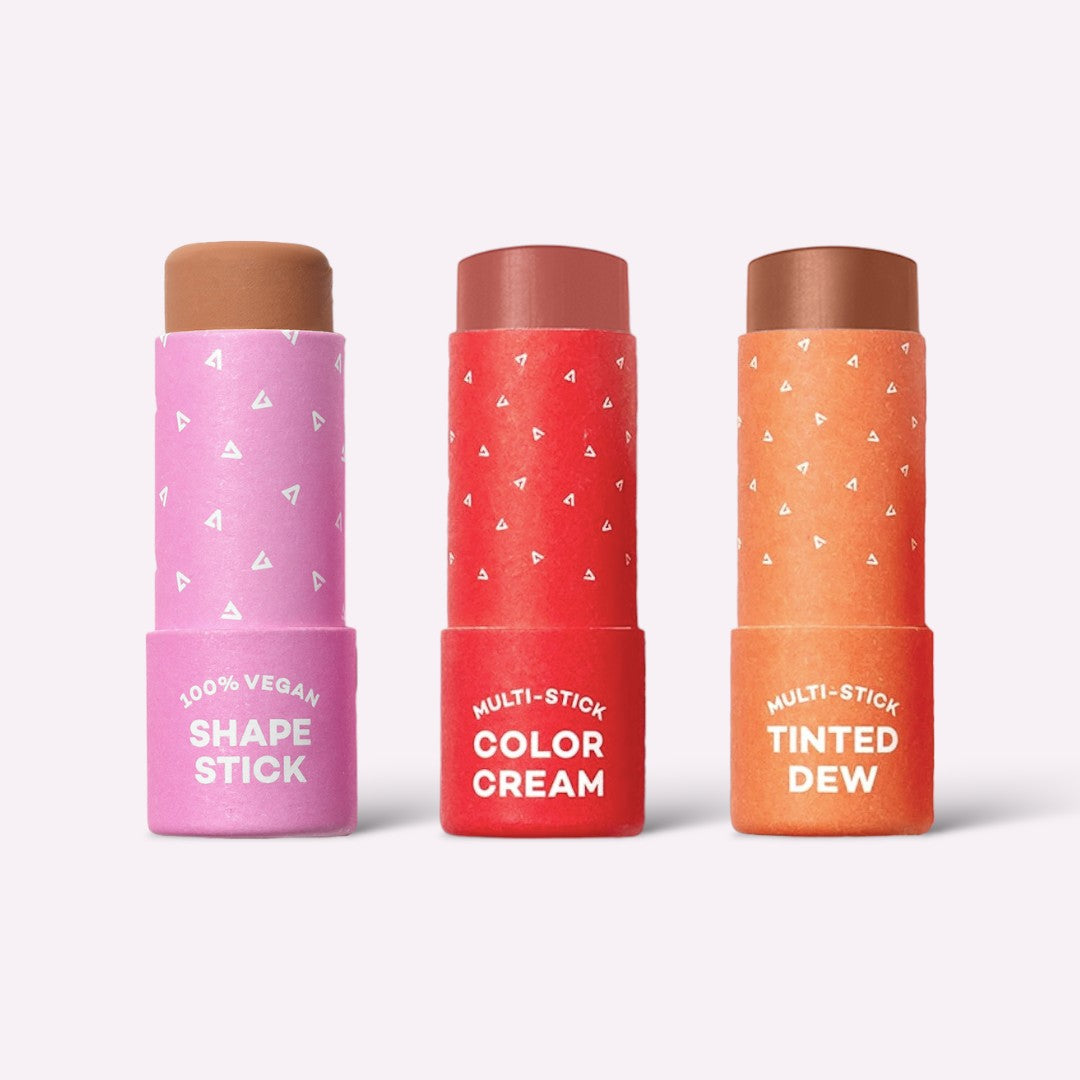
Ever found yourself in a makeup aisle, paralyzed with fear that the very foundation you're eyeing might betray your skin and cause a breakout? You're definitely not alone. The secret is knowing what to look for: non comedogenic makeup brands that create products specifically to avoid clogging your pores. It's all about getting that flawless coverage without sabotaging your skin's health.
Why Non Comedogenic Makeup Is Such a Big Deal
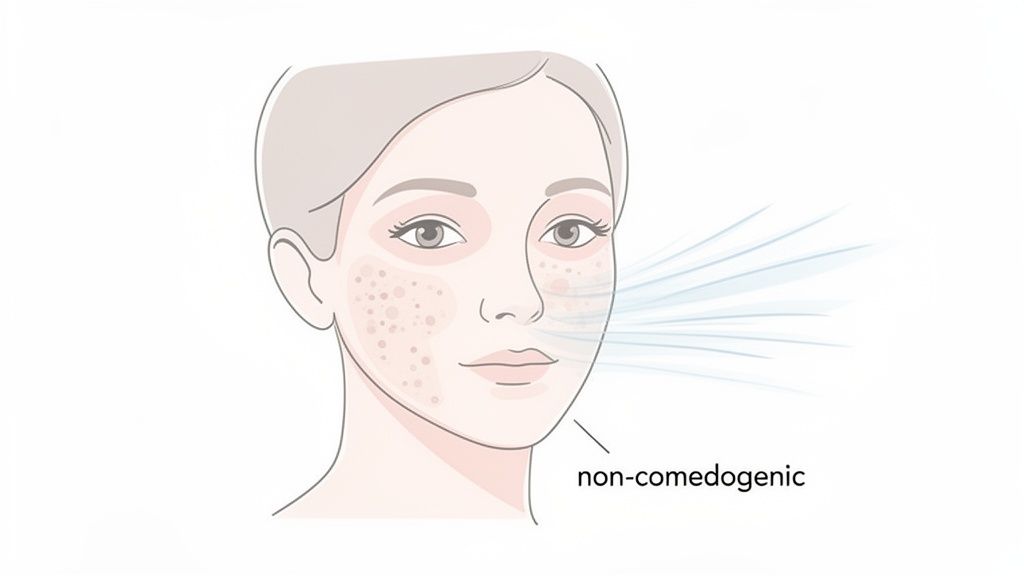
If your skin is sensitive or acne-prone, your relationship with makeup can feel... complicated. That little voice in your head whispering, "Is this concealer going to cause a new pimple?" is a real (and valid) concern. This is exactly where the term "non-comedogenic" becomes your new best friend.
Think about it like this: your pores are like tiny, delicate doorways on your skin's surface. Comedogenic ingredients are the equivalent of trying to shove a king-sized mattress through them—they just get stuck, causing a major blockage. Non-comedogenic ingredients, on the other hand, are designed to slip right past without causing a traffic jam.
The World is Catching On to Pore-Friendly Products
This huge shift toward skin-conscious cosmetics isn't just a fleeting trend; it's a real movement shaking up the beauty industry. The global market for non-comedogenic products is expected to hit a whopping $27 billion by 2033, climbing at a steady 7% each year.
What’s fueling this? A much deeper, collective understanding of skin health, especially when you consider that acne impacts up to 85% of people between the ages of 12 and 24. It’s a huge deal. You can read more about this market shift in recent non-comedogenic beauty research.
Consider this guide your roadmap. We'll help you figure out what this term really means and how to spot the brands that genuinely have your skin's back.
The big idea behind non-comedogenic makeup is simple: beauty products should make your skin look good, not fight against it. It’s about empowering you to wear makeup with confidence, knowing the formula is designed to let your skin breathe.
To get there, you've got to learn to look past the pretty marketing claims on the front of the bottle and become fluent in decoding the ingredient list on the back. This knowledge is power—it turns you from a hopeful shopper into a savvy, informed consumer.
Once you know which ingredients to welcome and which to avoid, you can confidently pick products that line up with your skin goals. To get you started on your clearer-skin journey, you can also check out our curated list of non-comedogenic makeup products.
What “Non-Comedogenic” Actually Means for Your Skin
You’ve probably seen the term "non-comedogenic" splashed across beauty products, but what does it really mean? Let’s break it down.
Think of your skin's pores as tiny, open pathways. When everything is running smoothly, your skin's natural oils (sebum) travel up and out, keeping everything moisturized and happy. It's a perfect system.
Now, imagine something comes along and creates a roadblock. That’s essentially what comedogenic ingredients do. They mix with oil and dead skin cells, creating a blockage inside the pore. This clog is called a comedo—the technical term for the starting point of a blackhead or a whitehead.
A product that’s truly non-comedogenic is made with ingredients that are far less likely to cause these roadblocks. It’s designed to let your skin do its thing without getting in the way, which is a game-changer if you’re trying to keep breakouts at bay.
The Comedogenic Scale Explained
To get a bit more scientific, experts created the comedogenicity scale. It’s a simple rating system that gives ingredients a score based on how likely they are to clog pores, usually on a scale from 0 to 5.
Here’s a quick guide to the numbers:
- 0: Won't clog pores at all.
- 1: Very low chance of clogging pores.
- 2: Moderately low chance. Most skin types will be fine with these.
- 3: A moderate chance of causing clogs. This is where it gets risky, especially for acne-prone folks.
- 4: A fairly high chance of clogging pores.
- 5: A high chance of clogging pores. Steer clear if you’re prone to breakouts.
Ideally, a non-comedogenic product should be packed with ingredients rated 0, 1, or 2. This scale is a super helpful tool, but it isn’t the whole story.
A Critical Caveat: The Lack of Regulation
Here’s the catch, and it’s a big one: the term "non-comedogenic" is not regulated by the FDA.
That means any brand can slap that label on its packaging without having to prove it or meet any kind of official standard. A product could be marketed as non-comedogenic but still have an ingredient with a rating of 3 or 4 that your specific skin just doesn’t agree with.
This is why you have to become your own detective. Instead of taking a label at face value, learning to scan an ingredient list for potential culprits is the best way to avoid unwanted breakouts.
Your real power is in reading and understanding the ingredient list. A brand’s claim is a good start, but the formula itself tells you the real story.
To help you get started, here’s a quick reference for some of the ingredients you’ll run into most often when you’re looking at makeup.
A Quick Guide to Common Makeup Ingredients
Use this reference to understand common ingredients and their likelihood of clogging pores, helping you make smarter choices when reading labels.
| Ingredient Name | Comedogenic Rating (0-5) | Commonly Found In | Potential Effect on Skin |
|---|---|---|---|
| Shea Butter | 0-2 | Moisturizers, lip balms, creams | Deeply moisturizing, but the raw, unrefined version can be heavier. |
| Coconut Oil | 4 | Skincare, makeup, hair products | Highly moisturizing but also highly comedogenic for many people. |
| Jojoba Oil | 2 | Facial oils, serums, foundations | Closely mimics skin's natural sebum, making it well-tolerated by most. |
| Algae Extract | 5 | Serums, masks, creams | Can be very nourishing but is known to be a major pore-clogger. |
| Hemp Seed Oil | 0 | Serums, moisturizers, makeup | Non-comedogenic and anti-inflammatory, great for acne-prone skin. |
| Avocado Oil | 3 | Rich creams, balms | Very hydrating and rich, but can be problematic for oily or acne-prone skin. |
Knowing which ingredients to look for is half the battle. If you want to dive deeper, keeping a comprehensive pore-clogging ingredients list handy while you shop can be a lifesaver. When you’re armed with this kind of knowledge, you can see right past the marketing buzz and choose products that will genuinely help your skin thrive.
How to Read Labels and Spot Truly Safe Brands
Let’s be real: since the term "non-comedogenic" isn't regulated, you can't always trust what you see on the front of the bottle. The best way to protect your skin is to become your own ingredient detective. This just means flipping the product over and learning to scan the ingredient list for the good, the bad, and the ugly.
Think of an ingredient list like a recipe. A chef knows exactly which ingredients will make a dish feel heavy and rich versus light and fresh. You can learn to do the same for your skin, spotting what’s likely to weigh it down and clog your pores. It’s a skill that puts all the power back in your hands.
This little decision tree is a great starting point for figuring out if a product is on your side.
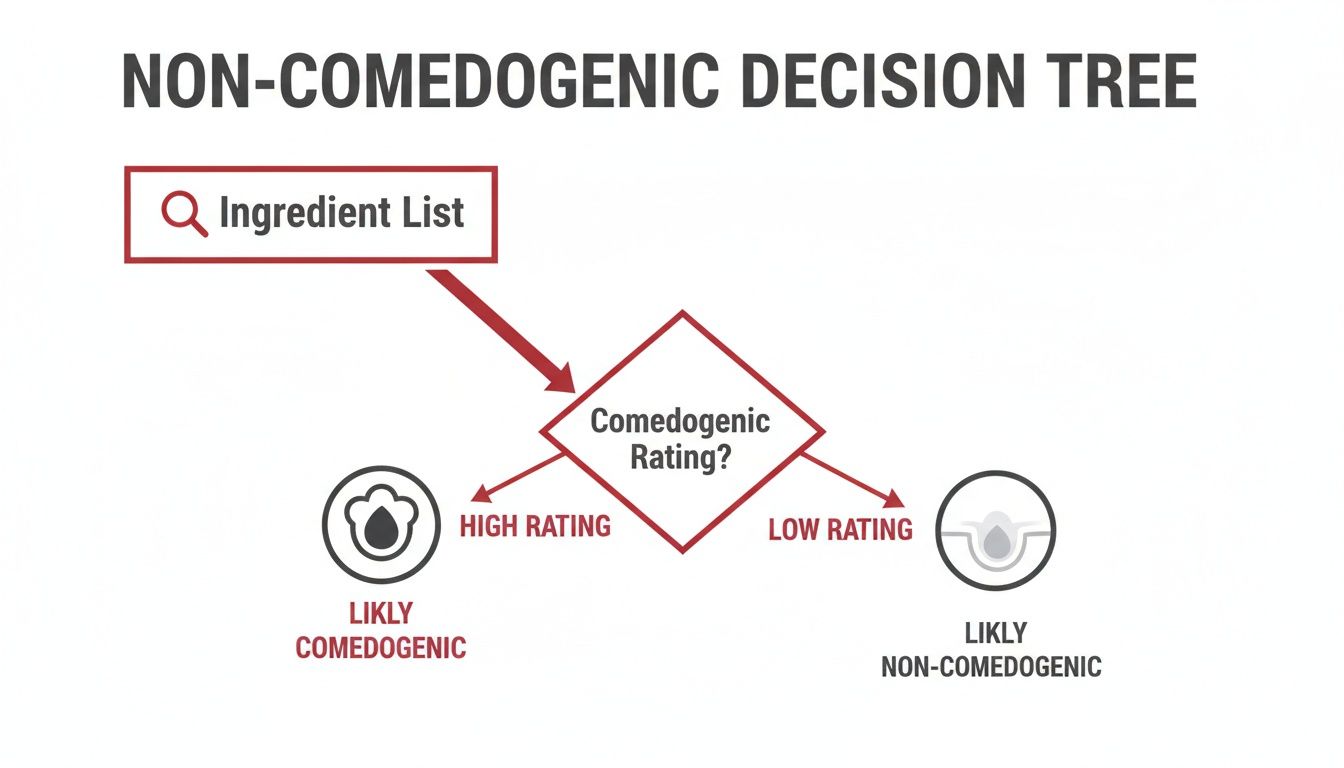
The main takeaway here? Ingredients with high comedogenic ratings are your red flags, while those with low ratings are total green lights for clear skin.
Your Ingredient Watchlist
To make things a bit easier, it helps to know the common offenders and their skin-friendly alternatives. Just getting familiar with a few key players can totally change how you shop.
Red Flag Ingredients to Avoid:
- Isopropyl Myristate: A super common emollient that, unfortunately, scores high on the pore-clogging scale.
- Coconut Oil: We love it in a smoothie, but on acne-prone faces? Not so much. It's notorious for causing breakouts.
- Algae Extract: This one can be a big trigger for acne and is highly comedogenic.
- Laureth-4: An emulsifier that’s often linked to blackheads and whiteheads.
- Ethylhexyl Palmitate: Often used as a silicone substitute, but it can be a major pore-clogger for many.
Green Flag Ingredients to Look For:
- Squalane: A dreamy, lightweight oil that feels just like your skin’s natural sebum.
- Jojoba Oil: So similar in structure to your skin's own oils, it’s amazing for balancing things out.
- Hemp Seed Oil: Jam-packed with fatty acids and known for its anti-inflammatory magic.
- Glycerin: A hydration hero that pulls moisture into the skin without clogging anything.
- Silica: A mineral makeup staple that absorbs excess oil and gives a beautiful, smooth finish.
Decoding Your Makeup Label: A Quick Comparison
Let's look at two hypothetical foundation labels side-by-side. Seeing the difference in black and white makes it so much easier to spot what to look for and what to run from.
| Feature | Example of a Problematic Label | Example of a Non-Comedogenic Label |
|---|---|---|
| First Five Ingredients | Water, Ethylhexyl Palmitate, Isopropyl Myristate, Glycerin, Talc | Water, Squalane, Glycerin, Silica, Jojoba Seed Oil |
| Key Oils | Cocos Nucifera (Coconut) Oil, Mineral Oil | Vitis Vinifera (Grape) Seed Oil, Cannabis Sativa (Hemp) Seed Oil |
| Texture & Emulsifiers | Contains Laureth-4 and Cetyl Acetate, both known to have higher comedogenic ratings. | Uses Cetearyl Olivate and Sorbitan Olivate, which are olive-derived and gentle on pores. |
| Overall Impression | This list starts with two major red-flag ingredients right at the top. High chance of clogs! | The top ingredients are all known to be safe for acne-prone skin. A much better bet. |
As you can see, a quick scan of the first few ingredients gives you a pretty good idea of what you’re dealing with. The closer a problematic ingredient is to the top of the list, the more of it is in the product.
Beyond the Ingredient List
A brand’s vibe and philosophy can tell you a lot, too. Transparency is a huge green flag. Does the company talk openly about where they get their ingredients and how they make their products? Do they actually teach you about what's inside? That level of honesty usually means they’re making higher-quality, skin-conscious stuff.
This whole movement is happening because we, the shoppers, are demanding it. The anti-acne cosmetics market is expected to hit a whopping $4,174 million by 2032, mostly because people want makeup that actually benefits their skin. And with up to 70% of consumers looking for products with 'clean' labels, brands have no choice but to step up their game.
Things like vegan and cruelty-free certifications also point to a brand that cares. While not directly about clogging pores, it shows a conscious, ethical mindset that often carries over into the quality and safety of their formulas. The more you understand the building blocks, the better choices you can make. If you want to dive deeper, we have a whole guide on how to spot effective natural ingredients for makeup.
Finding the Right Formula for Your Skin Type
Slapping a "non-comedogenic" label on a bottle is a decent starting point, but it's not a golden ticket to clear skin. The best non-comedogenic makeup brands get that what works for oily skin might be a total disaster for someone with a dry or sensitive complexion. The real secret is matching the formula to what your skin is actually asking for.
Think of it like watering houseplants. A cactus barely needs any water to be happy, but a fern needs to stay moist all the time. Drown the cactus and you'll kill it, just like a heavy, oil-based product can overwhelm already oily skin. Your skin type is the boss, and it dictates what kind of "nourishment" it needs from your makeup.
For Oily and Acne-Prone Skin
If your skin is constantly in oil-production mode, your main mission is to find products that can mattify and control shine without clogging you up. Oil-free formulas are your new best friend; they give you coverage without adding more fuel to the fire.
Look for lightweight liquids or powders that won't feel like a heavy mask. Mineral makeup is an awesome choice here. Ingredients like zinc oxide and titanium dioxide are inert, which is a fancy way of saying they won’t clog pores and can even help calm down some of the inflammation that comes with acne.
For Dry Skin
Dry skin is thirsty for hydration, but finding a moisturizing formula that doesn't feel heavy or cause breakouts can feel like a unicorn hunt. The trick is to look for non-comedogenic ingredients that are great at pulling in and locking down moisture.
Here are your green-flag ingredients:
- Hyaluronic Acid: This stuff is a true superstar. It can hold up to 1,000 times its weight in water, giving you a major hydration boost without a greasy feel.
- Glycerin: Another powerful moisture magnet that helps keep your skin feeling soft and happy.
- Squalane: A super lightweight, non-comedogenic oil that actually mimics your skin’s natural oils, so it moisturizes without the risk of clogged pores.
These ingredients help your foundation give you that dewy, hydrated glow while still letting your skin breathe.
The right non-comedogenic formula should do more than just cover things up—it should actively support your skin's health. For dry skin, that means lasting hydration. For oily skin, it means keeping oil in check.
For Sensitive Skin
Sensitive skin can throw a fit over everything from fragrance to weird chemicals, which makes finding makeup a real challenge. For you, the label to look for in addition to non-comedogenic is hypoallergenic.
Make it a priority to find products that are fragrance-free, since synthetic fragrances are one of the biggest culprits for skin irritation. Mineral-based formulas are usually a safe bet because they tend to have shorter, simpler ingredient lists with fewer things that could cause a reaction. To dive deeper into picking gentle products, check out our guide on choosing hypoallergenic makeup for sensitive skin.
Sometimes, the best way to figure things out is to see how specific products actually perform. Reading reviews and guides on something like the Estée Lauder Double Wear foundation can offer real-world insight into how a formula works on different skin types. A little bit of research goes a long way toward finding a product that will keep your skin happy and clear.
Why Axiology Leads in Clean, Non-Comedogenic Beauty

In a sea of makeup options, some non-comedogenic makeup brands do more than just play defense by leaving out pore-clogging ingredients. They go on offense, actively feeding your skin with good stuff. Axiology has made a name for itself in the clean beauty space by building its entire philosophy around formulas that are as kind to your skin as they are to the planet.
This isn’t just about making products that won't cause problems. It's about creating makeup that doubles as skincare. Think of it as a proactive approach where cosmetics and skincare are one and the same. Honestly, this should be the new standard for what it means to be a truly skin-conscious brand—moving from just "safe" to actively beneficial.
Formulas That Heal and Hydrate
Axiology’s ingredient list reads like a trip to a really great farmer’s market. It’s all about potent, earth-derived elements. Take their Fungdation, for example—it's the very first foundation to be infused with skin-renewing reishi and snow mushrooms. And these aren't just for show; they pull their weight.
- Reishi Mushroom: This one is a calming superstar, known for its anti-inflammatory properties. It helps dial down redness and supports a healthy skin barrier.
- Snow Mushroom: A total hydration powerhouse, it works a lot like hyaluronic acid, pulling moisture into the skin for a plump, dewy look without getting anywhere near your pores.
This “skincare-first” vibe means your foundation is doing more than just providing coverage. It’s actually working with your skin all day to make it look and feel better. It’s makeup that enhances your natural beauty, not just covers it up.
Axiology proves that high-performance makeup and gentle, non-comedogenic ingredients don't have to be mutually exclusive. Their products are designed to look amazing while respecting your skin's delicate balance.
Simplicity and Sustainability
A big part of keeping skin clear is just… not overwhelming it. Axiology gets this. They champion a minimalist routine with their multi-use products, like the iconic Color Cream Crayons. You can swipe them on your lips, cheeks, and eyes, which simplifies things and cuts down on the risk of a reaction from layering a bunch of different formulas. A simpler routine means less opportunity for pore-clogging buildup. Simple.
Plus, Axiology’s commitment goes beyond the ingredients. By being 100% plastic-free, the brand takes on the beauty industry's massive waste problem head-on. They use recycled paper and other sustainable materials, showing a deep respect for the planet we all share.
This big-picture vision—amazing vegan ingredients, a less-is-more philosophy, and a serious dedication to sustainability—is what makes Axiology stand out. It’s a brand made for people who want performance from their products and integrity from the companies they buy from. Axiology doesn't just sell makeup; it offers a cleaner, kinder way to do beauty.
Your Burning Questions About Non-Comedogenic Makeup
Jumping into the world of non-comedogenic makeup can feel like you’re cramming for a test you didn’t know you had. Even when you think you’ve got it all down, a few tricky questions always seem to pop up.
This is your cheat sheet. We're here to tackle those lingering "what ifs" and "how tos" so you can walk away feeling 100% confident in picking products that actually support clear, happy skin.
Can I Trust a Product Just Because It Says "Non-Comedogenic"?
It’s a great starting point, but honestly? Not entirely. The claim “non-comedogenic” isn’t regulated by the FDA, which means brands can use it as more of a marketing term than a guarantee. There's no official standard they have to meet.
Your best move is to become your own detective. Use what you’ve learned here to scan ingredient lists for known troublemakers like isopropyl myristate or certain algae extracts. And lean into transparent non-comedogenic makeup brands that are happy to share their formulas and what’s behind them.
The ultimate proof is always how your own skin reacts. A patch test on your jawline for a few days is the only way to be totally sure before going all-in with a full-face application.
Is Mineral Makeup Always a Safe Bet?
For the most part, yes! Pure mineral makeup is usually a fantastic non-comedogenic option. The main ingredients—think zinc oxide, titanium dioxide, and mica—are inert, meaning they don’t breed bacteria or clog pores. Plus, they can even be soothing for the skin.
But the key word here is pure. You’ve got to check the full ingredient list. Some brands will add binders, fillers, or preservatives that can cause issues. Bismuth oxychloride is a common one that can trigger irritation and even cystic acne for some people. A short, simple ingredient list is usually your best friend.
Should I Switch My Entire Routine to Non-Comedogenic Products?
If you have acne-prone or sensitive skin, it can make a huge difference, but you don't have to do it all at once. The best strategy is to prioritize the products that spend the most time touching your skin.
Start with your base makeup first:
- Foundation: This covers the most real estate on your face.
- Concealer: Often applied pretty heavily right over breakout-prone spots.
- Primer: This is the very first layer that sits on your skin all day.
- Blush & Bronzer: These also cover large areas like your cheeks.
For things like mascara or eyeliner, the non-comedogenic label isn't as critical since they don’t really hang out in your pores. Just aim for gentle, non-irritating formulas. By swapping out your base products first, you’ll make the biggest impact on preventing new breakouts and can see how your skin responds.
How Do I Know if a Specific Makeup Product Is Causing Breakouts?
The trick is to isolate the suspect. The only real way to do this is to introduce new products into your routine one at a time. So, when you try a new foundation, keep every single other thing in your skincare and makeup routine exactly the same for at least two weeks.
If you start seeing new pimples, especially where you apply that product the most (like your cheeks or jawline), you've likely found your culprit. It takes a little patience, but this methodical approach removes all the guesswork and makes it so much easier to build a routine that keeps your skin clear.
Ready to embrace makeup that loves your skin back? Explore Axiology's collection of clean, non-comedogenic, and plastic-free products designed to enhance your beauty without compromise.