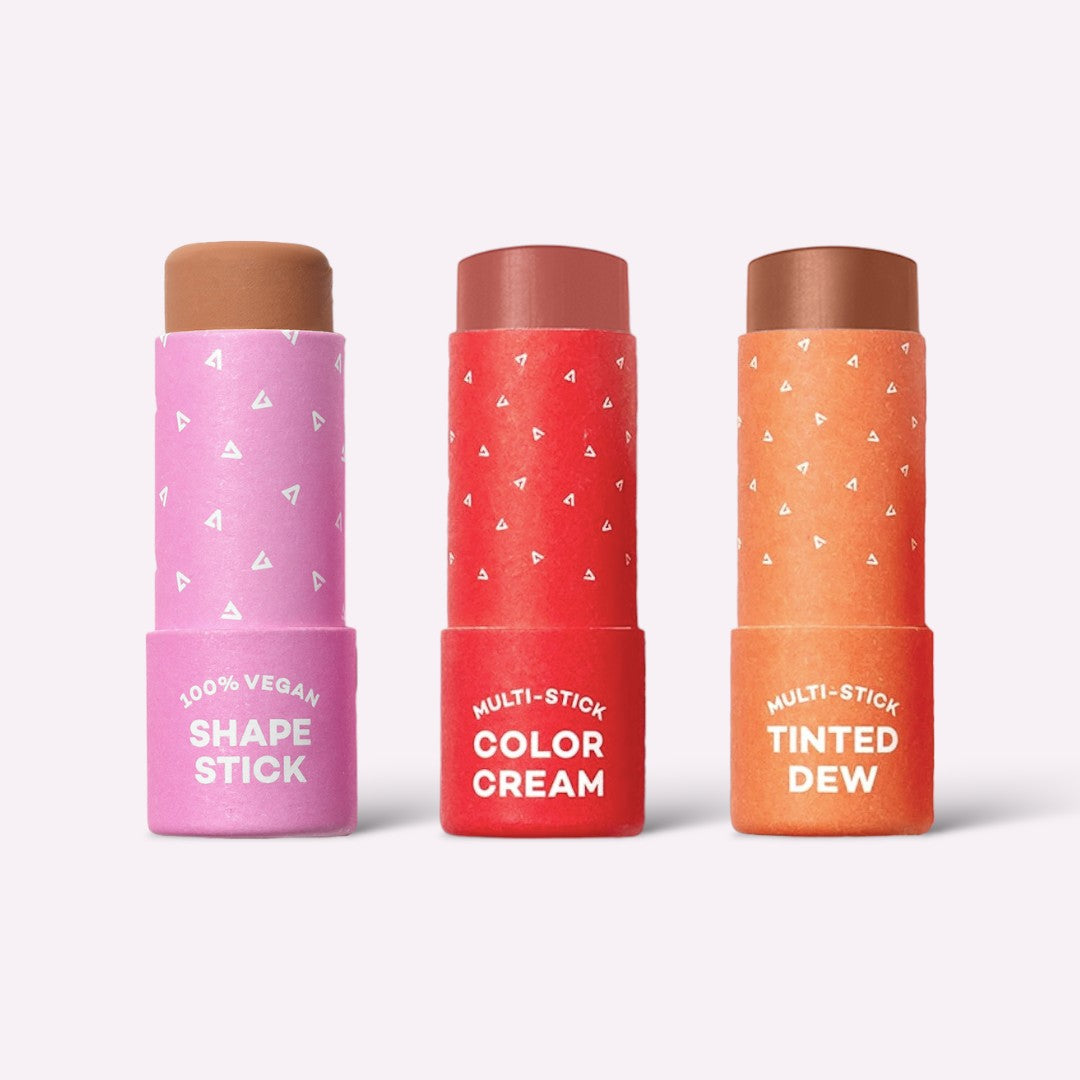
Sustainable beauty isn't just a trendy label—it's a whole philosophy. At its heart, it’s about creating products that are kind to our skin and our planet through every single step of their journey, from the moment an ingredient is planted in the ground to the day you toss the empty container.
It’s a commitment to thinking about the bigger picture.
What Truly Makes a Beauty Product Sustainable
The word "sustainable" gets thrown around a lot, and frankly, it can feel a bit hollow. To really get what it means, stop thinking about a product as just a thing on your shelf. Instead, picture it as part of a healthy ecosystem. It has a backstory, a life, and an afterlife, and a truly sustainable product is designed with intention for all three phases.
This mindset isn't just a niche movement anymore; it's a massive shift in how we think about beauty. The global market for sustainable beauty and skincare hit a whopping USD 190.7 billion in 2024 and is expected to more than double to USD 433.2 billion by 2034. This explosion is happening because people like you are asking for more—more transparency, cleaner formulas, and brands that actually stand for something. You can see the data behind this trend in the full market research report.
It’s All About the Full Lifecycle
Most products we buy follow a pretty straight line: take resources, make a product, and then toss it when it’s empty. Sustainable beauty flips that script. It’s all about a circular approach, where every stage is designed to minimize waste and harm.
Think about it: a face cream with amazing organic ingredients isn't so great if it comes in a clunky, non-recyclable plastic jar made in a factory with terrible labor practices. A truly sustainable product has to tick all the boxes.
True sustainability isn't a single feature—it's a promise. It means looking at the entire journey of a product, from the seed in the ground to the empty tube in your recycling bin, to understand its real impact.
To give you a clearer picture, we've broken down what a genuinely sustainable product looks like. Think of this table as your quick-reference guide for spotting the real deal.
The Pillars of a Truly Sustainable Beauty Product
| Pillar | What It Means | Example in Action |
|---|---|---|
| Conscious Sourcing | Ingredients are grown and harvested ethically, without depleting natural resources or harming local communities. | A brand uses shea butter sourced from a women's cooperative that pays fair wages and practices regenerative farming. |
| Green Formulation | The formula inside is safe, biodegradable, and non-toxic. The production process also minimizes water and energy use. | A facial oil made with only 9 powerful botanicals that break down safely in waterways, created in a solar-powered lab. |
| Circular Packaging | The container is designed to be minimal, reused, refilled, or easily recycled. The goal is to eliminate waste entirely. | A lipstick tube made from recycled paper that can be composted, or a glass bottle designed for endless refills. |
| Ethical Operations | The company itself operates with integrity—from cruelty-free testing and fair labor standards to transparent supply chains. | A company that is B Corp Certified, donates a portion of profits, and is completely transparent about its carbon footprint. |
When a product checks all these boxes, you know you're holding something that's not just good for you, but good for everyone and everything involved in its creation.
Decoding Ingredient Lists for True Sustainability
Trying to figure out what's really in your beauty products can feel like learning a new language. You turn the bottle over, see a wall of complicated words, and your eyes glaze over. I get it. But learning to read that label—officially called the INCI, or International Nomenclature of Cosmetic Ingredients—is the single best tool you have for making conscious choices.
Think of the ingredient list as the product's DNA. It tells the whole story, from the heavy-hitting active ingredients to the stuff that just holds it all together. Once you know how to spot a few key players (both the good and the bad), you go from being a confused shopper to someone who knows exactly what they're putting on their skin and out into the world.
This little decision tree is a great way to visualize what we’re talking about. It breaks down the key questions to ask when you’re trying to figure out if a product is actually sustainable.

As you can see, a product only gets the green light when it nails all three: conscious sourcing, a green formula, and circular packaging. Just checking one box isn't enough.
The Red Flags: Common Ingredients to Avoid
Some ingredients are everywhere in traditional beauty products, but they come with a hefty environmental price tag. They might make a product feel nice for a moment, but their long-term impact is a huge red flag.
Here are a few of the usual suspects to keep an eye out for:
- Microplastics: These tiny plastic bits, often listed as polyethylene or polypropylene, are used as cheap fillers or exfoliants. They go right down the drain and into our oceans, where they poison marine life and work their way up the food chain. No, thank you.
- Unsustainable Palm Oil: Palm oil itself isn’t evil, but the way it's usually farmed is a leading cause of deforestation. If you see "Sodium Palmate" or similar derivatives without a Roundtable on Sustainable Palm Oil (RSPO) certification, it’s best to steer clear.
- Certain Silicones: Anything ending in "-cone" (like dimethicone) gives products that silky, slippery feel. The problem? Many aren't biodegradable and just build up in our water systems, sticking around for hundreds of years.
Spotting these is your first line of defense. If you see them on a label, it’s a pretty good sign the product doesn't align with a truly sustainable mission.
The Good Stuff: The Rise of Green Chemistry
On the flip side, some of the most exciting things happening in beauty right now are coming from green chemistry. This isn't just about mashing up plants and calling it a day. It’s the actual science of creating super effective, biodegradable ingredients that work with nature, not against it.
Green chemistry is the real answer to the beauty industry's waste problem. It's all about making high-performance ingredients that don't leave a toxic mess behind. It proves you don't have to choose between a product that works and one that's good for the planet.
Instead of harsh, synthetic chemicals, brands are finding brilliant, plant-derived alternatives that give you amazing results without all the ecological baggage.
Green Lights on the Label: Sustainable Swaps to Look For
So, what should you be looking for? When you’re scanning an ingredient list, these are the positive signs that a brand is doing it right.
What to Look For:
- Biodegradable Exfoliants: Think jojoba beads, finely ground seeds (like apricot), or fruit enzymes. They get the job done without polluting our waterways.
- RSPO-Certified Palm Oil: This label means the palm oil was produced without trashing forests or hurting local communities.
- Plant-Based Emollients: Ingredients like squalane (from olives!), shea butter, and kokum butter are incredible moisturizers that give products a smooth, luxurious texture without needing silicones.
- Botanical Actives: Smart brands are using things like mushrooms, algae, and powerful plant extracts to deliver real benefits to your skin. Want to go deeper? You can explore more about the world of natural ingredients for makeup and just how powerful they can be.
These ingredients aren't just "natural"—they're renewable and biocompatible. By choosing products that use these kinds of thoughtful alternatives, you're voting with your wallet. You’re supporting the brands pushing the entire industry toward a cleaner, greener future.
Rethinking Packaging for a Zero-Waste Routine
Let’s be real: the container a product comes in is usually its biggest environmental headache. For way too long, the beauty industry has relied on throwaway plastic, creating a mountain of waste that will outlive us all. But something’s changing. We, the people buying the products, are starting to look beyond the formula and demand smarter, cleaner packaging.
This isn’t about some guilt trip over a plastic tube. It’s about recognizing that a brand's packaging choices have massive real-world consequences, from jam-packed landfills to plastic-choked oceans. The good news? We’re in the middle of a packaging revolution, and it’s making a zero-waste (or at least less waste) routine easier than ever.

Ranking Packaging Materials from Worst to Best
Not all packaging is created equal. Once you know the good, the bad, and the ugly, it's way easier to make better choices in the store aisle.
- Worst Offenders: At the very bottom are mixed materials—think pumps with metal springs inside plastic tubes—and brand-new virgin plastic. These are a recycling nightmare and almost always end up in the trash.
- Better, But Not Perfect: Moving on up, we have post-consumer recycled (PCR) plastics and glass. PCR gives existing plastic another shot at life, and glass can be recycled forever. Still, producing and recycling both takes a fair bit of energy.
- The Gold Standard: The true winners are the options that close the loop. We’re talking refillable systems, package-free solids (like shampoo bars), infinitely recyclable aluminum, and materials that go back to the earth, like compostable paper.
The Pioneers of Circular Packaging
Some awesome, forward-thinking brands are proving that great beauty products don’t have to trash the planet. For them, packaging isn't an afterthought; it’s a core part of their mission.
Brands are getting seriously creative, using materials like mushroom packaging that’s fully compostable or even water-soluble pods that just dissolve down the drain. This kind of innovation isn't cheap, and the industry is taking note. While beauty companies spent a whopping USD 7.7 billion on ads in 2022, a growing slice of that is going toward telling us about these greener options. Plus, big-deal programs are dedicating billions to research better biodegradable and recyclable materials, which helps speed things up for everyone.
"The most sustainable package is no package at all. When that’s not possible, the next best thing is a package that can be reused, refilled, or returned safely to the earth. This is the future of beauty."
That’s pretty much the heart of the circular design movement. If we choose materials that can be used again and again or simply composted, we can finally ditch the "take-make-waste" model that’s been running the show for too long.
How to Audit Your Own Shelfie for Waste
Ready to make a change? Start with a quick inventory of what you already own. This isn’t about feeling bad; it’s about getting smart.
- Gather Your Products: Pull everything out of your makeup bag and bathroom cabinet.
- Sort by Packaging Type: Make piles for plastic tubes, glass jars, aerosol cans, and those tricky mixed materials.
- Identify the Problems: Which pile is the biggest? Your daily-use items are the most powerful place to start making swaps.
- Plan Your Swaps: As you finish a product, commit to replacing it with something better. Trade your liquid foundation in plastic for a solid version in a recyclable tin. Swap disposable makeup wipes for reusable cloth rounds.
Every conscious swap you make sends a message to the industry and helps build a future where a beautiful "shelfie" is also a sustainable one. If you want to dive deeper, check out this great guide on what goes into creating truly sustainable cosmetics packaging.
How to Spot Greenwashing and Find Brands You Can Trust
Trying to find truly sustainable beauty products can feel like you’re walking through a hall of mirrors. You’ll see a lot of beautiful, nature-inspired packaging and vague claims like "eco-friendly" or "all-natural." This is often a tactic known as greenwashing, where brands give the impression of environmental responsibility without actually doing the work.
It's a clever marketing trick that makes it tough to tell who’s genuinely committed and who’s just putting on a show.
Greenwashing works because it plays on our desire to do the right thing. A brand might shout about one organic ingredient while whispering about the synthetic chemicals also in the formula. Or they’ll celebrate a recyclable bottle that’s topped with a non-recyclable pump. It’s a classic misdirection, but once you know what to look for, you can see right through it.
If you want to get a better handle on these often-confusing terms, you can start by breaking down sustainability buzzwords.
Look for Proof, Not Promises
Honestly, the single best way to cut through the noise is to look for third-party certifications. These aren't just pretty logos; they are legit seals of approval from independent organizations that have audited a brand's entire process. Think of them as a background check for your beauty products.
These certifications prove that a company is walking the talk, not just slapping a leaf on its label.
A certification is a brand's promise turned into proof. It means an unbiased expert has investigated their claims and confirmed that they meet rigorous standards for ethical and environmental performance.
A brand's commitment can even extend to its entire operational setup. To get better at spotting greenwashing, it helps to understand what real environmental commitment looks like behind the scenes. For example, learning about the benefits of ISO 14001 certification for a business shows a much deeper level of accountability. This kind of knowledge empowers you to ask tougher questions and demand real transparency.
Key Sustainable Beauty Certifications at a Glance
While there are tons of certifications out there, a few key players carry the most weight in the beauty world. Getting to know them is like having a secret decoder ring for the beauty aisle. This table breaks down some of the most important seals to look for.
| Certification Logo | What It Guarantees | Key Focus Area |
|---|---|---|
| Guarantees that no animal testing was used at any stage of product development, from raw ingredients to the final product. It’s the gold standard for cruelty-free. | Animal Welfare | |
| Assesses a company's entire social and environmental impact—supply chain, ethics, employee benefits, and community work. Certified B Corps are legally required to balance profit and purpose. | Overall Ethics & Impact | |
| A leading European certification for organic and natural cosmetics. It enforces strict standards for ingredient sourcing, organic content, and prohibiting harmful synthetics. | Organic & Natural Ingredients | |
| Focuses on the people behind the ingredients. It ensures that ingredients from developing countries are sourced ethically, with fair wages and safe working conditions for farmers and workers. | Ethical Sourcing & Labor |
By prioritizing products that carry these certifications, you’re not just buying a lipstick or a serum; you’re voting with your dollars for brands that have invested in genuine, verifiable sustainability. It’s a powerful way to make a difference.
Building Your Own Sustainable Beauty Routine
Switching to sustainable beauty can feel like this massive, overwhelming project. But here's the secret: it doesn't have to be an all-or-nothing thing. It's about progress, not perfection. Honestly, the most sustainable thing you can do right now is to use what you already have. Let's keep perfectly good products out of the landfill, okay?
Once you’re ready to start making changes, think slow and steady. This isn’t a stressful bathroom overhaul; it’s more of a mindful edit of your daily rituals. That's how you build habits that actually stick.

Start with a Simple Audit
First things first, let's get a real look at what you're working with. Pull out all your daily go-to products and do a quick inventory. We're looking for two main culprits: packaging waste and sketchy ingredients.
- Packaging: How much single-use plastic are you seeing? Make a mental note of anything in those tricky non-recyclable containers, like fancy pumps or tubes made of mixed materials.
- Ingredients: Give those labels a scan. Are there any red flags like microplastics (look for polyethylene) or unsustainable palm oil derivatives?
This isn't about feeling guilty. It’s just about figuring out where you can make the biggest, most impactful changes. You'll probably find that just a few products are doing most of the heavy lifting when it comes to waste.
Make One Swap at a Time
Okay, you've got your starting point. Now, resist the urge to trash everything and buy all new stuff. I know it's tempting. Instead, just pick one high-use item to replace when it runs out. This makes the whole process way more manageable and, frankly, affordable.
A great place to start is with whatever you use up the fastest. For a lot of us, that’s a daily cleanser, body lotion, or deodorant. Swapping just one of those can slash your plastic waste over the course of a year.
By focusing on one thing at a time, you give yourself space to actually research the alternatives and find a sustainable product you genuinely love. No more impulse buys that end up in the back of a drawer. This is how you build a new routine that’s truly better for you and the planet.
As you keep going, start prioritizing products that do more with less. Multi-use items are the cornerstone of a minimalist, sustainable routine. Think about it: a single color stick that works for lips, cheeks, and eyes replaces three different products. That saves you money and cuts way, way down on packaging. This simple move toward versatility is one of the most powerful steps you can take.
Your Questions About Sustainable Beauty, Answered
Jumping into the world of sustainable beauty can feel like learning a new language. You start making conscious choices, but then the questions pop up. Are these products actually better? Am I going to go broke? Let's clear the air on some of the most common hang-ups.
Think of this as your cheat sheet for navigating the green beauty space with a little more confidence.
Are Sustainable Beauty Products More Expensive?
It’s true that some sustainable products have a higher price tag upfront, but they almost always save you money in the long run. The secret? They’re usually way more concentrated. A little goes a long way, so you’re not constantly running out and buying more.
Plus, so many of these gems are multi-use—think a single balm for your lips, cheeks, and eyes. That immediately cuts down on the number of products you need to buy. Add in refillable options that save you from paying for packaging over and over, and you’ll see the mindset shift. It’s less about buying cheap, disposable stuff and more about investing in a few high-quality things that last.
Does "Natural" or "Organic" Automatically Mean Sustainable?
Nope, not necessarily. While these terms feel like they’re all in the same family, they mean very different things. "Natural" is a notoriously unregulated word that marketers can slap on almost anything. "Organic" is much more specific—it means the ingredients were grown without synthetic pesticides, which is a huge win for sustainability.
But a truly sustainable product looks at the whole picture. We’re talking ethical labor, water usage, packaging waste, and whether a so-called “natural” ingredient was sourced in a way that destroys ecosystems (looking at you, uncertified palm oil). Always check for third-party certifications to get the full story.
How Do I Actually Recycle Beauty Packaging?
Getting disposal right is the final, crucial step. What you can and can’t recycle depends entirely on your local rules, which can be surprisingly different from town to town.
Here’s a quick guide to doing it right:
- Check Local Rules First: Seriously, this is the most important step. A quick search for your town’s recycling guidelines will tell you what they accept.
- Clean It Out: All containers need to be completely empty and rinsed. Leftover gunk can contaminate a whole batch of recycling.
- Sort Your Materials: Glass and aluminum are pretty much always a safe bet. For plastics, look for the number inside the triangle logo. #1 (PET) and #2 (HDPE) are your best shots at being recycled.
- Tackle the Tricky Stuff: Those complex bits like pumps, droppers, and mixed-material tubes? They usually can’t go in your home recycling bin. Look for brand take-back programs or special services that handle hard-to-recycle beauty waste.
Honestly, the best move is to just choose products with minimal, easily recyclable, or even compostable packaging from the get-go.
Ready to simplify your routine with products that are just as good for your skin as they are for the planet? Check out Axiology’s collection of plastic-free, vegan, and multi-use makeup. It’s proof that sustainability can be seriously beautiful. Find your new go-to at axiologybeauty.com.