When someone says a makeup brand is "sustainable," what does that actually mean? It’s not just about a recyclable jar, though that’s part of it. A truly sustainable brand looks at the big picture, committing to being environmentally and ethically responsible from the moment an ingredient is grown to the day you finish the last swipe of lipstick.
It’s a complete, holistic approach—one that ensures every step of the process is designed to minimize harm to our planet and everyone on it.
What Makes a Makeup Brand Sustainable
Trying to define a sustainable makeup brand can sometimes feel like chasing smoke. The beauty industry loves to throw around words like "eco-friendly," "green," and "clean," but these terms often don't have clear, regulated definitions. This ambiguity makes it way too easy for brands to engage in a little creative marketing—what we all know as greenwashing.
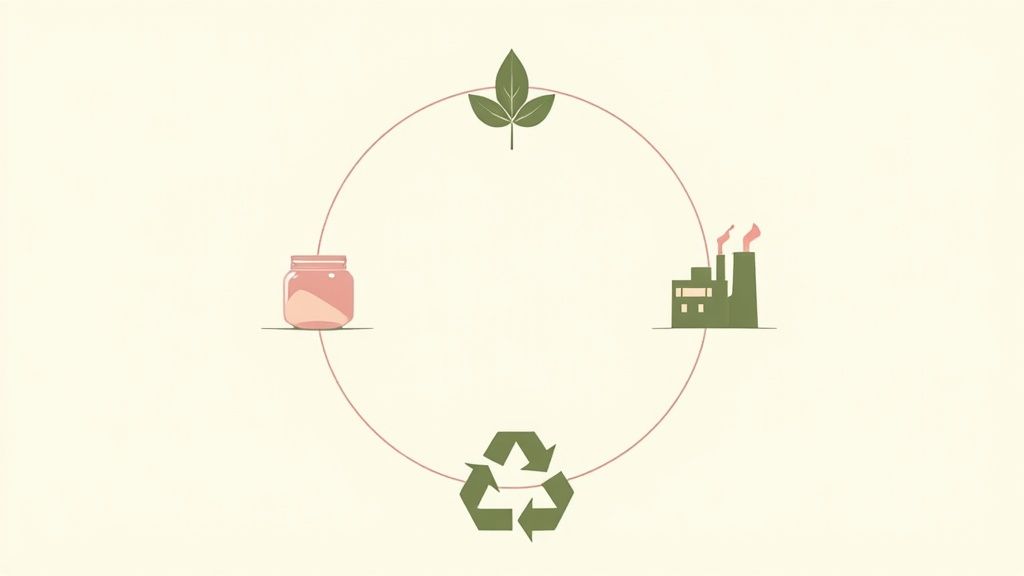
To cut through the noise, it helps to stop thinking of sustainability as a single action and start seeing it as a complete ecosystem.
Think about a healthy forest. Everything works in harmony—the soil, the trees, the water, the wildlife. A genuinely sustainable brand operates on that same interconnected principle. It's a circular system where every choice, big or small, affects the whole.
This way of thinking is catching on, big time. The worldwide natural cosmetics market is projected to grow at an annual rate of 5.75%, mostly because people like us are demanding products that are better for the environment and come in recyclable packaging.
So, how can you spot the real deal? We’ve broken it all down into four core pillars. Think of these as the foundation you should look for when you're trying to figure out if a brand actually walks the walk.
To give you a bird's-eye view, here's a quick rundown of what those pillars look like.
The Pillars of a Truly Sustainable Makeup Brand
| Pillar | What It Means | Why It Matters |
|---|---|---|
| Ingredients & Sourcing | Using ingredients that are safe, non-toxic, and sourced ethically. | Protects your health, prevents animal cruelty, and supports fair labor and biodiversity. |
| Packaging & Waste | Designing packaging that is minimal, recyclable, compostable, or refillable. | Reduces the massive amount of waste that ends up in landfills and oceans. |
| Ethical Operations | Running the business responsibly—from fair labor to carbon footprint. | Ensures the company's impact on people and the planet is positive. |
| Transparency & Certifications | Being honest about practices and getting verified by third-party organizations. | Builds trust and proves a brand's claims are more than just marketing fluff. |
These pillars give us a solid framework for evaluating any brand. Understanding them is the first real step in moving beyond the buzzwords and making choices you can feel good about. And if you want to dive even deeper, check out our guide on breaking down sustainability buzzwords.
A truly sustainable brand considers its impact at every stage: from the seed in the ground to the product's end-of-life. It’s about creating beauty that doesn’t leave a scar on the planet.
Let's take a closer look at what each of these pillars really means in practice.
Decoding Ingredients and Ethical Sourcing
Let's get real: what’s inside a product is the true heart of sustainable beauty. While pretty packaging matters, a brand’s commitment to clean, non-toxic, and ethically sourced ingredients tells you everything you need to know about their values. It’s the difference between a product that just looks good and one that actually is good—for you, and for our global community.
This focus on ingredient integrity is a huge deal. The sustainable beauty market was recently valued at a massive USD 190.7 billion and is expected to explode to USD 433.2 billion by 2034. This boom is happening because people like you are demanding more transparency and ethical practices from every sustainable makeup brand. You can dig into the full market report here.
Clean Formulas and Conscious Sourcing
A truly sustainable brand starts with what it leaves out. Lots of conventional makeup is packed with a cocktail of synthetic chemicals—think parabens, phthalates, and synthetic fragrances—that can be rough on your skin and even worse for aquatic life when they go down the drain. Clean beauty, at its core, means saying "no thanks" to all that.
But real sustainability goes deeper by asking tough questions about what goes in.
Where did that shea butter come from, and did the local community benefit from harvesting it? Was the mica that gives your eyeshadow its shimmer mined without child labor? Are the plant-based oils in your lipstick contributing to deforestation?
This is where ethical sourcing becomes a non-negotiable. It means making sure every raw material is obtained responsibly, paying fair wages, ensuring safe working conditions, and protecting biodiversity. It’s about remembering that every single ingredient has a story and a human impact behind it.
Vegan and Cruelty-Free Commitments
For so many of us, the most important ethical line in the sand is animal welfare. This is where the terms "cruelty-free" and "vegan" come in. They’re often used together, but they mean very different things.
- Cruelty-Free: This is simple—the product and its ingredients were not tested on animals at any stage. The gold standard is the Leaping Bunny certification, which guarantees no new animal testing has occurred anywhere in the supply chain.
- Vegan: This means the product contains zero animal-derived ingredients or byproducts. We're talking no beeswax, no carmine (a red pigment made from crushed beetles), and no lanolin (from sheep's wool).
A brand can be cruelty-free but not vegan, or the other way around. A genuinely sustainable makeup brand, however, usually embraces both, ensuring its products are kind to animals from start to finish. If you want to dive deeper into these distinctions, check out our guide on what vegan makeup truly is.
Looking for these certifications on a label is one of the quickest and most powerful ways to check a brand’s claims. It turns a simple purchase into a vote for a kinder, more responsible beauty industry.
Navigating Truly Sustainable Packaging
Packaging is usually the first thing we notice about a product, and let’s be real, in the beauty world, it’s a huge source of waste. If a product's formula is its soul, the packaging is its body. A truly sustainable makeup brand makes sure that this body is designed to have a super gentle impact on the earth long after the lipstick inside is gone.
The beauty industry is famous (or infamous) for its addiction to single-use plastics, which can stick around for centuries. It’s a massive environmental headache, but it’s also sparked some incredible creativity in how things are packaged. Brands are finally looking beyond the basic recycling symbol and getting into materials that are either infinitely reusable or can just return safely to the earth.
This shift means looking at the entire life of a container, from the moment it's made to the moment you’re done with it. It’s all about creating a circular system instead of a straight line to the landfill.
Beyond The Blue Bin
Tossing a jar into the recycling bin and hoping for the best isn't the simple fix we wish it was. So many makeup parts—like pumps, tiny caps, and compacts made of mixed materials—are too small or complicated for most recycling facilities to even handle. This is where a brand's real commitment to smart design shines.
A great sustainable packaging game plan usually involves one (or more) of these moves:
- Refillable Systems: This is pretty much the gold standard. You buy a beautiful, durable case once and then just pop in refills. It drastically cuts down on waste. Think of it as a "forever" home for your favorite foundation.
- Post-Consumer Recycled (PCR) Materials: This is just a fancy way of saying "making new packaging from old, used plastic or paper." It gives trash a second chance and means we don't have to use up new resources.
- Compostable and Biodegradable Materials: Some brands are getting really innovative with packaging made from paper, bamboo, or even cornstarch that you can compost at home. It just breaks down and goes back into the soil.
- Minimalist Design: Sometimes the most sustainable package is the one that's barely there. This "naked" approach uses the absolute minimum, often just paper wrapping, to protect the product.
The most eco-friendly package is the one you can use over and over again, or one that disappears without a trace. It’s about ditching a disposable mindset for a restorative one.
Making Smart Choices
When you know what these different packaging options are, you can make way better choices. For a deeper look into the good, the bad, and the ugly of materials like glass, aluminum, and cool bioplastics, check out our full guide on sustainable cosmetics packaging.
At the end of the day, a sustainable makeup brand makes it easy for you to do the right thing. They give you clear instructions on how to refill, recycle, or compost their packaging, taking all the guesswork out of being an eco-conscious beauty lover. By supporting brands that are all-in on circular design, you're helping build a beauty industry where looking good and doing good go hand in hand.
Your Guide to Spotting a Genuinely Sustainable Brand
Trying to figure out which beauty brands are actually sustainable can feel like a full-time job. It's overwhelming, but you don't need a PhD in environmental science to make good choices. The trick is knowing what questions to ask.
Think of this as your field guide for cutting through the noise. Arm yourself with a few key questions, and you'll quickly learn how to tell the difference between a truly committed sustainable makeup brand and one that's just good at marketing. It’s all about building that confidence to see past vague claims and spot greenwashing from a mile away.
What's Inside? Ingredients and Sourcing
The heart of any product is its ingredient list. A brand that’s serious about sustainability will be totally transparent about what’s in the tube and, just as importantly, where it came from.
Here are a few simple things to ask:
- Are the ingredients clean? Look for brands that are upfront about what they leave out—things like parabens, phthalates, and synthetic fragrances.
- Is it ethically sourced? Do they talk about fair trade practices for ingredients like mica or shea butter? They should be able to explain how they make sure their supply chain is free from exploitation.
- Is it vegan and cruelty-free? The quickest way to know for sure is to look for official certifications. Logos from Leaping Bunny or PETA are your best bet.
What's Outside? Packaging and Waste
Let's be real: packaging is the most obvious (and often most wasteful) part of the beauty industry. Brands that are truly thinking ahead are all about solutions that keep stuff out of landfills and help create a circular system.
This little flowchart is a great way to quickly size up a product’s packaging.
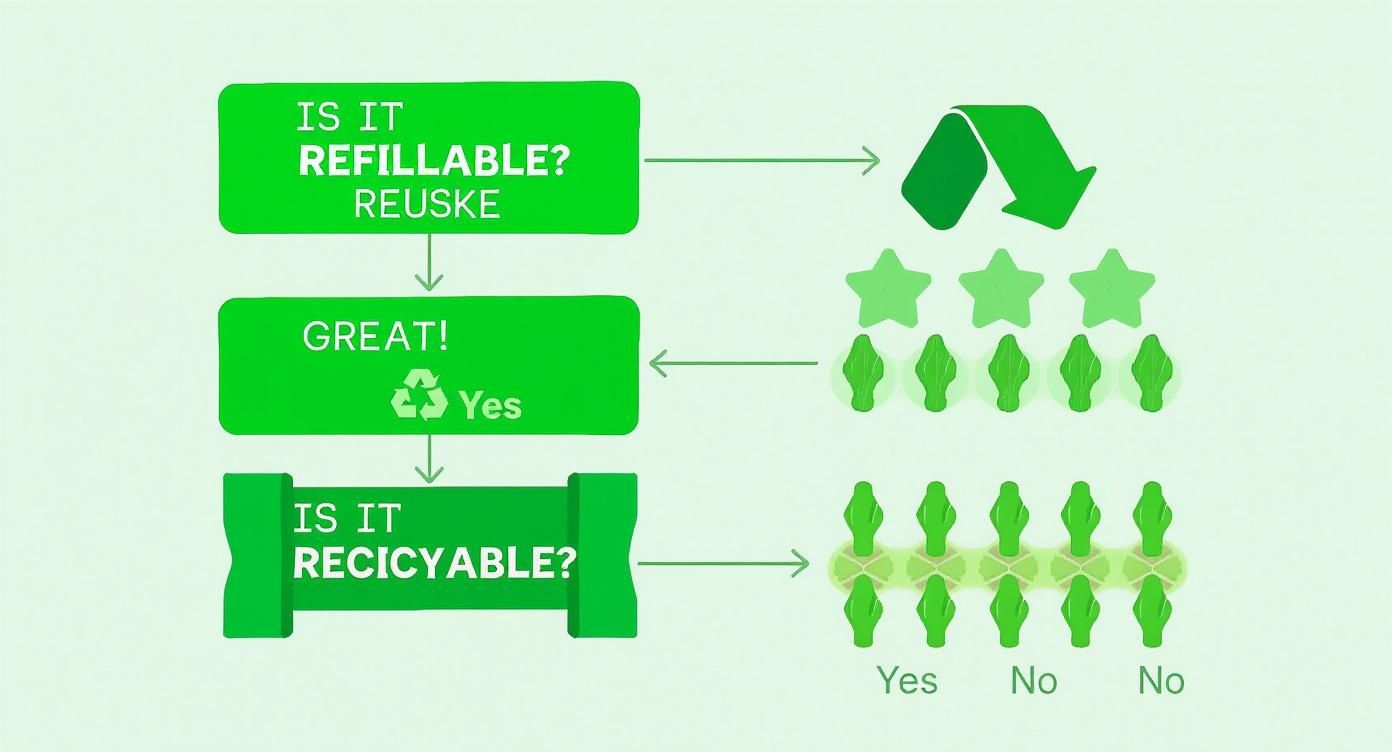
As you can see, it’s all about prioritizing reuse over recycling. Refillable options are almost always the most powerful choice for cutting down on waste in the long run.
Red Flag Alert: Watch out for vague terms like "eco-friendly" or "earth-conscious" that aren't backed up with specifics. If a brand says its packaging is recyclable, do they actually tell you how to recycle it? Real sustainability comes with clear, actionable info, not just pretty buzzwords.
The Big Picture: Brand Ethics and Certifications
Okay, now it’s time to zoom out and look at the company as a whole. A brand’s commitment to sustainability should be part of its DNA, not just something they slap on a label.
Third-party certifications are your best friend here—they’re like an unbiased fact-checker for a brand’s claims.
Here’s what to look for:
- Do they have legit certifications? Keep an eye out for seals like B Corp, which means the company meets high standards for social and environmental performance, or Carbon Neutral, which shows they’re offsetting their carbon footprint.
- Are they transparent? Do they openly share info on their website about how their products are made, their labor practices, and their sustainability goals?
- Do they give back? Lots of sustainable brands team up with environmental or social causes, putting their money and influence where their mouth is.
To make this super simple, here's a quick checklist you can use next time you're shopping.
Sustainable Makeup Brand Evaluation Checklist
| Criteria | What to Look For | Red Flags to Avoid |
|---|---|---|
| Ingredients | Clean, non-toxic formulas; Clear ingredient lists; Ethically sourced raw materials (e.g., fair trade mica). | Vague ingredient policies; Use of harmful chemicals (parabens, phthalates); No info on sourcing. |
| Packaging | Zero-waste, refillable, or plastic-free options; Minimalist design; Clear recycling instructions. | "Eco-friendly" claims with no proof; Single-use plastics; Complex, non-recyclable materials. |
| Animal Welfare | Vegan formulas (no animal byproducts); Cruelty-free certification (Leaping Bunny or PETA). | No official certifications; Ambiguous statements like "we don't test on animals" (could mean third parties do). |
| Certifications | Third-party seals like B Corp, Carbon Neutral, or 1% for the Planet. | Self-made logos or "green" sounding terms without official backing. |
| Transparency | Openly shares supply chain info, manufacturing practices, and sustainability reports. | Hiding information; No clear sustainability section on their website; Ignoring customer questions. |
| Brand Ethics | Gives back to social or environmental causes; Follows fair labor practices. | No evidence of community involvement or charitable partnerships; Silence on labor standards. |
By keeping these points in mind, you can confidently cut through the greenwashing and throw your support behind the brands that are genuinely doing the work. Happy conscious shopping
Seeing Sustainability in Action with Axiology
Theory is great, but let's be real—seeing it in practice makes all the difference. To really get what a truly committed sustainable makeup brand looks like, we're going to talk about Axiology. This brand doesn’t just sprinkle in a little sustainability for marketing; their entire reason for being is built on it. They're a perfect example of what's possible in beauty.
Axiology basically takes our checklist and brings it to life. It all starts with their ingredients. They're known for their 10-ingredients-or-less formulas, which is a huge deal in an industry famous for mile-long, impossible-to-pronounce ingredient lists. By keeping things clean, vegan, and cruelty-free, they make sure their products are good for your skin and the planet.
And that commitment goes all the way down to their sourcing. Every single ingredient is hand-picked not just for how well it works, but for its ethical backstory and tiny environmental footprint. It’s exactly what you want to see from a brand that walks the talk.
Pioneering Plastic-Free Packaging
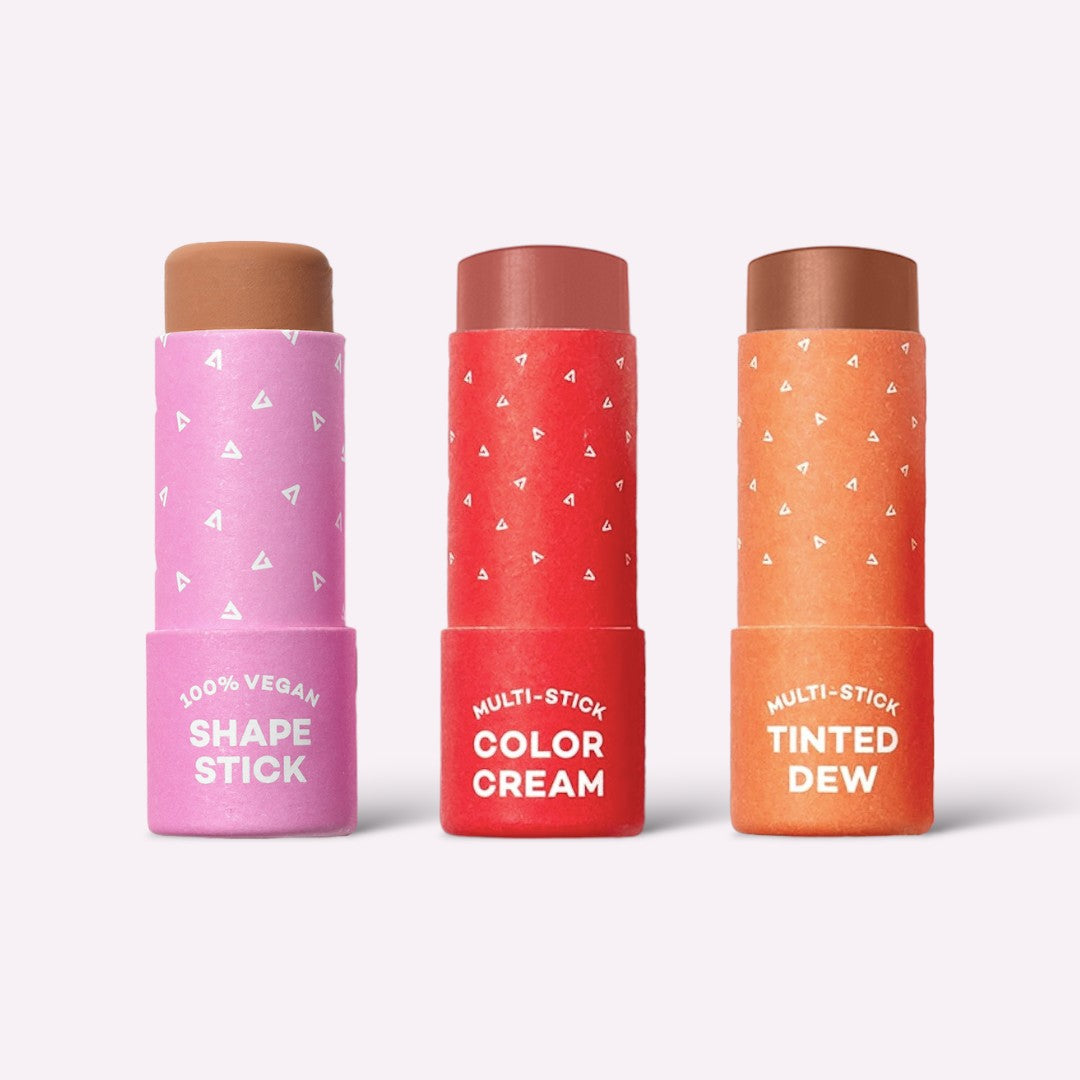
Where Axiology really blows my mind is their packaging. They are true pioneers in the zero-waste movement, especially with their iconic Balmies. You know, those awesome multi-use crayons? They're completely tube-free and wrapped in recyclable paper, which means zero plastic.
They're essentially "naked," which completely challenges the idea that every lipstick or blush needs to come in a chunky plastic tube. It’s not just a cute gimmick; it’s a powerful statement about how much waste we create.
This shot from their website says it all, putting that beautiful, plastic-free design right where you can see it.
You immediately get their message: minimal waste, maximum performance. It’s proof you don’t need a bunch of packaging to make beautiful, effective makeup.
A Complete Brand Ethos
But it's not just about the products and packaging. Axiology’s whole vibe is about sustainability. They're super transparent about their business, from how they make things to how they reduce waste in their operations. Plus, they have both Leaping Bunny and PETA certifications, so you know their cruelty-free and vegan claims are legit.
Axiology demonstrates that high-performance beauty and authentic sustainability aren't mutually exclusive. They prove that a brand can be luxurious, effective, and deeply ethical all at once.
When you look at a brand like Axiology, you can see how all the pieces of the sustainability puzzle click into place.
- Clean and Minimal Formulas: Their ingredient lists are short, easy to understand, and don’t have any of the nasty stuff.
- Zero-Waste Packaging: They are leading the charge with creative, plastic-free designs that you can either recycle or compost.
- Verified Ethical Standards: Those third-party certifications give you the confidence that they’re not just greenwashing.
This holistic approach makes Axiology the perfect case study. It’s a clear, real-world guide for what to look for when you're on the hunt for your next favorite sustainable makeup brand, helping you find products that you can feel really good about.
Looking Beyond the Product Label
While clean ingredients and eco-friendly packaging are a huge piece of the puzzle, a truly sustainable makeup brand has a much bigger story to tell. Its commitment to the planet and its people should be woven into the very fabric of the company, not just sprinkled on the product page.
Think of it like choosing a restaurant. A delicious meal is obviously key, but you also want to know the kitchen is clean, the staff is treated well, and the business cares about its community. The same goes for makeup. A brand’s day-to-day ethics really show you who they are.
And this isn’t just a niche concern anymore—it’s what people expect. The global clean beauty market is on track to hit a massive USD 21.29 billion by 2030. That incredible growth is being driven by regular people like us demanding transparency and ethical practices across the entire business, not just in the formulas. You can get the full scoop on clean beauty market trends here.
A Company’s Complete Ethical Footprint
So, what does this deeper commitment actually look like? It comes down to a company’s total impact, from the head office to the factory floor. A brand that’s serious about sustainability is actively working to shrink its environmental and social footprint in everything it does.
Here’s what to look for:
- Carbon-Neutral Operations: This means the company is taking full responsibility for its carbon emissions by measuring them, working to reduce them, and then offsetting the rest. This could mean investing in renewable energy or funding reforestation projects to balance the scales.
- Water Conservation: Manufacturing can use a shocking amount of water. A responsible brand has smart processes to cut down on water usage, recycle water on-site, and make sure it’s not polluting local rivers and lakes.
- Ethical Labor Practices: This is a big one. It means everyone in the supply chain—from the farmers harvesting ingredients to the people packing boxes—is treated with dignity, paid a fair wage, and works in a safe environment.
- Community Give-Back Programs: Many conscious brands put their money where their mouth is. They partner with non-profits or donate a slice of their profits to social and environmental causes, using their success to make a real difference.
A brand's ethics are revealed in its actions when no one is watching. It’s about ensuring the company’s internal operations align with the sustainable values it promotes externally.
The Power of Third-Party Verification
To make sure these commitments are more than just pretty words on a website, look for third-party certifications. Think of them as an independent seal of approval that confirms a company is actually doing what it says it is.
One of the most respected out there is the B Corp Certification. To become a B Corp, a company has to go through a super intense assessment of its impact on its workers, community, environment, and customers. It’s a legal commitment to balance profit with purpose, and it’s a major green flag that a sustainable makeup brand is genuinely in it for the right reasons.
Got Questions About Sustainable Makeup?
As you start looking deeper into sustainable beauty, you're bound to have some questions pop up. It's totally normal. All the new terms can feel a little confusing, but we're here to clear things up so you can feel good about your choices.
Think of this as your personal cheat sheet for those "wait, what does that really mean?" moments.
Is Clean Beauty the Same as Sustainable Beauty?
This is probably one of the biggest points of confusion, and the short answer is no, they aren't the same thing. They're related, for sure, but they focus on different parts of the puzzle.
- Clean Beauty is all about non-toxic ingredients. The main goal is personal health—making sure what you put on your skin is safe and free from potentially harmful chemicals.
- Sustainable Beauty takes a much wider lens. It starts with clean ingredients but then looks at the entire life of a product. We're talking ethical sourcing, planet-friendly packaging, carbon footprint, and whether the company is actually a good corporate citizen.
Basically, a product can be "clean" without being made by a truly sustainable makeup brand. Sustainability is the whole picture, linking our own well-being with the health of the planet.
A brand might have a clean formula but stick it in a single-use plastic jar. That's not sustainable. Real sustainability is a deep commitment that runs from the ingredient list all the way to the company's core ethics.
Are Sustainable Makeup Brands More Expensive?
Sometimes, yes, the price tag can be a little higher upfront. And there's a good reason for that. Things like paying workers fairly, using high-quality natural ingredients, and developing innovative plastic-free packaging just cost more than the cheap, mass-produced alternatives.
But here's the flip side: many sustainable brands are designed to be a better investment in the long run. Take refillable products, for example. They can save you a ton of money over time because you're just buying the product refill, not paying for the whole package over and over again. It’s a shift from a throwaway mindset to one that values lasting quality.
Ready to find a brand that nails performance, ethics, and sustainability? Check out Axiology and discover our plastic-free makeup, made with 10 ingredients or less, that’s as good for your skin as it is for the planet.