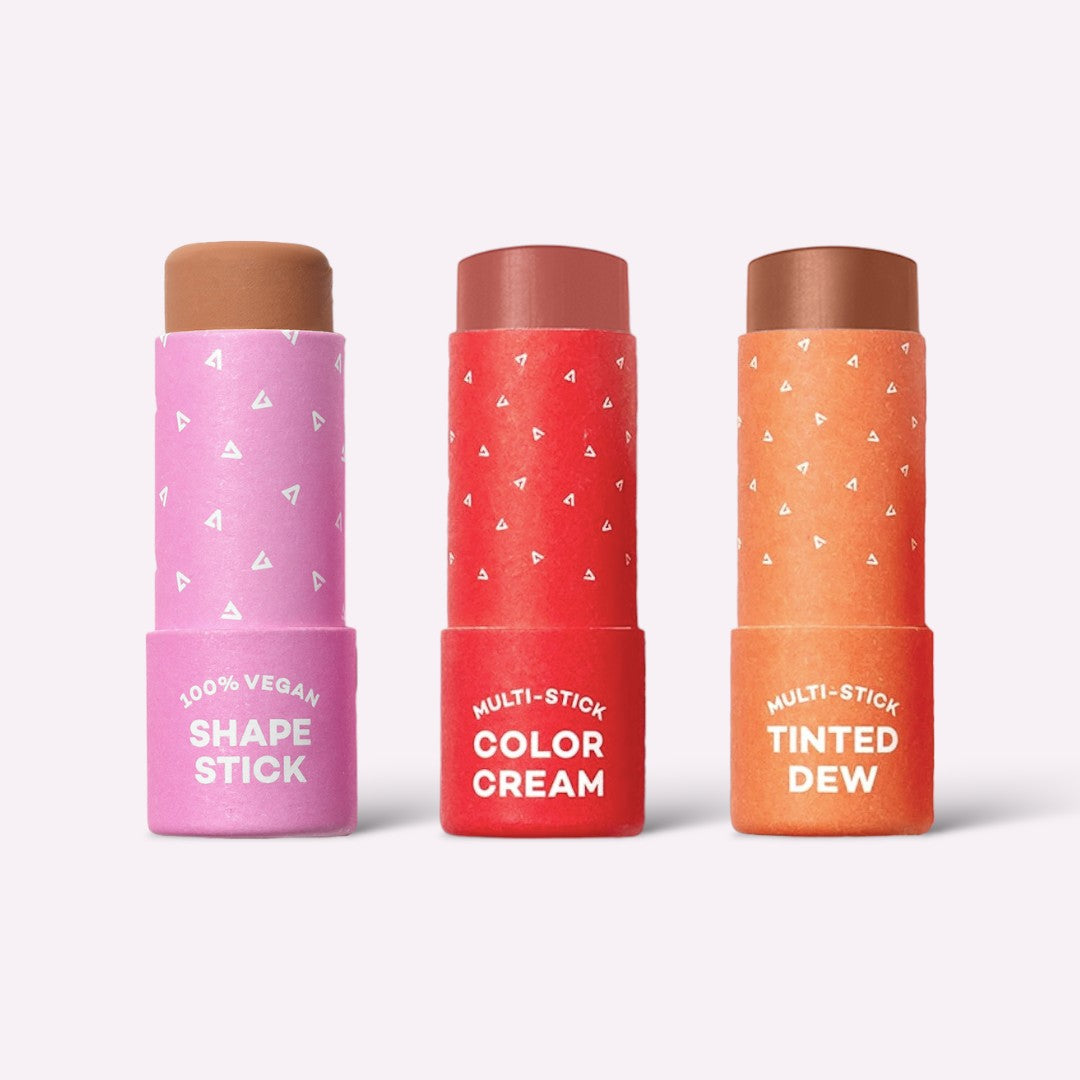
When we talk about sustainable makeup, we're talking about brands that actually care about their impact—both on the planet and on people. It's a full-circle approach, looking at everything from how ingredients are sourced to what happens to the packaging when you're done with it. Think of it as a conscious uncoupling from the wasteful, harmful habits of the fast beauty industry.
Why Sustainable Makeup Is the Future of Beauty
The beauty world is finally waking up. For too long, the industry has run on a model of disposability. We're all familiar with it: single-use plastic compacts, shady ingredient sources, and a never-ending cycle of product launches designed to make us feel like we need more, more, more. This has left a pretty ugly mark, from polluted rivers to landfills overflowing with plastic waste. We've written a whole guide on just how fast beauty harms people, wildlife, and the planet.
But something is shifting, and it's being driven by people like you who are demanding better from their beauty products. It’s no longer enough for a lipstick to be the perfect shade; we want to know the story behind it. This groundswell of consciousness is completely reshaping the market.
In fact, the global sustainable beauty market was recently valued at a massive USD 190.7 billion and is expected to soar to USD 433.2 billion by 2034. That's not just a trend—it’s a clear signal that consumers are choosing non-toxic, cruelty-free, and eco-conscious products over the old guard. You can read more about these market trends on InsightSLICE.
The New Definition of Luxury
Let's be clear: choosing sustainable makeup isn't about making a sacrifice. It’s about raising your standards. The most exciting brands today are proving that you can have high-performance, genuinely luxurious products that are also ethical. They’re rewriting the rules of what it means to be a beauty company by focusing on what really matters:
- Ingredient Integrity: They stick to clean, non-toxic formulas that are just as kind to your skin as they are to the environment.
- Packaging Innovation: They're thinking beyond just "recyclable" and are pioneering refillable, compostable, and even totally zero-waste packaging.
- Ethical Commitments: Fair labor practices and a strict no-animal-testing policy aren't just marketing points; they're non-negotiable foundations of their business.
This guide is here to help you cut through the noise. We want to give you the tools to see past the greenwashing, understand what truly makes a brand sustainable, and build a beauty routine that feels good in every way—making your switch to eco-friendly makeup feel less like a chore and more like a discovery.
What Makes a Makeup Brand Truly Sustainable?
The word "sustainable" gets tossed around a lot in the beauty world. But what does it really mean when it comes to your makeup?
Think of it this way: a truly sustainable brand is like a healthy ecosystem. It’s not just about one pretty flower (like a bamboo lid on a plastic tube). It’s about the quality of the soil, the cleanliness of the water, and how every part works together in harmony.
Real sustainability is a full-circle commitment. It looks at the entire life of a product—from where the ingredients are grown all the way to what you do with the empty tube. Let's dig into what that actually looks like.
The Foundation: Ethical Sourcing and Production
Long before a lipstick gets to you, its journey starts with raw ingredients. A genuinely sustainable brand is obsessed with its supply chain, making sure everything is sourced ethically and responsibly. That means fair wages and safe conditions for every worker, from the farm to the factory.
It also means a non-negotiable commitment to animal welfare. And this goes beyond just the finished product. To be truly cruelty-free, no ingredients can be tested on animals at any point in the process.
A brand's sustainability is only as strong as its weakest link. If that shimmery eyeshadow is made with mica mined by children, or if a factory is dumping waste into a local river, any "green" claims just fall apart.
The Materials: Clean Ingredients and Non-Toxic Formulas
What you put on your skin really matters. Brands that take sustainability seriously are all about ingredients that are safe for you and the planet. This means ditching sketchy chemicals for clean, non-toxic, and often plant-powered formulas.
These companies are transparent about what’s inside, steering clear of ingredients tied to health issues or environmental harm. For instance, you won't find things like:
- Parabens and Phthalates: Common chemical preservatives and plasticizers.
- Petroleum-Based Ingredients: Like mineral oil, which comes from fossil fuels.
- Synthetic Fragrances: A sneaky way to hide dozens of mystery chemicals.
Instead, they focus on nourishing, hard-working ingredients from nature. The whole point is to create amazing makeup that makes you feel beautiful without costing your health or the planet.
The Structure: Eco-Conscious Packaging
Get ready for a staggering number: the beauty industry churns out an estimated 120 billion units of packaging every single year. Most of it is plastic that clogs up our landfills and oceans. Sustainable brands are fighting this problem with smarter packaging designed to cut waste.
This is where some of the coolest innovation is happening. Brands are switching to materials that are:
- Recyclable: Using things like glass, aluminum, or plastics that are actually easy to recycle.
- Refillable: Creating systems where you keep the pretty outer case and just buy refills. This slashes waste like you wouldn't believe.
- Compostable or Biodegradable: Making packaging from materials that break down and go back to the earth, leaving nothing behind.
- Zero-Waste: Offering solid products like our lipstick crayons or foundation sticks that need little to no packaging at all. (Cough, cough, Balmies).
This isn't just a minor tweak; it's a complete shift away from the throwaway culture of beauty. It's about making the outside of the product just as thoughtful and beautiful as what's inside.
How to Spot a Truly Sustainable Makeup Brand
Trying to navigate the world of sustainable makeup can feel overwhelming. With so many brands tossing around terms like "green" and "eco-friendly," how do you tell who's actually committed versus who's just good at marketing? It really comes down to looking past the buzzwords and knowing what to look for.
Think of yourself as a detective. To be a conscious consumer, you just need to know the right questions to ask and where to find the answers. This guide will walk you through a simple, five-point check to assess any brand's real dedication to sustainability, so you can make choices that feel good to you.
This decision tree gives you a quick visual of the core areas to investigate when you're checking out a new brand.
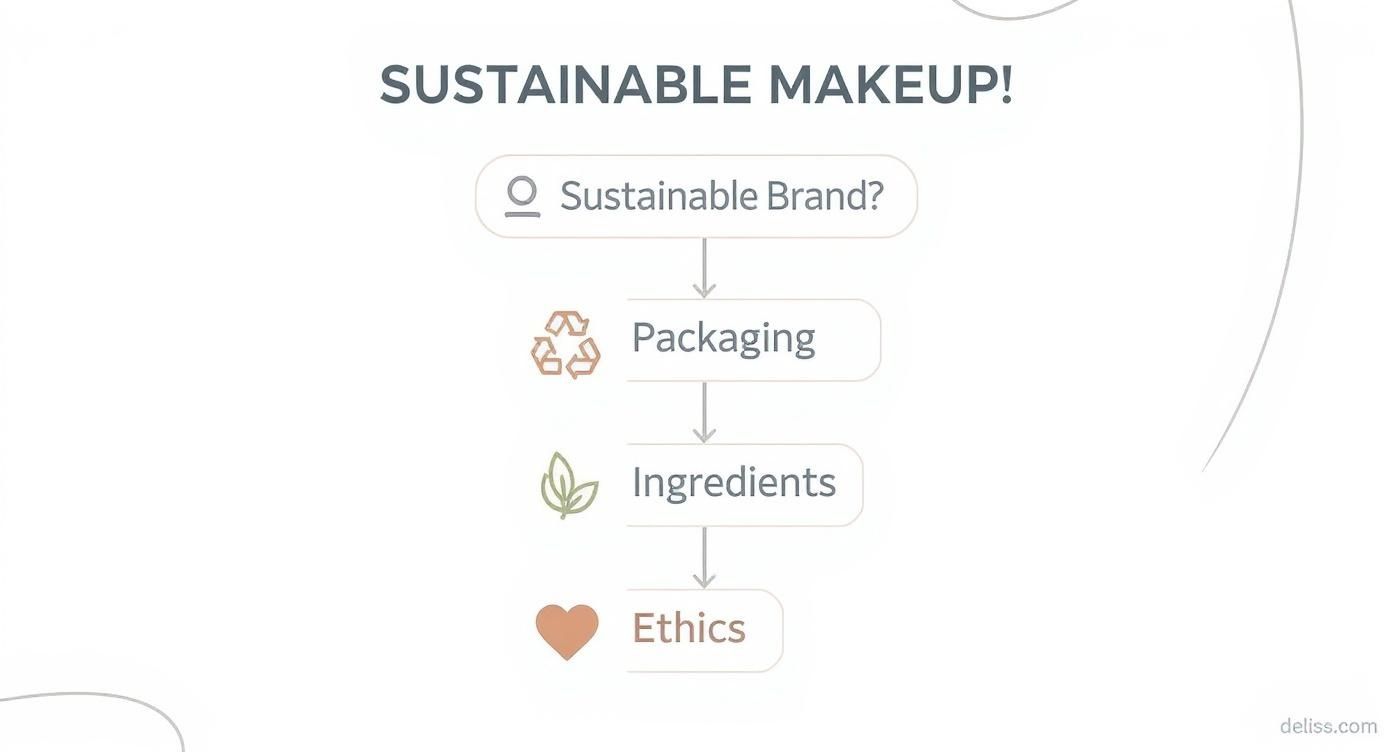
It breaks the whole process down, showing how packaging, ingredients, and ethics form the foundation of any brand that's genuinely sustainable.
1. Check Out Their Ingredients and Sourcing
A product’s story starts way before it ever lands in your makeup bag. The first thing to look at is where its ingredients come from and if they’re both safe for you and sourced without harming people or the planet. This is about more than just reading the INCI list.
Take two super common ingredients: mica and palm oil. Both are frequently tangled up in some serious ethical and environmental messes. Mica, the stuff that gives highlighters that gorgeous shimmer, is often mined using child labor. A truly sustainable brand will either get their mica from ethical, child-labor-free mines or opt for a synthetic, lab-made version instead.
It’s a similar story with palm oil, which is a massive driver of deforestation. A responsible brand will only use RSPO-certified sustainable palm oil, or better yet, avoid it completely.
When you're looking at a brand, ask yourself: Are they open about how they source tricky ingredients? For a truly sustainable makeup brand, transparency isn't just a nice-to-have; it's a must.
2. Look at Their Packaging
Let’s be real: the beauty industry has a huge packaging problem. A brand that’s actually sustainable is actively trying to fix this, not add to it. This means going way beyond just "recyclable" and getting creative with smarter, circular solutions.
The push to cut down on waste is getting stronger. Today, 30% of brands are offering refillable products, and that's a direct result of customer demand. It makes sense when you see that 85% of shoppers now say sustainability is a top priority, with Gen Z and Millennials really leading the charge.
Here's a quick checklist of what to look for:
- Refillable Options: Can you keep the pretty outer case and just buy a refill? This cuts down on so much waste.
- Post-Consumer Recycled (PCR) Materials: Are they using old plastic to make new packaging? This gives existing materials a second life instead of creating new plastic.
- Compostable or Biodegradable Packaging: Is the packaging designed to break down and go back to the earth, like the paper tubes and boxes Axiology uses?
- Minimalist & Plastic-Free Designs: Does the brand skip the unnecessary boxes, cellophane wrap, and mixed materials that make recycling a nightmare?
3. Investigate Their Supply Chain Transparency
Real sustainability means you can see the whole picture. If a brand is cagey about where its products are made or who makes them, that’s a major red flag. A truly transparent company is proud to pull back the curtain on its supply chain.
When checking out a new brand, their website is your first stop. Companies that work to design a website that builds trust often provide deep insights into their values and operations. Look for brands that are upfront about their factories, their labor policies, and how their products are actually made.
4. Verify Their Certifications
Third-party certifications are your best friend here. They’re one of the most reliable ways to know if a brand’s claims are legit because these outside groups have super strict standards. It takes the guesswork out of it for you. Still, it helps to know what each seal means. (If you want to go deeper, check out our article breaking down sustainability buzzwords).
To help you out, here's a quick rundown of some of the most common certifications you'll see on beauty products and what they actually guarantee.
Key Sustainability Certifications at a Glance
| Certification Logo | What It Guarantees | Key Focus Area |
|---|---|---|
| Leaping Bunny | Guarantees that no animal testing was conducted at any stage of product development, from raw ingredients to the final product. It's the gold standard for cruelty-free. | Animal Welfare |
| B Corporation | Assesses a company's entire social and environmental impact. B Corps are legally required to consider their workers, community, and the planet in their decisions. | Holistic Ethics |
| PETA's Beauty Without Bunnies | A trusted cruelty-free certification that verifies products and their ingredients are never tested on animals. | Animal Welfare |
| Vegan Certified | Ensures that a product contains absolutely no animal-derived ingredients or byproducts, like beeswax, lanolin, or carmine. | Ingredients |
Seeing these logos is a great sign that a brand is walking the walk, not just talking the talk.
5. Ask About a Product's End-of-Life
Finally, a truly sustainable brand has a plan for its products even after they're empty. Just telling customers to "recycle" isn't enough, especially since so many tiny cosmetic tubes and caps can’t be processed by most city recycling systems.
Look for brands that take responsibility for their own waste. This might look like:
- Take-Back Programs: Many brands team up with services like TerraCycle to collect their empty containers and make sure they get recycled properly.
- Clear Disposal Guides: They should give you simple, step-by-step instructions on how to recycle or compost every part of their packaging.
- Designing for Disassembly: Is the packaging easy to take apart, clean, and sort so it has the best chance of actually being recycled?
By using these five pillars—ingredients, packaging, transparency, certifications, and end-of-life—you can cut through the noise and find the sustainable makeup brands that are genuinely committed to making beauty better for all of us and the planet.
Spotting Greenwashing Red Flags and False Claims
https://www.youtube.com/embed/2NsBcVrPQok
Diving into the world of sustainable makeup means you need to bring a healthy dose of skepticism along. So many companies throw around vague, earth-friendly language to seem more responsible than they really are—a sneaky tactic we call greenwashing. Learning to see through these marketing tricks is probably the most important skill you can have as a conscious consumer.
Think of it like this: a truly sustainable brand gives you the full recipe, listing out every last ingredient and step. A greenwashing brand? They just show you a pretty picture of the finished cake. Your job is to demand the recipe. And those vague claims are your first major red flag.
Unpacking Vague Language
Be on high alert for buzzwords that sound amazing but mean very little without proof to back them up. They’re often just there to create an eco-friendly mirage without any real commitment.
Here are some common culprits:
- "Eco-friendly" or "Green": These terms are totally meaningless without context. What specifically makes the product eco-friendly? Is it the packaging, the formula, or how it’s made?
- "All-Natural": This term isn't regulated at all. Plenty of "natural" ingredients can be harvested unsustainably or even be harmful. Arsenic is natural, but you definitely don't want it in your foundation.
- "Chemical-Free": This one is just scientifically impossible—everything is a chemical, including water! It’s a marketing term designed to scare you into buying something that sounds safer than it is.
A brand that’s genuinely sustainable will get specific. Instead of just saying "eco-friendly," they’ll tell you, "Our lipstick is packaged in a 100% home-compostable paper tube, cutting plastic waste by 95% compared to traditional packaging."
The Misdirection Playbook
Another classic greenwashing move is to spotlight one tiny sustainable feature to distract you from much bigger, less-sustainable practices. It’s a common trick that plays on our desire to make a quick, feel-good purchase without digging too deep.
For instance, a company might go on and on about its new bamboo lid. But what about the rest of it? So often, that bamboo is glued to a non-recyclable plastic base, or the formula inside is packed with petroleum-derived ingredients.
A recent report showed that 68% of people are actively looking for "clean" products. Brands know this, and they’ll use their marketing to create that perception. Learning about crafting an authentic brand voice can also help you notice when a company’s messaging feels off or forced—another potential hint that you're being greenwashed.
Your Greenwashing Detector Checklist
To protect yourself from phony claims, start asking some critical questions before you pull out your wallet. A truly sustainable makeup brand will have clear, easy-to-find answers.
- Can they back it up? Hunt for data, third-party certifications (like Leaping Bunny or B Corp), and detailed info on their website.
- Is the whole product sustainable? Don't get distracted by one shiny feature. Look at the ingredients, the main container, and any outer packaging. If you want to go deeper on this, you can learn all about what makes for truly eco-friendly cosmetics packaging in our dedicated guide.
- Are they transparent about their supply chain? Do they openly talk about where their ingredients come from and how their products are actually made?
By asking these questions, you stop being a passive shopper and become an active investigator. It’s a mindset that empowers you to support the sustainable makeup brands that are genuinely putting in the work for positive change.
Building Your Sustainable Makeup Routine
Ready to make your makeup bag a little greener? The good news is, it doesn't have to be some expensive, overwhelming purge. The best way to transition is slow and steady.
Instead of a massive toss-out, just commit to replacing each product with a better, more sustainable alternative as you run out. This approach is way kinder to your wallet and the planet. It means you actually use what you already have, thoughtfully curating a collection that truly aligns with your values. Think of it as a mindful refresh, not a frantic overhaul.
Start with Smart Swaps
The easiest place to begin is with simple, high-impact changes. Take a look at your daily staples or anything that comes in a ridiculous amount of plastic. Just swapping one of those can seriously cut down on your daily waste.
From there, you can work your way through your routine, making conscious choices one product at a time. It’s all about progress, not perfection.
Sustainable Swaps for Your Base
Foundation, concealer, powders—these guys are often guilty of coming in complex, hard-to-recycle packaging. But thankfully, a ton of great brands are creating amazing alternatives that perform beautifully without the plastic mess.
- Go Solid with Foundation Sticks: These formulas are a game-changer. They completely ditch the need for plastic bottles and pumps, plus they're often more concentrated, so a little goes a long way. Minimal packaging for the win.
- Choose Refillable Compacts: Keep an eye out for brands offering refillable pans for powders, bronzers, and blushes. You get to keep the nice, durable outer case and just pop in a new product, which drastically cuts down on what you're throwing away.
- Embrace Multi-Use Color: This is one of the best tricks in the book for reducing consumption. A single color stick can work as your lipstick, blush, and even eyeshadow. That’s three separate plastic products replaced by one zero-waste hero.
Pro Tip: Try to prioritize waterless or solid formulas whenever you can. Think about it: shipping water all over the world creates a huge carbon footprint. Solid products are lighter, more compact, and need fewer preservatives, making them a much smarter choice for both you and the planet.
Rethinking Your Lip and Eye Makeup
Lipsticks and mascaras are notorious for their plastic tubes, which almost never get recycled. This is a huge area where making a different choice can massively reduce your plastic footprint over time. When your current faves run out, look for these eco-friendly options.
For lipstick, look for tubes made from paper, bamboo, or recyclable aluminum. A lot of brands now offer "balmies" or crayons that are totally package-free, wrapped only in a bit of recyclable paper. For mascara, scout out brands that use glass or aluminum tubes or, even better, offer refill programs.
Handling Makeup End-of-Life
A truly sustainable routine also means thinking about what happens when you’re done with a product. Just tossing it can lead to contaminating soil and waterways, so a little extra care makes a big difference.
- Finish What You Have: The most sustainable product is always the one you already own. Use it up completely before you even think about buying a replacement.
- Clean and Separate Components: Before you recycle, make sure containers are totally empty and clean. Pull apart any mixed materials—like taking the pump off a glass bottle—to give each piece the best chance of actually being recycled.
- Use Specialized Recycling Programs: For all those tricky little bits your local curbside program won't take (think tiny caps or complex tubes), use take-back programs offered by brands or services like TerraCycle.
By adopting this one-at-a-time swap strategy and focusing on multi-use, minimally-packaged products, you can build a beautiful and effective makeup routine that truly feels good to use. Every small change adds up to a huge, positive impact.
Got Questions About Sustainable Makeup? We've Got Answers.
Making the switch to a more conscious beauty routine is awesome, but it definitely brings up some questions. It's smart to wonder how your choices will affect your wallet, the planet, and of course, our animal friends. We've rounded up some of the most common concerns to give you clear, straightforward answers.
Are Sustainable Makeup Brands More Expensive?
It’s true that some sustainable products might have a higher price tag upfront, but it's not a hard and fast rule. When you do see a higher price, it's often because you're paying for things like ethically sourced, high-quality ingredients and fair wages for workers. Think of it as an investment in a healthier planet and society.
But also, think about the long-term value. A multi-use product, like a single color balm for your lips and cheeks, literally replaces two separate items, saving you cash. Refillable options also cut costs over time compared to buying a brand-new packaged product again and again. The price reflects the true cost, not just cheap convenience.
How Can I Be Sure a Brand Is Cruelty-Free?
This is a big one. Thankfully, there are super reliable ways to check. The most trustworthy method is to look for official third-party certifications. Keep an eye out for these logos on the packaging or a brand's website:
- Leaping Bunny: This is the gold standard. It guarantees no animal testing happened at any stage of product development.
- PETA's Beauty Without Bunnies: Another highly respected certification that confirms both the final product and its ingredients are free from animal testing.
Be a little skeptical of vague, self-made claims like "cruelty-free" or "not tested on animals" if there's no official logo to back it up. These terms aren't regulated and can be seriously misleading. Sometimes they only refer to the final product while completely ignoring the ingredient supply chain.
A brand that has gone through the rigorous process of certification is proud to show it off. If you can’t find a logo, it’s a good reason to dig a little deeper or just choose a brand that’s transparently certified.
What Is the Most Impactful Change I Can Make?
If you’re looking for the single most effective first step you can take, it's this: focus on reducing packaging waste. The beauty industry creates a truly massive amount of plastic, and a lot of it isn't even recyclable through standard curbside programs.
Start by choosing products with minimal, recyclable, or refillable packaging. Opting for solid, waterless formulas—like foundation sticks or our zero-waste Balmies—makes a huge difference. These products completely eliminate the need for plastic bottles and slash the carbon footprint that comes from shipping heavy, water-based liquids all over the globe. This one simple shift can dramatically shrink your personal environmental impact.
Ready to build a beauty routine that’s kind to your skin and the planet? Explore Axiology's collection of plastic-free, multi-use makeup and discover how beautiful sustainability can be.