Trying to decipher a beauty label can feel like you need a secret decoder ring. Let's simplify it. Toxic free beauty products are just products made without ingredients that have been linked to potential health issues. It's all about putting safety and honesty first, instead of relying on fuzzy marketing terms that don't mean much.
Think of this guide as your personal translator for the world of clean beauty.
Your Roadmap to Toxic Free Beauty Products
Choosing safer cosmetics means looking past the hype and focusing on what really counts: the integrity of the ingredients. More and more of us are searching for cleaner, more transparent options, and this collective voice is completely reshaping the beauty industry. This guide is your map to making choices you can feel good about—for your skin and your overall health.
This shift is all about empowerment. It’s about finally understanding what you’re putting on your body every single day. The point isn’t to be afraid of chemicals, but to make conscious, informed decisions.
Why Conscious Choices Matter Now More Than Ever
The desire for a cleaner, simpler lifestyle is definitely growing. It's easy to feel overwhelmed when you first realize just how many potentially sketchy chemicals are in everyday things, from our makeup bags to our cleaning cabinets. Switching to a non-toxic approach is a powerful way to lower that chemical load and give your body a little extra support.
People who make the switch often report some pretty amazing benefits, like:
- Clearer, calmer skin once they ditch common irritants and allergens.
- Less inflammation and fewer sensitivity flare-ups.
- Peace of mind from knowing their routine is in line with their long-term wellness goals.
The goal isn’t about achieving perfection or dodging every single toxin out there—that’s just not realistic. It’s about mindfully reducing your overall exposure where you can, so your body can more easily handle the rest.
Beyond the Bathroom Cabinet
This commitment to living with fewer toxins often spills over into other parts of life. As awareness grows, many people find themselves seeking out things like non-toxic activewear and cleaner household products. It becomes a more holistic way of thinking about wellness, where every choice contributes to a healthier environment, both for you and the planet.
Ultimately, navigating the world of toxic free beauty products is about taking back your power. It’s about asking the tough questions, demanding transparency, and choosing brands that share your values. And as you’ll see in our guide to the best clean beauty brands, this movement is packed with incredible options so you never have to compromise on performance.
What "Toxic Free" Actually Means in Cosmetics
When you see the phrase "toxic free" on a cosmetic product, it’s easy to assume it’s an official, regulated claim, kind of like seeing "USDA Organic" on your groceries. But in the world of beauty, that’s not quite how it works.
The term toxic free isn't actually defined or controlled by the FDA or any other regulatory body. Instead, it’s a philosophy. It’s a promise from a brand that they’ve intentionally formulated their products without certain ingredients that have been linked to potential health concerns.
Think of it like deciding what to eat. Some people skip gluten, others cut out processed sugar—not because a government agency told them to, but because it aligns with their personal health goals. In the same way, "toxic free" beauty is for people who want to consciously sidestep specific chemicals like parabens, phthalates, and synthetic fragrances.
It’s all about taking a proactive approach to what you put on your body, focusing on ingredient awareness instead of getting bogged down by vague marketing terms like "natural" or "green." A true toxic-free philosophy is rooted in transparency and the simple belief that you deserve to know what’s in your products.
Understanding Your Body Burden
To really get why this matters, it helps to understand a concept called body burden.
Picture your body as a rain barrel. Every day, tiny amounts of various chemicals from the air we breathe, the food we eat, the water we drink, and the products we use collect inside. A single drop—or one lipstick application—might not seem like a big deal on its own.
But those little drops add up over time. The average person slathers, spritzes, and lathers on multiple personal care products a day, and each one can contain dozens of ingredients. This repeated, low-dose exposure from all these different sources is what contributes to your total body burden.
The whole point of choosing toxic-free beauty isn't to live in fear of one ingredient. It's about mindfully reducing the cumulative load on your body. By making a few conscious swaps, you can lower the overall amount of potentially questionable chemicals your system has to deal with.
It's really about playing the long game for your health and giving your body's natural detoxification systems a bit of a break.
A Focus on Intentional Formulation
A brand that’s truly committed to a toxic-free philosophy doesn’t just avoid a few of the well-known "bad guys." It's a much deeper commitment that shapes how they create products from start to finish.
This intentional approach usually involves:
- Prioritizing Simplicity: Using fewer, more effective ingredients instead of a complex chemical cocktail. This not only makes labels easier to understand but also reduces the chances of skin irritation.
- Sourcing with Care: Choosing raw materials that are not only high-performing but also ethically and sustainably sourced. It’s about ensuring purity while also looking out for the planet.
- Championing Transparency: Openly sharing full ingredient lists and explaining what each ingredient does. Real toxic-free brands want you to feel empowered and informed, not confused.
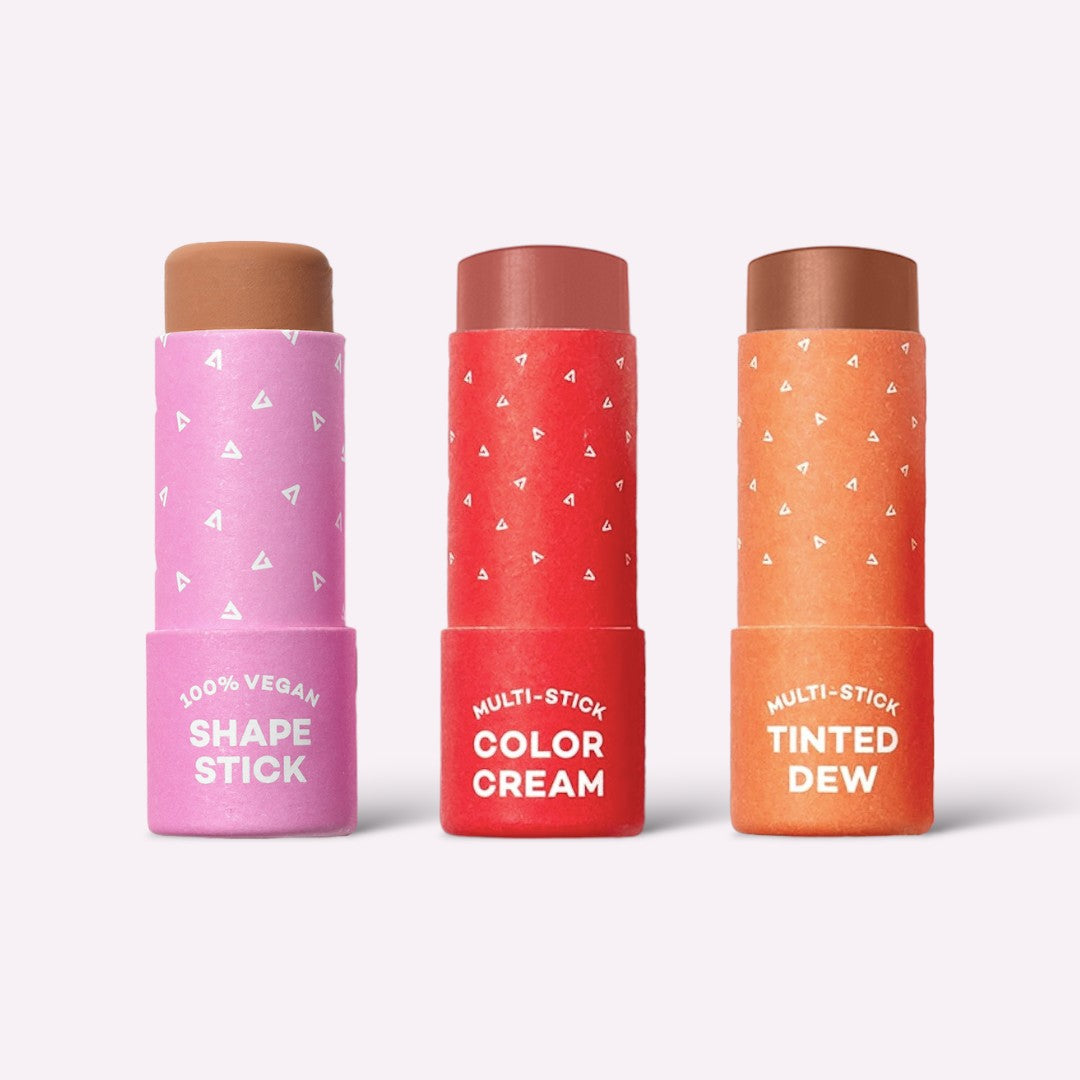
This philosophy is at the heart of everything we do at Axiology. We intentionally formulate our products with a minimal number of recognizable, plant-derived ingredients. Our goal has always been to create amazing makeup that’s kind to your skin and the planet—which is exactly why our packaging is completely plastic-free.
This isn’t about chasing trends; it’s about holding ourselves to a higher standard for what beauty can and should be. It’s our promise to create cosmetics that are as clean and safe as they are beautiful. When you choose products made with this level of care, you’re supporting a movement toward a healthier, more transparent beauty industry for all of us.
Key Ingredients to Avoid in Your Beauty Routine
Trying to navigate the world of toxic free beauty products can feel overwhelming, but it gets a whole lot easier once you know what to look for—and what to leave on the shelf. This isn't about memorizing a long list of scary-sounding chemicals. It’s about recognizing a few of the most common offenders so you can make choices that feel good.
Think of it like learning to spot weeds in a garden. You don't need to be a botanist, but if you can identify the top few troublemakers, you can keep your garden healthy and thriving. The same idea applies here.
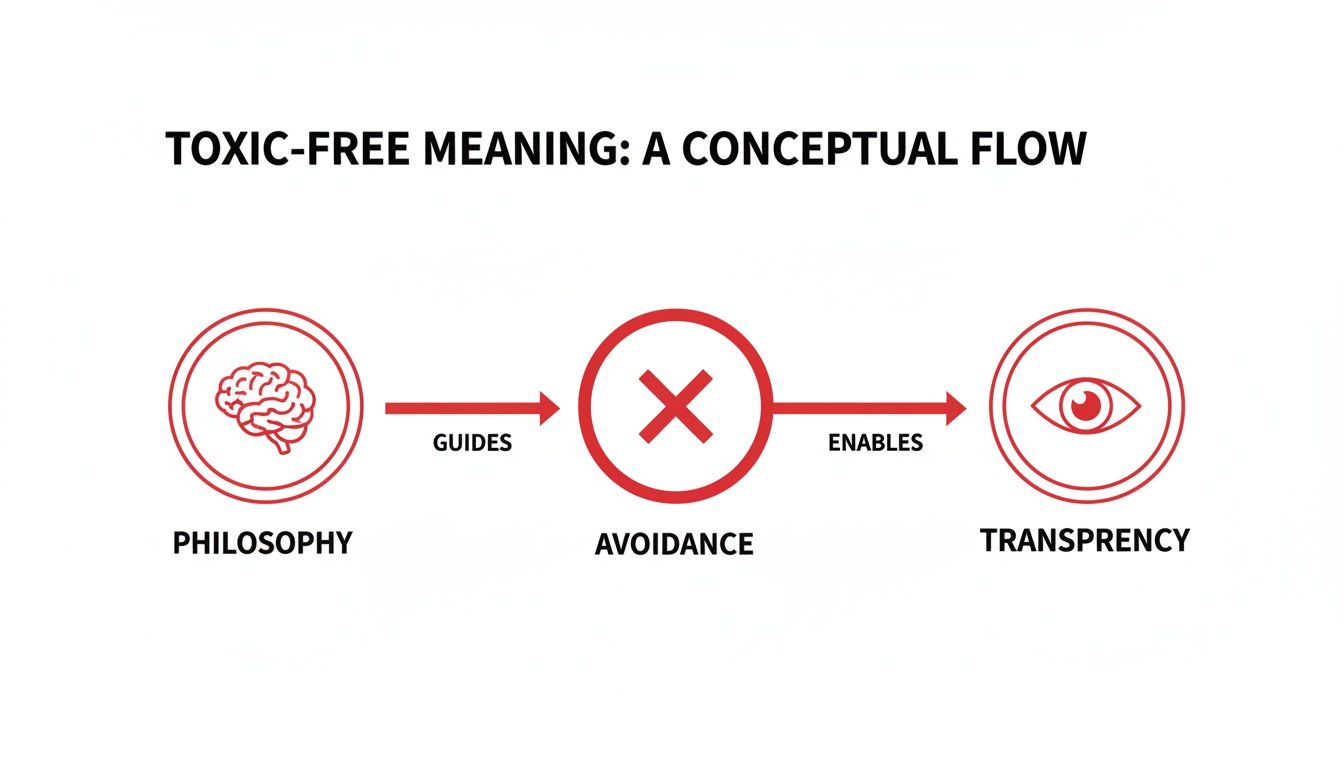
This whole approach starts with a conscious mindset, which then guides what we choose to avoid and pushes for total transparency from the brands we support.
With that philosophy in mind, let’s get into some of the specific ingredients worth skipping.
The Big Three: Parabens, Phthalates, and Fragrance
If you’re just starting to clean up your routine, focusing on these three is a fantastic first step. They are everywhere in mainstream products and are usually the first things to go when a brand commits to a truly toxic-free mission.
- Parabens (like methylparaben, propylparaben): These are preservatives used to stop bacteria and mold from growing in products like lotions and foundations. The big concern is that they can mimic estrogen, potentially messing with the body's natural hormone balance.
- Phthalates (like DBP, DEHP): Often called "plasticizers," these chemicals make plastics more flexible and also help scents last longer. You’ll rarely see the word "phthalate" on a label; they’re usually hiding under the catch-all term "fragrance."
- Synthetic Fragrance ("Parfum"): This single word can conceal a cocktail of dozens, or even hundreds, of chemicals that brands aren't required to disclose. It's a massive loophole that leaves you completely in the dark about what you're actually putting on your skin.
Thankfully, people are demanding better, and it’s making a real difference. We’re seeing a huge shift in the industry as shoppers vote with their wallets. The paraben-free market alone is worth USD 27 billion, growing at 4.7%; phthalate-free is at USD 11 billion with a whopping 8.9% growth; sulfate-free is at USD 20 billion and 5.0%; and vegan is at USD 11 billion with 6.5%.
Sulfates and Formaldehyde Releasers
Beyond the top three, a couple of other common ingredients raise red flags, especially if you have sensitive skin.
Sulfates (SLS and SLES): Sodium Lauryl Sulfate (SLS) and Sodium Laureth Sulfate (SLES) are the foaming agents that create that rich lather in cleansers and shampoos. While they clean effectively, they can be pretty harsh, stripping the skin and hair of their natural oils and causing dryness and irritation.
Formaldehyde-Releasing Preservatives: Ingredients like DMDM hydantoin and imidazolidinyl urea slowly release tiny amounts of formaldehyde to keep products fresh. Formaldehyde is a known carcinogen, and even though the levels are low, the concern is about repeated, long-term exposure from all the different products we use daily.
Spotting these ingredients isn't about creating fear; it’s about empowerment. It’s about understanding your products, not being scared of them. When a brand is open about what they leave out, it says a lot about what they value.
PFAS and the Push for Transparency
There’s growing concern around a class of chemicals called PFAS (per- and polyfluoroalkyl substances). You may have heard them called "forever chemicals" because they don't break down easily in our bodies or the environment.
In cosmetics, PFAS might be used to make products waterproof or long-lasting. The tricky part? They're almost never listed on ingredient labels. This is where a brand’s commitment to transparency is everything. Companies dedicated to being toxic-free have to do the hard work of vetting their suppliers to make sure these chemicals aren’t sneaking into their raw materials. To go deeper, you can learn more about PFAS and the need for supply chain transparency in our detailed article.
Ultimately, choosing toxic free beauty products means supporting brands that don’t just avoid questionable ingredients but also champion honesty, making it easy for you to know exactly what you’re putting on your body.
How to Become a Confident Ingredient Reader
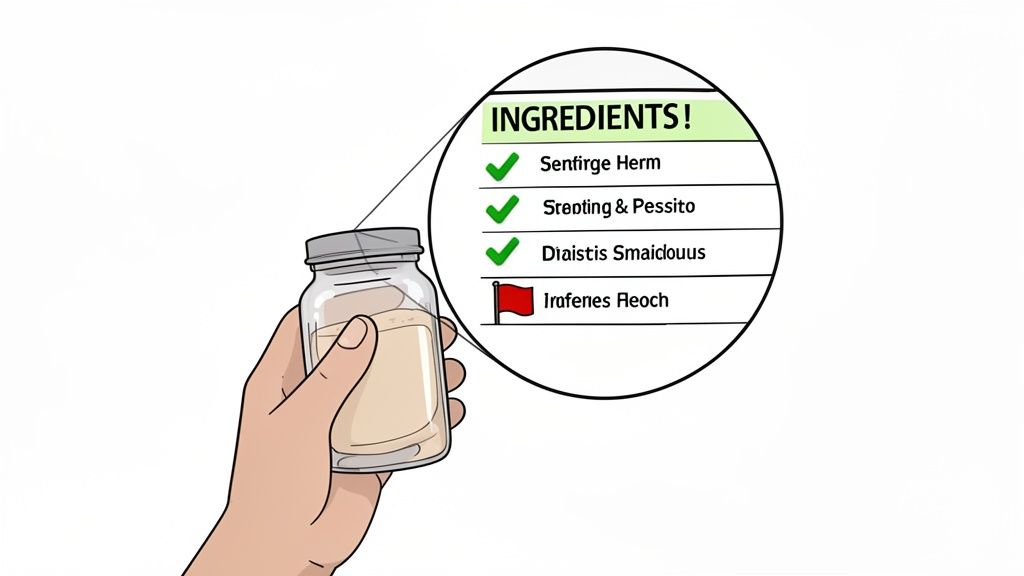
Let’s be honest, staring at a beauty ingredient label can feel like trying to crack a secret code. The long, scientific names and teeny-tiny print are enough to make anyone’s eyes glaze over.
But here’s the secret: once you learn a few basic rules, you get the power to see right past the flashy marketing on the front of the bottle and understand what’s really inside.
This skill is everything when it comes to choosing toxic free beauty products. It turns you from a passive shopper into someone who’s in the driver's seat of their own health. The best part? You absolutely do not need a chemistry degree to pull it off.
If you’ve ever learned how to read food labels like a pro, you’re already halfway there. A lot of the same ideas apply, giving you a great head start.
Start with the Order of Ingredients
Here’s the single most important thing to know about any ingredient list: ingredients are always listed from the highest concentration to the lowest. The very first ingredient is what makes up most of the product, and it goes all the way down to the last, which is present in the smallest amount.
This one rule tells you so much. If a brand is shouting about a rare, magical botanical extract, but you find it at the very bottom of the list after a dozen synthetic chemicals, you know there's barely any of it in there.
A great rule of thumb is to focus on the first five ingredients. These usually make up about 80% of the formula. If you spot any of your personal red-flag ingredients in that top group, you can pop it right back on the shelf and move on.
Tools to Simplify Your Search
You don’t have to do this alone. A few brilliant apps and websites can act like your personal ingredient dictionary, making the whole process way less confusing. Having one of these on your phone is a game-changer for clean beauty shopping.
- EWG's Skin Deep Database: This is one of the most thorough resources out there. You can look up thousands of specific products or individual ingredients to get a safety score and learn about potential health red flags.
- Think Dirty App: This app is amazing for in-store decisions. Just scan a product's barcode, and it gives you a straightforward "dirty meter" score from 0 to 10, explaining why each ingredient gets its rating.
Think of these tools as a translator in your pocket. They take the complex scientific language and convert it into straightforward, actionable information, empowering you to make a quick and confident decision.
Spotting Hidden Fragrance and Vague Terms
One of the trickiest parts of reading labels is navigating the vague terms brands sometimes use to hide ingredients they’d rather you not notice.
The biggest offender by far is the word "fragrance" or "parfum." Legally, this one little word can conceal a proprietary cocktail of hundreds of different chemicals, including potential allergens and endocrine disruptors like phthalates.
A truly transparent brand will either skip the synthetic fragrance entirely or tell you exactly what’s in their scent blend, like specific essential oils.
By learning these ground rules and leaning on helpful resources, you can decode any label that comes your way. This is your key to confidently navigating the world of toxic free beauty products and curating a routine that truly feels good.
Understanding Certifications in Clean Beauty
Let's be honest, the world of toxic free beauty products can be a confusing place. When brands throw around vague words like "clean" or "natural," it’s hard to know what you’re actually getting. This is where official certifications from independent organizations come in—they’re like trusted friends cutting through the noise.
Think of it like shopping for organic groceries. You look for that official USDA Organic seal because you know it represents a strict set of rules for farming and processing. Beauty certifications work the same way. They’re a shortcut to finding products that align with your values, whether that’s animal welfare, pure ingredients, or a lighter environmental footprint.
These labels aren't just for show; they’re a sign of a brand's commitment to being open and honest.
Key Certifications and What They Mean
Navigating all the different logos can feel like a chore, but a few key players really stand out for their tough standards. Getting to know what each one guarantees helps you quickly spot the products that are right for you.
Here are some of the most respected certifications in the clean beauty space:
- Leaping Bunny: This is the gold standard for cruelty-free. It promises that no animal testing happened at any stage of product development, from the raw ingredients to the final tube of lipstick. To get this seal, a brand has to agree to open its entire supply chain to monitoring.
- The Vegan Society: This certification is your guarantee that a product is 100% free of animal-derived ingredients. That means no beeswax, carmine, lanolin, or other common animal-based additives. It’s an important one to know because a product can be cruelty-free without actually being vegan.
- USDA Organic: While you see it more often in the grocery aisle, this seal on a cosmetic product means at least 95% of its ingredients are certified organic. This is one of the strictest certifications out there, regulating how ingredients are grown, harvested, and processed.
It's important to remember that no single certification covers everything. A product can be Leaping Bunny certified but not vegan, or it could be USDA Organic but still come in wasteful plastic packaging. This is why a holistic view is so important.
Beyond the Label to True Sustainability
A truly "clean" philosophy goes way beyond just the ingredient list. It’s about the entire life of a product, from where the ingredients come from to what happens to the packaging when you’re done with it. This is where our personal health and the planet's health really connect.
For instance, vegan cosmetics are a huge part of toxic-free beauty because they avoid both animal ingredients and, often, a lot of harsh chemicals. They're becoming a go-to for sustainability advocates, with the global market hitting USD 19.21 billion and projected to climb to USD 32.56 billion by 2032. You can dig into the numbers in the full vegan cosmetics market report.
This is why at Axiology, we believe in going further. Our commitment to being one of the top cruelty-free makeup brands is just the start. We also make sure our products are completely vegan and housed in innovative, plastic-free packaging. It’s all about creating beauty that is kind to your skin and the planet—proving that amazing makeup and environmental responsibility can absolutely go hand in hand.
Your Questions on Toxic Free Beauty Answered
Diving into clean beauty can feel like learning a whole new language. You start squinting at ingredient lists, wondering what half of it means, and it’s totally normal to feel a bit lost. Let's cut through the noise and tackle some of the biggest questions that pop up when you decide to shop for toxic free beauty products.
Think of this as your personal cheat sheet—clear, simple answers to help you feel confident about the products you're putting on your skin.
Are Natural and Organic Always Toxic Free?
Not always, and this is probably the biggest misconception out there. The problem is that terms like "natural" and "organic" aren't tightly regulated in the beauty world. A brand can slap "natural" on a label even if there are only one or two plant ingredients swimming in a sea of synthetic chemicals. The same goes for "organic"—it might just refer to a single ingredient, not the whole shebang.
A truly toxic-free product isn't defined by these buzzy marketing words. It's about what’s deliberately left out. The focus is on skipping a known list of potentially harmful chemicals, which is a much more solid standard than a vague claim on the front of a bottle. When in doubt, always flip it over and read the full ingredient list.
Do Toxic Free Beauty Products Actually Work Well?
They absolutely do. The old idea that "natural" means wimpy or ineffective is officially ancient history. The clean beauty movement has pushed innovators to create seriously high-performance makeup using amazing botanicals and safe, cutting-edge science.
Honestly, today's toxic free products often work better than the old-school stuff. Thanks to huge leaps in green chemistry, you don't have to choose between your health and getting results. You can have it all.
Brands are now using incredible ingredients that deliver rich color, stay-put power, and real skincare benefits, all without the questionable extras.
Is Switching to a Toxic Free Routine Expensive?
It really doesn’t have to be. Sure, some luxury clean brands have a higher price tag, but there are tons of affordable options on the shelves now. The best trick? Don’t try to overhaul your entire collection overnight. Just replace products one by one as you run out.
Here are a few tips to keep it wallet-friendly:
- Start Small: Don't toss everything at once. Swap out the products you use every single day first.
- Find a Multi-Tasker: A multi-use color stick for your lips, cheeks, and eyes can take the place of three different products. That’s less money, less clutter, and less waste.
- Think Long-Term: Sometimes a product that costs a little more is packed with better, more concentrated ingredients, meaning it will last you way longer than a cheaper version full of fillers.
What Is the Best First Step to Clean Up My Routine?
If you’re wondering where to start, focus on your "leave-on" products. We’re talking about things that stay on your skin for hours, like your moisturizer, foundation, lip balm, or body lotion. Because they hang around for so long, their ingredients have more time to be absorbed.
Go through the ingredient lists of these daily go-tos. Switching just one of them for a cleaner option can make a big difference in your daily chemical load and makes the whole process feel way less daunting. It’s the easiest, most impactful way to start your toxic free journey.
At Axiology, we think clean, safe beauty should be easy and fun. Our products are always vegan, cruelty-free, and packaged without plastic because we care about your health and the planet's. Check out our collection of multi-use makeup.