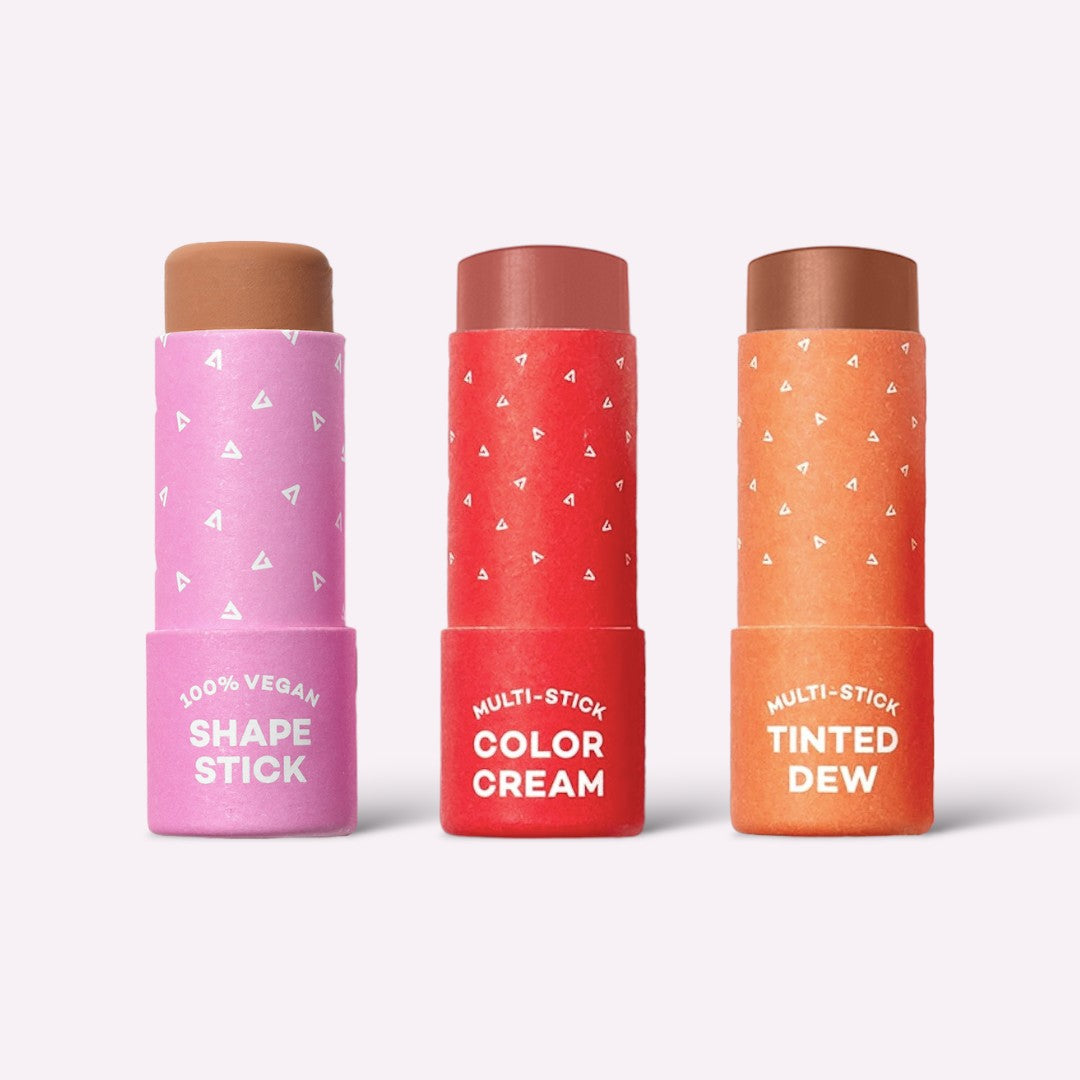
So, what does “toxic-free” even mean when it comes to cosmetics?
At its core, it’s about beauty products made without any ingredients that are known or even suspected to cause harm—to our bodies or to the planet. This whole movement is about putting safety and transparency first, helping you make a real choice about what you put on your skin, instead of just trusting a slick marketing campaign.
The Clean Revolution in Your Makeup Bag
Ever find yourself standing in a store, squinting at a product label full of words you can’t pronounce? You’re not just confused; you're feeling that little nudge of concern. You're definitely not alone. That exact moment is part of a huge shift happening in beauty—a real clean revolution, right in our makeup bags.
The term toxic-free cosmetics isn’t some strict, government-regulated definition. It’s better to think of it as a promise, or a philosophy. It’s a movement powered by people who are tired of guessing and want to consciously steer clear of ingredients linked to health issues and environmental damage. What started as a niche interest has totally blown up, and it's reshaping the entire beauty industry.
In just a few years, this has become a massive global movement. Back in 2023, the clean beauty market was already valued at about USD 8.25 billion. And it's not slowing down—analysts are projecting it will hit a whopping USD 21.29 billion by 2030. If you're a data nerd, you can dig into more on this growth with Technavio's industry analysis.
What This Guide Will Do for You
Jumping into this new world can feel like a lot, but don't worry. This guide is your roadmap. We want to give you the know-how to make choices you feel great about.
Here’s what we’ll cover:
- Decode Ingredients: Learn how to spot the common culprits on a label without needing a chemistry degree.
- Understand the Benefits: Get the real scoop on how choosing toxic-free products helps your skin and the planet.
- Shop with Confidence: Pick up practical tips and learn to recognize trustworthy certifications so you can cut through the marketing fluff.
The big idea is simple: You deserve to know exactly what’s in the products you use every single day. True beauty shouldn’t cost you your well-being or the health of our environment.
This is all about making informed choices, not about being perfect overnight. We'll even show you how brands like Axiology are walking the walk, proving that high-performance beauty can also be pure, ethical, and totally transparent. Let's get started on changing your relationship with cosmetics, one clean choice at a time.
How to Decode Cosmetic Ingredient Labels
Staring at a cosmetic ingredient list can feel like you’re trying to crack a secret code. But once you know what to look for, you’ll be a label-reading pro, easily spotting the stuff you want to avoid and choosing the best toxic-free cosmetics. The trick isn't to memorize every single chemical—it's about learning to recognize the usual suspects.
Think of it like scanning a recipe. You don't need to know the molecular structure of sugar, but you do know you might want to limit it. We can do the same with cosmetics by grouping ingredients by what they do, making it way easier to skip the questionable ones.
This whole idea of clean beauty really boils down to two things: what’s good for you, and what’s good for the planet. It’s a philosophy we live by here at Axiology.
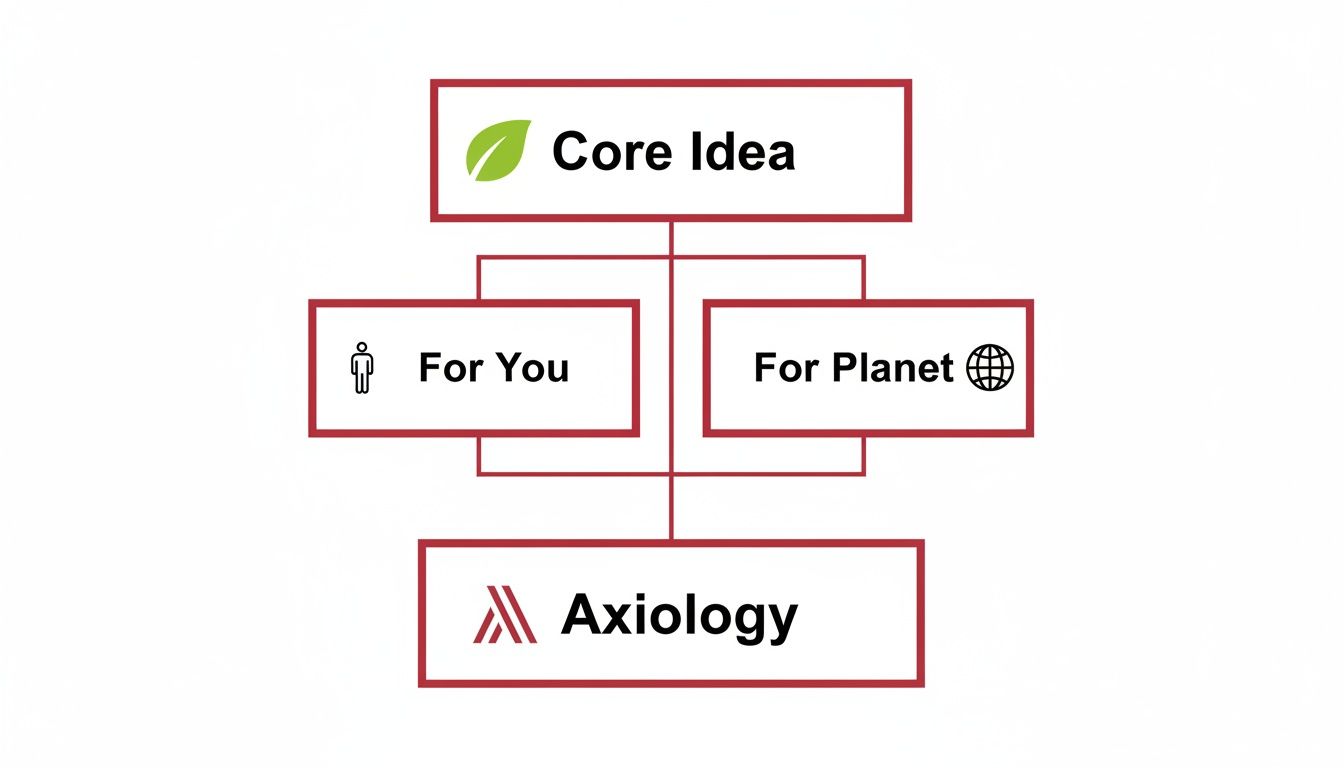
This chart really gets to the heart of it. Moving toward toxic-free beauty is about connecting your own wellness with the health of the environment, which is exactly why we do what we do.
A Quick Guide to Ingredients to Avoid
To make things easier, we've put together a little cheat sheet. Use this table to quickly spot potentially harmful chemicals, see what they're used for, and understand why you might want to avoid them.
| Ingredient Category | Examples to Spot on Labels | Primary Concern |
|---|---|---|
| Preservatives | Parabens (methylparaben, propylparaben, etc.), Formaldehyde-releasers (DMDM hydantoin) | Potential hormone disruption, known carcinogens |
| Surfactants | Sodium Lauryl Sulfate (SLS), Sodium Laureth Sulfate (SLES) | Can strip the skin's natural barrier, causing irritation and dryness |
| Fragrance | "Fragrance," "Parfum," Phthalates | A loophole that can hide hundreds of undisclosed, potentially irritating chemicals |
| Contaminants | Lead, Mercury, PFAS ("forever chemicals") | Neurotoxins and endocrine disruptors; accumulate in the body over time |
This isn't an exhaustive list, of course, but it covers some of the biggest offenders you'll see on labels. Knowing these key players is a huge step toward cleaning up your beauty routine.
The Problem with "Fragrance"
See the word "fragrance" or "parfum" on an ingredient list? That's a huge red flag. Thanks to a loophole that protects "trade secrets," that one little word can legally hide hundreds of undisclosed chemicals.
What’s in that mystery mix? Often, it’s phthalates. These chemicals make scents last longer but are also known endocrine disruptors linked to a whole range of health issues.
This is why opting for products scented only with essential oils or, even better, those that are completely fragrance-free is the safest way to go.
Hidden Toxins: Heavy Metals and Contaminants
Sometimes, the most worrying ingredients aren't even added on purpose—they’re contaminants. For example, lead, a well-known neurotoxin, can show up in trace amounts in color cosmetics, especially those made with certain mineral pigments.
While the levels might be tiny in a single product, the real concern is the cumulative exposure from using these products every day for years. That’s why some states, like Washington with its Toxic-Free Cosmetics Act, are banning or strictly limiting chemicals like lead and PFAS (the "forever chemicals" often found in waterproof makeup).
Learning to read labels is a skill that helps in all areas of life. Just like you might learn how to read nutrition labels effectively to make healthier food choices, understanding your makeup ingredients empowers you to protect your skin and body.
And if you're curious about the good stuff we use instead, check out our deep dive on natural ingredients for makeup.
The True Benefits of Going Toxic Free
Choosing toxic-free cosmetics is about so much more than just avoiding a list of chemicals you can't pronounce. It’s a conscious move toward nurturing your own health and looking out for the planet. Think of it as a positive ripple effect—one that starts with your skin and expands all the way out to our most fragile ecosystems.
When you make the switch to cleaner formulas, you’re not just sidestepping potential harm. You’re actively choosing a kinder, more nourishing path for your body. It's like swapping a diet of processed junk for whole, vibrant foods. You can literally see and feel the difference, and it's deeply satisfying.
Happier Skin One Product at a Time
For lots of people, the first thing they notice after going toxic-free is calmer, happier skin. It makes sense. Conventional cosmetics are often loaded with harsh surfactants, synthetic fragrances, and aggressive preservatives that can throw your skin's natural balance completely out of whack.
This is a game-changer if you deal with sensitivity, redness, or breakouts. Ingredients like sulfates (SLS/SLES) are notorious for stripping your skin’s natural oils, leaving it dry and irritated. And that innocent-looking word "fragrance" on a label? It can hide hundreds of undisclosed chemicals that are common triggers for allergic reactions. Yikes.
By embracing toxic-free beauty, you're giving your skin a much-needed break from these agitators. The result is often:
- Reduced Irritation and Redness: Gentle, plant-based ingredients just work with your skin, not against it.
- Fewer Breakouts: Clean formulas skip the pore-clogging fillers and harsh chemicals that can make acne worse.
- Improved Skin Health: Nourishing ingredients like fruit oils and butters actually support and strengthen your skin barrier.
Basically, you’re letting your skin breathe and do its thing without having to constantly fight off a barrage of synthetic junk.
A Lighter Footprint on the Planet
Here’s something to think about: your beauty routine is directly connected to the health of the environment. Every time you wash your face or rinse off makeup, those ingredients go down the drain, into our waterways, and eventually out to rivers and oceans.
Many mainstream products contain chemicals that don’t biodegrade and cause real problems for aquatic life. Two of the biggest offenders are microplastics and certain chemical sunscreens.
Microplastics—those tiny plastic particles used as exfoliants or fillers—are a huge issue. Aquatic animals mistake them for food, and they end up accumulating all the way up the food chain, harming everything from plankton to whales.
And it doesn't stop there. Chemical UV filters like oxybenzone and octinoxate have been proven to contribute to coral bleaching, which is devastating to our fragile reef ecosystems. When you opt for a toxic-free, mineral-based sunscreen or a foundation without these chemicals, you’re making a choice that directly helps protect our oceans.
The Long-Term Wellness Perspective
Beyond just looking after your skin today, choosing toxic-free cosmetics is a smart investment in your long-term health. Your skin is your body’s largest organ, and it can absorb small amounts of whatever you put on it.
Think about it. Daily, repeated exposure to ingredients linked to endocrine disruption—like certain phthalates and parabens—raises some serious questions about what the cumulative effect is over a lifetime. One swipe of a lipstick that might contain lead contaminants seems like no big deal, but years of daily use? That adds up.
This isn’t just paranoia; it’s becoming a serious public health conversation. Washington’s Toxic-Free Cosmetics Act, for example, now bans intentionally added lead, PFAS ("forever chemicals"), and formaldehyde in beauty products sold in the state. This kind of legislation shows a growing awareness that cutting down our daily chemical load is vital.
By choosing cleaner products right now, you’re aligning your personal habits with this crucial wellness movement. It's a powerful way to protect yourself and help pave the way for a healthier future for everyone.
How to Confidently Shop for Clean Beauty
Let's be honest: trying to shop for clean beauty can feel like you’re navigating a jungle. Everything is shouting "natural," "green," and "clean," and it's ridiculously easy to get turned around. But if you know what to look for, you can cut right through the noise and feel genuinely good about what you're buying.
The trick is to look right past the pretty packaging and the buzzy marketing slogans. Words like "natural" and "organic" sound great, but they aren't strictly regulated in the beauty world. A product can have just a single organic ingredient and still plaster the term all over its label. It’s a sneaky tactic called "greenwashing," and it's designed to make products seem way healthier and more eco-friendly than they actually are.
So instead of getting caught up in those vague claims, let's focus on the stuff that actually tells you a product is safe and made with integrity.
Look for Trustworthy Certifications
Third-party certifications are your absolute best friend here. When you see one of their logos, it means an independent organization has actually checked out a brand's claims, which takes all the guesswork out of it for you. Think of them as a clear, visual shortcut to finding brands that walk the walk.
It's like getting a seal of approval from an unbiased expert. While no single certification covers every single thing, they are solid proof that a brand is committed to doing things the right way.
Here are a few of the most respected logos to keep an eye out for:
- Leaping Bunny: This is the gold standard for cruelty-free. It’s a guarantee that no animal testing happened at any point in the product’s development — from the raw ingredients all the way to the final tube of lipstick.
- EWG Verified™: The Environmental Working Group’s little green logo means a product meets their super-strict standards for health and transparency. Anything with this seal is free from EWG's long list of concerning chemicals and tells you exactly what’s inside.
- MADE SAFE®: This is one of the toughest certifications to get. They screen products for over 6,500 known harmful chemicals to make sure they're made without stuff known to harm our bodies or the planet.
Spotting these logos is one of the fastest ways to know if a brand is truly committed to making toxic-free cosmetics.
Use Digital Tools to Your Advantage
You don't need a chemistry degree to figure out what's in your products. These days, there are some seriously powerful tools right on your phone that can help you research ingredients and find safer options. They give you the power to make smart decisions before you even walk into a store.
The most essential tool for any clean beauty lover is the Environmental Working Group's (EWG) Skin Deep® database. It’s a free online resource with info on tens of thousands of products and ingredients. You can look up a product or an ingredient and get its hazard score, which is based on a massive review of scientific studies. It breaks down potential issues like allergies or cancer risk in a way that’s actually easy to understand.
Using a tool like Skin Deep is like having a team of scientists in your pocket. It lets you quickly check a brand's claims and understand what ingredients really mean for your health.
Your Simple Shopping Checklist
Ready to hit the aisles? Keep this little checklist in mind to stay focused and make choices you can feel great about. It’s a simple way to vet products and build a routine that’s truly clean.
- Read the INCI List: Always, always flip the product over and read the full ingredient list (it’s usually labeled INCI). Ingredients are listed from highest to lowest concentration, so pay close attention to the first few.
- Spot-Check for Red Flags: Scan that list for the big no-no's like "fragrance/parfum," parabens, phthalates, and sulfates (SLS/SLES). If you spot them, it's a good sign to put that product right back on the shelf.
- Search for Certifications: Look for those trusted logos on the packaging, like Leaping Bunny, EWG Verified™, or MADE SAFE®. Seeing one is a strong signal that you're looking at a brand with integrity.
- Assess Brand Transparency: Does the brand talk openly about its philosophy and where its ingredients come from? The best clean beauty brands are usually proud to tell you what's in their products—and, just as importantly, what's not.
When you start using these strategies, you stop being just a shopper and become someone who's in control of their own health. You’ll find that choosing cosmetics that are safe, effective, and ethical isn't just possible—it’s actually pretty empowering.
Axiology: Putting People and Planet First
It's one thing to learn about what makes cosmetics "toxic-free," but it’s another to see a brand actually live and breathe those principles. Moving from theory to practice is where the magic happens, and Axiology is a perfect real-world example of a company built from the ground up on safety, ethics, and a deep respect for the environment.
Our whole philosophy isn’t just about making awesome lipstick. It’s about proving that high-performance, drop-dead-gorgeous makeup doesn't have to come at the cost of our health or the planet's. This commitment is in our DNA—from how we source every single ingredient to the finished product that lands in your makeup bag.
Formulas That Are Actually Toxic-Free
First things first, our formulas are a direct reflection of everything we've been talking about. We obsessively craft them to be free from all the harmful junk that clutters up conventional makeup. You'll never, ever find parabens, sulfates, synthetic fragrances, or phthalates on our ingredient lists. No way.
Instead, we lean into powerful, earth-derived ingredients that are actually good for your skin. Think avocado oil, kokum butter, and elderberry extract—good stuff that delivers rich, vibrant color while also giving your skin some love. It’s proof that you don’t need a laundry list of questionable chemicals to create products that look and feel incredible.
Our Unwavering Ethics
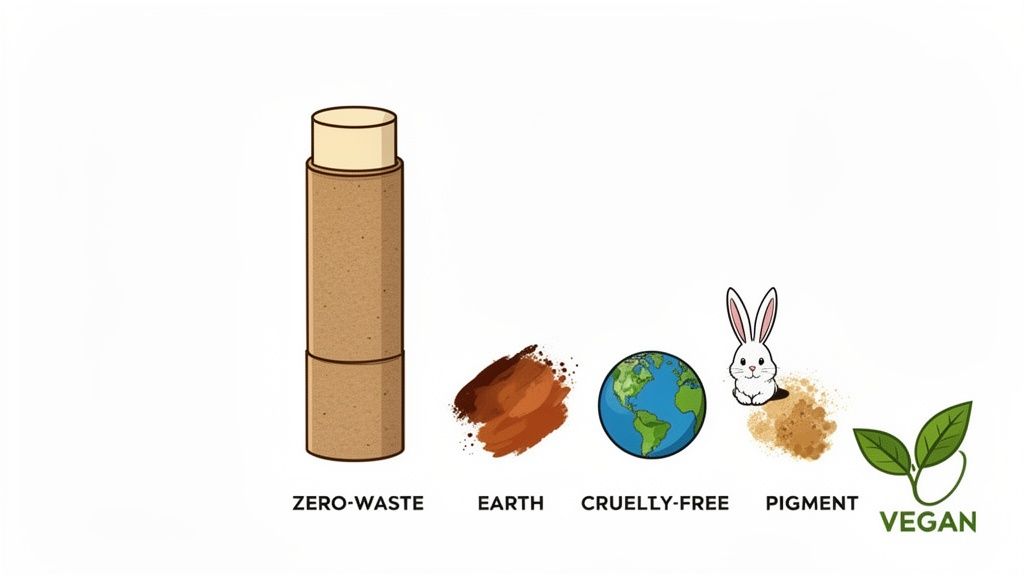
Beyond safe ingredients, a huge part of the toxic-free movement is a rock-solid commitment to doing the right thing. At Axiology, that means unwavering vegan and cruelty-free principles. Every single product we make is 100% vegan. No animal products, no byproducts like beeswax or carmine. Period.
Plus, we're certified by PETA as completely cruelty-free. This is your guarantee that no animal testing happens at any point, from raw ingredients to finished goods. For us and so many others, this dedication to compassion isn't just a nice-to-have; it's a total non-negotiable.
Planet-First Innovation
Okay, this might be the most obvious part of our commitment: our game-changing packaging. The beauty industry has a serious plastic problem, and we're tackling it head-on by being one of the first brands to go completely plastic-free. This isn’t just a small tweak; it’s a complete rethink of how cosmetics should be packaged.
Our products are housed in paper, recycled cardboard, and aluminum—materials that are easy to recycle or even compost. Our signature Balmies, for example, are zero-waste, multi-use crayons wrapped in paper that you just peel away as you go.
This planet-first approach is setting a new standard for what's possible in sustainable beauty. It's a direct response to what conscious consumers are asking for: brands that take their environmental responsibility seriously. When you choose Axiology, you’re not just getting a clean formula; you’re joining a movement to slash waste and protect our planet. You can read more about how this philosophy drives every decision we make by checking out our mission.
Your Toxic Free Cosmetics Questions Answered
Dipping your toes into cleaner beauty is awesome, but let's be real—it can bring up a lot of questions. Think of this as your personal cheat sheet for clearing up the confusion, busting a few myths, and giving you the confidence to keep going.
This isn't about making things complicated. It’s about making the switch to toxic-free cosmetics feel simple, smart, and totally doable. Let's get into it.
Are Natural and Toxic Free the Same Thing?
This is a big one, and the short answer is no, not really. The word "natural" isn't regulated in the beauty world, which means brands can pretty much slap it on anything. It’s more of a marketing buzzword than a real promise of safety.
Sure, many amazing toxic-free products are full of natural ingredients, but not everything from nature is good for you. Lead, for example, is a naturally occurring element, but it's also a neurotoxin you definitely don't want anywhere near your lipstick. On the flip side, some synthetic ingredients created in a lab are perfectly safe and work beautifully.
The whole point of the toxic-free movement is ingredient safety, regardless of where it comes from. The goal is to avoid ingredients with known or suspected health and environmental risks, whether they're plant-based or lab-made.
So, instead of just trusting the word "natural," the real power move is to flip the product over and actually read the ingredient list.
Do Toxic Free Cosmetics Perform as Well?
Absolutely. The old myth that you have to choose between performance and safety is officially dead. The clean beauty industry has grown up, and today’s toxic-free brands are creating products that are just as vibrant, long-lasting, and feel-good as the conventional stuff—sometimes even better.
Formulators today are total pros at using high-quality, plant-based ingredients to get incredible results. They can create amazing pigments and silky-smooth textures without having to fall back on sketchy chemicals. You don't have to compromise anymore.
It's actually pretty cool how brands are now making gorgeous makeup with ingredients you can actually recognize.
- Vibrant Pigments: Instead of synthetic dyes that can cause irritation, brands are using earth-derived minerals and fruit pigments for rich, stunning shades.
- Nourishing Bases: Forget petroleum-based fillers. Clean products now use skin-loving ingredients like avocado oil, shea butter, and kokum butter that actually hydrate and protect your skin.
Brands like Axiology are proof. Our products deliver major color payoff and a beautiful finish, all while being packed with ingredients that are good for you. Performance and purity can—and should—go together.
How Can I Switch to Toxic Free on a Budget?
Going clean doesn't mean you have to toss your entire makeup bag and start over. That’s not just expensive, it’s also wasteful! A much smarter (and cheaper) way to do it is the "swap as you go" method.
It’s super simple: when you finish a product, just replace it with a cleaner option. This way, you can make the switch gradually, at your own pace, without feeling like you have to drop a ton of cash all at once. It turns a huge task into a series of small, easy wins.
To get the most for your money, be a little strategic.
- Start with "Leave-On" Products: Focus first on the products that stay on your skin the longest, like your foundation, lipstick, or body lotion. These have the most contact time, so swapping them makes the biggest impact.
- Invest in Multi-Use Products: This is a genius move for saving money and cutting down on waste. One product that works for your lips, cheeks, and eyes means you're buying one thing instead of three. Axiology's Balmies were designed for exactly this, making your routine and your budget way simpler.
By being intentional and choosing versatile products, you can build a clean, beautiful makeup collection without the stress.
What Is the First Step I Should Take Today?
The easiest and most powerful thing you can do right now is to just start reading your ingredient lists. Seriously. You don't have to become a cosmetic chemist overnight. Just grab one product you use every single day—your lip balm, mascara, whatever.
Flip it over and look at the ingredients. Then, pull out your phone and use a resource like the EWG Skin Deep® database to look up the first five ingredients. This tiny act of curiosity is the first step to becoming a more conscious consumer.
This isn't about feeling guilty about past purchases; it’s about empowering your future ones. Just by looking up a few ingredients, you’ll start to recognize what’s what. You'll figure out what you’re cool with and what you’d rather skip.
From there, you can start making those small, informed swaps. This one simple habit is the best tool you have for navigating the world of clean beauty.
Ready to start your journey with a brand that puts safety and transparency first? Axiology crafts high-performance, 100% vegan, and plastic-free makeup that's as kind to your skin as it is to the planet.
Explore Axiology's clean, planet-friendly makeup