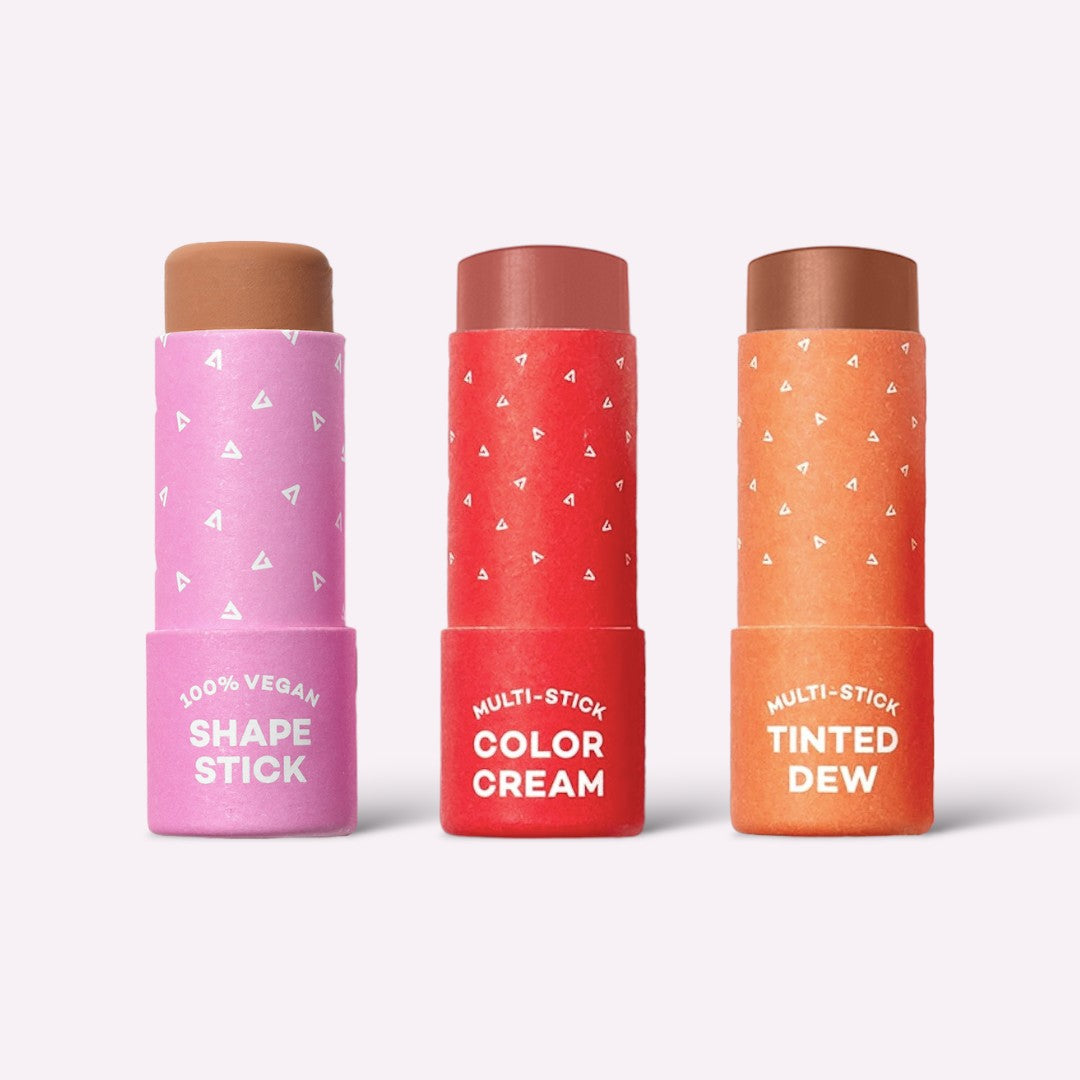
Let’s talk about “toxic-free” makeup. It’s a term you see everywhere, but what does it actually mean? Put simply, it’s makeup made without chemicals that are potentially harmful. It’s about choosing safe, often plant-derived ingredients instead. Think of it like swapping processed snacks for whole, nourishing foods—but for your skin. It’s a simple, conscious move toward a healthier beauty routine.
So, What's the Real Deal with Toxic-Free Makeup?
The phrase "toxic-free makeup" can feel a little vague, mostly because it isn't an officially regulated term. There’s no government seal that defines it. Instead, it represents a powerful movement—driven by people like you—demanding cleaner, safer cosmetics that you can feel genuinely good about using every day.
This whole shift started because people began asking questions. For decades, the beauty industry wasn't super transparent, but today’s shoppers want to know exactly what they’re putting on their skin. This curiosity has fueled a massive surge in the clean beauty market, which was valued at USD 8.25 billion in 2023 and is expected to hit USD 21.29 billion by 2030. That’s not just a trend; it's a collective desire to sidestep questionable ingredients for the sake of our health and the planet. You can dive deeper into the clean beauty market's growth here.
The Philosophy Behind It All
At its heart, choosing toxic-free makeup is about making mindful, informed choices. It’s not about being perfect overnight or living in fear of every single chemical out there. It’s more of a gradual process of taking back control.
The goal isn’t to avoid every single toxin—which is pretty much impossible—but to reduce your overall exposure where you can. This gives your body a better shot at managing its natural detoxification processes.
This journey really boils down to a few key ideas:
- Reading Labels: It’s all about looking past the flashy marketing and learning to actually read an ingredient list to spot and avoid things you don’t want on your skin.
- Health-First Formulas: Brands in this space focus on ingredients known for being gentle and beneficial, leaving out the stuff linked to skin irritation, hormone disruption, or other health worries.
- Knowledge is Power: When you start this journey, you become an educated consumer. You understand the why behind your choices, which leads to a more confident and intentional beauty routine.
Ultimately, this guide is here to show you that switching to safer cosmetics is totally doable and incredibly rewarding. It's about building a better relationship with your beauty products, one smart choice at a time.
The Ingredients To Avoid in Your Makeup Bag
Let's be real, reading a makeup ingredient list can feel like trying to decipher a foreign language. But figuring out what not to put on your skin is the single most important step in cleaning up your beauty routine. This isn't about creating fear; it's about giving you the power of knowledge.
Think of your skin like a sponge. Whatever you smooth, dab, or swipe onto it doesn't just sit there—it can get absorbed. That's why being picky about what’s in your foundation is just as important as being picky about what’s in your food. We'll break down some of the biggest red-flag ingredients to make them easier to spot.
The Preservative Problem
Preservatives are necessary. They stop nasty things like bacteria and mold from setting up camp in your products. But some of the most common ones are, well, problematic.
- Parabens: You’ll see these listed as things like methylparaben, propylparaben, or butylparaben. They’re great at making products last forever on the shelf, but there are concerns that they can act like estrogen in the body and mess with your endocrine system.
- Formaldehyde-Releasers: This sounds as scary as it is. Chemicals like DMDM hydantoin and imidazolidinyl urea slowly leak formaldehyde—a known carcinogen—to keep products fresh. No, thank you.
Fragrance Fillers and Foaming Agents
These ingredients are all about making a product smell nice and feel luxurious. The problem? They're often hiding some pretty sketchy stuff.
Phthalates, for instance, are the secret ingredient that makes a scent linger. They’re also endocrine disruptors, and you’ll almost never see them listed. They hide under the catch-all term “fragrance” or “parfum.” This is the infamous "fragrance loophole," a little trick that lets companies pack in dozens of chemicals without telling you about a single one.
Choosing products labeled “fragrance-free” is one of the easiest ways to clean up your routine. This simple switch helps you avoid a cocktail of unknown chemicals, including hidden phthalates.
Then there are Sulfates like Sodium Lauryl Sulfate (SLS). They’re what make cleansers and shampoos create that rich, satisfying lather. But they’re also known skin irritants that can strip away your skin's natural oils, leaving it dry and angry.
Your Quick-Reference Guide to Dodgy Ingredients
To make things a bit simpler, here’s a quick cheat sheet for some of the most common ingredients worth avoiding. Keep an eye out for these names when you're shopping.
| Ingredient Family | What to Look For on Labels | Commonly Found In | Primary Concern |
|---|---|---|---|
| Parabens | Methylparaben, Propylparaben, Butylparaben | Foundations, Creams, Concealers | Endocrine disruption |
| Phthalates | Often hidden as "Fragrance," "Parfum," DBP, DEHP | Perfumes, Nail Polish, Hairspray | Endocrine disruption |
| Sulfates | Sodium Lauryl Sulfate (SLS), Sodium Laureth Sulfate (SLES) | Face Wash, Shampoo, Body Wash | Skin and scalp irritation, dryness |
| Formaldehyde-Releasers | DMDM Hydantoin, Imidazolidinyl Urea, Diazolidinyl Urea | Mascara, Nail Polish, Skincare | Known carcinogen, skin allergies |
| PFAS | "Fluoro" in the name, Polytetrafluoroethylene (PTFE) | Foundation, Lipstick, Waterproof Mascara | "Forever chemicals," potential health risks |
This is just a starting point, of course, but knowing these key players is a huge step toward making safer choices.
The Wider World of Ingredient Awareness
Once you start looking, you see it everywhere. This mindful approach to ingredients naturally spills over from your makeup bag into your entire bathroom cabinet. Suddenly, you'll find yourself checking your shampoo, your lotion, and even your hair products. You might start looking for things like the benefits of alcohol-free formulas in heat protectants, applying that same logic of avoiding harsh, unnecessary chemicals.
Another massive issue getting more attention is PFAS, a.k.a. "forever chemicals." You’ll sometimes find them in foundation and lipstick to make products more waterproof and long-wearing. We went deep on this topic—you can learn more about PFAS and why supply chain transparency is so crucial right here on our blog.
It all adds up to a routine that’s safer, more informed, and puts you in control.
When you know how to spot these key ingredients, you can confidently choose products that are actually good for you, inside and out. It’s not just about looking good; it's about feeling good about what you’re using.
How to Read Makeup Labels Like a Pro
Alright, you know what to look out for. Now it's time to put on your detective hat.
Learning to read a makeup label—that long, intimidating list of ingredients—is the single most powerful tool you have. Officially, it's called an INCI (International Nomenclature of Cosmetic Ingredients) list, but think of it as the product's true story. Once you learn the language, you can't unsee it.
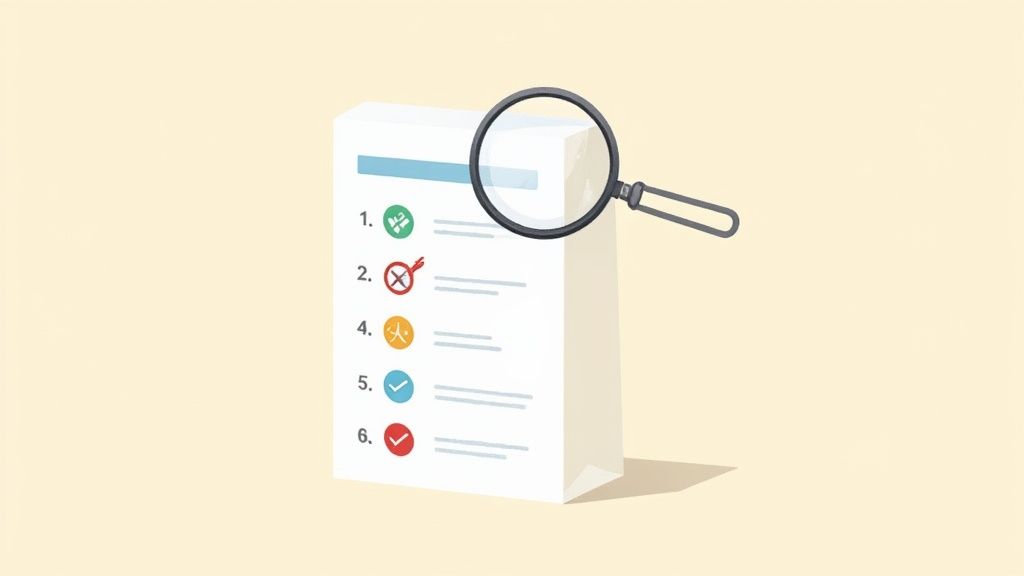
Here's the most important rule of thumb: ingredients are listed from the highest concentration to the lowest. The stuff at the very top of the list makes up the bulk of the product. The first five to seven ingredients? That’s pretty much your entire formula right there.
Think of it like a recipe for a cake. Flour and sugar will be at the top of the list because you need a lot of them, while vanilla extract will be near the bottom. If you see a questionable ingredient in the top five, it’s a major component of that product.
Your Three-Step Label Scan
You don’t need a chemistry degree to figure this out. I promise. Just follow this quick-and-dirty process to get the info you need in seconds.
- Focus on the First Five: Glance at the first five ingredients. Are they things you recognize, like nourishing oils and butters? Or is it a list of silicones, fillers, and water? This tells you almost everything you need to know about the product's quality.
- Scan for Red Flags: Next, quickly skim the rest of the list for any of the big no-nos we talked about earlier. Look for parabens, phthalates (often disguised as "fragrance"), and formaldehyde-releasers.
- Check the Tail End: Anything listed after the one-percent line (which is where most preservatives and colorants hang out) can be in any order. This is the favorite hiding spot for "fragrance." If you see "parfum" followed by a mystery list of chemicals, it's a good sign to put that product right back on the shelf. If you want to see what a truly transparent ingredient list looks like, check out our guide on the importance of fragrance-free beauty products.
Dodging the Greenwashing Traps
"Greenwashing" is just a fancy term for when brands use sneaky marketing to make their products sound way healthier or more eco-friendly than they actually are. It's the beauty world’s version of junk food being labeled "all-natural" because it contains one drop of a plant extract.
Don't fall for vague, feel-good words on the front of the package.
- "Natural": This term is basically meaningless. Arsenic is natural, too.
- "Clean": A popular buzzword, but unless the brand clearly defines what "clean" means to them, it's just marketing fluff.
- "Eco-friendly": This needs to be backed up with real action. Are they using recycled packaging? Do they have legit sustainability certifications?
Always, always flip the product over. Let the INCI list tell you the real story. A brand that’s truly making toxic-free makeup will be proud to show you what's inside.
Decoding Certifications and Seals You Can Trust
Trying to find truly toxic-free makeup can feel like a pop quiz you didn't study for. With so many buzzwords and promises on the packaging, how can you tell what’s legit and what’s just clever marketing? That's where third-party certifications come in. Think of them as your trusted field guide.
These seals are a shortcut to peace of mind. Instead of you having to personally investigate every single ingredient and supply chain, these independent groups have already done the heavy lifting. They're here to verify specific claims so you can shop with a whole lot more confidence.
It's good to know, though, that no single seal tells the entire story. A product might be cruelty-free without being vegan, or vegan without using organic ingredients. The trick is to learn what the most common logos actually mean, then look for the combination that feels right for you and your values.
The Big Three Seals to Know
When you’re on the hunt for cleaner, more ethical products, you’ll probably see a few logos over and over again. These are some of the most respected and recognizable certifications in the beauty industry.
-
Leaping Bunny: This is the gold standard for cruelty-free. A Leaping Bunny certification is your guarantee that no animal testing was used at any stage of product development, from the raw ingredients to the final formula. You can learn more about what it takes to be considered one of the top cruelty-free makeup brands in our detailed guide.
-
The Vegan Society: This seal confirms that a product contains zero animal-derived ingredients or by-products. This covers the obvious stuff like beeswax and carmine (made from crushed beetles), but also the less obvious ones like lanolin (from sheep's wool). The demand for vegan cosmetics has seriously blown up, with the market projected to hit USD 32.56 billion by 2032, thanks to shoppers like you looking for plant-based, chemical-conscious options.
-
EWG Verified™: This mark from the Environmental Working Group goes beyond just avoiding a few bad ingredients. It means a product meets the EWG's strictest standards for health and transparency. Brands with this seal have promised to avoid everything on their "unacceptable" list and provide full ingredient disclosure—including what's in their fragrances.
Reading Between the Seals
Remember, certifications are great tools, but they aren't the final word. A brand might be 100% vegan and cruelty-free but not have the official seals. The certification process can be really expensive, which is often a huge barrier for small, independent businesses.
The presence of a trusted seal is a strong positive signal. Its absence, however, doesn't automatically mean a brand is cutting corners. It just means you may need to do a little more digging on their website to understand their sourcing and testing policies.
Ultimately, getting familiar with these seals empowers you to quickly find products that line up with your toxic-free mission. They help you cut through the marketing noise and support brands that are genuinely committed to making beauty safer and kinder for everyone.
Making the Switch Without the Overwhelm
Diving headfirst into the world of toxic-free makeup can feel like a huge deal. The good news? You don’t have to toss your entire makeup bag and start from zero. Honestly, a sudden purge is expensive, wasteful, and pretty darn stressful.
The best way to go about it is slowly and mindfully. Think of it less like a frantic clean-out and more like a thoughtful upgrade. The idea is to replace products as you finish them, making the whole process easier on your sanity and your wallet. This way, you can make choices you feel good about without feeling rushed.
Start With High-Impact Products
To get the most bang for your buck, start with the products that cover the most skin or hang out on your face the longest. These are the items where a cleaner swap makes the biggest impact, fast.
- Foundation and Concealer: These guys sit on your skin all day. Switching to a toxic-free version when you run out is a perfect first move.
- Lipstick and Lip Balm: Let's be real, you end up eating a little bit of whatever you put on your lips. Making this an early switch is a super smart, health-first decision.
- Moisturizer and Primer: Just like foundation, these are your base layers. They're designed for long-term contact, making them prime candidates for an upgrade.
By zeroing in on these key players first, you immediately lower your daily exposure to potentially sketchy ingredients without the pressure of a full-scale makeup intervention. It's a simple strategy that adds up over time.
Simplify Your Routine (and Your Bag)
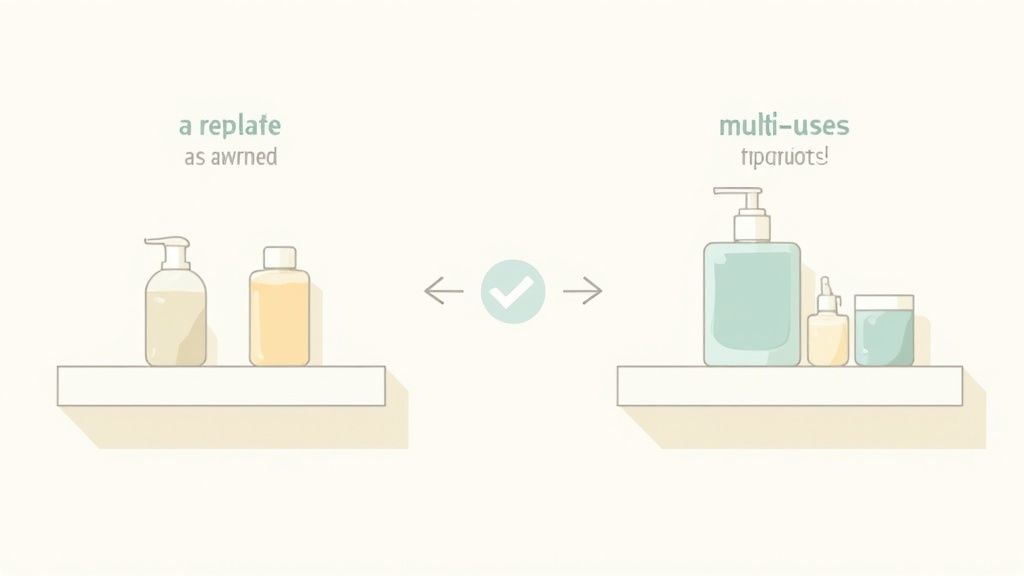
One of the best things to come out of the clean beauty movement is a return to simplicity. This is where multitasking products become your absolute best friend. Instead of needing a dozen different things, you can find amazing products that do the job of two or three.
A single multi-use stick can be your lipstick, your blush, and even a quick wash of color on your eyelids. It declutters your makeup bag, streamlines your morning, and cuts down on waste. Win-win-win.
Our plastic-free Multi-Sticks, for example, were born for this. They give you gorgeous, buildable color for lips, cheeks, and eyes, all from one little zero-waste tube.
Navigating Sensitive Skin and Sustainability
If you have sensitive or reactive skin, taking it slow is even more crucial. By switching one product at a time, you can easily pinpoint any ingredients that your skin isn't vibing with. A quick patch test on your inner arm is always a good idea before going all-in on your face.
This mindful approach to ingredients often naturally leads to thinking about packaging, too. You’ll notice that many brands making toxic-free makeup, like us here at Axiology, are also obsessed with ditching plastic for materials like recycled paper and aluminum. When you choose brands like that, you’re making a choice that’s better for your body and kinder to the planet. It’s proof that conscious beauty is about so much more than just what’s in the bottle.
Finding Your Go-To Toxic-Free Products
Ready to start finding products you absolutely love? Diving into the world of toxic-free makeup is a fun process of discovery. With a few simple guidelines, you can build a collection that makes you look and feel incredible without compromising your values.
You’re not alone in this search, by the way. The market for safer cosmetics is absolutely booming. The global natural and organic cosmetics world is expected to grow to a staggering USD 103.23 billion by 2034.
This explosion is happening because of shoppers like you who are more informed and intentional than ever, actively looking for products that are safe, sustainable, and eco-friendly. You can read more about the natural cosmetics market trends to see just how big this movement has become.
Your Simple Discovery Checklist
As you start exploring new brands and products, keep this simple checklist in your back pocket. It’s a super straightforward way to vet anything before you bring it home.
-
Scrutinize the Ingredients: Always, always flip the product over and read the label. Look for nourishing, recognizable ingredients at the top of the list and keep an eye out for any of the red flags we’ve talked about.
-
Look for Certifications: Trusted seals like Leaping Bunny (cruelty-free) or The Vegan Society are quick, reliable shortcuts. They’re a clear sign that a brand is truly committed to ethical practices.
-
Read Real Reviews: See what other people are saying! Look for reviews from reliable sources or influencers who share your values to get an honest take on how a product actually performs.
This isn't about finding one perfect brand overnight. It’s about building a curated collection of go-to products that bring you joy and peace of mind.
Think of this as the start of a personal adventure to build a cleaner, more intentional beauty routine. Enjoy the process
Got Questions About Toxic-Free Makeup?
Once you start digging into the world of clean beauty, it's totally normal for a few questions to pop up. Let's bust some of the most common myths so you can feel confident about making the switch.
Is "Toxic-Free" Makeup as Good as the Regular Stuff?
Absolutely. The old idea that you have to sacrifice performance for safety is officially a thing of the past. Seriously, forget everything you thought you knew.
Thanks to some amazing breakthroughs in green chemistry, today's toxic-free makeup delivers rich pigments, staying power, and buttery textures that go toe-to-toe with any conventional brand out there. It's all about using smarter, plant-based ingredients that actually nourish your skin while making you look fabulous.
Does Clean Makeup Go Bad Faster?
Sometimes, but it’s not the big deal you might think. Because clean beauty brands opt for natural preservatives instead of synthetic ones like parabens, the shelf life can be a little shorter.
Most products are still good for a standard amount of time after you open them. Just look for the little open jar symbol on the packaging—it's called the 'PAO' (Period After Opening) and will have a number like '12M' for 12 months. Honestly, it’s just a good reminder to actually use and enjoy the products you buy while they're at their best.
The price of toxic-free makeup often reflects higher-quality ingredients, ethical sourcing, and more sustainable packaging. Think of it as a direct investment in your health and the planet.
Plus, when you choose versatile, multi-tasking products, you simplify your routine and can even save money in the long run. Fewer, better things, right?
Ready to explore a world of makeup that's as kind to the planet as it is to your skin? Discover the vegan, plastic-free, and high-performing products from Axiology and see how beautiful clean beauty can be. Start building your conscious makeup collection today.