When you hear the term "toxin-free beauty," it's easy to get a little lost. What does it really mean?
At its heart, it's pretty simple. It means choosing cosmetics and skincare made without ingredients that have been linked to potential health or environmental problems. We're talking about ditching synthetic chemicals like parabens, phthalates, and sulfates for safer, often plant-based, alternatives.
Think of it as picking whole foods for your skin. It’s a conscious choice to nourish your body with ingredients that are clean, simple, and effective.
What Toxin-Free Beauty Actually Means
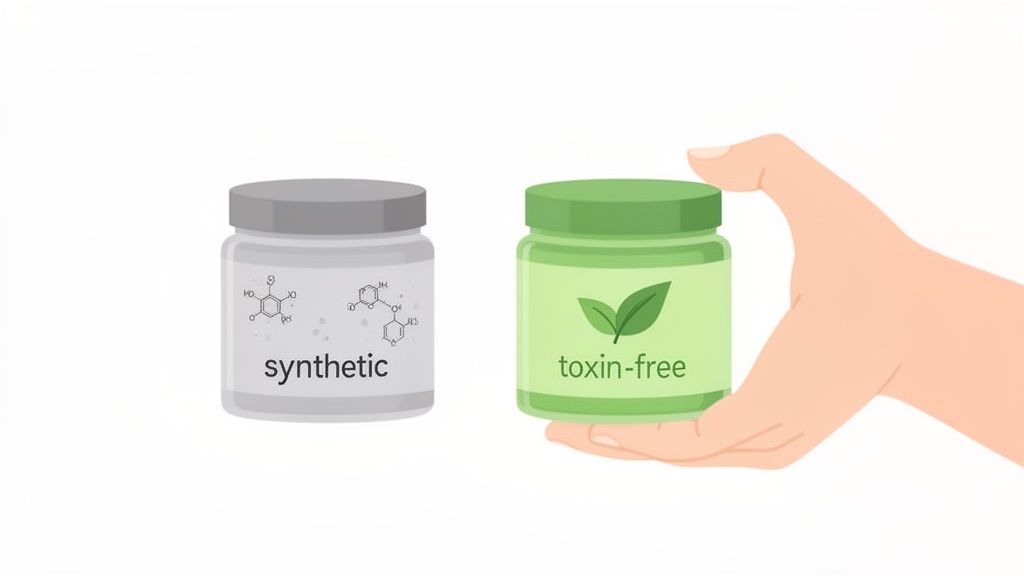
Let's cut through all the marketing jargon. The idea of "toxin-free" isn't about scaring anyone. It’s about being empowered to make choices that feel right for you and for the planet. It’s a move away from an old-school industry norm where complex chemical cocktails were just standard practice.
Think about your beauty routine like you think about your diet. For years, many conventional products were like highly processed snacks—loaded with preservatives (hello, parabens), texturizers (sulfates), and artificial fragrances (often hiding phthalates) to make them last longer and feel a certain way. They did their job, but more and more of us are starting to question their long-term impact.
The Rise of Conscious Consumerism
This whole movement toward toxin-free beauty products is happening because people are demanding transparency. We're not just taking marketing claims at face value anymore. We're flipping over bottles, reading ingredient lists, and asking some tough questions about what we’re putting on our skin—which, by the way, is our body's largest organ.
This shift is huge. The clean beauty market was valued at $8.25 billion in 2023 and is expected to jump to a whopping $21.29 billion by 2030. This growth is largely driven by eco-aware millennials and Gen Z, with about 68% of consumers now actively looking for clean skincare brands.
This isn't just another trend; it's a real change in how we think about beauty. We're starting to prioritize long-term wellness over short-term results and demanding products that are as kind to our bodies as they are to the environment.
Why This Matters for Your Routine
Going toxin-free is all about lowering your body's overall "toxic load." Our bodies are amazing and can handle a lot, but the goal is to ease the burden of unnecessary chemicals wherever we can. This is especially true for the products we use every single day, like moisturizers, foundations, and lipsticks.
Getting this basic idea down is key. It helps you:
- Spot Red Flags: You’ll start to recognize common ingredients that don't fit into a clean philosophy.
- Demand Better: Every time you choose a clean product, you're voting with your wallet and encouraging more brands to clean up their act.
- Build a Healthier Routine: You get to create a lineup of products that genuinely nourish and support your skin.
When you embrace this mindset, you're not just buying another lipstick. You're investing in a healthier, more conscious approach to beauty. For a deeper dive into this philosophy, check out our guide to the world of non-toxic makeup.
Decoding Labels and Ingredients to Avoid
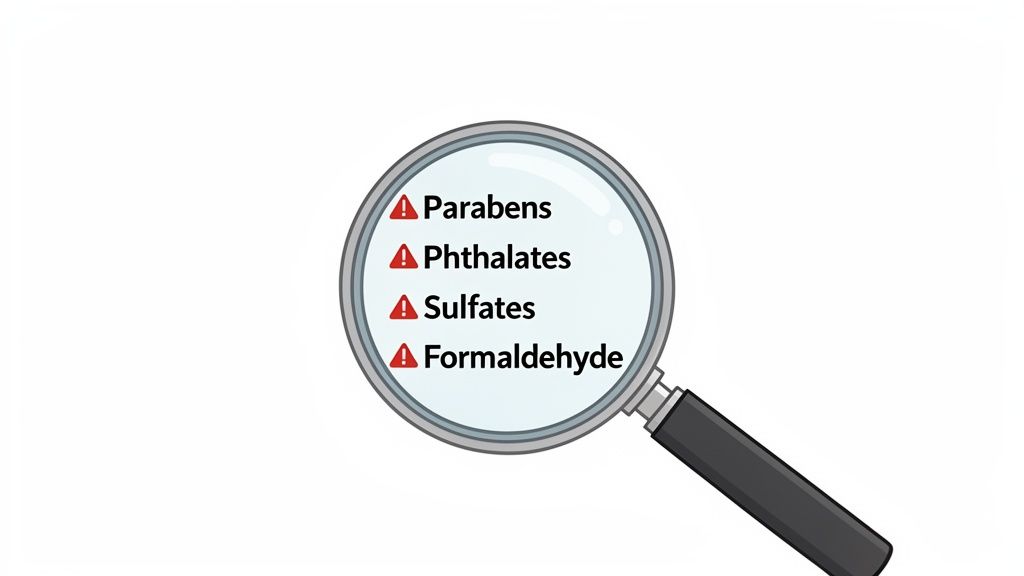
Alright, let's talk about becoming your own beauty detective. When you start exploring the world of toxin-free beauty products, the ingredient list on the back of any product is your best clue. I know, it can feel like you're trying to learn a whole new language.
The good news? You don't need a chemistry degree. You just need to know what to look for.
Think of it like a recipe: ingredients are listed from the highest concentration to the lowest. This little rule is your secret weapon. If you see something amazing like avocado oil listed dead last after a dozen other things, you know there’s barely any of it in there. This is so important because the pretty marketing claims on the front can be, well, a little misleading. The real story is always in the fine print.
The Most Common Ingredients to Avoid
To make your detective work a bit easier, I've rounded up a list of the usual suspects. These chemicals got popular because they were cheap ways to preserve products or create a silky texture. But as we've learned more, it’s become clear that they might not be the best for our bodies.
To really get what's going into your products, it's worth knowing the top 10 skincare ingredients to avoid. Here are some of the biggest names on that list.
A Quick Guide to Ingredients to Avoid
Use this as a quick reference when you're shopping. It breaks down the common chemicals, where you'll find them, and exactly why choosing toxin-free alternatives is a game-changer.
| Ingredient To Avoid | Commonly Found In | Why You Should Avoid It |
|---|---|---|
| Parabens | Moisturizers, makeup, shampoos, shaving gels | These are used as preservatives to stop mold and bacteria. The problem is they are potential endocrine disruptors, which means they can mimic hormones in your body and mess with its natural flow. |
| Phthalates | Fragranced lotions, nail polish, hair spray | These make plastics more flexible and help scents stick around longer. Like parabens, they're linked to endocrine disruption and potential reproductive health issues. No thank you. |
| Sulfates (SLS/SLES) | Shampoos, body wash, face cleansers, toothpaste | Ever wonder what makes your soap super foamy? It's usually sulfates. While that lather feels nice, it can strip your skin and hair of their natural oils, leading to irritation and dryness. |
| Formaldehyde | Nail polish, hair straightening products, eyelash glue | This one is a known carcinogen used as a preservative. Sneakily, it can also be released by other preservatives, so you have to watch out for "formaldehyde-releasers," too. |
And this is really just the beginning. Other ingredients like certain chemical sunscreens, coal tar dyes in hair color, and even some kinds of animal-derived squalene can bring up both ethical and health concerns. Educating yourself on the cosmetic industry's use of squalene is a real eye-opener into how complicated ingredient sourcing can be.
The Hidden Chemicals in Fragrance
Okay, here’s my most important pro-tip for reading labels: be very suspicious of the word "fragrance" or "parfum." That one little word can be a Trojan horse for dozens, sometimes hundreds, of unlisted chemicals.
Thanks to a loophole in labeling laws, companies can protect their signature scents as "trade secrets." This means they don't have to tell you what's actually in them. A product can be packed with phthalates and other synthetics, all hiding behind that one vague term.
This makes "fragrance" one of the biggest red flags on any ingredient list. If you're serious about going toxin-free, look for brands that are either unscented or use natural essential oils and—this is key—list them clearly.
For instance, a clean product might say "Lavandula Angustifolia (Lavender) Oil" instead of just "fragrance." That kind of transparency is a huge green flag.
Putting It All Into Practice
Look, becoming a confident label reader takes time. Don't feel like you have to memorize every single chemical overnight. It's more about recognizing the major offenders.
Here are a few easy ways to start:
- Start with Your Daily Drivers: Check out the products you use every single day—your moisturizer, foundation, deodorant. These add up to the most exposure over time.
- Use a Reference Guide: Screenshot the table above and keep it on your phone. It’s a super handy cheat sheet for when you're in the store.
- Look for Short Ingredient Lists: Simpler is often better. Brands that believe in clean formulas, like Axiology with our 10-ingredient-or-less philosophy, make it easy to see exactly what you’re putting on your skin.
- Embrace Transparency: Stick with brands that are open about their ingredients and sourcing. If a company makes it hard to find that info? That’s a red flag.
By taking these small steps, you go from being a passive consumer to someone who's actively in charge of their own health. The goal isn't perfection; it's progress. Every label you decode is another step toward a cleaner, healthier beauty routine that feels right for you.
Navigating Certifications and Cruelty-Free Claims
Ever walk down the beauty aisle and feel like you're trying to crack a secret code? There are dozens of little logos and stamps on every package, all making big promises. But what do they actually mean? This is where understanding certifications becomes your superpower.
Think of these symbols as more than just clever marketing. They're your visual shortcut to knowing a brand has met specific, tough standards. They totally take the guesswork out of shopping and give you confidence that a company’s claims about being organic, vegan, or cruelty-free have been checked out by a third party.
Distinguishing Between Key Ethical Claims
First things first, it’s super important to know that terms like 'vegan' and 'cruelty-free' aren't the same thing, even though they often hang out together in the clean beauty world. Nailing the difference is key to making sure your purchases actually line up with your values.
Here’s a simple breakdown:
- Cruelty-Free: This means a product and its ingredients were not tested on animals at any point. The Leaping Bunny logo is the gold standard here, signaling a strict, no-excuses commitment to zero animal testing.
- Vegan: This guarantees a product has absolutely no animal-derived ingredients or byproducts. We're talking no beeswax, carmine (a red pigment from insects), lanolin (from sheep's wool), or squalene from sharks.
- Organic/Natural: These labels, often certified by groups like ECOCERT or USDA Organic, are all about where the ingredients come from. They verify that ingredients were grown without synthetic pesticides or fertilizers for a purer, more earth-friendly formula.
A product can be cruelty-free but not vegan (it might have beeswax but wasn't tested on animals), or vegan but not certified organic. When you see a brand with multiple certifications, you know they're serious about their commitment to being both ethical and clean. You can dive deeper into this with our guide to verified cruelty-free makeup brands.
Why Third-Party Verification Matters
So, why can't we just take a brand's word for it? Unfortunately, terms like "natural" or "clean" aren't regulated by the FDA. This means literally any brand can slap them on their packaging—a sneaky practice known as greenwashing. A company could call its product "eco-friendly" while still packing it with questionable ingredients.
That's exactly why official, third-party certifications are so important. They're like independent auditors, confirming that a brand isn’t just talking the talk. When you spot a trusted logo, you know the brand has invested real time and money to prove its claims.
For example, to earn the Leaping Bunny certification, a company has to open up its entire supply chain for review and recommit to its standards every single year. It's that level of scrutiny that turns a simple claim into an ongoing, trustworthy promise.
The Growing Demand for Ethical Beauty
This whole movement toward verified claims is being driven by conscious consumers like you. And it's reshaping the industry, fast. The vegan cosmetics market is expected to hit USD 71.51 billion by 2025, while the cruelty-free beauty market is projected to reach USD 7.20 billion that same year.
This massive growth is led by millennials and Gen Z, with over 60% favoring ethical brands that steer clear of harmful chemicals and animal-derived ingredients. Learning to read these little logos empowers you to shop with total confidence. It lets you quickly spot the brands that share your values, making sure the products you bring home are good for your body, kind to animals, and gentle on our planet.
How to Transition to a Toxin Free Routine
Let's be real: the thought of switching to a completely toxin-free beauty routine can feel... massive. The idea of tossing every single product and starting from scratch isn’t just overwhelming, it’s also wildly expensive and unrealistic for most of us.
But here’s the good news: getting to a cleaner routine doesn’t have to be a stressful, all-or-nothing purge.
Think of it more like a gradual, mindful edit of your collection. The goal here is progress, not overnight perfection. Taking small, manageable steps lets you build a routine with toxin free beauty products you actually love, without all the pressure. This slow-and-steady vibe is way more sustainable and makes the whole process feel rewarding instead of rushed.
Start with Your High-Impact Products
The smartest place to begin is with the products that have the biggest impact on your skin. We're talking about the stuff you use every single day or the things that cover the largest surface area of your body. Think: your daily moisturizer, your go-to foundation, or that body lotion you slather on after every shower.
These are the products that sit on your skin for hours, giving their ingredients plenty of time to get friendly with your body.
Even just replacing one of these "high-impact" products is a huge first step. Swapping your conventional foundation for a clean alternative, for example, immediately cuts down your daily exposure to a bunch of potentially unnecessary chemicals. It’s a strategy that lets you make a meaningful change without having to Marie Kondo your entire makeup bag at once.
The Replace-as-You-Go Method
Probably the most practical and budget-friendly way to do this is to simply replace products as you run out of them. Seriously, there's no need to waste what you already have. Once your current face wash or mascara is empty, that’s your moment to research and choose a cleaner, toxin-free replacement.
This method turns a massive project into a series of small, simple decisions over time. It spreads out the cost and gives you the space to mindfully pick new things that really align with your wellness goals. It’s an easy, no-pressure way to slowly build a routine that truly works for you.
To make your search even easier, you can keep an eye out for key certifications. This little graphic shows some of the most important labels to look for when you're choosing clean, ethical beauty.
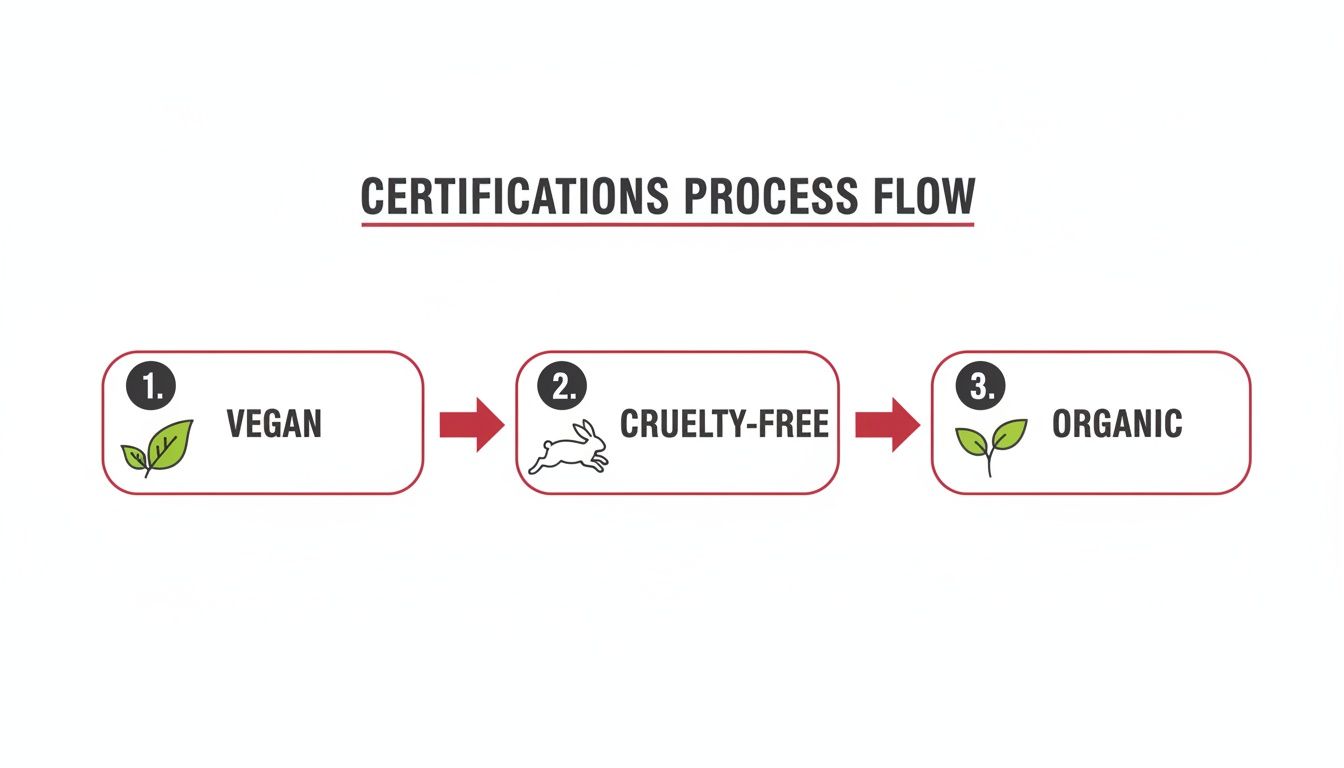
Spotting these symbols for Vegan, Cruelty-Free, and Organic standards is like a visual shortcut, confirming that a product meets tough third-party criteria for safety and ethics.
Focus on One Ingredient at a Time
If reading long, complicated ingredient lists makes your eyes glaze over, try this: focus on avoiding just one or two specific chemicals at a time. For instance, you could start by committing to products that are free of "fragrance" or parabens. This approach makes label-checking way less intimidating and helps you build confidence as you shop.
Tackling your transition one ingredient at a time makes the process feel so much more achievable. Once you get comfortable spotting and avoiding parabens, you can move on to eliminating sulfates, then phthalates, and so on.
It’s like learning a new skill step-by-step. Each small win builds momentum, making your long-term goal of a totally toxin-free routine feel well within reach.
Simplify Your Routine with Multi-Use Products
Another brilliant strategy? Just simplify your routine altogether. Fewer products automatically means fewer ingredients to worry about. This is where multi-use items become your absolute best friend, saving you time, money, and precious counter space. A single product that works as a lipstick, blush, and eyeshadow is the perfect example of conscious efficiency.
- Streamline Your Makeup Bag: Swapping three separate items for one multi-functional stick instantly declutters your life.
- Reduce Ingredient Exposure: Using one product for multiple things naturally lowers the number of different formulas you're putting on your skin daily.
- Embrace Minimalism: A simplified routine often leads to a greater appreciation for high-quality, versatile products that deliver results without the fuss.
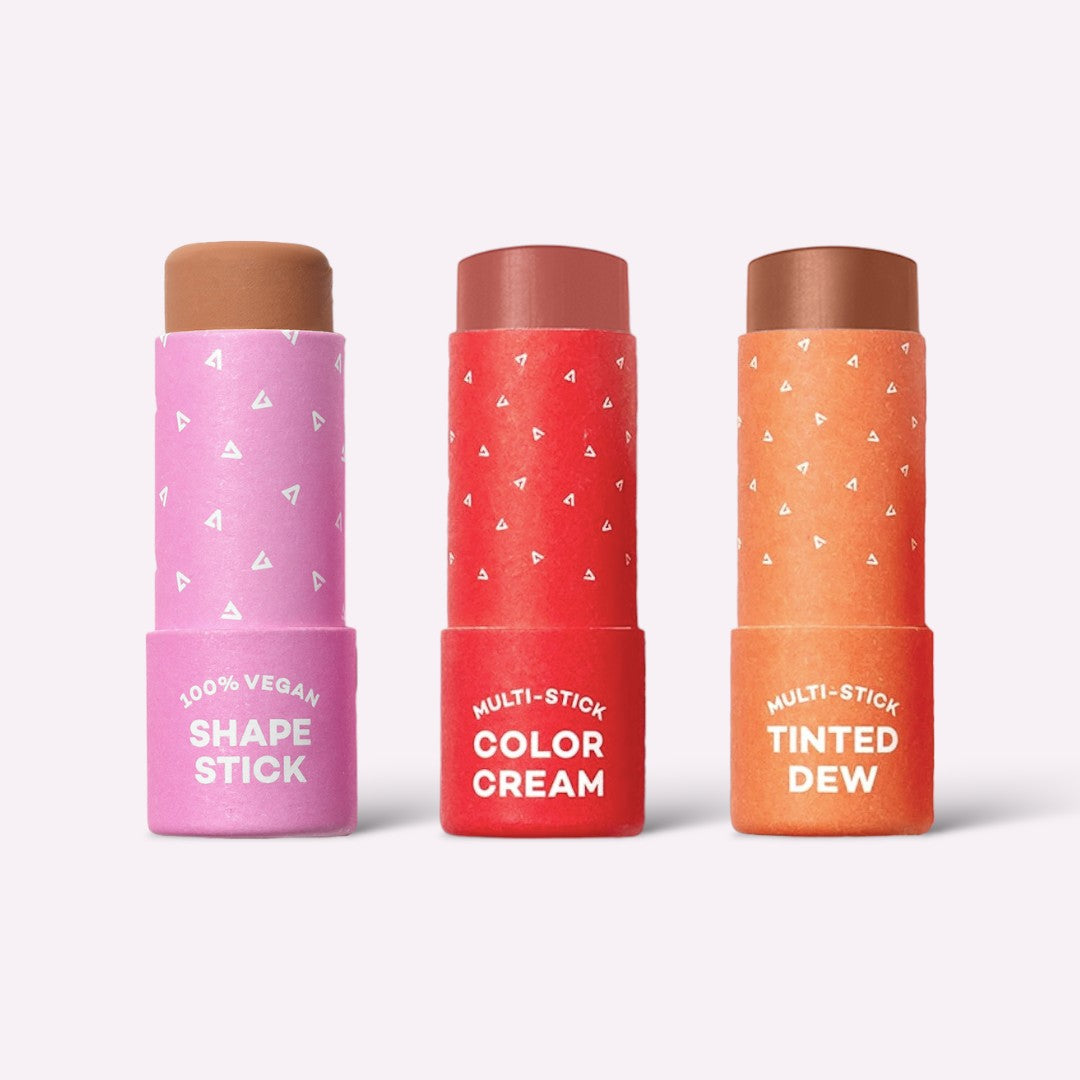
Our Axiology Color Cream Multi-Sticks are designed to do just that. They offer beautiful, buildable color for your lips, cheeks, and eyes in one simple, plastic-free package. Choosing versatile products like these not only helps your move toward a toxin-free lifestyle but also champions sustainability and minimalism in your beauty habits. Win-win.
Axiology: A Case Study in Clean Innovation
All this talk about what to avoid is great, but what does it look like when a brand actually gets it right? Let's take a look at Axiology. This isn't just a brand spotlight; it's a real-world example of how a company can build beauty from the ground up with integrity, transparency, and a deep respect for both people and the planet.
By looking at Axiology’s core philosophies, we can connect the dots between reading an ingredient label and joining a bigger movement for healthier, more sustainable beauty. It’s the perfect way to see how choosing toxin-free beauty products is less about what you avoid and more about what you actively choose to support.
Radical Simplicity: The 10-Ingredient Philosophy
One of the coolest things Axiology does is commit to radical simplicity. The brand operates on a "10-ingredients-or-less" philosophy for its color products. In an industry famous for long, baffling chemical lists, this is a total breath of fresh air.
This minimalist approach does two major things for you:
- It creates instant transparency. When you can count the ingredients on one hand, there’s literally nowhere for shady synthetics or fillers to hide.
- It empowers you with knowledge. You know exactly what’s going on your skin—simple, effective, and recognizable plant-derived ingredients you can actually pronounce.
This isn’t just about using fewer ingredients for the sake of it. It’s about proving that gorgeous, high-performing makeup doesn’t need a complex chemical cocktail. It’s a direct challenge to the overwhelming nature of conventional beauty, putting the power right back in your hands.
A Holistic Approach to Clean Beauty
Axiology’s commitment goes way beyond the ingredient list. The brand's entire vibe is built on the pillars that define the very best of the clean beauty movement, making sure every product is not just toxin-free but also ethically sound.
For Axiology, "clean" isn't just a marketing buzzword. It's a comprehensive promise that includes being 100% vegan, cruelty-free, and palm-oil-free. This multi-faceted approach means no corners are cut, from sourcing raw materials all the way to the finished product.
This big-picture view is exactly what shoppers are looking for these days. It’s why the natural and organic personal care market is exploding, projected to jump from US$28.4 billion in 2025 to a massive US$54.3 billion by 2032. This boom is happening because more and more of us are seeking out products that are free from synthetics and made with sustainable practices. You can explore more insights on this market shift to see just how powerful conscious consumerism has become.
A Toxin-Free Body on a Toxin-Free Planet
Maybe the most defining part of Axiology's innovation is its industry-leading stance on waste. The brand has completely ditched plastic in its packaging, recognizing that a truly toxin-free approach has to consider the planet's health, too. Their products come in paper, recycled aluminum, and other compostable materials.
This connects the idea of a "toxin-free" body directly to a "toxin-free" planet. It gets that plastic waste and the chemicals it can leach are two sides of the same coin. By offering products in beautiful, earth-friendly packaging, Axiology provides a complete solution for anyone who cares just as much about the planet's well-being as their own.
Your Questions About Toxin-Free Beauty Answered
Dipping your toes into the world of toxin-free beauty can bring up a lot of questions. It's completely normal to wonder if these cleaner alternatives can really measure up to the products you’ve been loyal to for years. Let's clear the air and tackle some of the most common myths and worries so you can feel great about making the switch.
Think of this as a quick chat to iron out any doubts. We’ll get into the big questions about performance, cost, and what those labels really mean, with straightforward answers to help you on your way.
Are Toxin-Free Products As Effective?
This is probably the biggest hesitation people have: do clean beauty products actually work as well as the conventional stuff? The short answer is a huge yes. The old idea that you need harsh, synthetic chemicals for a product to be effective is officially a myth.
The truth is, performance is all about high-quality formulation and powerful ingredients, not synthetic fillers or aggressive preservatives. Today's toxin-free brands are basically masters of plant-powered science, using botanical extracts, rich oils, and nourishing butters that get incredible results. Ingredients like avocado oil, shea butter, and elderberry extract aren't just safe—they're loaded with vitamins and antioxidants that actually feed your skin.
Performance is driven by thoughtful formulation, not a long list of chemicals. Innovative clean brands prioritize creating products that feel amazing, last all day, and deliver stunning results without compromising on safety.
The days of choosing between performance and clean ingredients are long gone. In fact, many people find their skin looks and feels better than ever after switching, simply because they're no longer slathering it with potential irritants. Say goodbye to the days when "natural" meant a deodorant that gave up by noon or a foundation that slid off your face. The market now is packed with powerful, effective options.
Does "Natural" Automatically Mean "Toxin-Free"?
This is an excellent question, and the difference is super important to understand. While "natural" and "toxin-free" often hang out in the same circles, they aren't the same thing. The word "natural" isn't regulated in the beauty industry, meaning a brand can slap it on a label even if the product contains synthetic preservatives, fragrances, or other stuff you want to avoid.
Picture this: a product could be made with 90% natural ingredients, but that last 10% might include a synthetic fragrance that’s hiding dozens of unlisted chemicals. This is exactly why becoming a savvy label-reader is your new superpower.
Here’s a simple breakdown:
- A "natural" product mostly uses ingredients from nature, but the term is loose and often just a marketing buzzword.
- A "toxin-free" product specifically avoids ingredients linked to health or environmental concerns, whether they're natural or synthetic.
The main takeaway? Always flip the bottle over and look past the front-of-pack claims to the full ingredient list. A truly toxin-free product will have a transparent, understandable list you can trust. It’s less about a single marketing term and more about a brand’s total commitment to safety and clarity. For more insights on general skin health, you might also find publications like the Beverly Hills Skin Journal interesting.
Is Switching to Toxin-Free Beauty More Expensive?
Let's talk money. There's a common belief that clean beauty always comes with a hefty price tag. While some high-end brands can be pricey, the market has exploded, and now there are tons of accessible and affordable toxin-free options out there.
It's true that products made with high-quality, ethically sourced organic ingredients can cost more than their mass-produced cousins. That price difference often covers things like sustainable farming, fair-trade practices, and serious safety testing—all investments that lead to a better product for you and the planet. But the value you get often makes it worth it.
Plus, you can find major savings by taking a more minimalist approach to your routine. This is where multi-use products really get to shine.
The Value of Versatility
Instead of buying a separate lipstick, blush, and eyeshadow, you can grab one amazing multi-use stick. This move not only saves you cash but also declutters your makeup bag and cuts down on packaging waste.
Think about the perks:
- Cost-Effectiveness: One product does the job of three, seriously reducing your overall spending.
- Simplicity: A streamlined routine makes getting ready faster and way less complicated.
- Sustainability: Fewer products mean less packaging and a smaller environmental footprint.
By focusing on versatile, hard-working essentials, you’ll find that a toxin-free routine can be just as affordable—if not more so—than a conventional one. It's all about investing in smarter products that deliver value in more ways than one.
At Axiology, we believe clean, ethical beauty should be for everyone. Our plastic-free Multi-Sticks and other makeup essentials are designed to simplify your routine and nourish your skin with 10 ingredients or less, proving you don’t have to compromise on your values or your budget. Explore our collection of vegan, cruelty-free products at Axiology.