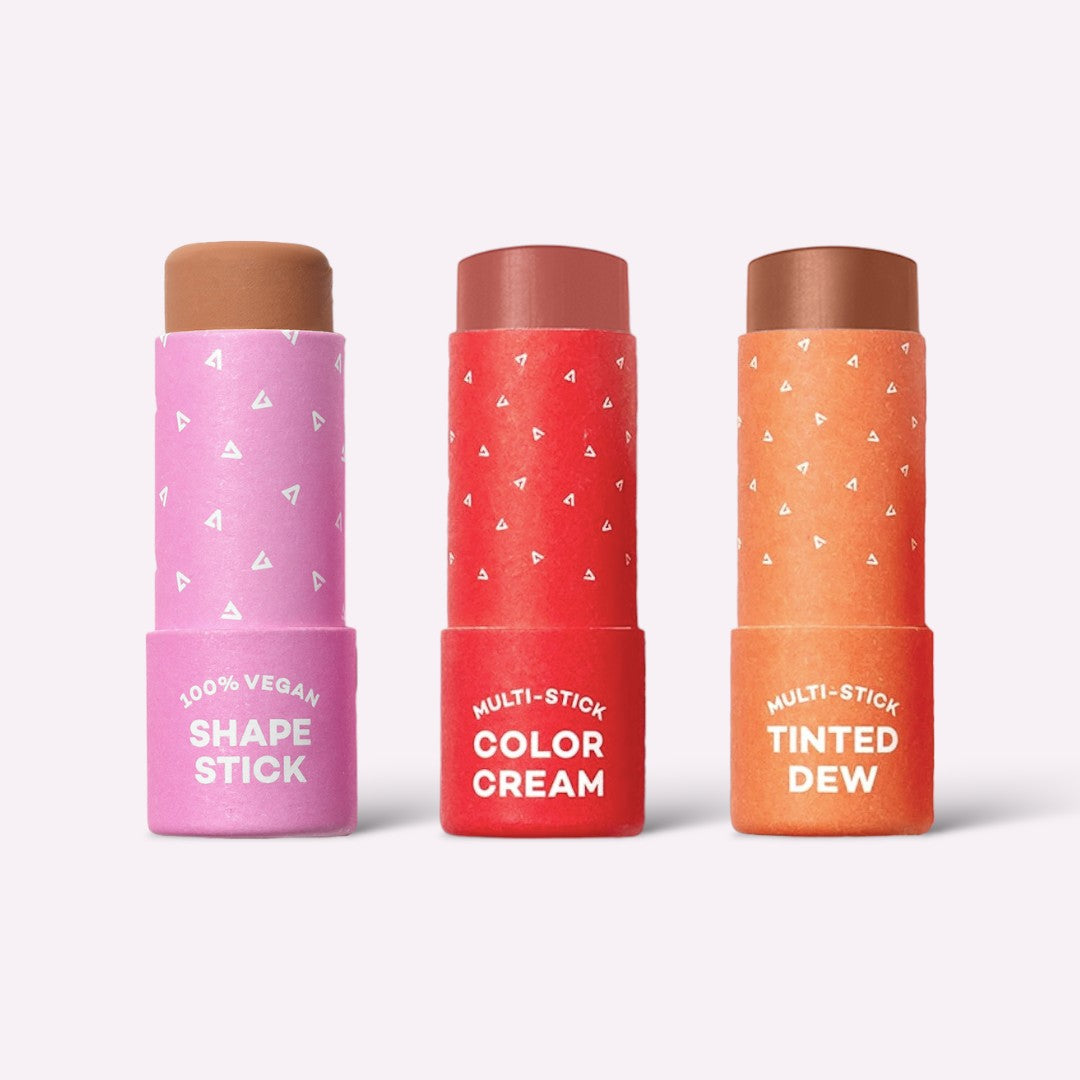
Trying to figure out the world of ethical beauty can feel like you’re learning a new language. But the key difference is actually pretty simple: vegan is all about the ingredients, while cruelty-free is all about the testing process. A product can be one without being the other, and that’s why getting the lingo down is so important for making choices you feel good about.
Decoding the Labels Vegan and Cruelty Free Cosmetics
Let's break down the two biggest pillars of ethical beauty. Think of it like you're ordering at a cafe. "Vegan" is the recipe itself—it’s a promise that your smoothie bowl has zero animal-derived ingredients.
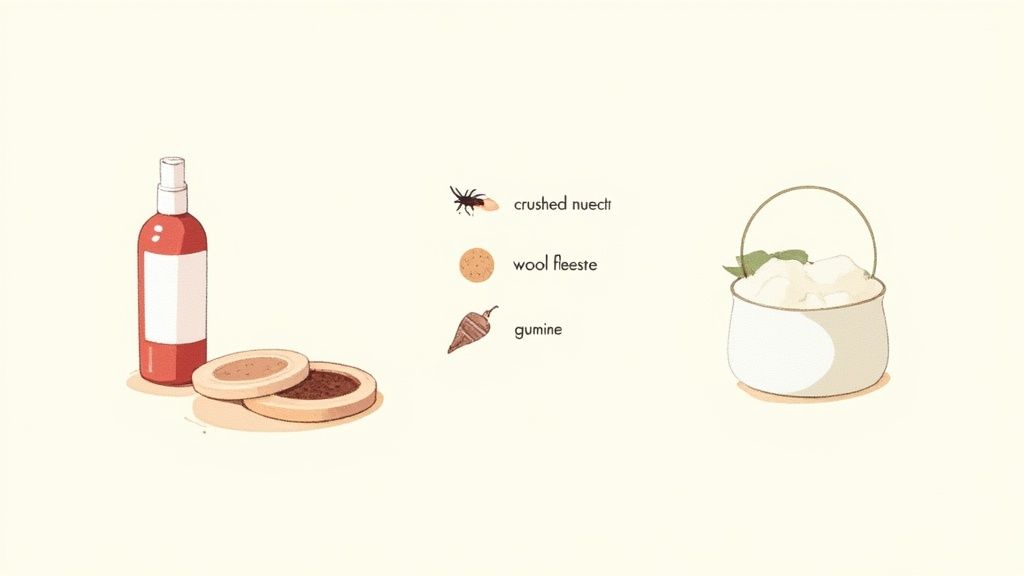
In the same way, vegan cosmetics are made without things like beeswax, lanolin (which comes from wool grease), or carmine (a red color made from crushed bugs). The focus is 100% on what’s inside the bottle.
On the flip side, "cruelty-free" is about the process—how that smoothie bowl was tested before it made it to you. A cruelty-free certification is a guarantee that no animal testing happened at any point in the product’s creation. That goes for every single ingredient all the way to the final lipstick you’re holding. It's a promise that safety was confirmed without harming any animals.
This is a huge distinction because a product could have honey in it (making it non-vegan), but if it was never tested on animals, it can still be called cruelty-free.
Vegan vs Cruelty Free At a Glance
To make it even clearer, here’s a quick cheat sheet to help you tell these important labels apart on the fly.
| Attribute | Vegan Cosmetics | Cruelty Free Cosmetics |
|---|---|---|
| Main Focus | Ingredient list | Testing methods |
| What It Means | No animal-derived ingredients | No animal testing |
| Common "No" Ingredients | Beeswax, honey, lanolin, carmine | N/A (focus is on process) |
| Can It Contain... | Animal-tested ingredients? Yes. | Animal-derived ingredients? Yes. |
Ultimately, a product can be vegan but not cruelty-free, and vice versa. That's why spotting both labels is the gold standard for truly conscious beauty.
Why Both Labels Matter
For someone who wants to make a fully ethical choice, the sweet spot is finding a product that is both vegan and cruelty-free. This ensures your makeup is free from animal byproducts and that its creation didn’t cause any animal suffering.
And this isn't just some niche preference anymore—it’s a massive movement.
The global vegan cosmetics market was valued at about USD 18.36 billion and is expected to shoot up to USD 35.50 billion by 2033. This shows a huge shift in what people want from their beauty products.
That kind of growth is proof that shoppers are using their money to vote for kinder, more transparent brands. When looking for ethical options, many people rely on guides that pull together the 12 Best Natural Skincare Brands, which just goes to show how much the industry is leaning into transparency and accountability.
So, to keep it simple when you're shopping:
- Vegan Focus: What’s in it? It has to be 100% plant-based or synthetic. No animal stuff, period.
- Cruelty-Free Focus: How was it made? It must have been developed without any animal testing, ever.
By looking for both certifications, you can be sure your beauty routine lines up with a complete ethical standard, helping build a kinder and more sustainable future for all of us.
How to Spot Trustworthy Ethical Beauty Certifications
Navigating the world of vegan and cruelty-free cosmetics can sometimes feel like you’re trying to decipher a secret code. With so many claims splashed across the packaging, how do you actually know which ones to trust? The answer is third-party certifications. Think of them as your reliable guide to genuinely ethical products.
It’s a lot like an organic food label. You wouldn’t just trust a piece of fruit that someone scrawled "organic" on with a marker, right? You look for the official USDA Organic seal because you know it represents a strict, verified process. Ethical beauty certifications work the same way—they offer a promise that a brand has been thoroughly vetted by an independent organization.
This infographic breaks down what we're talking about, showing how vegan and cruelty-free standards are the bedrock of conscious beauty.
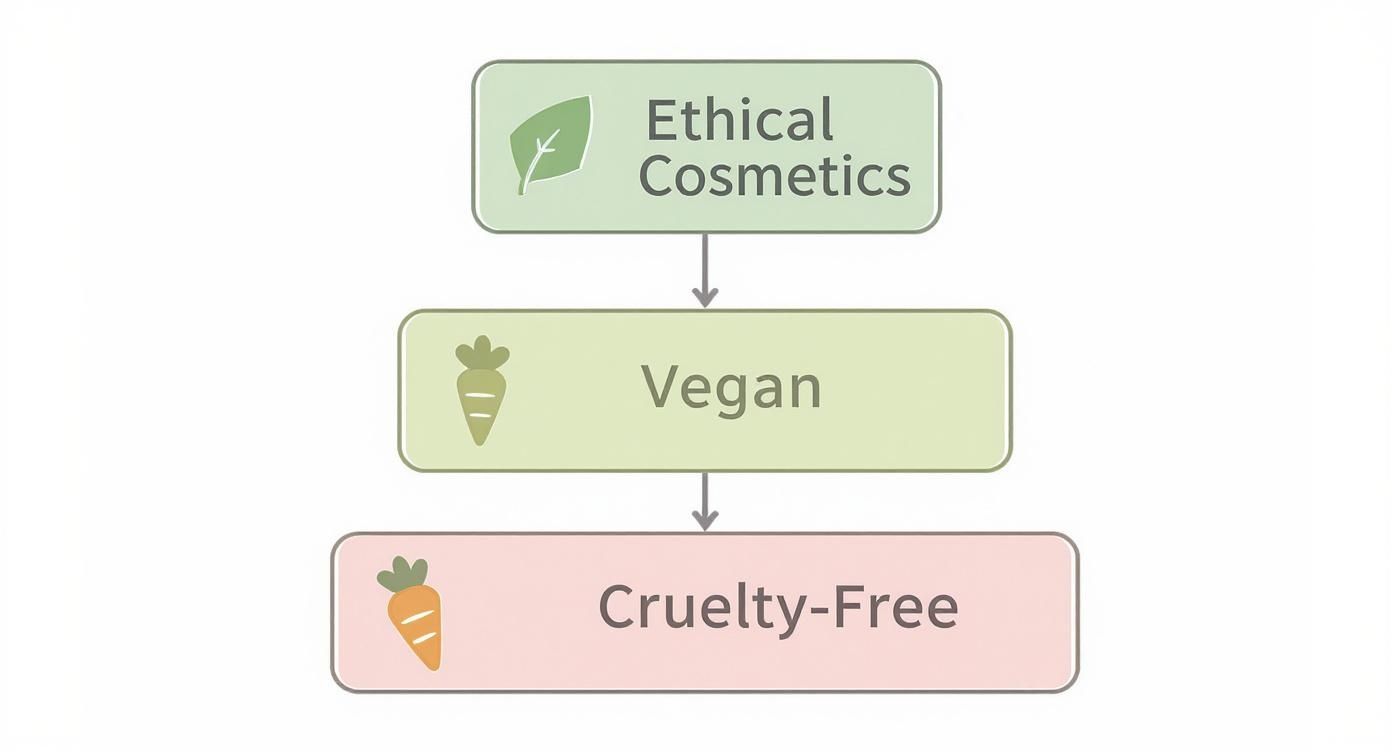
As you can see, "Ethical Cosmetics" is the ultimate goal, built on two totally separate pillars: "Vegan" (zero animal ingredients) and "Cruelty-Free" (zero animal testing).
The Most Recognized Cruelty Free Certifications
When it comes to making sure no animal testing happened, two logos really stand out as the global gold standards. Spotting one of these bunnies is a fantastic first step.
-
Leaping Bunny: Often considered the holy grail, the Leaping Bunny Program makes brands prove that no new animal testing was used in any phase of product development. That includes the company itself, its labs, and its suppliers. They use a supplier monitoring system and require ongoing proof to keep their seal.
-
PETA's Beauty Without Bunnies: Run by People for the Ethical Treatment of Animals (PETA), this program certifies that a brand and its suppliers don’t conduct, commission, or pay for any tests on animals for their ingredients, formulas, or final products.
The best part? These organizations have extensive, searchable online databases. If you're ever on the fence about a brand, a quick search on their websites can confirm its status in seconds. This is a must-have tool for any conscious shopper trying to make sense of the cruelty free makeup brands out there.
One key piece of these certifications is the Fixed Cut-Off Date (FCOD). This is a date after which a company and all its suppliers must have stopped animal testing for good. It keeps brands from just coasting on old, outdated tests and shows a real commitment to moving forward.
The Gold Standard for Vegan Certification
Now, while cruelty-free logos are all about the testing process, they don't tell you anything about what's inside the product. A lipstick could be cruelty-free and still contain stuff like beeswax or carmine (a red pigment from crushed insects—yuck). That's where vegan certifications come in.
-
The Vegan Society Trademark: That little sunflower logo is instantly recognizable and it's the original and most trusted vegan certification. It guarantees a product is 100% free from animal-derived ingredients. It also confirms no animal testing was involved, making it a super comprehensive seal of approval.
-
PETA-Approved Vegan: Alongside their cruelty-free bunny, PETA also offers a "Vegan" logo. This label certifies that the final product has no animal-derived ingredients, giving you an extra layer of confidence.
Why Third Party Verification Is So Important
In an industry drowning in marketing jargon, self-made claims like "cruelty-free" or "not tested on animals" printed on a bottle without an official logo can be super misleading. These phrases aren't legally regulated. A company could say its finished product wasn't tested on animals, while conveniently forgetting to mention that its individual ingredients were.
Third-party certifications cut right through that noise. They require brands to open their entire supply chain up for inspection, from where they get their raw materials to how their products are made. This tough, independent audit is the only way to be totally sure that a product truly aligns with your values.
Ultimately, these logos do the homework for you. By learning to recognize these trusted symbols, you can shop with confidence, knowing your dollars are supporting brands that are genuinely committed to a kinder, more transparent beauty industry. They turn a confusing makeup aisle into a clear path toward making a real difference.
Uncovering Animal Ingredients Hiding in Your Cosmetics
Ever turned over a lipstick to read the ingredients and felt like you needed a chemistry degree to understand it? You’re not alone. When you start looking for vegan and cruelty-free cosmetics, you quickly realize that what’s in the formula is just as important as how it was tested.
Think of it like being a food detective. You know to scan a label for hidden dairy or eggs, right? Well, becoming a conscious beauty consumer means learning to spot the sneaky animal byproducts that can hide in plain sight on a makeup label. This knowledge is your superpower—it lets you make choices that truly line up with your values.
This whole ingredient-first mindset is a huge shift happening in beauty. People want clean, ethical products, and the numbers don't lie. The skincare world, which had a whopping 34.01% market share recently, is proof that we care deeply about what we put on our skin every single day. If you want to nerd out on the numbers, you can discover more insights about the vegan cosmetics market and see just how big this movement has become.
Common Animal Ingredients to Look Out For
Alright, let's pull back the curtain on some of the most common culprits. Knowing these will help you clean up your makeup bag for good.
Carmine (or Cochineal)
- What It Is: A vibrant red pigment made from crushing thousands of female cochineal insects. Yep, bugs.
- Where You'll Find It: It’s the go-to for creating those deep reds and pinks in many lipsticks, blushes, and eyeshadows.
- Plant-Based Alternatives: Thankfully, we don't need insects for great color. Brands are now using gorgeous pigments from beets, berries, and other fruits to get the same rich hues without harming a single living thing.
It's a shock for many to learn where that pretty red comes from. To get the full story, check out our deep dive on what cochineal red insect dye is and why we steer clear.
Lanolin
- What It Is: A greasy substance, sometimes called "wool wax," that's extracted from sheep's fleece.
- Where You'll Find It: Because it’s so moisturizing, you'll find it in lip balms, glosses, and heavy-duty creams.
- Plant-Based Alternatives: Rich plant butters like shea and cocoa, plus nourishing oils like coconut and jojoba, do an even better job of hydrating without any animal involvement.
Guanine
- What It Is: A shimmery, crystalline material that comes from crushed fish scales.
- Where You'll Find It: It's the secret ingredient that gives highlighters, bronzers, nail polishes, and eyeshadows that pearly glow.
- Plant-Based Alternatives: The mineral mica gives off a brilliant, ethical shimmer. There’s also synthetic fluorphlogopite, a lab-made alternative that provides that same sparkle with zero animal origins.
A recent study asked 1,000 consumers to pick out animal-derived ingredients from a list. The result? Only 2.6% could correctly identify all of them. It just goes to show how confusing labels can be for the average person.
Other Hidden Animal Byproducts
Beyond those big three, a few others tend to pop up. Keep an eye out for these to become an even savvier shopper.
| Ingredient | Source | Found In | Vegan Alternative |
|---|---|---|---|
| Beeswax (Cera Alba) | Secreted by bees to build honeycombs | Lip balms, mascaras, lotions | Candelilla wax, carnauba wax |
| Collagen | Protein from animal bones, skin, and tissue | Anti-aging creams, serums | Plant-based peptides, algae extracts |
| Keratin | Protein from animal hair, horns, and feathers | Hair strengthening products, nail care | Soy protein, almond oil |
| Tallow | Rendered fat from cattle or sheep | Soaps, foundations, eyeshadows | Vegetable fats, plant oils |
This list might look intimidating, but don't worry—you don't have to memorize it. The easiest path is to look for products certified by trusted groups like The Vegan Society. Their sunflower logo is a simple, reliable shortcut that guarantees a product is 100% free from animal ingredients and has been thoroughly checked.
By getting familiar with these key terms, you can scan any ingredient list with confidence and know that the products you choose are truly kind. Every purchase you make is a vote for a more ethical and transparent beauty industry. One lipstick at a time.
Why Your Ethical Beauty Choices Matter
When you go for vegan and cruelty-free makeup, you're doing so much more than just being kind to animals. Every single purchase sends a message, a powerful ripple that travels through the entire beauty industry. It’s a vote for a kinder, cleaner future, and it sparks positive change for our planet and even our own skin.
Think of it like a domino effect. One conscious choice—like grabbing a plant-based lipstick instead of a conventional one—starts tipping the scales. It immediately lowers the demand for animal ingredients, which in turn eases the environmental burden of factory farming. That one simple decision becomes part of a much bigger shift toward real sustainability and honesty in the beauty world.
Your choices aren't just personal preferences; they're economic signals. They tell brands exactly what you care about. As more of us demand ethical options, companies have no choice but to listen, get creative, and change how they do things.
The Environmental Ripple Effect
Opting for plant-based beauty is a direct investment in the planet’s health. Let's be real: producing animal-derived ingredients often comes with a hefty environmental price tag, from clear-cutting forests for grazing land to the staggering amount of water needed for livestock.
In contrast, plant-based ingredients usually leave a much lighter footprint. Growing plants for oils and butters, for example, typically uses way less water and land than raising animals for things like tallow or lanolin. This simple switch helps conserve our precious natural resources and cuts down the carbon emissions tied to your beauty routine.
- Reduced Water Usage: Plant-based goodies like shea butter and jojoba oil need significantly less water to produce compared to animal-derived fats.
- Lower Carbon Footprint: The farming processes for plants generally release fewer greenhouse gases than livestock operations.
- Promotes Biodiversity: Sourcing sustainable botanicals encourages farming that protects ecosystems, a world away from the monocultures often linked to animal agriculture.
Every time you opt for a product with vegan and cruelty free cosmetics, you are actively supporting a more sustainable supply chain. It's a small action with a significant cumulative impact on our planet's well-being.
This commitment to the planet also shows up in the packaging. The brands leading the charge in ethical beauty are often the same ones pioneering sustainable packaging—think plastic-free and zero-waste solutions that cut down on environmental harm even further.
A Kinder Approach to Your Skin
Beyond the global impact, choosing vegan and cruelty-free cosmetics has some amazing personal perks. These formulas often swap out potentially harsh, synthetic, or animal-derived ingredients for gentle, skin-loving botanicals. It’s like feeding your skin a clean, nourishing diet.
Products made with plant extracts, fruit pigments, and natural oils are frequently much kinder to sensitive skin. They skip common irritants while delivering powerful antioxidants, vitamins, and hydrators straight from nature. This means you can get that vibrant color and glowing skin without compromising your skin's health.
Honestly, a lot of people find their skin gets clearer and calmer after making the switch. By cutting out unnecessary additives and focusing on high-quality, plant-based ingredients, vegan formulas put both performance and your well-being first.
Fueling a More Transparent Industry
Your wallet is the most powerful tool you have for driving change across the entire industry. When you consistently choose brands that are open about their sourcing, testing, and ingredient lists, you’re demanding a higher standard from everyone.
And the big legacy brands are definitely taking notice. The vegan cosmetics market is exploding—it’s projected to hit $35.5 billion by 2033—which is undeniable proof that ethics are now a major deciding factor for shoppers. This pressure is forcing larger corporations to rethink everything, from finally ending animal testing to reformulating their iconic products with vegan ingredients.
Each dollar you spend on a certified vegan and cruelty-free product is an investment in innovation. It helps smaller, ethical brands grow and nudges the bigger players to move toward more responsible practices. At the end of the day, your daily choices are building a beauty industry where compassion, sustainability, and transparency aren't just trendy extras, but the absolute standard.
How Axiology Walks the Walk on Ethical Beauty
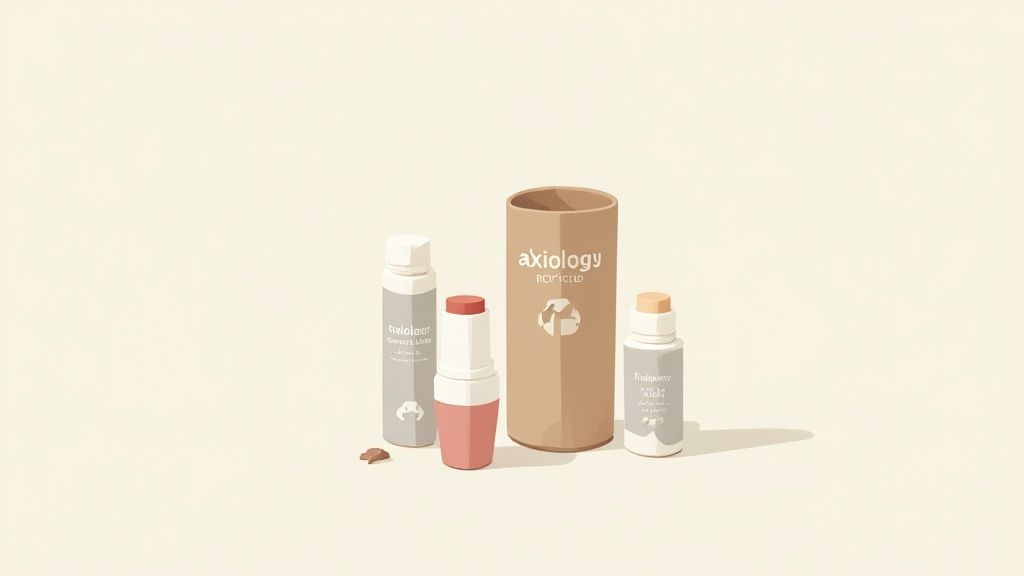
This isn't just a pretty picture. It's the whole philosophy in one shot: clean, simple, and vibrant, with packaging that doesn't trash the planet. This image from Axiology’s website perfectly captures a brand that refuses to compromise on ethics or performance.
A Mission That Started with Compassion
From the very beginning, Axiology was built to be 100% vegan and cruelty-free. This wasn't some marketing buzzword tacked on later; it's baked into the brand’s DNA.
Every single product is formulated without animal-derived ingredients. That means no carmine, no lanolin, and no beeswax—ever. It’s a strict, non-negotiable commitment.
The brand's whole journey is a testament to the belief that gorgeous makeup shouldn't harm animals. If you want to get to the heart of it, you can read more about Axiology's story and the passion behind the products.
This kind of dedication is resonating with more people than ever. The demand for ethical beauty is exploding, and consumers are getting smarter about seeking out plant-based ingredients for their skin-friendly benefits and lack of harsh chemicals. It's a full-blown movement.
Redefining Sustainability by Ditching Plastic
Axiology’s commitment goes way beyond just the formulas inside the packaging. They're one of the true pioneers tackling the beauty industry’s massive plastic problem head-on.
Axiology’s standout achievement is being 100% plastic-free. While so many brands are still just talking about reducing plastic, Axiology has already eliminated it. They’ve proved that sustainable packaging can be beautiful, functional, and totally possible.
Their signature products are the perfect example:
- Color Cream Multi-Sticks: These brilliant, do-it-all sticks simplify your routine, working as your lipstick, blush, and eyeshadow in one.
- Zero-Waste Packaging: The Multi-Sticks come wrapped in paper and tucked into a chic, recyclable red box made from 100% post-consumer recycled paper.
This isn't just a small gesture. It's a direct challenge to an industry that churns out an estimated 120 billion units of packaging every year, most of which is plastic.
Ethical Sourcing and a Hard No to Palm Oil
Axiology also digs deep into the tricky world of ingredient sourcing. One of the biggest things that sets them apart is their strict palm oil-free policy.
Here’s the thing: palm oil is technically vegan, but its production is one of the main drivers of deforestation and habitat destruction for countless animal species. It’s a murky area for any brand claiming to be ethical.
So, Axiology just skips the drama altogether. By completely avoiding palm oil, they sidestep any environmental gray areas. Instead, their products are packed with nourishing, Earth-friendly ingredients like avocado oil, coconut oil, and grapeseed oil.
Axiology is proof that a beauty brand can be successful without cutting corners. By putting vegan principles, zero-waste packaging, and conscious sourcing at the core of everything they do, they're showing how vegan and cruelty free cosmetics can lead the entire industry toward a kinder, more sustainable future.
Got Questions About Vegan and Cruelty-Free Cosmetics?
Diving into the world of ethical beauty can feel like learning a new language. You start looking at labels, reading up on brands, and suddenly, you’re hit with a wave of questions. It's totally natural to feel a little lost in the details. That's why we put this section together—to clear up the confusion around the most common questions about vegan and cruelty-free cosmetics.
Think of this as your go-to guide for all those "wait, but what about..." moments. We're tackling the practical stuff and the tricky gray areas to help you walk down the beauty aisle feeling totally confident in your choices.
Are Natural or Organic Cosmetics Always Vegan and Cruelty-Free?
This is probably one of the biggest points of confusion, and the short answer is a hard no. While "natural" and "organic" are great-sounding words, they live in a completely different universe from "vegan" or "cruelty-free." It’s like comparing apples and oranges—both are good for you, but they aren't the same thing.
"Natural" and "organic" are all about how the ingredients were grown and sourced. An organic lipstick, for instance, is made with ingredients grown without certain synthetic pesticides. But that same "natural" lipstick could still contain honey or beeswax. And that "organic" ingredient could have been tested on animals somewhere along the supply chain.
The only real way to know if a product lines up with your ethics is to look for official, third-party certifications. Seals from Leaping Bunny, PETA, and The Vegan Society are your best friends here. They cut through the marketing fluff and tell you a product is the real deal.
So, always keep an eye out for those official bunny or sunflower logos. They’re proof that a brand has gone through a serious verification process, giving you peace of mind that a vague marketing claim simply can’t.
How Can I Check if a Brand Is Really Cruelty-Free?
With so many brands slapping their own "not tested on animals" claims on their packaging, it pays to be a little skeptical. A self-made claim on a bottle isn't regulated, and honestly, it can be pretty misleading. A company might say its final product wasn’t tested on animals, but that’s a classic loophole—it says nothing about whether their ingredient suppliers were doing the testing.
The most reliable way to get the truth is to trust the experts. Here’s your game plan:
- Look for the Logos: Hunt for the official Leaping Bunny or PETA's Beauty Without Bunnies logos on the packaging. These aren't just pretty pictures; they're certifications.
- Check the Databases: Both Leaping Bunny and PETA have easy-to-search online databases of every single brand they’ve certified. This is your ultimate source of truth.
- Go Straight to the Source: If you’re still not sure, shoot the company an email. Ask them direct questions about their supply chain policies and whether their parent company tests on animals.
It's also a great idea to check out a brand's FAQ section, like Peelanails' frequently asked questions. This is often where brands get specific about their stance on animal testing and their commitment to vegan formulas.
Do Vegan Cosmetics Actually Work as Well as the Old-School Stuff?
Oh, absolutely. The idea that you have to sacrifice performance for principles is completely outdated. Any performance gap that might have existed in the early days of vegan beauty is long gone. Today, cosmetic science has come so far that vegan products often blow their traditional counterparts out of the water.
Modern formulas are packed with incredible plant-based alternatives that deliver stunning color, serious staying power, and amazing skincare benefits. Just think: for every animal-derived ingredient, there's a plant-based one that works just as well—or even better.
| Traditional Ingredient | What It Does | The High-Performing Vegan Swap |
|---|---|---|
| Carmine | Red Pigment | Fruit and beet pigments |
| Lanolin | Moisturizer | Shea butter, cocoa butter, jojoba oil |
| Guanine | Shimmer | Mica, synthetic fluorphlogopite |
| Beeswax | Thickener | Candelilla wax, carnauba wax |
You really don’t have to compromise. Brands are proving every single day that you can get rich, buttery textures and bold, lasting color from the power of plants.
What’s the Deal With the “Parent Company Issue”?
This is a tricky one, and it’s an ethical crossroads every conscious shopper eventually reaches. The "parent company issue" is when a smaller brand is proudly certified as cruelty-free, but it's owned by a massive corporation that still tests on animals for its other brands.
It puts you in a tough spot. Do you buy from the cruelty-free brand to show the big guys that ethical beauty sells? Or does your money indirectly support the parent company’s harmful practices? There are really two ways people look at this.
- Supporting Progress: Some people choose to buy from the cruelty-free brand. Their thinking is that strong sales send a powerful message to the parent company that there’s a real demand for ethical products. The hope is that this success will push the larger corporation to go cruelty-free across the board.
- Avoiding Complicity: Others prefer to boycott the brand completely. For them, any money spent ultimately lands in the parent company's pockets, which helps fund their overall operations—including animal testing.
There’s no right or wrong answer here. It’s a completely personal decision that comes down to your own ethical compass. The important thing is to be aware of these company structures so you can make a choice you feel good about.
At Axiology, we believe in making ethical choices simple. Our products are 100% vegan, cruelty-free, and plastic-free, so you never have to second-guess your purchase. Explore our collection of multi-use makeup at https://www.axiologybeauty.com.