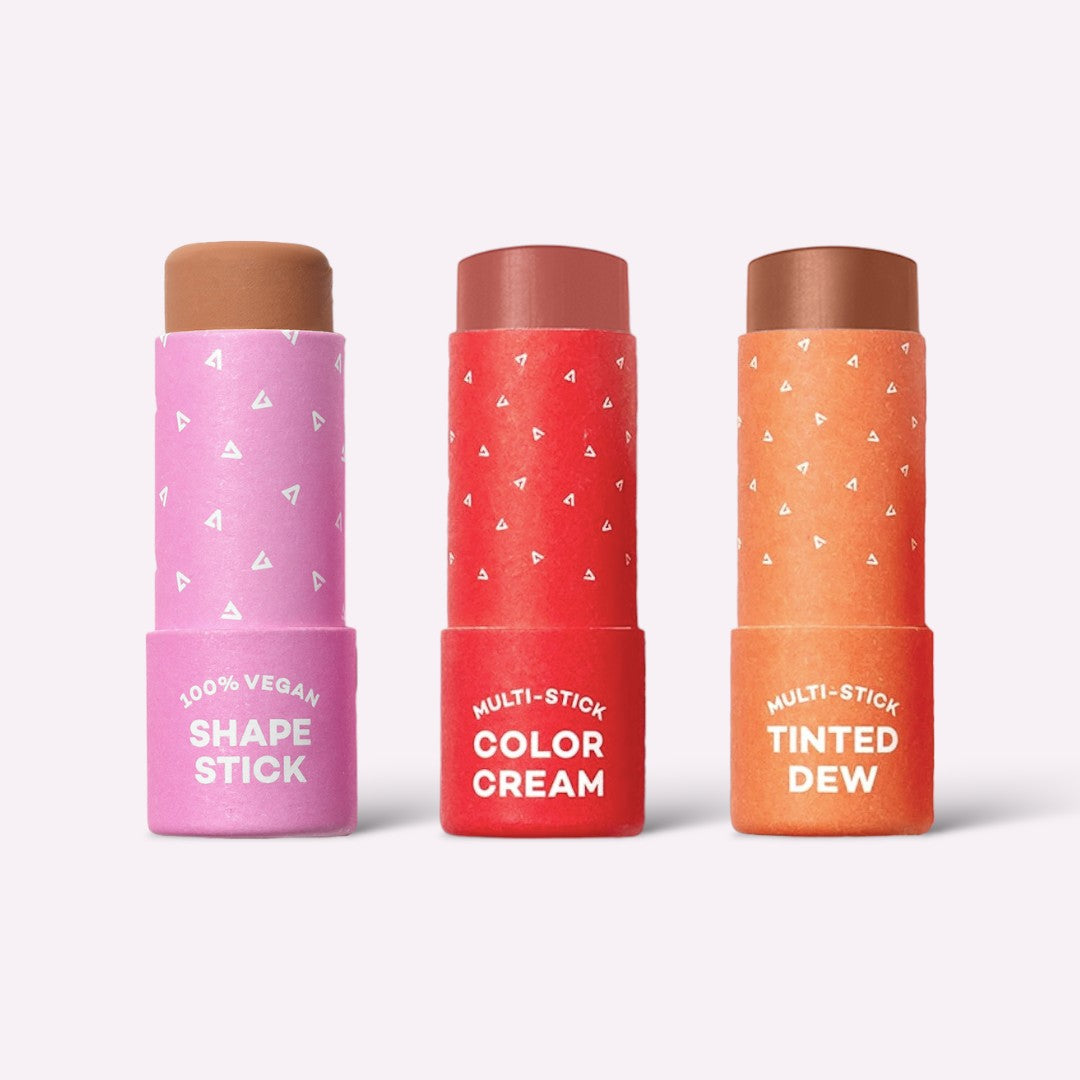
So, what does “vegan makeup” actually mean?
It’s simple, really. Vegan makeup is made with zero animal-derived ingredients, byproducts, or derivatives. That’s it. Think of it as a plant-based diet, but for your skin—every single ingredient comes from plants, minerals, or is made synthetically.
This means you won’t find common stuff like beeswax, carmine (a red pigment from crushed beetles, yuck), or lanolin (from sheep's wool) on the ingredient list.
It All Comes Down to the Ingredients
At its heart, the vegan label is a promise about what’s in the formula. It's not about vague "natural" claims or clever marketing. It’s a hard and fast rule: if it came from an animal, it’s out.
It’s kind of like baking a cake. A classic recipe calls for eggs and butter. A vegan baker gets the same delicious result by swapping in smart alternatives like applesauce and coconut oil. Vegan makeup follows the same logic, ditching traditional animal-based ingredients for equally effective (and often more innovative) replacements.
This isn’t just a niche trend anymore. It’s a full-blown movement, powered by people like us who want products that are both kind and high-performing.
A Market Driven by Conscious Choices
The massive growth of the vegan cosmetics market shows just how much things are changing. We're all getting pickier, actively looking for products that align with our values and pushing brands to get creative with plant-based formulas.
And the numbers don't lie. The market was valued at a whopping USD 18.36 billion this year and is expected to hit USD 35.50 billion by 2033. You can read more about the vegan cosmetics market's rapid expansion and what's behind the boom.
This explosion is a direct answer to the question: what makes makeup vegan? The answer is always in the ingredients.
A product’s vegan status is 100% about its formula. It has nothing to do with animal testing, packaging, or how “natural” it is. If there’s even a trace of an animal byproduct, it’s not vegan. Simple as that.
To help you get your bearings, we've put together a quick cheat sheet.
Vegan Makeup At a Glance
Here’s a simple table to clear up the differences between vegan makeup and other common beauty terms you might see.
| Concept | What It Means | Example |
|---|---|---|
| Vegan | The product contains no animal-derived ingredients or byproducts. | A lipstick made with candelilla wax instead of beeswax. |
| Cruelty-Free | The product and its ingredients were not tested on animals at any stage. | A brand that verifies its entire supply chain is free of animal testing. |
| Clean | The product is formulated without certain controversial ingredients (like parabens or phthalates). | A foundation free from synthetic fragrances and sulfates. |
This table makes it easy to see that while these terms often overlap, they aren't the same thing. A product can be cruelty-free without being vegan, and vice-versa!
What It Means in Practice
To really get it, let's break down the promises behind a truly vegan product. Knowing these pillars will help you become a much sharper and more conscious shopper.
- Zero Animal Ingredients: This is the big one, the absolute must. No pigments from crushed insects, no moisturizers from sheep's wool. None.
- Focus on Alternatives: Vegan brands are masters of the swap. They find incredible plant-based or synthetic alternatives that work just as well, if not better. Think plant waxes instead of beeswax or iron oxides for rich color instead of carmine.
- Ingredient Purity: This commitment goes all the way down the list. It’s not just about the star ingredients; every thickener, emulsifier, and preservative has to be animal-free, too.
Decoding Labels to Find Hidden Animal Ingredients
Alright, let's get into the nitty-gritty. Going beyond the basic definition of vegan makeup means you have to become a bit of an ingredient detective. Cosmetic labels can be a minefield of confusing names, and some of the most common non-vegan ingredients are hiding in plain sight, usually masked by scientific terms that don't exactly scream "animal-derived."
It’s a lot like checking a food label for allergens. The first few times, the list might feel totally overwhelming. But once you know what to look for, you can spot the culprits in seconds. The same goes for makeup—learning a handful of key ingredients is your ticket to making choices you can feel good about.
The Most Common Culprits Hiding in Your Makeup
For decades, certain animal-derived ingredients have been cosmetic staples because, frankly, they work. But here’s the good news: modern, ethical brands have discovered incredible plant-based and synthetic alternatives that perform just as well—if not better—without compromising on vegan values.
Here are some of the most frequent offenders to keep on your radar:
- Carmine (or Cochineal, Natural Red 4, E120): This vibrant red pigment comes from crushing and boiling female cochineal insects. It’s shockingly common in red lipsticks, blushes, and eyeshadows. To learn more about this one, you can check out exactly what cochineal red insect dye is and why so many brands are finally ditching it.
- Lanolin: A super moisturizing emollient, lanolin is basically grease from sheep's wool. You'll spot it in hydrating products like lip balms, glosses, and creamy foundations.
- Guanine (or Pearl Essence): That pearly, iridescent shimmer in many highlighters, bronzers, and eyeshadows? It often comes from guanine, which is made from crushed fish scales.
- Beeswax (Cera Alba): A classic thickener and emulsifier found in everything from mascara to lip balm and pomades. Since it’s produced by bees, it’s considered an animal byproduct.
This diagram helps break down a few of the key ingredients that are never found in vegan formulas.
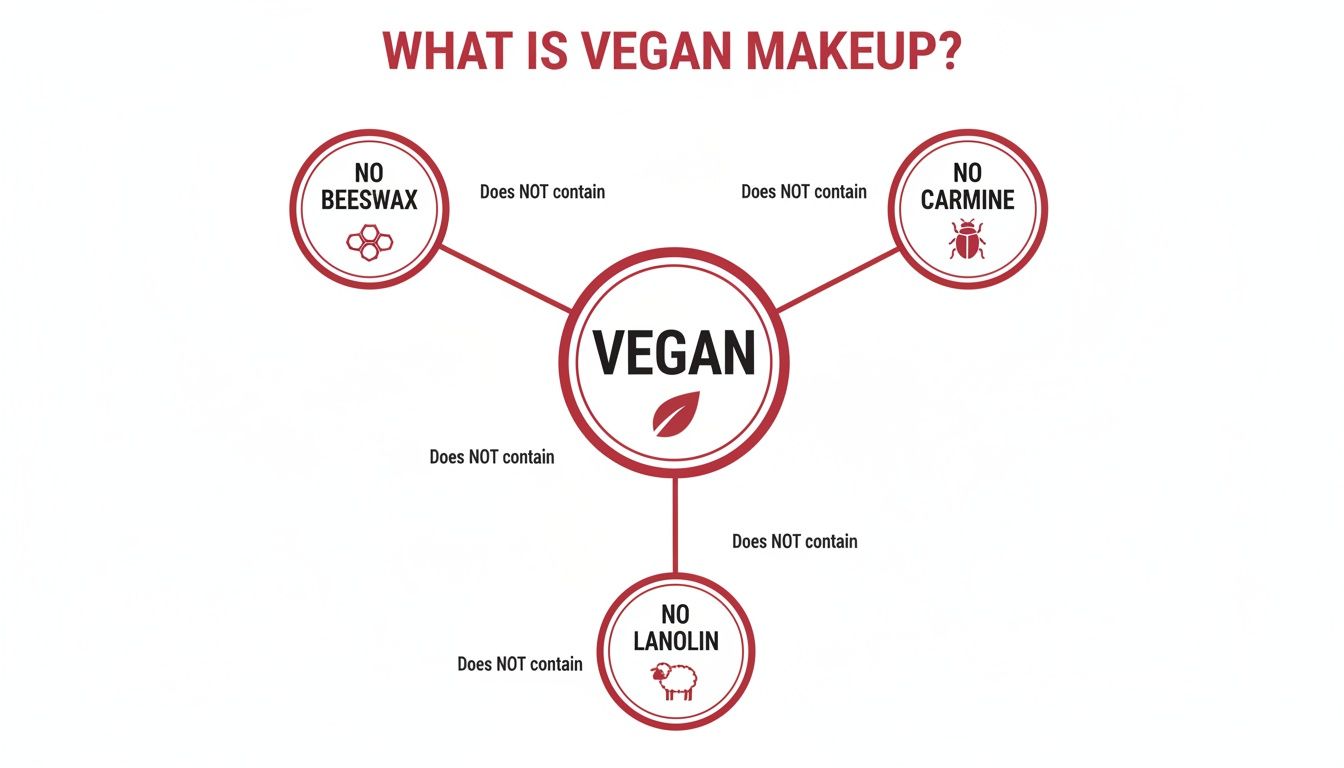
As the infographic shows, what makes makeup truly vegan is the strict avoidance of ingredients like beeswax, carmine, and lanolin—all of which have been mainstays in traditional cosmetics for a long time.
High-Performing Vegan Alternatives Are the New Standard
The best part is that for every animal-derived ingredient out there, there's a fantastic vegan swap. Conscious brands aren't just taking things out; they're innovating with effective, plant-powered alternatives that deliver amazing results for your skin and the planet.
Let's take a look at what these ethical swaps look like in the real world.
Common Non-Vegan Ingredients and Their Vegan Swaps
Knowing the substitutes is just as important as knowing what to avoid. It helps you recognize high-quality vegan formulas and appreciate the clever science behind them.
| Non-Vegan Ingredient | Where It Comes From | Common Vegan Alternative |
|---|---|---|
| Carmine | Crushed cochineal insects | Iron oxides and fruit pigments like beet, berry, and cherry extracts provide rich, stable color. |
| Lanolin | Grease from sheep's wool | Shea butter, cocoa butter, and plant oils (like jojoba and coconut) offer superior, non-greasy hydration. |
| Guanine | Crushed fish scales | Mica and synthetic fluorphlogopite (synthetic mica) create a brilliant, ethical shimmer. |
| Beeswax | Secreted by honey bees | Candelilla wax and carnauba wax, both derived from plants, provide excellent structure and glide. |
| Collagen | Animal connective tissue | Plant-based peptides and soy protein are used to achieve a similar plumping and firming effect in skincare and makeup. |
| Keratin | Horns, hooves, and feathers | Hydrolyzed plant proteins from sources like corn, wheat, and soy strengthen lashes and brows effectively. |
Once you get familiar with these names—both the ones to skip and the ones to embrace—reading an ingredient list feels less like a chore and more like an empowering check-in. It lets you see past the marketing hype and confirm for yourself that what you’re buying is truly vegan.
Understanding Vegan Versus Cruelty-Free
When you’re trying to shop more consciously, the terms “vegan” and “cruelty-free” pop up everywhere. They’re often thrown around together, but they actually mean two very different things. It's probably the biggest point of confusion for anyone trying to clean up their makeup bag, and getting it straight is the key to buying products that truly line up with your ethics.
Think of it this way: a vegan brownie isn't automatically organic. One label tells you about the ingredients (no eggs or dairy), while the other tells you about the farming process (no synthetic pesticides). It's the same deal with makeup. One term defines the formula, and the other defines the testing process.
What Cruelty-Free Really Means
"Cruelty-free" is all about animal testing. Simple as that. A product gets to call itself cruelty-free if neither the finished product nor any of its individual ingredients were tested on animals. Ever.
And this promise has to cover the entire supply chain. A brand that's genuinely cruelty-free makes sure its suppliers aren't conducting or paying for animal testing, either. This is a commitment to an ethical process, not what's actually inside the tube or bottle.
How Vegan Is Different
Like we've mentioned, vegan makeup is defined purely by its ingredient list. A vegan product has absolutely no animal-derived ingredients or byproducts in it. That means no beeswax in your lip balm, no lanolin from sheep's wool in your moisturizer, and no carmine from crushed beetles for that red pigment.
The focus is entirely on the formula. This is where it gets tricky—a product could be made with 100% plant-based ingredients but still have been tested on animals. That would make it vegan, but not cruelty-free. It’s a critical distinction to make.
The Four Possible Scenarios
Once you understand both concepts, you’ll see that every product falls into one of four categories. Knowing these will help you read labels like a pro.
- Vegan and Cruelty-Free: This is the gold standard. The product has zero animal ingredients and wasn’t tested on animals at any point.
- Vegan but NOT Cruelty-Free: The formula is plant-based, but the company or its suppliers still test on animals. You’ll often see this with brands that sell in countries where animal testing is required by law.
- Cruelty-Free but NOT Vegan: No animal testing happened, but the formula includes ingredients like beeswax, honey, or lanolin.
- Neither Vegan nor Cruelty-Free: This is the old-school approach. The product contains animal-derived ingredients and was tested on animals.
The ultimate goal for most of us is to find products that check both boxes. Supporting brands that are both vegan and cruelty-free is how we ensure our purchases are kind to animals from the first ingredient to the finished product.
Why Both Labels Matter
When you choose products that are both vegan and cruelty-free, you're sending a huge message to the beauty industry. You’re telling them you want animal-free ingredients and humane, modern testing methods.
And brands are listening. The innovation in plant-based ingredients has been incredible, showing that we don’t need animal-sourced components anymore. Just look at the stats: the lip and nail makeup segments are projected to explode at a 16.51% CAGR from 2025-2030, largely because new vegan pigments can finally compete with the vibrancy of old-school ones. We’re seeing amazing technology, like stable plant oils completely replacing lanolin without sacrificing performance.
Ultimately, looking for both labels helps push the entire industry toward a more compassionate and sustainable future. If you want to dive deeper, check out our guide to some of the best cruelty-free makeup brands making a difference today.
Navigating Certifications and Logos You Can Trust
Walking down the makeup aisle can feel like a pop quiz you didn't study for. With so many brands making big claims about their ethics, how do you know who's actually walking the walk? A cute sticker or a vague promise on a website just isn't enough proof. Real trust comes from third-party verification.
Think of certifications as a background check for your beauty products. Instead of just taking a brand's word for it, an independent organization has done all the heavy lifting for you. They’ve dug into ingredient lists, vetted suppliers, and made sure every single part of the process meets strict vegan standards. Spotting their official logo is your shortcut to confidence, saving you from playing ingredient detective.
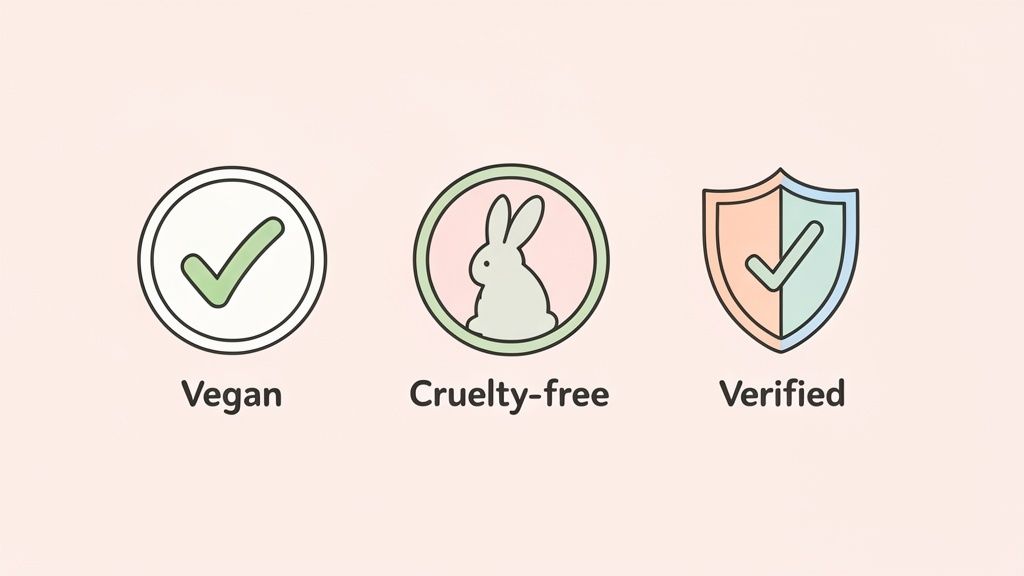
The Gold Standard Logos to Look For
While a lot of different symbols float around, a few key players have set themselves apart as the most reliable authorities in the vegan beauty world. When you see one of these logos, you can breathe easy knowing the product has passed a serious inspection.
-
The Vegan Society Trademark: This is one of the oldest and most respected vegan certifications on the planet, instantly recognizable by its sunflower logo. To earn this seal, brands have to prove their products are totally free from animal ingredients, haven't involved animal testing, and have solid measures in place to prevent cross-contamination with non-vegan stuff during production.
-
PETA's "Vegan" Logo: People for the Ethical Treatment of Animals (PETA) offers another well-known certification. Brands have to submit a detailed statement confirming their products contain zero animal-derived ingredients to get this logo. It’s a straightforward, unmistakable sign of a vegan formula.
These organizations don't just hand out logos like candy. They require stacks of paperwork, supplier confirmations, and a real commitment to staying compliant. It’s this rigorous process that gives their symbols actual weight and meaning.
Spotting Fakes and Misleading Claims
Unfortunately, not all logos are created equal. The rise in conscious consumerism has also brought a wave of "greenwashing"—where brands use tricky marketing to seem more ethical or eco-friendly than they really are. This is where your new label-reading skills become so important.
A key takeaway is that an official certification is a legal promise, backed by a respected third party. A self-made logo of a bunny or a leaf is just a marketing graphic with no accountability behind it.
To keep from getting duped, watch out for these common red flags:
- Vague Language: Phrases like “plant-powered,” “botanical,” or “earth-friendly” sound lovely, but they have no regulated definition. They absolutely do not guarantee a product is vegan.
- Unofficial Logos: Be skeptical of generic bunny, leaf, or “V” symbols that don't belong to a known certification body like The Vegan Society, PETA, or the Leaping Bunny Program (for cruelty-free status). It's incredibly easy for brands to design their own logos to imply an ethical standard they don't actually meet.
- "Vegan-Friendly" Claims: This term is often used by companies that offer some vegan products but aren't fully vegan themselves. While that specific lipstick might be fine, it means you have to be extra diligent checking every single item from that brand.
True transparency is all about clear, verifiable proof. By focusing on official certifications, you can confidently cut through the noise and support brands that are genuinely committed to animal-free beauty. Learning to tell the difference between a legitimate seal of approval and a clever marketing ploy is how you make choices that truly align with your values.
Looking Beyond Ingredients to Packaging and Production
A truly conscious approach to beauty means looking beyond what’s inside the bottle. Sure, the ingredient list is the foundation of what makes makeup vegan, but a more holistic view looks at the entire product lifecycle—from sneaky processes in the supply chain to the packaging that ends up on your shelf. This is what separates brands that just slap a "vegan" label on a formula from those that live and breathe the ethos.
It’s about asking the tougher questions. For instance, were animal-derived agents used during manufacturing, even if they don't show up on the final ingredient list? This happens more than you'd think, especially with certain filtering or clarifying processes that have historically used animal byproducts. A truly committed brand makes sure every single step is free from animal involvement.
The Hidden Impact of Production
Another huge piece of the puzzle is cross-contamination. Picture a factory that makes both vegan and non-vegan makeup. If they use the same equipment to mix a beeswax balm and then a candelilla wax formula without super-strict cleaning protocols, guess what? Trace amounts of animal products can sneak into the vegan item.
Dedicated vegan brands get around this by:
- Using dedicated equipment for their vegan production lines to completely eliminate any risk.
- Implementing strict, verifiable cleaning and sanitation procedures between batches.
- Manufacturing in entirely vegan facilities to ensure zero contact with animal-derived stuff.
This level of detail is what protects the integrity of the vegan promise, giving you peace of mind that your product is pure from start to finish. It’s a commitment to the process, not just the ingredients.
True ethical beauty considers the entire journey of a product. It's not enough for a formula to be vegan if the production process or packaging relies on animal-derived components or environmentally harmful practices.
Connecting Vegan Ethics with Sustainable Packaging
The conversation around ethical beauty naturally flows into environmental responsibility. Veganism is rooted in minimizing harm, a principle that aligns perfectly with choosing sustainable packaging. Let's be real, a formula free of animal products feels pretty inconsistent when it's housed in single-use plastic destined for a landfill.
This is where eco-conscious choices become a huge part of what makes makeup vegan in a bigger-picture sense. Forward-thinking brands are prioritizing materials that reflect this ethos. You can explore our guide on eco-friendly packaging for cosmetics to see how innovative materials are totally changing the game.
The most dedicated brands are focusing on a few key areas to shrink their environmental footprint:
- Plastic-Free Materials: Opting for glass, aluminum, or recycled paper instead of virgin plastic.
- Vegan Glues and Inks: Making sure the adhesives and dyes used on boxes and labels are free from animal-derived binders, like casein (a milk protein) or animal-based gelatin.
- Refillable Systems: Designing products that let you buy refills, which drastically cuts down on packaging waste over time.
This comprehensive perspective is the future of conscious beauty. It acknowledges that what’s on the outside matters just as much as what’s on the inside, creating a product that is kind to animals and the planet at every single stage.
How to Build Your First Vegan Makeup Kit
Feeling ready to make the switch? The good news is, transitioning to a fully vegan makeup routine doesn't have to be a stressful or crazy expensive overhaul. Think of it less like a total gut renovation and more like a slow, intentional refresh of your collection.
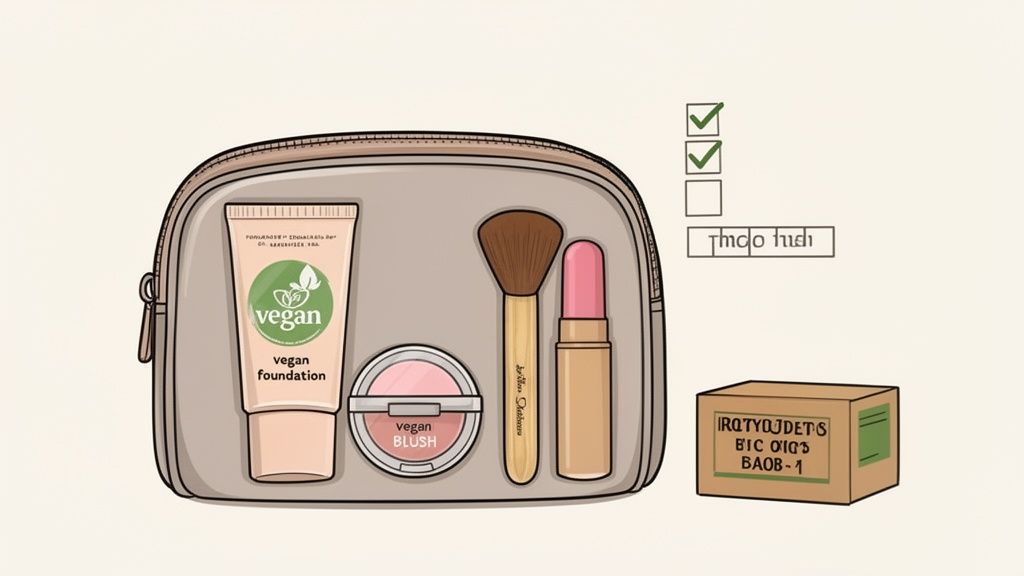
The trick is to start small. Just replace items as they run out and focus on finding amazing alternatives you actually love to use. This approach makes the whole process feel way more manageable for both your wallet and your sanity.
Start with an Audit of Your Current Collection
Before you even think about buying anything new, take a good look at what you already own. Go through your makeup bag product by product and sort everything into three piles: "Keep," "Replace," and "Unsure."
This little audit isn’t about making you feel guilty; it’s just about gathering intel. It shows you which products you reach for the most, which makes it a whole lot easier to figure out what your first vegan purchases should be.
Next, pick up your "Unsure" pile and put those new ingredient-detective skills to the test. Scan the labels for those common animal-derived culprits like carmine, lanolin, or beeswax. Use the official certification logos we talked about as your North Star.
A Step-by-Step Replacement Strategy
Okay, now you know what needs replacing, and you can make a shopping list that won't break the bank. The whole idea is to avoid that panicked feeling of having to buy an entire new kit all at once. Instead, just adopt a simple one-in, one-out policy.
- Prioritize Daily Essentials: Start with the products you can't live without. If concealer or mascara is your ride-or-die, focus on finding a vegan replacement for that item first.
- Replace as You Finish: When your go-to non-vegan foundation finally runs out, that’s your signal to go find its vegan successor. This method spreads the cost out over time and makes the transition feel totally natural.
- Find Your Vegan 'Dupes': Are you obsessed with a specific lipstick shade or formula? So many online communities and beauty blogs are dedicated to finding vegan "dupes" (duplicates) for popular mainstream products. A quick search can lead you straight to your perfect, ethically-aligned match.
Don’t feel like you have to toss everything out immediately. Honestly, the most sustainable option is to use up what you already have before buying something new. This journey is all about making more conscious choices from here on out.
Simplify Your Routine with Multi-Use Products
One of the absolute best ways to build a vegan kit is to embrace a little minimalism. Multi-use products are a game-changer for eco-conscious beauty because they cut down on both waste and clutter. Brands like Axiology are all about this approach with products that work on lips, cheeks, and eyes.
Think about adding these kinds of versatile workhorses to your new kit:
- A buildable color stick: Use it as a blush, eyeshadow, and lip tint. Boom. That’s three products in one.
- A tinted lip balm: It’s perfect for that sheer wash of color and hydration, simplifying your whole look.
- A high-quality tinted serum: This combines the good stuff from skincare with light coverage, making your base routine a breeze.
Building your first vegan makeup kit is really the final, empowering step in figuring out what makes makeup vegan. It’s where all this new knowledge turns into real action. By starting slow, focusing on your must-haves, and opting for versatile products, you can build a collection that is kind, effective, and totally, uniquely you.
Frequently Asked Questions About Vegan Makeup
Even after you've got the basics down, a few practical questions always seem to pop up. Let's tackle some of the most common ones so you can feel totally confident the next time you're shopping for makeup.
Does Vegan Makeup Perform as Well as Non-Vegan Makeup?
It absolutely does. This might be the biggest myth out there, but any performance gap that might have existed in the past is long gone. Seriously. Modern, plant-based and synthetic ingredients are now so good that vegan makeup often performs even better than the old-school stuff.
Brands are using amazing alternatives like candelilla wax instead of beeswax for structure, vibrant fruit pigments for color, and shimmery mica instead of crushed beetles. You really don't have to give up pigmentation, staying power, or a beautiful texture to make an ethical choice anymore. The performance is 100% there.
Is Clean or Natural Makeup Always Vegan?
Nope, not necessarily. And this is a super important one to remember. The terms "clean" and "natural" aren't regulated, which means brands can throw them around pretty freely. A product marketed as "natural" can easily have animal ingredients like beeswax or honey.
Likewise, a "clean" product might skip chemicals like parabens or sulfates but still contain things like lanolin (from sheep's wool) or carmine (from crushed insects).
Always look past the marketing buzzwords. The only way to be certain a product is vegan is to check for a certified vegan logo from a trusted organization or to carefully vet the ingredient list yourself.
Is It More Expensive to Buy Vegan Makeup?
It really doesn't have to be. While you can definitely find some pricey luxury vegan brands, the huge boom in demand has made vegan beauty way more accessible. You can now find awesome, high-performing vegan makeup at every price point, from drugstore steals to high-end formulas.
The market is packed with choices, making it easy to build a makeup bag that fits your budget and your values. If you're curious about the bigger picture and what's driving these trends, you can check out some current beauty industry statistics.
Ultimately, choosing vegan makeup today isn't about sacrifice. It’s about aligning your wallet with your heart—without giving up on quality. With so many incredible options out there, making the switch has never been easier.
At Axiology, we believe in beauty that is kind to animals and the planet. Discover our collection of plastic-free, 100% vegan, and cruelty-free multi-use makeup at https://www.axiologybeauty.com.