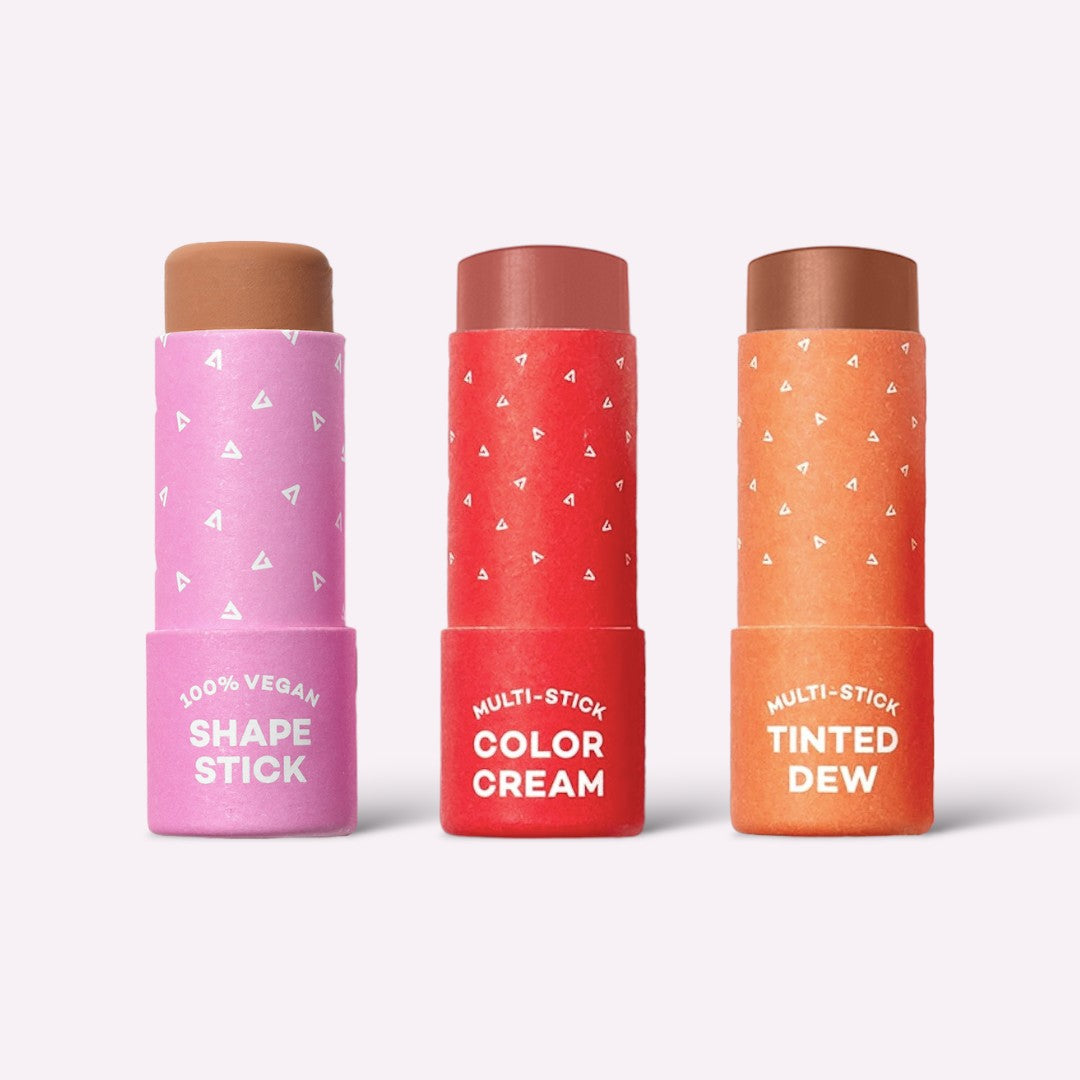
Zero waste beauty products are essentially just smart, sustainable alternatives to your everyday cosmetics. They focus on packaging that is refillable, compostable, or recyclable to help cut down on the insane amount of plastic waste we produce.
But it’s not just about what you buy. It's about a bigger shift in mindset—consuming less, and picking high-quality products that are genuinely better for the planet.
Why Zero Waste Beauty Is More Than a Trend
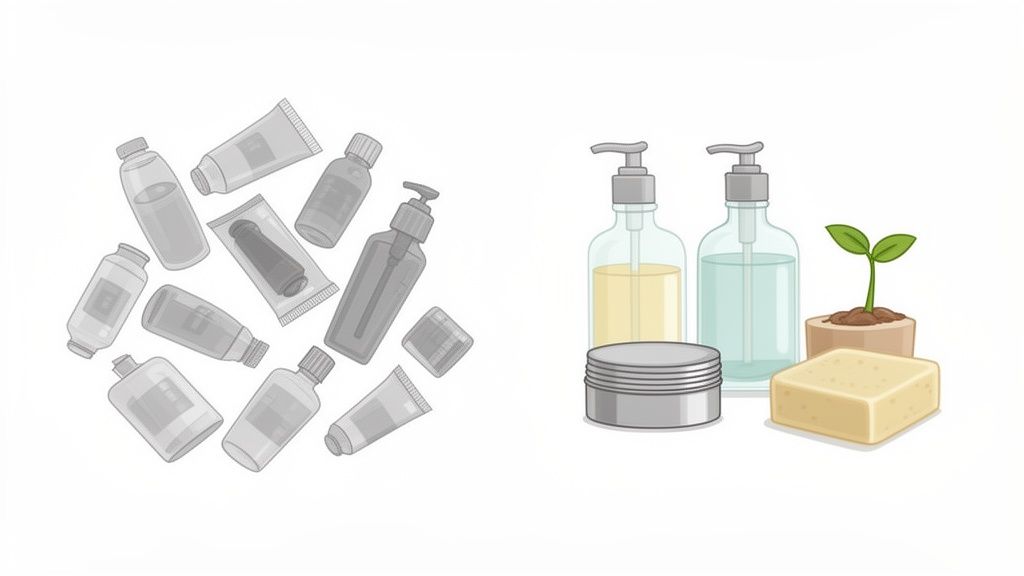
Let's be real: the beauty industry has a serious packaging problem. The constant stream of plastic tubes, tricky pumps, and single-use everything adds up to a massive environmental headache. The move toward zero waste beauty isn’t just some fleeting trend; it's a real, powerful response from people who are tired of it.
This movement is all about making choices that feel good and empowering, not limiting. It’s a return to simplicity, where quality trumps quantity, and you can support brands that actually share your values.
The core ideas are pretty simple:
- Use what you have: Shop your stash before buying new.
- Pick better packaging: Look for glass, aluminum, or compostable paper.
- Embrace multi-use products: A single crayon for lips, cheeks, and eyes simplifies everything.
The Growing Demand for Sustainable Choices
People are waking up and asking questions. We’re looking for transparency and holding brands accountable for their environmental footprint. The proof is in the numbers—the global zero waste cosmetics market was valued at about USD 7.85 billion in 2024, a huge jump from USD 4.5 billion in 2023. It's projected to hit USD 11.2 billion by 2032, all because people like you are demanding better options.
This isn't just about tossing a bottle in the recycling bin. It's about changing our relationship with the stuff we use every day, turning a simple routine into a statement.
Thankfully, innovative brands are proving you don't have to give up performance for principles. You can find incredible, high-quality, plastic-free products that work beautifully without the side of eco-guilt.
To get the full picture, it helps to dive into the principles of conscious living and sustainability. Understanding the big ideas helps you see what zero waste really means and how every small swap adds up to a much bigger, positive impact.
Let’s Do a Mindful Beauty Audit
Before you even think about buying a single new thing, the most powerful first step is to take a hard look at what you already own. I promise, this isn't about shaming you for past purchases. It's about getting real. This little audit will show you exactly what your habits are and where the most waste is coming from in your routine. It gives you a clear, totally manageable starting point.
Go gather everything. And I mean everything—your makeup, skincare, hair products, the works. Pull it all out of drawers, bags, and bathroom cabinets, and lay it all out where you can see it. Seeing it all in one place can be a real eye-opener and is the key to making real changes.
Get Sorting
Okay, now it’s time to make three distinct piles. This just breaks the whole task down so it doesn't feel so overwhelming. The goal here is total honesty about what you actually use and need.
-
Keep and Use: These are your ride-or-dies—the products you love and grab without thinking. This pile is also for those great finds you might have forgotten about. Put them right up front on your shelf so you remember to use them up.
-
Nearly Empty: Think of this as your "use-it-up" challenge pile. It’s for all those products with just a few applications left. Make it a priority to finish these before cracking open anything new. It’s a super satisfying way to reduce waste and clear out some serious clutter.
-
Let Go: This is for everything that's expired, made your skin freak out, or is a color you’ll realistically never wear again. (Yes, I’m talking about that glitter eyeshadow from 2017). Be ruthless here; holding onto something you won’t use doesn’t do you or the planet any favors.
The most sustainable product is the one you already have. Seriously. The whole point of this audit is to buy less later by appreciating and actually using what you have right now.
Figuring Out What To Do With the "Let Go" Pile
Alright, you've got your "Let Go" pile. Now what? This is where it gets tricky, because recycling rules can feel like a secret code. You can't just toss everything into your curbside bin and hope for the best.
First, check for expiration dates. Look for that little open jar symbol with a number inside (like "12M" for 12 months). For safety's sake, expired liquids or creams should never be donated.
For the packaging, you need to figure out what’s actually recyclable in your town. Look for the number inside the chasing arrows symbol. Just because the symbol is there doesn't mean it’s accepted everywhere.
- Plastics #1 (PET) and #2 (HDPE): These are your best bets. They’re the most commonly recycled plastics—think clear water bottles and opaque milk-jug-type containers.
- Plastics #3, #4, #6, #7: These are the tough ones. Most local programs won't take them.
- Plastic #5 (PP): This one is getting easier to recycle, but you'll still need to check with your local facility. It’s often used for tubs and caps.
Don’t forget to clean containers out completely before tossing them in the bin! One bit of leftover gunk can contaminate a whole batch of recycling. For anything your local program rejects, look into mail-in services that specialize in hard-to-recycle beauty packaging. Going through this process now will make choosing truly zero waste beauty products so much easier down the road.
Decoding Labels on Sustainable Products
Stepping into the world of sustainable beauty can feel like you're trying to learn a new language. You see terms like “clean,” “vegan,” and “cruelty-free” plastered everywhere, but they don't always mean what you think. Getting a real handle on them is the only way to make choices that actually cut down on waste and line up with what you care about.
The biggest point of confusion is usually packaging. Let's clear up the big three:
-
Recyclable: This is the one we all know. It means a material, like glass or aluminum, can be broken down and turned into something new. The catch? It only works if you clean the item properly and—this is a big one—if your local recycling program actually accepts it.
-
Biodegradable: This label just means something can be broken down by microorganisms over time. The problem is, there’s no set timeframe. A so-called “biodegradable” plastic might take hundreds of years to decompose in a landfill, leaving a trail of microplastics behind.
-
Compostable: This is the gold standard we should all be looking for. It means the material will break down into nutrient-rich soil within a specific window, usually around 90-180 days, in a proper composting setup. Genuinely compostable packaging, like the paper tubes we use for our Balmies, leaves nothing harmful behind.
Spotting Genuine Eco-Friendly Claims
Beyond the packaging, you'll see labels talking about what’s inside the product. These terms aren't really regulated, so you have to be a bit of a detective. "Clean beauty" usually just means a product is made without certain controversial ingredients like parabens or phthalates.
Likewise, "vegan" means a product has zero animal-derived ingredients, while "cruelty-free" (often certified by groups like Leaping Bunny) means no animal testing was involved. And yes, a product can be one without being the other. For example, a "cruelty-free" lip balm might contain beeswax, which means it isn’t vegan.
Greenwashing is what happens when a brand spends more time and money marketing itself as eco-friendly than it does on actually minimizing its environmental impact. Always look for specifics and certifications, not just vague claims like "earth-friendly."
This little framework is a great way to think about auditing your own products and planning what you buy next.
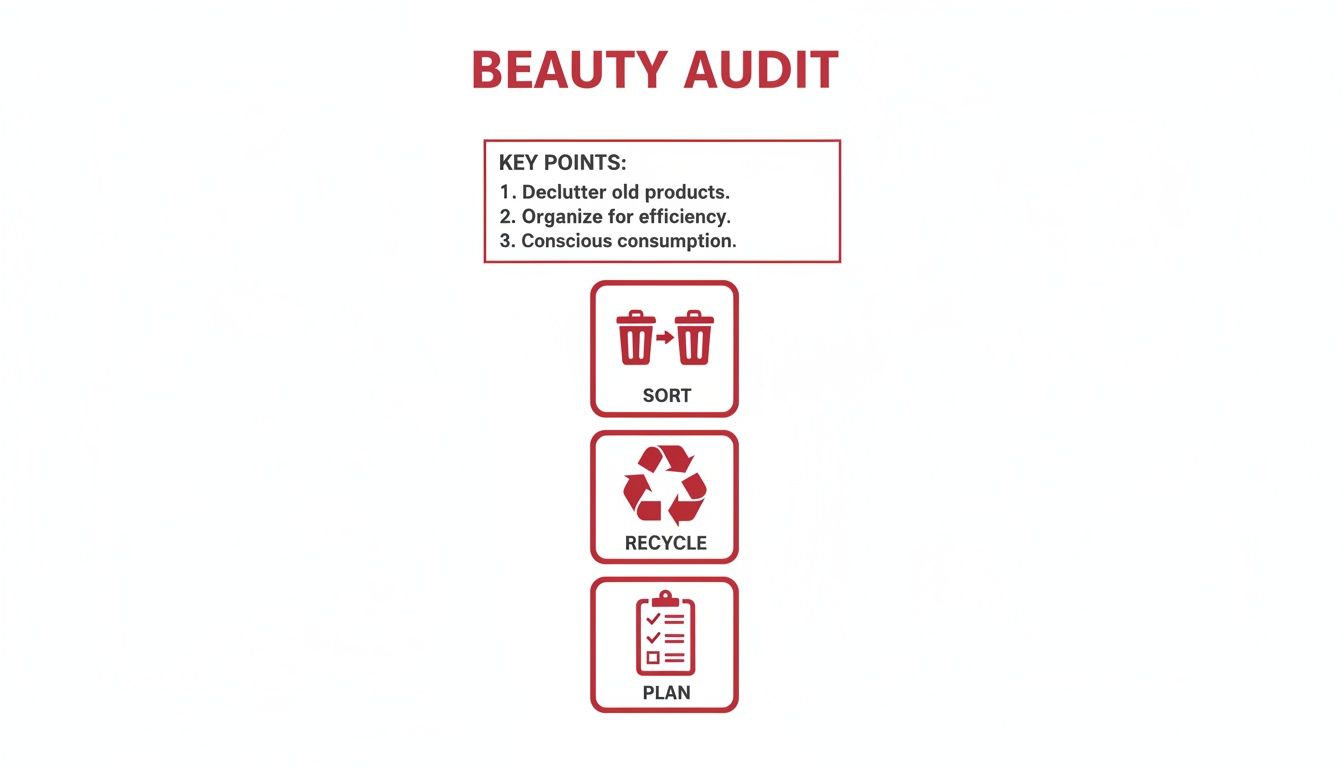
As the visual shows, a mindful audit starts with sorting what you have, recycling what you can, and making a conscious plan for what comes next. If you want to become an expert at spotting truly eco-conscious brands, you can dive deeper by breaking down sustainability buzzwords.
Comparing Sustainable Packaging Materials
Choosing between different types of packaging can feel like a trade-off. Paper is great, but will it hold up? Glass feels luxurious, but it's heavy and breakable. The best choice often comes down to the product itself.
Here’s a quick comparison to help you make smarter decisions when you're standing in the aisle (or scrolling online).
| Material | Pros | Cons | Best For |
|---|---|---|---|
| Glass | Infinitely recyclable, feels premium, and protects formulas well. | Heavy (higher shipping emissions), can break easily. | Serums, foundations, and creams. |
| Aluminum | Lightweight and infinitely recyclable without losing quality. | Can be dented, may have plastic liners. | Deodorant tubes, tins, and bottles. |
| FSC-Certified Paper | Compostable, lightweight, made from responsible sources. | Not suitable for liquids, can be less durable. | Solid products like Axiology's Multi-Sticks and lip balms. |
| Post-Consumer Recycled (PCR) Plastic | Gives existing plastic a second life, reducing new plastic creation. | Can be hard to recycle again, quality degrades over time. | A "better than virgin plastic" option for pumps or tubes. |
Ultimately, the goal is progress, not perfection. Every time you choose a product in paper over plastic, or glass over a non-recyclable tube, you’re making a difference.
Building Your Zero Waste Beauty Kit
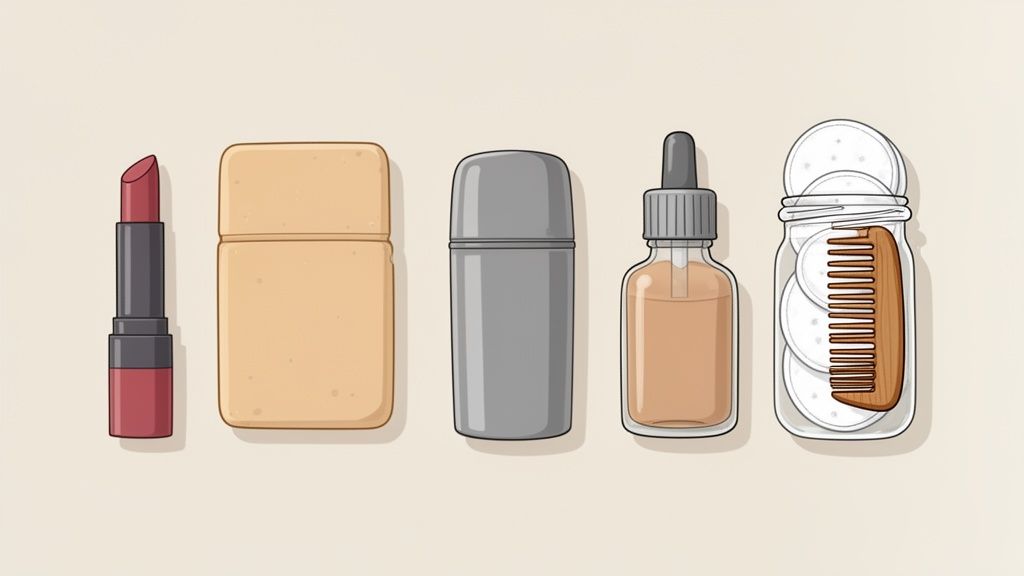
This is where the fun really starts—putting together a simple, effective, and truly sustainable beauty kit. The secret isn't finding a one-to-one replacement for every single product you toss. Instead, the magic is in embracing minimalism and versatility.
The absolute cornerstone of a low-waste routine is the multi-use product. Think about replacing your lipstick, blush, and eyeshadow with a single, elegant color stick. This one swap declutters your makeup bag, simplifies your morning, and drastically cuts down on packaging waste. It's a total shift in thinking from "more is more" to "smarter is better."
Prioritizing High-Impact Swaps
When you're just starting, focus on the things you use up and buy most often. These are your daily drivers, and they offer the biggest opportunity to slash your waste.
It’s no surprise that personal care items like skincare and haircare dominate the zero-waste beauty market right now, making up about 55% of sales. Why? Because they're repeat purchases. Swapping to solid bars and refillable containers creates a huge, lasting impact over time. That said, the makeup category is growing the fastest, which shows a clear demand for sustainable color cosmetics. You can explore the market dynamics of zero waste cosmetics if you want to dive deeper into the trends.
To get the most bang for your buck, start with these swaps:
- Solid Shampoo and Conditioner Bars: One little bar can replace up to three plastic bottles of liquid shampoo, saving both plastic and water. They're also a game-changer for travel.
- Solid Facial Cleansers: Just like shampoo bars, these get rid of the plastic bottle and usually come in simple paper or cardboard. Easy peasy.
- Refillable Deodorant: Look for brands that offer a permanent, durable case with plastic-free refills. You buy the case once and just pop in a new stick when you need it.
- Safety Razors: Ditching disposable plastic razors for a stainless steel safety razor is a classic zero-waste move. It saves an unbelievable amount of plastic (and money) in the long run.
A common myth is that going zero-waste means you have to sacrifice quality. Honestly, the opposite is usually true. Brands in this space focus on high-quality, concentrated formulas without the cheap fillers and water that dilute most conventional products.
Elevating Your Makeup Routine
Once you've tackled the daily essentials, you can turn your attention to makeup. This is where you can see how high-performance products and zero-waste goals can perfectly align. The key is to look for brands that are thoughtfully designing their packaging from the ground up to be sustainable.
For instance, a lot of foundations now come in glass bottles and aluminum tubes that skip the hard-to-recycle plastic pump entirely. These materials are infinitely recyclable without losing quality, making them a way better choice than plastic.
This is also where multi-use products really shine. A product like Axiology’s Balmies can be used on your lips, cheeks, and eyes, giving you a cohesive look from a single, paper-wrapped crayon. They are completely zero-waste—wrapped in recycled paper and tucked into a recyclable carrying case. It's proof that you don’t need a drawer overflowing with products to create a beautiful look. This approach doesn't just minimize waste; it encourages creativity and a more intuitive, playful relationship with your makeup.
Exploring Refills and Simple DIY Solutions
Making the switch to solid bars and multi-tasking products is a massive step forward, but your zero-waste journey doesn't have to stop there. If you're ready to level up, embracing refill programs and simple DIY options can shift your routine from just reducing waste to actively preventing it in the first place.
Refill programs are popping up everywhere, and for good reason. They let you buy a product once and then top it up forever. This whole model is a game-changer because it finally separates the product you love from its single-use packaging, tackling the problem right at the source.
You'll generally run into two kinds of refill systems:
- In-store refills: This is where you bring your own clean, empty bottle to a shop and fill it up from a bulk dispenser. It's becoming super common for things like shampoo, conditioner, and body lotion.
- Mail-in refills: With this system, a brand sends you a refill pouch or pod—usually in lightweight, recyclable, or compostable packaging—so you can replenish your original container at home.
A quick tip when you're looking into a refill service: look for transparency. A good program will be totally open about how they sanitize their in-store dispensers and will use truly minimal, eco-friendly packaging for their mail-in options.
The Charm of Simple DIY Beauty
For anyone who loves a more hands-on approach, making your own beauty products can be incredibly satisfying. You get total control over the ingredients and can completely eliminate packaging. It’s a win-win. But, it's really important to know when DIY is a great idea and when it's much safer to leave things to the pros.
Simple recipes for things like body scrubs or lip balms are usually perfectly safe and work beautifully. I mean, who doesn't love a good sugar scrub made with brown sugar and coconut oil from the pantry? If you're curious to dive deeper into making your own stuff, you can explore a variety of DIY beauty recipes for some great inspiration.
On the other hand, more complex products like facial serums, sunscreens, or foundation are not good candidates for a kitchen chemistry session. These require precise formulations to be both effective and safe. My advice? Stick to the simple, preservative-free recipes and always, always do a patch test before using something new.
And when you've finished a product—whether it was DIY or store-bought—disposing of the container thoughtfully is the final step. You can learn more about how to properly recycle your tubes and other packaging to make sure nothing ends up in a landfill. This complete-circle approach, from creation to disposal, is what a truly sustainable routine is all about.
Your Zero Waste Beauty Questions Answered
Diving into a more mindful routine is awesome, but it's totally normal for a few questions to pop up. When you're trying something new, a little uncertainty is part of the process. Let’s get into some of the most common worries people have about switching to zero waste beauty products.
"Isn't it way more expensive?" This is probably the number one question I hear. While some sustainable swaps might seem pricier upfront, they almost always save you money in the long run.
Think about it this way: a single solid shampoo bar can last as long as three plastic bottles of the liquid stuff. When you start doing the math on a cost-per-use basis, the value is suddenly crystal clear. Plus, multi-use products mean you’re buying fewer things overall, which is a win for both your wallet and your bathroom counter.
Navigating Common Challenges
Another big worry is about performance and skin sensitivity. What if you buy a new zero-waste product and your skin absolutely hates it? That's a super valid concern—the whole point is to reduce waste, not create more by tossing out things that don't work for you.
The easiest way around this is to hunt for brands that offer sample sizes. This lets you test-drive a product without committing to the full thing. Spending some time reading reviews from people with your skin type can also be a game-changer for finding your perfect match.
Don't get discouraged if the first product you try isn't the one. Finding the right fit can take a little trial and error, just like it does with any other beauty product. Patience is your best friend here.
Finally, what do you do with the packaging when you're done? Proper disposal is the final piece of the puzzle.
- Clean it out: First things first, always make sure the container is completely empty and clean. No leftover product residue!
- Check local rules: Glass and aluminum are pretty much universally accepted in curbside recycling programs. For paper or cardboard, just make sure it’s clean before you toss it in the bin.
- Compost correctly: Anything marked as compostable needs to go into an actual compost system to break down properly. It won't biodegrade in a landfill.
- Find mail-back programs: For trickier items, look for brand-specific or third-party mail-in recycling programs like Pact Collective to make sure nothing ends up in the trash.
Getting this final step right is what truly closes the loop on your sustainable routine.
Ready to build a beautiful, sustainable makeup kit without the plastic? Explore the stunning, multi-use, and completely plastic-free products from Axiology and see how simple zero-waste can be. Find your perfect shades at axiologybeauty.com.