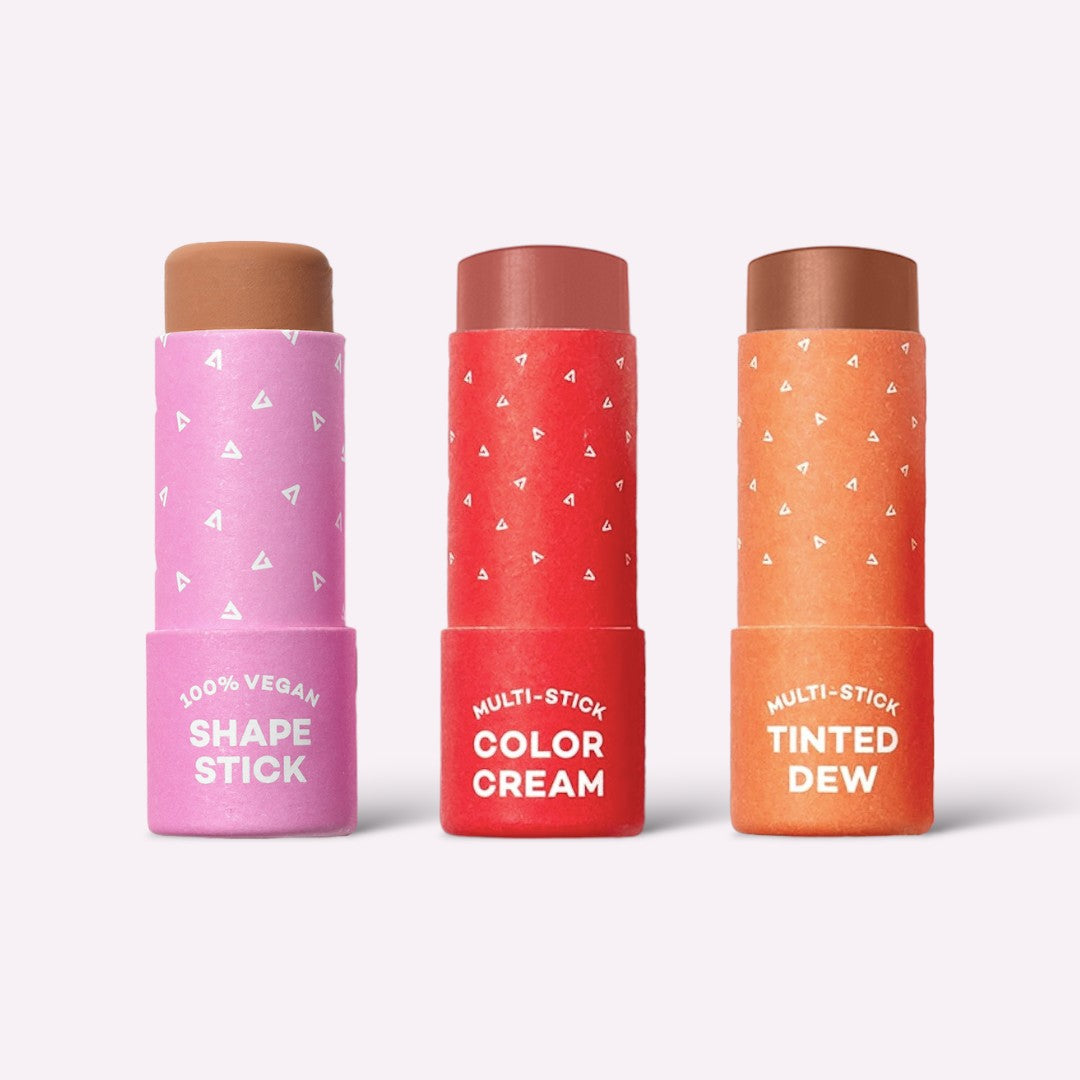
For what feels like forever, the satisfying crackle of a new product's plastic seal was just part of the beauty routine. But now, the environmental hangover from all that convenience is impossible to ignore, and it’s shaking up the entire industry. As we all start demanding better, brands are scrambling to find real alternatives to plastic packaging.
So, Why Is the Beauty Industry Breaking Up With Plastic?
The beauty world’s love affair with plastic is a long one. It’s lightweight, tough, and can be molded into basically anything, which made it seem like the perfect choice for everything from lipstick tubes to foundation bottles. For decades, it was the cheap and easy way to protect delicate formulas and create those shelf-worthy designs.
The problem is, that convenience came with a massive hidden cost. Most beauty packaging is meant to be used once and then tossed, feeding a global waste crisis. A jaw-dropping amount of it never even makes it to a recycling bin. Instead, it piles up in landfills or chokes our oceans, where it can stick around for hundreds of years. This ugly truth has finally sparked a movement.
The Conscious Consumer Has Arrived
These days, beauty shoppers know what’s up. We're more clued-in and environmentally aware than ever before, and we're actively looking for brands that share our values. Packaging has become a huge part of that decision. This isn’t just a passing trend; it's a make-or-break moment for brands.
The demand for sustainable options has gone from a niche "nice-to-have" to a core business strategy. Brands that don't get on board risk becoming totally irrelevant to a new generation of shoppers who care just as much about the planet's health as their own.
This pressure from all of us is forcing brands to innovate and move past empty green-washing gestures toward real, meaningful change. Companies like Axiology are a perfect example, showing everyone that you can build a hugely successful brand on plastic-free principles. Axiology's commitment to creating packaging that is beautiful, functional, and eco-conscious is setting a whole new standard for the industry.
And it's not just about good vibes; there's serious money behind this shift. The sustainable packaging market was valued at over USD 292.71 billion and is expected to rocket to USD 423.56 billion by 2029. You can see the full scope of this global shift in more market stats. That kind of growth just hammers home the urgent need for practical, beautiful alternatives that can redefine what beauty looks like.
Exploring the Top Plastic-Free Packaging Materials
Ditching plastic doesn't mean you have to compromise on beautiful, functional packaging. It just means opening the door to a whole world of different materials, each with its own personality and purpose. Making the right call means really understanding how these materials behave—from the moment they're created to what happens to them after your customer is done with them.
Think of this as your field guide to the top contenders in plastic-free packaging.
This flowchart breaks down the big picture: market forces, customer expectations, and brand innovation are all pushing us toward better, more sustainable materials.
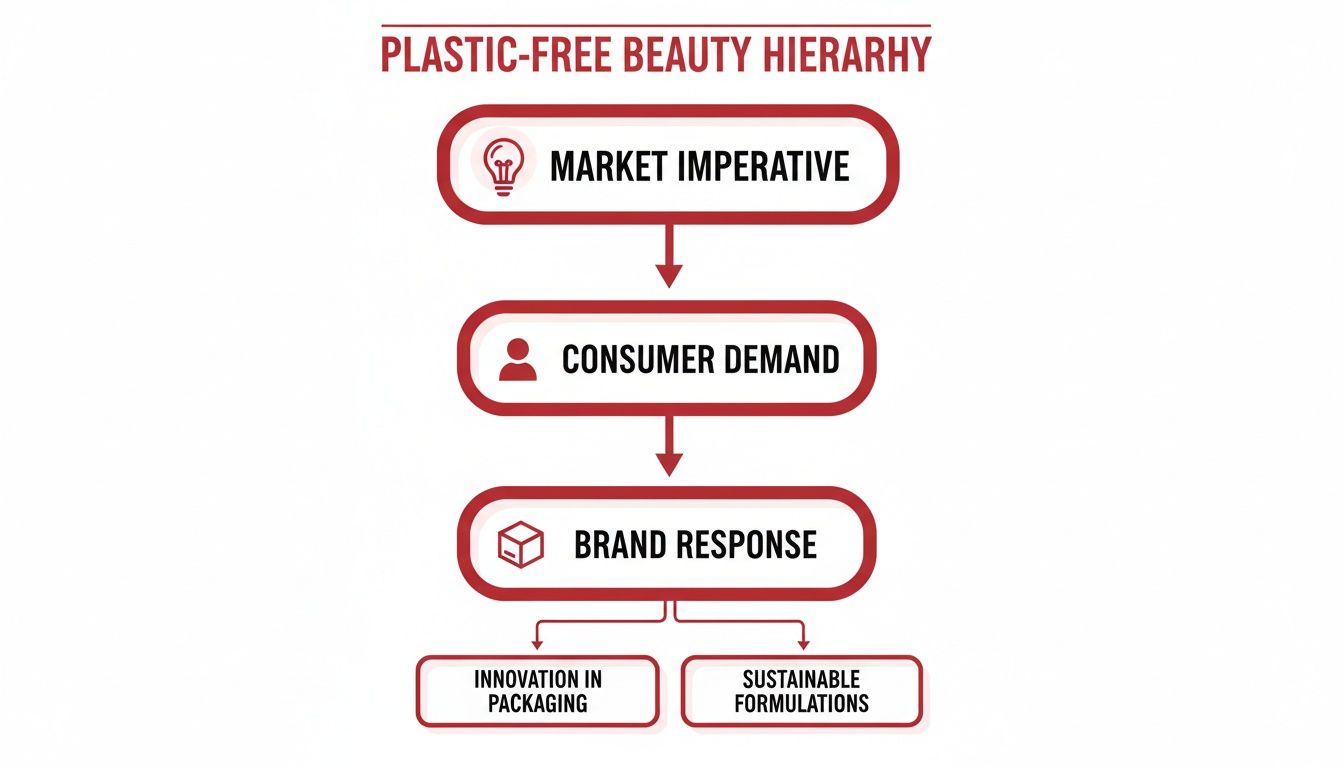
You can see how pressure from shoppers is a direct line to brands getting creative with their packaging and formulas, answering a crystal-clear market need.
Glass The Timeless Protector
There's a reason glass is such a classic. It’s a completely inert material, which is just a fancy way of saying it won’t react with or mess up the delicate formulas inside. This makes it perfect for things like serums, oils, and foundations. It's like a tiny, transparent vault protecting your product's integrity.
One of its best features? It's infinitely recyclable. Glass can be melted down and reformed into new bottles and jars again and again and again, without ever losing its quality or purity. That’s a true closed-loop system—the gold standard in sustainability.
Of course, it has its downsides. Glass is heavy and fragile. The extra weight can drive up shipping costs and the carbon footprint that comes with it. Plus, it needs plenty of protective wrapping to make sure it doesn’t break on its way to your customer.
Aluminum The Lightweight Champion
Aluminum is a surprisingly awesome and sustainable choice. It's incredibly light but still super durable, giving top-notch protection against light, moisture, and oxygen that can degrade sensitive ingredients. It's ideal for everything from tins for solid balms to tubes for creams.
Just like glass, aluminum is infinitely recyclable. Here's a cool fact: recycling aluminum saves about 95% of the energy needed to make it from raw materials. That incredible efficiency makes it a real powerhouse among alternatives to plastic packaging. Its featherlight weight also helps cut down on shipping emissions when compared to heavier options.
Paper and Molded Fiber The Natural Innovators
Paper and paperboard have become the go-to for eco-conscious brands, and for good reason. It’s sourced from a renewable resource, it's lightweight, easy to print on, and widely recyclable. It’s the material behind Axiology's signature lipstick and Balmie tubes, proving it can be both beautiful and functional.
Molded fiber, often made from recycled paper or agricultural extras like bamboo or sugarcane bagasse, takes things a step further. It can be shaped into custom inserts that cushion fragile products, replacing plastic bubble wrap or foam. It’s the perfect example of turning waste into a valuable packaging solution.
A crucial distinction to get your head around is the difference between biodegradable and compostable. While lots of natural materials are biodegradable (meaning they break down over time), certified compostable materials break down under specific conditions into nutrient-rich soil, actively giving back to the environment. For a deeper dive, you can learn more about the specifics of biodegradable materials for packaging in our detailed guide.
Biopolymers The Emerging Science
Biopolymers, which you might hear called bioplastics, are a whole new frontier. These materials come from renewable sources like corn starch, sugarcane, or even algae. The idea is to mimic the versatility of plastic but without the fossil fuels.
The market for plastic alternatives is blowing up, expected to hit USD 28.89 billion by 2034. Starch-based plastics, which can break down faster than traditional ones, are currently leading the charge, showing a major shift toward bio-based solutions.
But this category requires a bit of caution. While some biopolymers are commercially compostable, they need special industrial facilities to break down properly. If they get mixed in with traditional plastic recycling, they can cause major contamination issues. Clear labeling and educating your customers are absolutely essential if these materials are going to live up to their sustainable promise.
Comparing Plastic-Free Packaging Alternatives
To make things a little easier, here’s a quick-reference table that lays out the main alternatives. Think of it as a cheat sheet to help you weigh your options based on what’s most important for your product and your brand.
| Material | Best For | Recyclability | Compostability | Key Benefit |
|---|---|---|---|---|
| Glass | Serums, oils, foundations | Infinitely recyclable | Not compostable | Protects formula integrity |
| Aluminum | Balms, creams, powders | Infinitely recyclable | Not compostable | Lightweight & protective |
| Paper/Fiber | Solids, secondary packaging | Widely recyclable | Often compostable | Renewable & versatile |
| Biopolymers | Varies (plastic mimicry) | Not traditionally recyclable | Varies (often industrial) | Made from renewable resources |
Choosing the right material is always a balancing act. You have to consider your product's needs, your brand's values, and the real-world end-of-life options available to your customers. There's no single perfect answer, but by understanding the pros and cons, you can make a choice you feel great about.
Making the Right Choice for Your Beauty Products
Let's be real: picking a new packaging material is way more than just an eco-friendly box to check. It's a huge decision for your brand and your product. The right packaging has to do it all—protect your formula, look amazing on the shelf, tell your brand's story, and give your customers that feeling.
When you move away from plastic, you’re stepping into a new world of practical trade-offs. Every choice you make, from glass to paper, sends ripples through your entire business, affecting everything from shipping costs to how your product looks in a #shelfie.
This isn't just about a simple swap. It’s a strategic move that forces you to get honest about the real-world impact of each option. So, let's break down what these choices actually mean for a beauty brand, covering costs, logistics, and that all-important customer vibe.
Weighing the Pros and Cons of Premium Materials
Glass just screams luxury, right? Its weight, the cool feel in your hand—it creates a premium unboxing experience that plastic just can't compete with. For a high-end serum or a luxe foundation, that feeling of quality can totally justify a higher price tag. But that premium feel comes with some very real costs.
Glass is heavy. And fragile. This hits your shipping budget and the carbon footprint of your logistics directly. A brand might find that shipping a heavy glass jar costs almost double what it would for a lightweight plastic version. You also have to get serious about protective inserts (like molded fiber) to prevent breakage, which adds another layer of cost and complication to your supply chain.
Metal, especially aluminum, strikes a really interesting balance. It feels solid and protective, but it's surprisingly lightweight, which is great for keeping shipping costs in check. It's a fantastic option for balms, salves, and even some liquid products. The main thing you need to watch for is making sure the internal lining is compatible with your formula so you don't get any weird reactions over time.
The Versatility and Challenges of Paper
Paper and paperboard are basically a blank canvas for your brand. You can go wild with vibrant, gorgeous designs that tell your story right on the box. It’s lightweight, relatively affordable, and often made from recycled materials, making it a major player in the world of alternatives to plastic packaging.
But, here's the catch: paper isn't naturally waterproof or oil-proof. If you're selling a liquid foundation or a cleansing oil, paper packaging almost always needs a buddy—a protective inner lining or a separate container. This can sometimes mean you end up reintroducing plastic, which can feel like a step backward unless you opt for a compostable biopolymer liner.
The big takeaway here is that no single material is a silver bullet for every product. The real magic happens when you match the material's strengths with your product's needs and your brand's values. It's all about creating an experience that feels cohesive and honest.
This balancing act is where the real innovation comes in. You have to ask the tough questions: Does the luxe vibe of glass outweigh the higher shipping costs? Can we design our paper packaging to be both beautiful and protective without ditching our eco-creds?
Considering Cost and Supply Chain Realities
Switching to sustainable materials isn’t always a simple 1:1 cost swap. In fact, it rarely is. Sourcing high-quality, certified materials like FSC-certified paper or post-consumer recycled aluminum can sometimes cost more upfront than virgin plastic.
On top of that, your manufacturing partners have to be ready for the change. The machinery needed to fill a glass jar is totally different from what’s needed for a plastic tube. This could mean finding new suppliers or investing in new equipment, which can be a massive hurdle, especially for smaller brands. It’s so important to have frank conversations with your suppliers early on to figure out what they can handle and what the tooling costs might look like.
Here are the key things to dig into when you're thinking about a switch:
- Material Cost Per Unit: Get the hard numbers. Compare the price of glass, aluminum, and paperboard to what you're currently paying for plastic.
- Shipping Weight and Fragility: Do the math. Calculate how much more shipping might cost and what you'll need to budget for protective inserts.
- Supplier Capabilities: Ask them directly. Can your current (or new) suppliers actually work with these materials at the scale you need?
- Consumer Perception: How will your customers react? Will they see the new packaging as a worthy upgrade and feel good about it?
At the end of the day, picking the right material is about finding that sweet spot where your product, your brand identity, and your sustainability goals all click into place. It’s a thoughtful process, but one that lets you create packaging that doesn't just look good, but does good, too.
Navigating Certifications and Recycling Realities
Choosing packaging that isn't plastic is a huge first step, but the journey doesn't stop there. To make choices that are actually better for the planet, you need to learn the language of sustainability—all those certifications, labels, and recycling symbols that can either clear things up or just add to the confusion.
Not all eco-claims are created equal. Knowing the difference helps you dodge greenwashing and pick materials that genuinely make a positive impact.
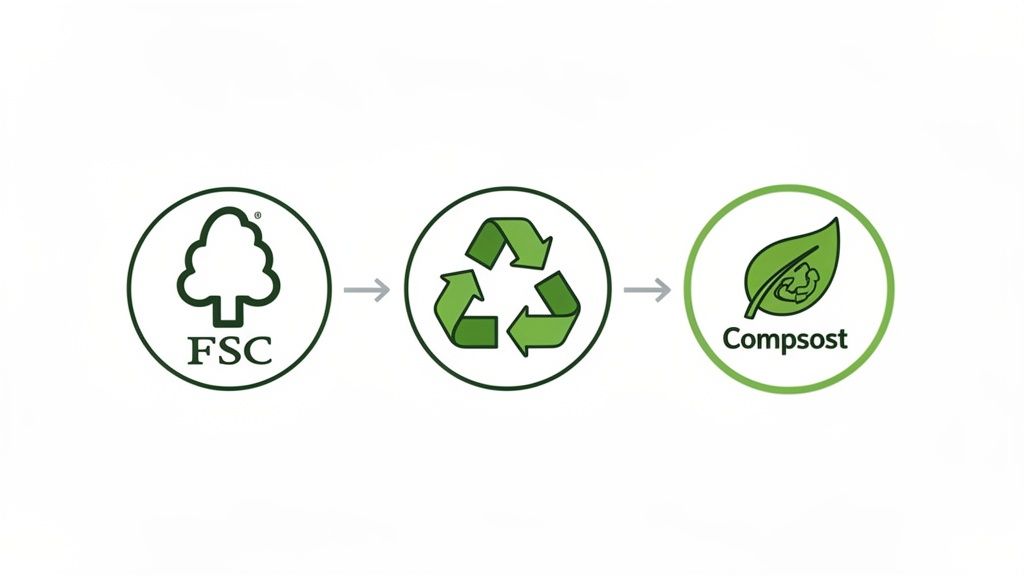
Think of these labels as a shorthand for a material's life story. They tell you where it came from and where it's supposed to end up. But like any good story, you need to read between the lines to get the full picture.
Decoding Key Eco-Labels
When you see a symbol on a package, it’s making a promise. For any brand that values transparency, understanding what those promises really mean is everything. Let's break down the big ones.
- FSC-Certified (Forest Stewardship Council): This is the gold standard for anything made from paper or wood. It’s your guarantee that the material comes from a responsibly managed forest, one that protects biodiversity and respects the rights of local communities. Basically, it ensures you’re not contributing to deforestation.
- Post-Consumer Recycled (PCR): This label means the material is made from waste that someone already used, collected, and then reprocessed into something new. Using PCR content helps close the loop by cutting down the need for virgin resources and keeping trash out of landfills.
- Compostable: This is a very specific claim. It means a material can break down into natural elements in a controlled setting, like an industrial compost facility. It’s not the same as “biodegradable,” which is a much hazier term. It’s super important to understand the differences between compostable and biodegradable materials to avoid any mix-ups.
These certifications add a layer of accountability, helping you trust that the materials you pick actually line up with your brand’s values.
The 'recyclable' symbol is more of a suggestion than a guarantee. It indicates that a material can be recycled, but it doesn't mean it will be. The reality depends entirely on your local infrastructure and market demand for that specific material.
The Reality of Recycling
This brings us to a tough truth: the gap between what’s recyclable in theory and what actually gets recycled. Just because a package has those little chasing arrows doesn't mean it’s got a one-way ticket to a new life. The success of recycling relies on a complex system that most of us never see.
For a material to be successfully recycled, a few things have to go right:
- Collection: Your local curbside program has to accept it. Tons of items, like small caps or packaging made from mixed materials, often get filtered out right away.
- Sorting: Once it gets to a facility, it has to be correctly sorted from all the other junk. Contamination from food waste or non-recyclable items can ruin an entire batch.
- Market Demand: Someone has to be willing to buy the sorted material and turn it into something new. If there's no market for a certain type of plastic, it often ends up in a landfill anyway.
This is exactly why being transparent matters so much. Talking about these challenges isn't a sign of failure; it’s an honest approach that builds trust with your customers. You can learn more about how to navigate these issues and why there's hope for recycling despite the hurdles.
By choosing materials that are widely recycled, like glass and aluminum, and by clearly teaching your customers how to dispose of your packaging, you can seriously up the chances of it completing its circular journey.
How Axiology Does Plastic-Free Beauty
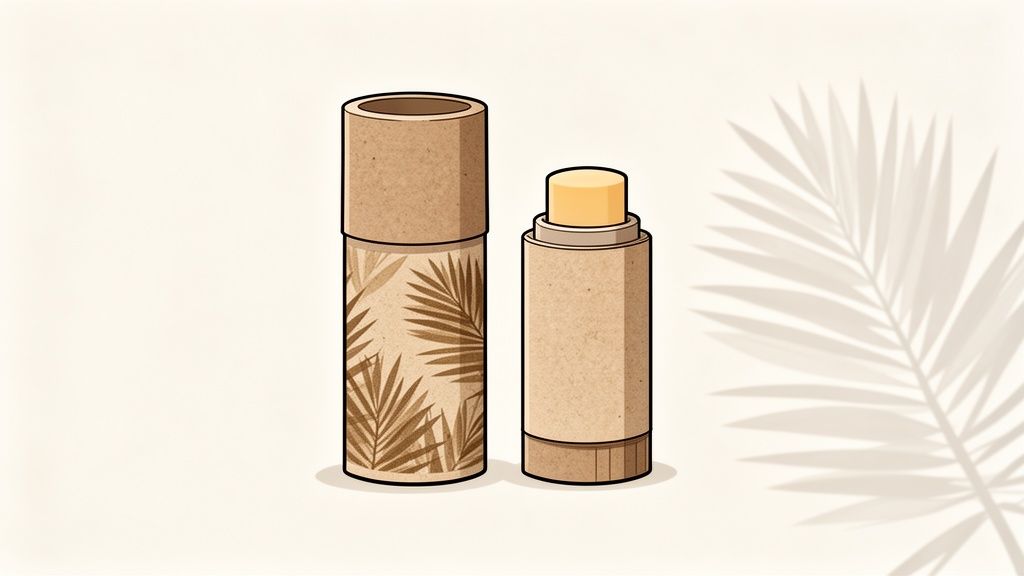
It’s one thing to talk about material properties in theory, but seeing it done right is where the magic really happens. Axiology isn't just another beauty brand; it’s proof that you can build an entire company around being plastic-free—and that it’s a seriously smart business move.
The story starts with founder Ericka Rodriguez, who wasn't just trying to launch another lipstick. She wanted to create products that were genuinely kind to animals, people, and the planet. This wasn’t just about the vegan formulas inside; it meant completely rethinking the packaging itself.
For Ericka, the goal was simple and non-negotiable: create beautiful, high-performance makeup that produced zero waste. This became the north star for every single decision, cementing Axiology as a true pioneer in finding real alternatives to plastic packaging.
From Vision to Reality with Paperboard
Axiology’s hero products, the Balmies, are a perfect example of this philosophy in action. Instead of a standard plastic tube, these genius multi-use crayons are wrapped in simple, recyclable paper. This wasn't a happy accident—it was a deliberate choice to kick plastic out of our daily routines.
The packaging is designed so you just tear the paper away as you use the product. It creates this direct, satisfying connection to the brand’s zero-waste mission. It’s a brilliant design that’s both functional and a constant, gentle reminder of what Axiology stands for.
And it’s a move that’s perfectly in sync with what’s happening in the wider market. Paper packaging is currently the frontrunner in the plastic-free world, owning 29.2% of the material share because it’s renewable and easy to recycle.
Navigating Sourcing and Design Hurdles
Going all-in on being plastic-free on a global scale definitely has its challenges. Axiology’s signature packaging isn't churned out by some giant, anonymous factory. It’s actually handcrafted by a women-owned cooperative in Bali, Indonesia. This partnership is a huge part of the brand’s ethical backbone, ensuring fair wages and supporting a local community.
Of course, this meant figuring out complex logistics and quality control from the other side of the planet. It required building a supply chain rooted in trust and shared values, not just the bottom line. The result is packaging that carries a story of empowerment in every fiber.
The challenge wasn’t just finding a plastic-free material; it was finding a partner who could bring the vision to life while upholding the brand's ethical standards. This commitment to a holistic, people-first approach is what sets Axiology apart.
The design itself was another puzzle to solve. How do you make packaging that protects the product, looks gorgeous on a shelf, and is simple enough for anyone to recycle or compost at home? The answer was found in elegant simplicity.
- Minimalist Construction: The paper tubes use as little glue as possible and no complicated layers, making them super easy to break down.
- Soy-Based Inks: All the printing uses vegetable-based inks, skipping the nasty chemicals found in a lot of traditional printing.
- Clear Communication: The brand gives you dead-simple instructions on how to handle the packaging at the end of its life. If you're curious, you can learn exactly how to recycle your Axiology tubes straight from the source.
Axiology's journey proves that with a little creativity and a lot of conviction, a brand can absolutely thrive without plastic. Their packaging isn’t just a box—it’s the physical embodiment of their promise, telling an authentic story that truly connects with conscious shoppers.
Your Roadmap to Ditching Plastic
So, you're fired up and ready to make a change. That's awesome. But turning that spark into a real-world plan takes more than just good intentions. Let’s be real, switching away from plastic packaging isn't something you do overnight. It’s a process—one that involves a hard look at what you’re doing now, some serious research, and then telling your customers all about it.
Think of this as your guide to getting it done without losing your mind.
The first step is a full-on packaging audit. I mean it. Lay out every single piece of packaging you use, from the jar that holds the cream to the filler in your shipping boxes. Pinpoint the biggest plastic culprits. This isn't about feeling guilty; it's about spotting your biggest opportunities for making a real difference. Maybe swapping out one product line's plastic jars is the slam dunk, or perhaps the low-hanging fruit is ditching bubble wrap for molded fiber.
Finding Good People and Designing for the Future
Once you know where to start, it's time to hit the books (or, you know, Google). You need to find ethical suppliers who are true specialists in alternatives to plastic packaging. Look for partners who are upfront about where their materials come from, have legitimate certifications (like FSC), and are actually excited to work with you on something new. You’re not just buying a box; you're building a relationship that says something important about your brand's values.
And yes, new materials come with new rules. A glass jar has totally different labeling needs than a paperboard tube. A metal tin might not play nice with your current filling machine. It's a creative puzzle. Work hand-in-hand with your suppliers and designers to create something that’s not just pretty and functional, but that you can actually produce.
The smartest way to do this? Start small. Don't try to change everything all at once. Pick a single product or line to test out new materials. This gives you a chance to get customer feedback and smooth out any supply chain bumps before you go all in.
Telling Your Story
Last but not least, bring your customers along for the ride. Seriously, be transparent. Tell them why you're making a change, what these new materials are, and—super important—how to properly get rid of the packaging when they're done. When you're open like this, you build a ton of trust. It turns a simple purchase into a shared mission, and that's how you create customers for life.
While you're rethinking your packaging, you might also want to look at things like eco-friendly promotional products to make sure your whole brand is on the same page. When you show a real, consistent commitment to the planet across the board, people see that it's not just marketing talk. It’s who you are. The road to plastic-free is tough but totally doable, and the reward is a stronger brand and a healthier planet.
Got Questions About Plastic-Free Packaging?
Making the switch from plastic always brings up a few questions. It’s a big change! So let's get into some of the most common things people wonder about when they start exploring better, more sustainable packaging.
So, Are Bioplastics Actually Better for The Planet?
This is a tricky one. Bioplastics can be a good move, but it’s not always a slam dunk. Since they’re made from renewable stuff like corn, they definitely help us use fewer fossil fuels. The big “but” here is what happens to them after you’re done.
The reality is, most bioplastics need a very specific environment—an industrial composting facility—to actually break down. They won’t just disappear in a landfill or the ocean. Worse, if they get tossed into the regular recycling, they can mess up the whole batch of recycled plastic, making everything less usable. For bioplastics to really work, we need super clear instructions for customers and way more access to industrial composting.
Isn't Glass Packaging Super Heavy and Expensive to Ship?
Yep, glass is definitely heavier than plastic. This can bump up shipping costs and the carbon footprint that comes with it. It’s also more delicate, so it needs a bit of extra TLC and protective padding to make it to you in one piece.
Despite all that, a lot of us think the trade-off is completely worth it. Glass is endlessly recyclable, has a beautifully luxe feel, and it’s totally inert—meaning it won’t ever mess with the product inside. For delicate formulas and a premium experience, it’s tough to beat.
How Can I Tell if a Brand's "Eco-Friendly" Claims Are Legit?
The key is to look for real, third-party certifications. Vague buzzwords like “eco-friendly” or “green” can be a red flag for greenwashing. You want to see specific, verifiable seals that tell you exactly what you’re getting.
- FSC (Forest Stewardship Council): This is a big one. It guarantees that any paper or wood used comes from forests that are managed responsibly.
- Compostability Certifications (like BPI): This seal confirms that a material will break down properly in the right composting conditions.
At the end of the day, a truly sustainable brand will be an open book. They'll be happy to tell you all about their materials, their suppliers, and will give you clear, easy-to-follow instructions on how to dispose of their packaging.
Ready to embrace a beautiful, plastic-free routine? Explore Axiology's collection of zero-waste makeup, crafted with care for you and the planet. Shop now at axiologybeauty.com.