When it comes to the whole cc vs bb cream thing, here’s the simplest way to think about it: BB cream is your hydrating 'Blemish Balm' that gives a sheer, moisturizing tint. CC cream is a 'Color Correcting' formula made specifically to even out things like redness or a sallow tone.
It really just comes down to what you need more: all-in-one moisture with a hint of color, or targeted help to get your complexion looking even and bright.
Your Quick Guide to BB and CC Creams
Walking down the beauty aisle trying to choose between a BB and a CC cream can feel a little overwhelming. They’re both multitasking wonders that mix skincare with makeup, but they’re built for totally different jobs. Think of them as two different roads to that same "my-skin-but-better" destination.
This move toward products that do more than one thing isn't just a fleeting trend. It shows how much we all want beauty routines that are simple but still effective. In fact, the global market for these creams is expected to grow at a CAGR of 23.20% between 2025 and 2033. That’s a huge jump, and it’s all because people are looking for ways to combine hydration, sun protection, and a bit of coverage in one easy step. You can read more about this market shift and what it means for conscious beauty.
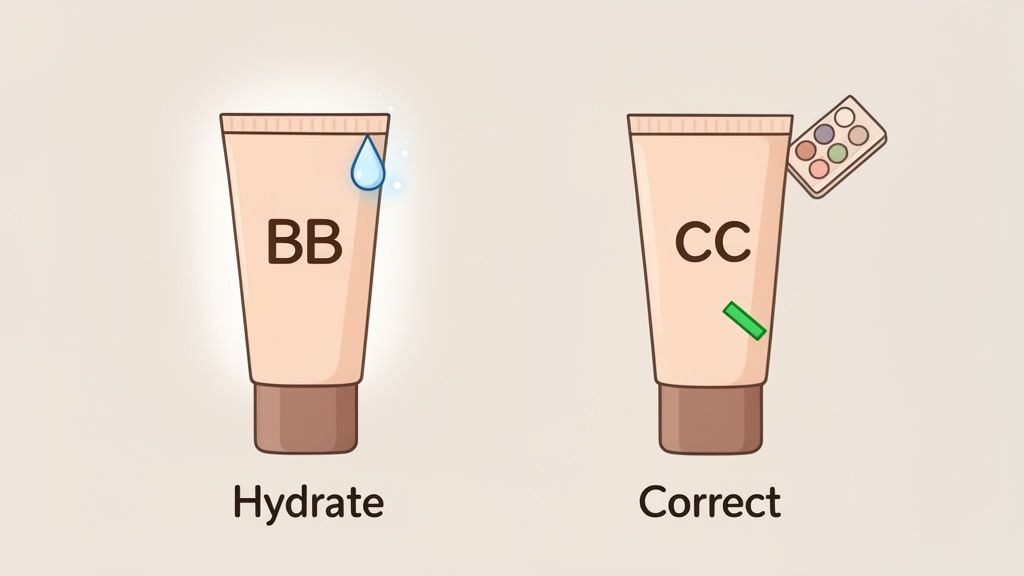
BB Cream vs CC Cream At a Glance
To make the choice even clearer, I've put together a quick comparison table. It breaks down the main differences so you can easily see which one is the right fit for your skin's goals.
| Feature | BB Cream (Blemish Balm) | CC Cream (Color Correcting) |
|---|---|---|
| Primary Function | Gives you hydration, SPF, and a sheer tint for a natural look. | Focuses on neutralizing redness, dullness, or dark spots for an even tone. |
| Coverage Level | Light to medium, kind of like a tinted moisturizer but with more perks. | Also light to medium, but often a bit more buildable where you need it. |
| Texture & Finish | Usually creamier and richer, leaving a dewy, glowing finish. | Tends to be lighter, sometimes with an airy feel for a satin or matte look. |
| Ideal For | Great for dry, normal, or mature skin types looking for a moisture hit and a healthy glow. | Perfect for oily, combination, or redness-prone skin that needs specific tone correction. |
Think of it this way: if your main goal is to hydrate and get a fresh-faced glow, BB cream is your go-to. If you’re dealing with redness or uneven patches and want a smooth, even canvas, CC cream is probably your new best friend.
How They Feel: Texture and Finish
When you're trying to choose between a CC and a BB cream, how it feels on your skin—and the look it gives you—is pretty much everything. It’s way more than just the letters on the tube; it’s about the very heart of each formula.
BB creams usually feel richer and more emollient. Think of them as your favorite tinted moisturizer, but with a serious upgrade, often loaded with hydrating goodies like hyaluronic acid and glycerin. The result? A dewy, healthy-looking glow that screams "I drink a lot of water." It's perfect if your skin is thirsty for moisture.
CC creams, on the other hand, are all about a lighter touch. Their texture is often described as airy or whipped, so they just glide over your skin without feeling heavy. This featherlight consistency is key because it has to carry those hard-working color-correcting pigments that knock out redness or dullness.
The Real-World Feel and Finish
The moment you start blending, you’ll know what each cream is all about. A BB cream feels instantly nourishing, melting into the skin to blur minor imperfections while giving you a visible shot of hydration.
A CC cream feels practically weightless. It’s built to create a smooth, perfected canvas, and it often dries down to a natural satin or soft-matte finish. This helps keep shine in check and makes sure the color-correcting magic stays put without creasing.
The Bottom Line: BB creams are all about hydration with a hint of tint. CC creams are focused on color correction with a lightweight, skin-perfecting texture. Simple as that.
It makes sense why these creams are so popular. Market data shows that cream-based makeup formats are a huge deal, making up 40% of global revenue in 2023. We clearly want products that feel amazing on our skin. BB creams give us that all-around perfected look, while CC creams solve specific frustrations like redness. If you want to dive deeper into these trends, you can get more insights on consumer preferences here.
What’s Inside Really Counts
The ingredients list is where you see the true personality of each cream shine through. Both are multi-taskers, for sure, but they’re mixed and measured for totally different results.
- Inside a BB Cream: You’ll typically find ingredients designed to hold onto moisture, like shea butter, ceramides, and botanical oils. They’re picked specifically to create that plump, dewy look we love.
- Inside a CC Cream: These often have light-diffusing particles for an instant blurring effect, plus ingredients like niacinamide to even out skin tone over time and antioxidants like Vitamin C. The formulas are usually oil-free to avoid a greasy feeling and help your look last all day.
And things are only getting better. The lines are blurring as brands get more creative, bringing in cool, sustainable ingredients like reishi and snow mushrooms. These powerhouse fungi offer skin-renewing benefits that go way beyond what we used to expect from a simple cream, giving you more bang for your buck in one simple, conscious step.
How To Choose The Right Cream For Your Skin
So, BB or CC cream? The truth is, it's not about which one is better in general, but which one is better for you and what your skin needs right now. The whole debate comes down to your main goal: are you looking for a hydration boost, or do you need to tackle some discoloration?
If your skin is on the drier or more mature side, a BB cream will likely be your best friend. Its formula is typically richer and more emollient, giving your skin a welcome drink of moisture. The result is a healthy, dewy glow that can help soften the look of fine lines.
On the flip side, if you're dealing with oily or breakout-prone skin, a CC cream is probably your perfect match. These formulas tend to be lighter and often oil-free, so they can color-correct and leave a satin finish without adding extra shine or—worse—clogging your pores.
Matching The Cream To Your Concern
The best way to decide is to think about your day-to-day and the specific things you’d like to address. That practical approach will get you to the right product way faster than any flashy marketing claim.
-
For Redness and Rosacea: If you’re constantly battling redness or dealing with rosacea flare-ups, a CC cream was practically made for you. Its color-correcting pigments are designed to neutralize those red tones, giving you an even canvas before you even reach for anything else.
-
For Post-Acne Marks: Those stubborn dark spots that blemishes leave behind? That’s another job for a CC cream. It helps instantly brighten those areas, making your overall complexion look smoother and more uniform.
-
For a Sheer Weekend Tint: For those days when you just want a quick, no-fuss look, a BB cream is your go-to. It gives just enough coverage to even things out while letting your skin feel fresh and hydrated. Easy.
To make it even simpler, here’s a little decision tree to help you visualize which cream aligns with your skin goals.
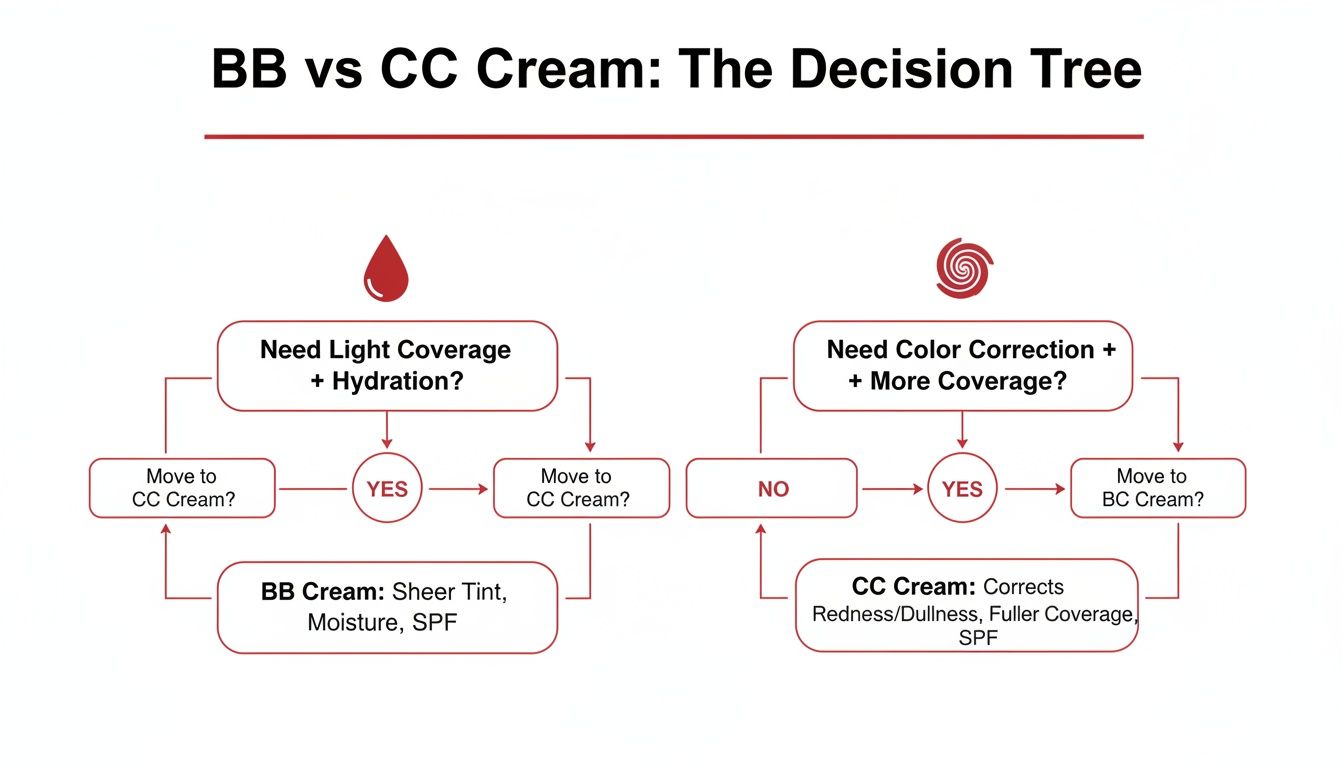
As you can see, if hydration and a dewy finish are what you're after, BB cream is the clear winner. But if you need more targeted color correction for a polished look, CC cream is the way to go.
A Few Real-World Scenarios
Let’s put this into practice. Say you have a big video call and notice some redness around your nose and chin. A CC cream will quickly neutralize that discoloration, making you look polished and even-toned on camera without that heavy foundation feeling.
Key Takeaway: Choose BB cream for an all-in-one moisturizing tint and CC cream for targeted solutions to issues like redness, dullness, or dark spots.
If your skin is sensitive or acne-prone, it’s always a good idea to make sure whatever you choose is non-comedogenic—meaning it’s formulated so it won’t block your pores. You can dive deeper into making pore-friendly choices with our guide to non-comedogenic makeup products. It’s all about getting the look you want while keeping your skin happy and healthy.
Making an Eco-Conscious Makeup Choice
Choosing between a CC and a BB cream goes way beyond your skin type—it’s a chance to vote with your dollar. The beauty industry is massive, and every single purchase sends a message to brands about what we, the consumers, actually care about.
When you pick a product, you’re not just getting a new tube of makeup. You’re backing a brand’s entire philosophy—from how they source their ingredients to their stance on animal welfare. It's a bigger deal than you might think.
This growing consciousness is making waves. The combined BB and CC cream market is set to hit a whopping $7.274 billion by 2033. A huge driver of this is a post-pandemic shift where an estimated 80% of consumers now lean towards multifunctional products that blend skincare and makeup into one easy step.
This move toward mindful buying means we have to look past the pretty packaging and get into the real ethics behind the brands. Making an informed, earth-friendly choice is easier than it seems once you know what to look for.
Decoding Sustainable Beauty Labels
Navigating the world of "clean" and "green" beauty can feel a bit like learning a new language. But a few key certifications can cut through the noise and point you toward brands that are genuinely doing the work.
These labels aren't just marketing fluff; they represent a real commitment to a healthier planet and kinder practices.
-
Cruelty-Free Certifications: Keep an eye out for the official Leaping Bunny logo. It's the gold standard, verifying that a brand doesn't test its products or ingredients on animals at any point. No exceptions.
-
Vegan Formulations: A "vegan" label means the product is completely free of animal-derived ingredients like beeswax, carmine, or lanolin. It’s a simple way to ensure no animals were part of the process.
By choosing products with verified vegan and cruelty-free certifications, you're actively helping to phase out outdated and unnecessary animal testing in the beauty industry. It's a small choice that adds up to a big impact.
Beyond the Bottle: Packaging and Brand Ethos
A brand’s commitment to the planet doesn't stop with its formula. Packaging is one of the biggest sources of waste in the beauty world, but some truly innovative companies are leading the charge for change.
Look for brands that are ditching plastic in favor of materials like glass, aluminum, or recycled paper. Even better are the ones offering refillable options, which slash single-use waste over time. This approach not only shrinks your environmental footprint but also fosters a more thoughtful, less disposable relationship with your makeup.
To help you vet your next purchase, here's a quick checklist to keep in mind.
| Checklist Item | What to Look For | Why It Matters for the Planet |
|---|---|---|
| Packaging Material | Glass, aluminum, recycled paper, or compostable materials. Best case: package-free or refillable. | Reduces reliance on virgin plastics, which clog landfills and pollute our oceans for centuries. |
| Cruelty-Free Logo | The official Leaping Bunny symbol is the most reliable certification. | Guarantees that no animal testing occurred at any stage, from ingredient sourcing to the final product. |
| Vegan Label | A clear "Vegan" statement or certification. | Ensures no animal products or by-products are used, supporting animal welfare and often a smaller environmental footprint. |
| Brand Transparency | Clear information about ingredient sourcing, manufacturing processes, and labor practices. | Honest brands aren't afraid to share their supply chain. It shows respect for consumers and the planet. |
| Palm-Oil Free | A specific "palm-oil free" claim on the label or website. | Palm oil production is a leading cause of deforestation and habitat loss for endangered species like orangutans. |
Ultimately, the best choice in the CC vs. BB cream debate is one that works for your skin and aligns with your values. When you support brands dedicated to sustainable and ethical production, a simple makeup decision becomes a powerful act.
If you’re inspired to make your whole routine a little greener, check out our guide to building an eco-friendly makeup collection.
How to Apply for a Natural, Flawless Finish
The secret to getting that dreamy, 'your-skin-but-better' look isn't just about the product—it's all in the application.
Always, always start with a clean, moisturized canvas. This simple prep step is non-negotiable for making sure your BB or CC cream glides on and melts into your skin, rather than just sitting on top of it. A gentle exfoliation once or twice a week also works wonders to buff away any dry patches.
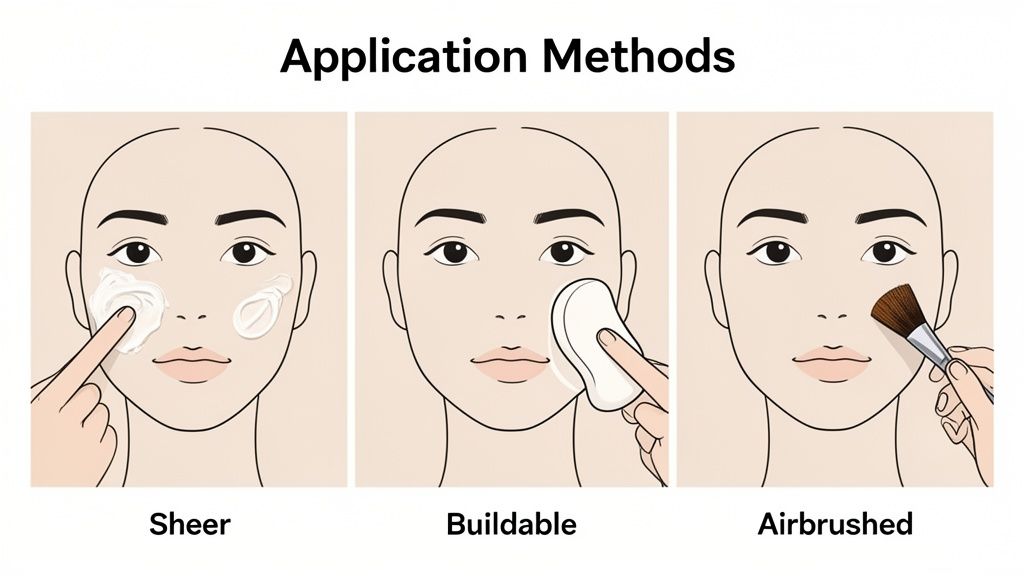
The tool you pick really dictates the final look, so choose wisely based on the coverage you’re after.
- Fingers: Your best bet for a sheer, lived-in finish. The warmth from your fingertips helps the product melt right into the skin.
- A damp sponge: Perfect for building up coverage gradually without a hint of streakiness.
- A synthetic brush: The go-to for buffing the cream into the skin for an almost airbrushed effect.
A little goes a long way, so start with just a pea-sized amount. You can always add more where you need it, like on areas with a bit more redness or a blemish. I like to warm the cream between my fingertips first—it makes it so much more spreadable.
Then, blend with gentle, outward motions. This technique is kinder to your skin (no tugging!) and helps everything look seamless. And one last thing: always double-check your work in natural light before you head out the door.
Setting Your Look for All-Day Wear
Once your cream is on, give it a minute to settle into your skin before doing anything else.
If you’re prone to shine, a light dusting of translucent powder on your T-zone is all you need. This trick keeps the oil at bay while letting your cheeks stay naturally dewy.
Pro Tip: Run your makeup sponge under warm water, squeeze out all the excess, and then use it to gently press and blend the cream. The difference is night and day.
To add a bit more polish without piling on product, you can use a stippling brush on the outer edges of your face for some subtle dimension. A final spritz of a hydrating setting spray will lock everything in place and give you a healthy glow that lasts.
Tips for Your Specific Cream
Remember to tailor your application to the product you're using. If you love your CC cream, concentrate it on areas that need color correction, like around the nose or on any discolored spots. For BB cream, you might want to apply a little extra on drier patches for a boost of hydration.
While your tools are important, the real magic happens with good skin prep and the right technique. Investing in quality sponges and brushes makes a huge difference and actually helps you use less product. Just be sure to clean them weekly with a mild, fragrance-free soap to keep bacteria and breakouts away.
A few more things to keep in mind: CC creams often pack in powerhouse ingredients like niacinamide, while BB creams might feature hydrators like hyaluronic acid. If you have sensitive skin, always do a patch test on your jawline first. Just apply a small amount and wait about 15 minutes to see how your skin reacts.
For more helpful pointers, check out our foundation application guide for beginners.
What's Next for Hybrid Skincare and Makeup?
If you thought BB and CC creams were a game-changer, get ready. We’re moving into a whole new era where the line between skincare and makeup is basically disappearing. This is way beyond your standard multitasking tinted moisturizer.
Brands are finally catching on and creating products that do more than just slap a filter on your skin for a few hours. We're talking next-level hybrids loaded with powerful, active ingredients that actually work to improve your skin over time. The whole conversation is shifting from just covering things up to actively making your skin healthier with every application. It’s not just about looking good today; it's about investing in your skin’s future.
Honestly, this evolution means we can—and should—expect a lot more from our makeup.
The New Wave of Treatment-Infused Makeup
Let's be real, most of us are way more ingredient-savvy these days. We read labels. We want formulas that work just as hard as our favorite serums. This demand has kicked off a major shift toward treatment-infused makeup, where things like peptides, antioxidants, and adaptogens aren’t just a nice little bonus—they’re the main event.
For example, you’re now seeing foundations formulated with powerhouse ingredients like reishi and snow mushrooms, which are incredible for renewing and hydrating the skin. These products give you that buildable coverage you want while also helping your skin stay resilient and moisturized. Your daily makeup routine basically becomes a proactive skincare ritual. Who wouldn't want that?
The goal of this new wave is pretty simple: your makeup should leave your skin in better shape than it was before you put it on. That philosophy is setting a totally new standard for the beauty industry.
Looking ahead, things like virtual try-on technologies will make it even easier to find and test out these advanced hybrids, giving you a personalized preview without the commitment.
This shift is a good thing. It empowers us to ask more from the products we buy. So, when you're deciding between a CC vs BB cream or any other complexion product, think about the long-term perks. When you choose makeup that also acts as great skincare, you’re supporting your skin’s health and a smarter, more value-driven approach to beauty.
A Few Final Questions
Even after breaking it all down, a few questions might still be swirling. Let's tackle some of the most common ones so you can feel totally confident in your choice.
Can I Use BB Cream and CC Cream Together?
You could, but it’s usually not necessary since they’re both meant to be all-in-one heroes.
If you really want to cocktail them, a better approach is to spot-treat with a CC cream just on areas with a lot of redness (like around your nose). Then, you could go over your whole face with a BB cream for that sheer, dewy finish. Honestly, though, for most of us, just picking one cream and pairing it with a good concealer where you need it is a much simpler way to go.
Is CC Cream a Replacement for Foundation?
For a lot of people, it absolutely is—especially for everyday wear. A CC cream gives you that lovely color correction and natural look without feeling like you're wearing a heavy mask.
That said, if you're getting ready for a big event or a photoshoot where you need that flawless, full-coverage finish, a traditional foundation is probably your best bet. Think of it this way: CC cream is for your daily life, while foundation is for those special moments when you need maximum impact.
The Real Difference: It really just boils down to what you're trying to do. CC cream is for daily color-evening with a natural vibe. Foundation is for when you want serious, camera-ready coverage.
How Do I Choose the Right Shade?
Good news! Picking a shade for BB and CC creams is way more forgiving than with foundation. Their formulas are sheerer and often designed to blend into a range of skin tones, which is why they usually come in a smaller selection of shades (like Fair, Light, Medium, and Deep).
The best way to find your match is to swipe a little bit along your jawline and blend it in. Step into some natural daylight to check it out—the right shade will just melt into your skin without leaving any weird lines.
Ready to find a complexion product that truly cares for your skin? Explore Axiology's collection of vegan, cruelty-free, and plastic-free makeup, including our innovative mushroom-infused Fungdation. Discover your perfect match and embrace beauty that's good for you and the planet at https://www.axiologybeauty.com.