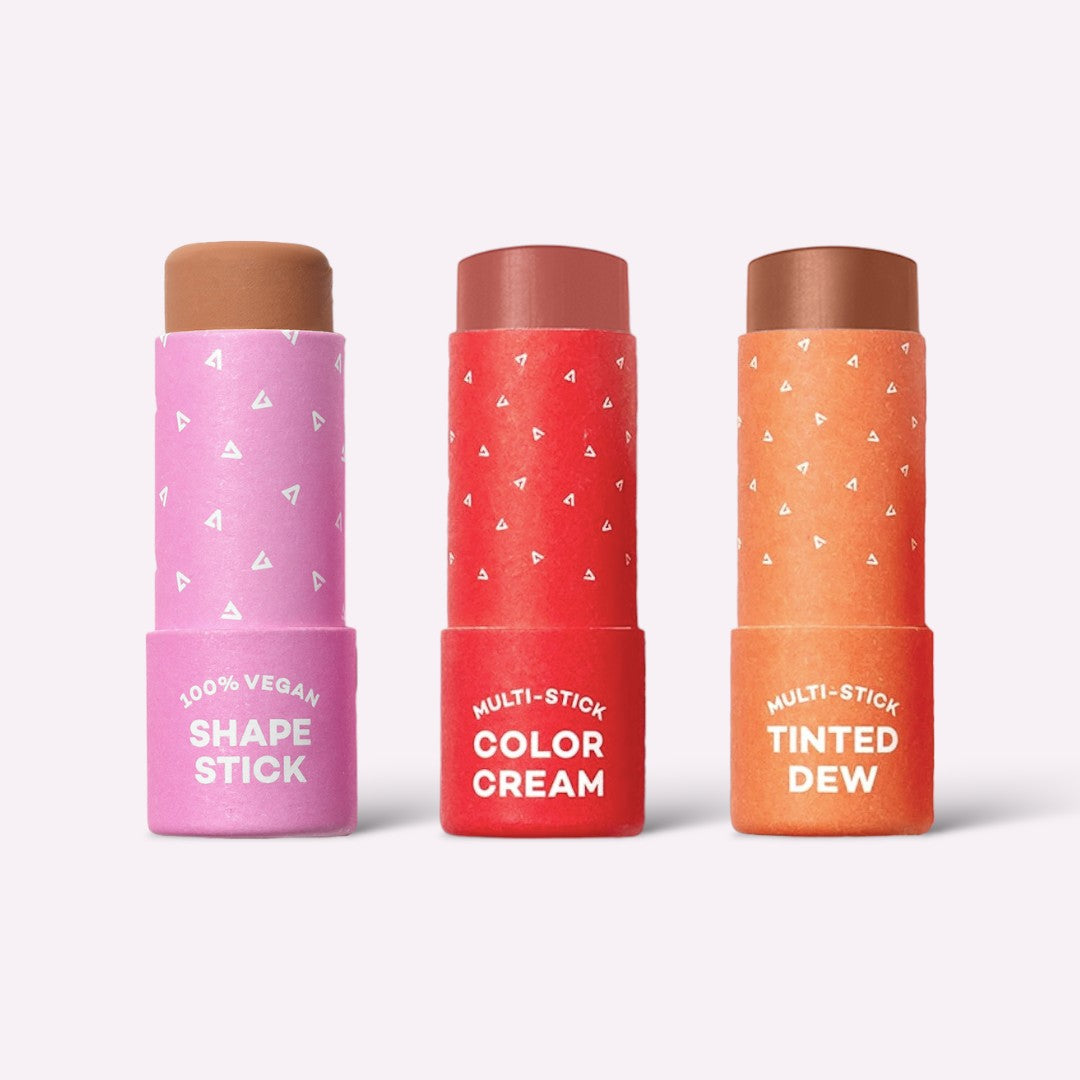
Eco Friendly Cosmetics aren’t just pretty bottles and dreamy scents. They mean using responsibly sourced ingredients, choosing packaging that won’t outlive your great-grandkids, and steering clear of unnecessary chemicals.
Getting Started With Eco Friendly Cosmetics
Jenna used to feel swamped by endless creams and serums. When she made the switch to green beauty, it was like clearing a tangled garden—suddenly there was room for products that truly nourish.
Eco friendly cosmetics tie skin health directly to environmental care. Along the way, you’ll find:
- Sustainable ingredients explained so you can pick truly clean formulas
- Green claims demystified by ingredient checks and certification summaries
- Simple swaps, like bar soaps and refillable bottles, that cut waste
- Real-world examples, including how Axiology champions ethical sourcing and minimalist packaging
You’ll also spot those hidden red flags in ingredient lists and decode marketing jargon that sneaks past the uninformed eye.
Beginning Your First Swap
Take it slow—replace one item at a time. For example, swap your liquid body wash for a bar soap that comes wrapped in recyclable paper.
The image below illustrates how regulators define cosmetics—as products used to cleanse, beautify, or alter appearance.

Notice how this broad definition can include everything from lotions to shampoos.
What To Expect Next
First, we’ll break down what eco friendly cosmetics really mean in plain English. Next, you’ll get a deep dive into five key sustainability criteria:
- Ingredients
- Sourcing
- Manufacturing
- Packaging
- Certifications
Then, I’ll share how to sift through green claims without falling for slick marketing. Finally, you’ll get hands-on tips for swapping routine products and spotting questionable ingredients fast. By the end, you’ll have a clear roadmap to a more sustainable beauty shelf.
Next Steps
- Audit your current lineup to find hidden synthetics.
- Research labels like COSMOS and Leaping Bunny for trusted certifications.
- Test travel or sample sizes—and even DIY options—before committing to full-size bottles.
Ready to dive deeper? Let’s get started! Keep an eye out for our next section, where we’ll define eco friendly cosmetics in easy, everyday terms.
Your journey toward a greener beauty routine starts now.
Defining Eco Friendly Cosmetics

Think of eco friendly cosmetics as a well-loved recipe—each ingredient plays a vital role, and the end result must taste (or in this case, feel) just right.
Your skincare ritual becomes a story where:
- Natural extracts deliver vitamins and antioxidants straight to your skin.
- Harsh synthetics may promise quick fixes but often leave an environmental hangover.
- Biodegradable formulas act like good compost, breaking down without a trace.
Traceability matters, too. When brands commit to organic sourcing, you can follow each component from seed to serum—no surprises, just full accountability.
Recognizing Key Certifications
Seeing a familiar badge on the tube or jar instantly builds trust. The most reliable stamps include:
- COSMOS for comprehensive natural standards
- USDA Organic for farm-to-face purity
- Leaping Bunny for guaranteed cruelty-free practices
“Ingredient transparency is the cornerstone of truly eco friendly cosmetics.”
In the EU, the EU Cosmetics Regulation sets strict limits on harmful additives and demands crystal-clear ingredient lists. If your moisturizer names aloe vera, jojoba oil, and shea butter front and center, you know exactly what you’re applying. No guessing games. No hidden codes.
Spotting Vague Marketing Claims
Words like “clean” or “green” are easy to print, hard to verify. Always flip the product around and scan the full ingredient deck.
- Verified claims rely on third-party seals or certificates.
- Unregulated buzzwords—think “eco” or “natural”—can hide behind fancy fonts.
- Look for clear percentages (for example, 70% organic ingredients).
A single unchecked term can unravel a brand’s entire green promise.
The global organic cosmetics market has seen tremendous growth, valued at USD 22.6 billion in 2025 and projected to reach USD 37.2 billion by 2035, expanding at a compound annual growth rate (CAGR) of 5.1%. This surge reflects a profound shift in consumer behavior, especially in North America and Europe, where eco friendly cosmetics are overtaking traditional formulas. Discover more insights about the organic cosmetics trend on FutureMarketInsights
Understanding Cruelty Free Testing
When a brand claims cruelty free, it means zero animal testing at any stage. Your best shortcuts:
- Look for the Leaping Bunny or PETA logos.
- Check a brand’s policy page for clear statements on no animal trials.
“Animal testing has no place in sustainable beauty.”
Exploring Biodegradable Formulas
From formula to packaging, every element can break down naturally instead of piling up in landfills. Keep an eye out for:
- Compostable cardboard tubes—perfect for lip balms and mascaras
- Water-based formulations that leave no oily residue
By combining transparent ingredients, trusted certifications, and ethical testing, you’ll step into the eco-beauty aisle with confidence.
• Read full ingredient lists for true transparency.
• Trust third-party seals over empty buzzwords.
• Choose products with compostable or recyclable packaging.
Eco friendly cosmetics let you treat your skin—and the planet—with equal care. Always prioritize brands that share supply chain details and practices to ensure every cosmetic choice aligns with true sustainability and meets expectations.
Key Sustainability Criteria For Eco Friendly Cosmetics
When you see “eco friendly” stamped on a beauty product, it should signal more than just a trendy buzzword.
It rests on five core pillars that guide your choices—from what goes on your skin to what ends up in landfills.
Ingredients Quality
Real talk: what we rub on our skin eventually finds its way back into the earth.
That’s why plant-based extracts like aloe vera and jojoba often beat out petroleum-derived additives. They’re gentler on your skin and far less likely to pollute waterways.
- Use ingredient databases or apps to verify each component
- Choose certified organic oils sourced from regenerative farms
- Ditch formulas with parabens and phthalates in favor of safer options
“Ingredient transparency lets you see exactly what nourishes your skin and the planet.”
Sustainable Sourcing
Every drop of oil or herbal extract ties back to a farm, a community, a supply chain.
Brands aligned with agroforestry projects not only protect biodiversity but also pay fair wages. When you buy with intention, you uplift people and ecosystems alike.
- Look for Fair Trade and Rainforest Alliance seals
- Read community impact stories on brand sites
- Prioritize crops grown with minimal water and zero harmful sprays
Curious about packaging too? Check out our guide on eco friendly packaging for cosmetics for straightforward tips.
Eco Manufacturing Practices
Factory floors have a huge carbon footprint—unless you choose versions running on renewable juice.
Solar panels, closed-loop water systems, and local ingredient sourcing turn a standard plant into a green powerhouse.
- Closed-loop systems that reuse water during processing
- Short transport routes between farms and factories
- Facilities certified under ISO 14001 environmental standards
“Manufacturing with renewable energy is as important as choosing clean ingredients.”
Natural and organic cosmetics are booming, hitting USD 45.61 billion in 2025 and projected to reach USD 103.23 billion by 2034 at a 9.50% CAGR. Learn more on Precedence Research.
Packaging Solutions
If ingredients form the heart of a product, packaging is its armor—and waste is its Kryptonite.
Glass jars, FSC-certified paperboard, and refillable formats let you skip single-use plastic and the recycling maze.
- Prioritize recyclable, compostable, or reusable containers
- Avoid multi-layer films that rarely make it through recycling
- Seek brands offering refill stations or return programs
To tie it all together, here’s an at-a-glance look at how these criteria stack up:
Comparison Of Sustainability Criteria
| Criterion | What To Look For | Example Label |
|---|---|---|
| Ingredients | Plant-based, organic, non-toxic | USDA Organic |
| Sourcing | Fair Trade, local, low-water farming | Fair For Life |
| Manufacturing | Renewable energy, closed-loop systems | ISO 14001 |
| Packaging | Recyclable, compostable, minimal design | FSC Certified |
| Certifications | Third-party seals, transparent audits | Leaping Bunny |
Keep this table handy next time you’re label-reading for a quick green-check.
Certification Overview
Those little badges on packs? They can make or break a claim.
Seals like COSMOS, USDA Organic, and Leaping Bunny confirm a brand’s promise extends beyond marketing copy.
- Visit certification body websites to confirm approved brands
- Cross-check package seals to avoid fakes
- Look for audit summaries or traceability reports
Summary Of Key Actions
- Scan ingredient lists; swap hidden synthetics for plant-based stars
- Back brands paying fair wages and practicing sustainable farming
- Opt for manufacturers powered by renewables and closed-loop systems
- Check packaging for FSC, compostable, or refillable marks
- Always verify certification seals on official sites before you buy
By combining clean ingredients, ethical sourcing, green manufacturing, mindful packaging, and trusted certifications, you’ll build a beauty routine that truly cares for your skin—and our planet.
How To Evaluate Green Claims
You know how brands toss around words like clean, natural, biodegradable, and non-toxic to catch your eye? It feels reassuring, but none of those buzzwords guarantee real eco cred. Think of a shiny label like a book cover—it looks inviting, but you still need to read inside to know the story.
Before you click “add to cart,” flip that bottle over and see what’s in the fine print.
Why Verification Matters
Companies pour big budgets into eco friendly cosmetics ads, but when you scan the label, critical ingredients often hide in minuscule type.
Taking an extra minute to verify ingredients isn’t just about your skin—it’s about keeping trace toxins out of our waterways and landfills.
Spot Red Flags
- Fragrance or “Parfum” can mask dozens of individual chemicals under one vague term.
- Generic “plant extract” without naming the species might hide synthetic additives.
- Claims like “50% natural” leave half the formula a mystery.
Being on the lookout for these tricks makes label-reading a lot less confusing.
Common Green Buzzwords
- Clean suggests fewer harmful chemicals but isn’t governed by a single definition.
- Natural often comes from plants, yet may still contain synthetic stabilizers.
- Biodegradable refers to the formula’s break-down, not the packaging.
- Non-Toxic relies on brand-specific tests instead of universal safety standards.
Knowing what these terms really mean helps you call for proof instead of empty promises.
Step By Step Verification Process
- Inspect Ingredient Lists using a trusted database to confirm each component.
- Cross-Check Certification Seals by verifying COSMOS, USDA Organic, or Leaping Bunny badges.
- Review Brand Transparency on dedicated sustainability pages for detailed reports.
- Use Apps like Think Dirty or EWG to get safety scores and origin info.
Judging a product by its packaging alone is like choosing a book by its cover—you’ll overlook hidden chapters.
Comparing Real Brands
EcoMist boldly labeled itself non-toxic, but a quick app scan revealed hidden silicones and plastic microbeads. It slapped “biodegradable” on the formula only—its plastic pump still ends up in landfills.
By contrast, Pure Bloom lays out fully traceable beetroot pigments, packs everything in sugarcane-based tubes, and publishes annual sustainability metrics. Apps give it a solid A, proving transparency pays off—for both your skin and the planet.
Following this process saves you money by steering you away from impulse buys that only look green. Plus, it gives you confidence that every ingredient on your shelf truly works—and won’t work against the earth.
Use the decision tree to prioritize your checks in three clear pillars. This decision tree illustrates the flow from ingredients through packaging to certifications.
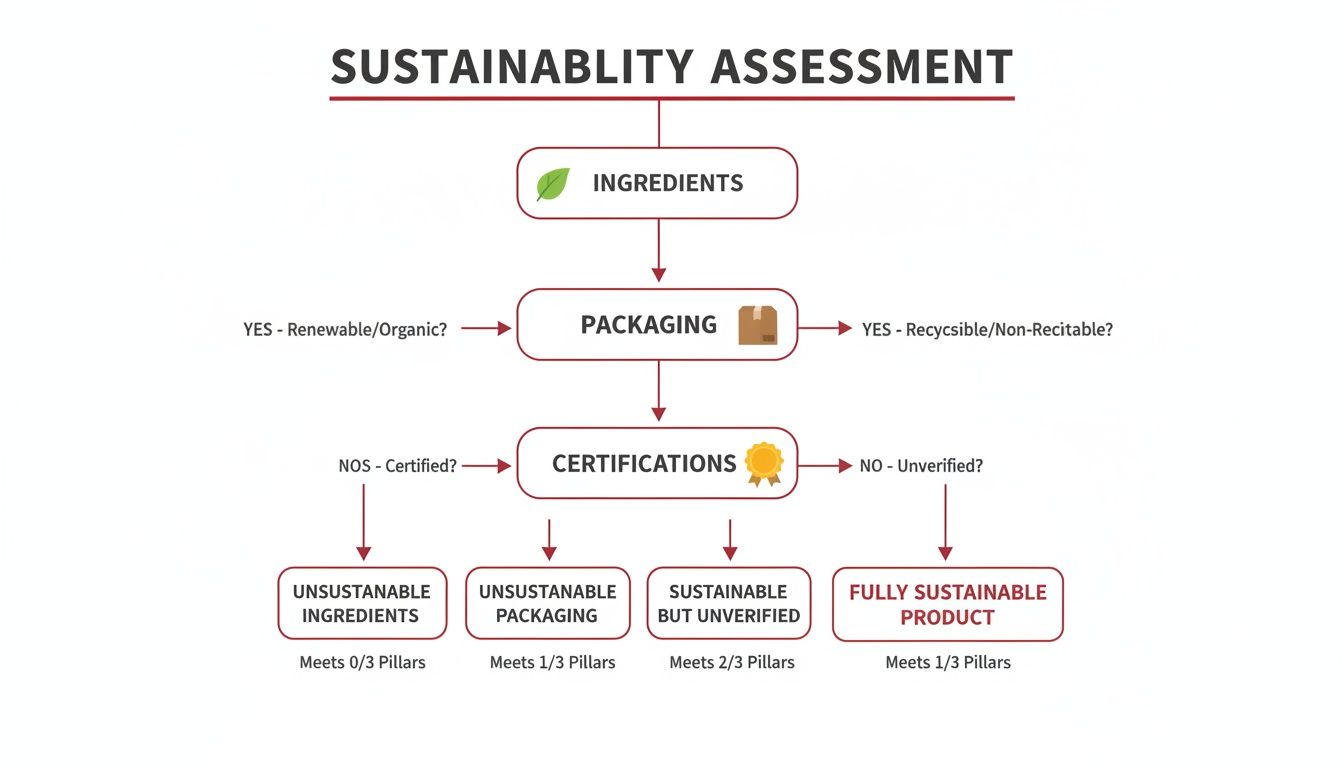
The infographic breaks down each step so you can see why covering all three pillars earns a solid green score.
Apply these checks every time you shop for eco friendly cosmetics to ensure you make informed, sustainable choices. You’ll avoid impulse buys and build a beauty shelf that reflects your values.
See our guide on Breaking Down Sustainability Buzzwords
Actionable Tips For Sustainable Beauty

Switching your beauty cabinet to eco friendly picks doesn’t have to be daunting. Start small—one swap or simple DIY recipe at a time—and you’ll see real progress.
I’ll never forget the day I ditched my plastic lotion bottle for a refillable soap bar. The plastic waste dropped instantly, and I felt more in control of my routine. Those little wins add up fast.
- Swap liquid shower gels for bar soaps wrapped in compostable paper
- Choose refillable deodorant sticks instead of single-use cans
- Trade disposable sheet masks for washable silicone versions
Many folks notice 30% less packaging clutter within a few weeks.
Share Your Wins Weekly
Set aside five minutes each Sunday to snap photos of your swaps and tag them with #SustainableBeauty. Tracking your journey in public keeps you honest—and celebrates every milestone.
Watching that plastic mountain shrink by 30% is oddly thrilling.
DIY Recipes For Eco Friendly Cosmetics
Why buy when you can make? Your kitchen holds all you need for simple, low-waste beauty.
- Oatmeal Honey Mask: Mix 2 tbsp rolled oats with 1 tbsp honey for a soothing overnight treatment.
- Coffee Oil Scrub: Stir 1 tbsp coffee grounds into 1 tbsp coconut oil for gentle exfoliation without microplastics.
- Sugar Citrus Scrub: Combine 2 tbsp raw sugar with a teaspoon of lemon zest to brighten and buff.
These blends rinse clean—no extra packaging drifting into our waterways.
Steps To Identify Red Flags
A shortcut to greener beauty is reading labels like a detective.
- Cross out parabens (methylparaben, propylparaben).
- Question vague “Fragrance” listings—chemicals often hide here.
- Pass on products that offer blanket percentage ranges instead of exact formulas.
Need more waste-cutting ideas? Check out our guide on 8 Easy Ways to Reduce Waste.
Build A Modular Skincare Routine
You don’t need to swap every product at once. Group items by purpose—cleanser, serum, moisturizer—and replace function by function. Look for multi-use sticks that slim down your kit:
- All-in-One color crayons for cheeks, lips, and lids
- Balms that double as brow tamer and skin soother
- Mineral powders that act as foundation and SPF
Seasonal Swaps
Match your formulas to the weather. In summer, reach for lightweight gels; in winter, opt for richer balms. This prevents overbuying and wasted products.
Invite A Friend
Turn sustainable swaps into a social game. Challenge a buddy to monthly product changes, then catch up over coffee or a quick call. Accountability and camaraderie make eco switches feel less like chores—and more like community.
Tiny, consistent swaps spark major impact over time.
Grab our printable checklist to monitor swaps, DIY recipes, and red-flag alerts. It’s your roadmap to a greener beauty shelf.
Axiology Case Study
When Ericka Rodriguez unveiled Axiology in 2019, her goal was clear: makeup should nurture both skin and planet. She set the bar high by focusing on vegan, ethically sourced ingredients—no shortcuts, no greenwashing.
Their flagship product, the Fungdation, marries reishi and snow mushrooms. By naming every ingredient—like sharing a secret family recipe—Axiology built trust from day one.
Here’s a snapshot of their homepage, where minimal, plastic-free packaging meets a clean, elegant design.
At first glance you notice the refill options and biodegradable tubes—no hidden gimmicks, just a straightforward path to zero-waste beauty.
Behind the scenes, Axiology works with regenerative farms to source plant oils and partners with cooperatives that pay fair wages. Their supply chain feels more like a community garden than a factory line.
- Ethically sourced ingredients from Rainforest Alliance farms to boost local economies
- Plastic-free biodegradable tubes made from sugarcane byproducts
- Refill pouches that cut packaging waste by 75%
- Fair wages and safe working conditions verified by third-party audits
Brand Commitment
Axiology’s model goes beyond buzzwords. They offer a 25% discount on returned pouches, rewarding customers for closing the loop. Today, over 90% of their packaging is plastic-free—and every cap and tube breaks down naturally.
Consumer Trust And Industry Shift
Since launch, more than 150 indie brands have taken notice and begun experimenting with refillable formats. Axiology’s latest social report even shows a 45% jump in positive brand sentiment.
A long-time customer summed it up best on social media:
“Axiology made me feel part of a community that cares for people and the planet.”
Now retailers invite Axiology to lead sustainability events and workshops, while larger beauty players study their supply-chain playbook. Their accessible website design ensures everyone—no matter ability—can join the green beauty revolution.
Axiology’s journey offers a clear roadmap for brands serious about making good on eco-friendly promises.
FAQ
Wondering what really makes a cosmetic “eco-friendly”? It’s not just a green sticker. An honest eco-friendly beauty product combines:
- Ingredient Transparency: every component revealed
- Fair Sourcing: growers and communities empowered
- Verified Seals: independent certifications you can trust
True sustainability also means clean factories, minimal packaging, and plant-based formulas. All together, they form the backbone of eco-friendly cosmetics.
Yet, greenwashing is everywhere. Brands lean on vague slogans, catchy logos, and “natural” claims that don’t hold up under scrutiny.
Always read the full ingredient list and verify seals on official certifier websites.
Here are a few ingredients that throw sustainability off balance:
- Parabens (methylparaben, propylparaben)
- Phthalates (texture-enhancing but risky)
- Synthetic fragrances (a mix of undisclosed chemicals)
Certification Labels
When you see marks like COSMOS, USDA Organic, or Leaping Bunny, you’re looking at different slices of the sustainability pie. Always click through to the certifier’s website and make sure the seal is up to date.
| Label | Focus |
|---|---|
| COSMOS | Natural & organic |
| USDA Organic | Farm-to-face purity |
| Leaping Bunny | Cruelty-free assurance |
For a deeper dive into sustainability criteria and spotting green claims, check out our decision-tree infographic and quick-reference checklist. You can also revisit the Axiology case study to see these principles in motion.
Still have questions? Drop us a line on our contact page.
Explore sustainable beauty with Axiology.