Figuring out your skin's undertone is all about finding that subtle, permanent color that lives just beneath the surface. It’s what makes a foundation truly disappear into your skin and what makes certain colors light you up. Getting a handle on this hidden layer is probably the single most important step toward a more intuitive, less frustrating beauty routine.
Why Your Skin Undertone Is Your Best Kept Beauty Secret
Ever bought a foundation that looked like a perfect match in the store, only to get it home and find it looks… off? Or maybe you’ve wondered why that amazing lipstick shade your friend wears makes you look washed out? The answer almost always boils down to your undertone—the constant, cool, warm, or neutral color just under your skin.
Your surface skin tone can change—hello, summer tan—but your undertone is with you for life. Think of it as the canvas. Your makeup and clothes are the paint. When the canvas and paint are in harmony, the whole picture just looks right. Effortless, even.
Skin Tone vs Skin Undertone
It’s super important to know the difference here. They work together, but they’re not the same thing at all.
- Skin Tone: This is what you see on the surface. It's usually described as fair, light, medium, tan, or deep. This is the part that can get a little darker in the summer and lighter in the winter.
- Skin Undertone: This is that subtle, underlying color that never changes. It’s the permanent tint that gives your skin its overall hue.
Getting this difference is a game-changer. It means you can finally stop guessing and start choosing products that you know will work. The result? A much more curated, sustainable beauty stash filled with things you actually love and use.
Knowing your skin undertone helps you pick makeup that plays up your natural beauty. A foundation that matches your undertone, for example, will blend in so seamlessly it looks like you’re not wearing anything. (You can get the full scoop on what a great foundation match does in our guide to what foundation makeup does). This knowledge just unlocks a new level of confidence, letting you pick colors that make your unique complexion shine.
Discover Your Undertone with These Simple At-Home Tests
You don't need a professional consultation or any fancy equipment to start figuring this out. Honestly, you can learn how to find your skin undertone right now, in your own home, with a few surprisingly simple tests. Think of it less like a science experiment and more like getting to know your skin a little better.
The trick is to look for a consistent story across a few different methods. One test on its own might feel a bit vague, but when you put the results from two or three together, the real picture usually starts to take shape.
This visual guide is super helpful for understanding the key difference: your surface tone might change with a bit of sun, but that undertone is your permanent, reliable guide for choosing colors that always look amazing on you.
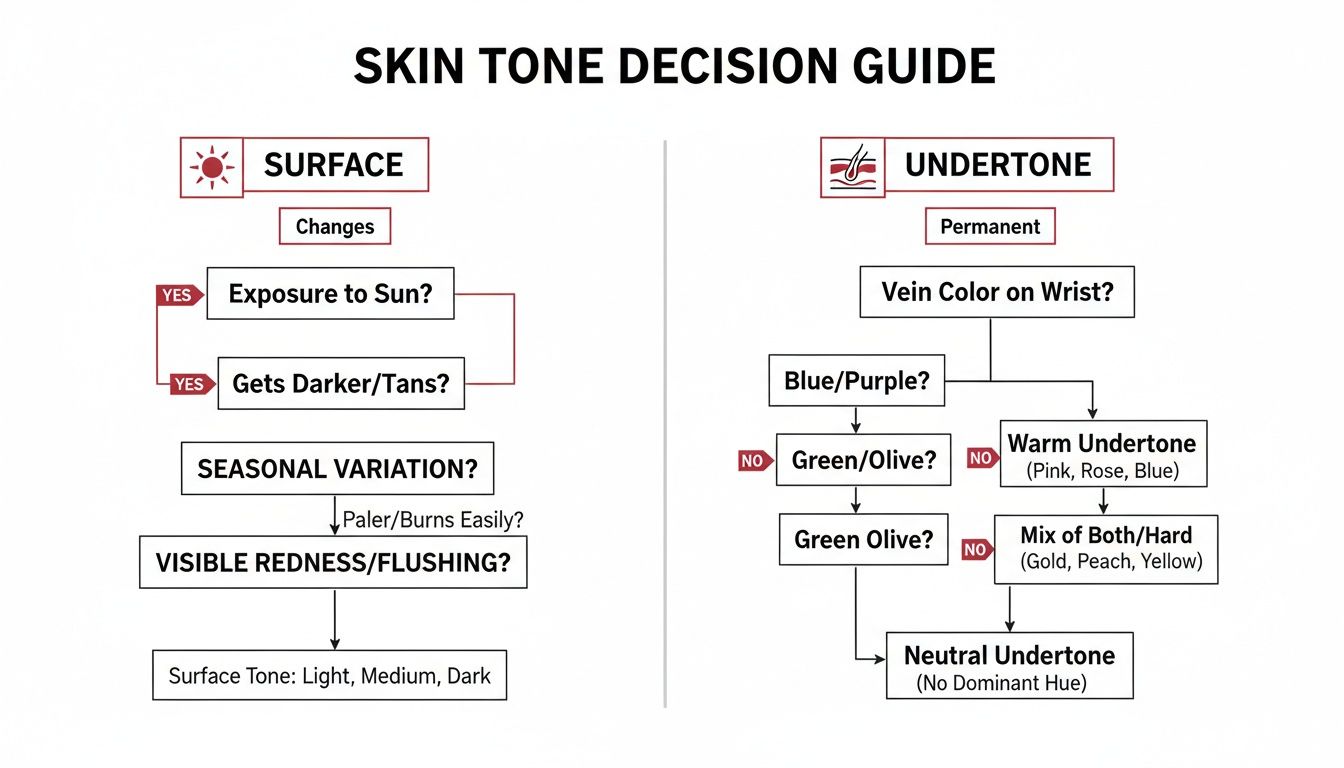
Ultimately, knowing this helps you pick shades that consistently make you look great, no matter the season.
The Vein Test: An Oldie But a Goodie
This is the classic, go-to test for a reason—it’s quick, easy, and all you need is your wrist and some good natural light. Find a spot near a window where the light is bright but not beaming directly on you, which can wash out the colors.
Now, just glance at the inside of your wrist. What’s the main color you see in your veins?
- Mostly blue or purple veins? This is a strong sign you have a cool undertone.
- Seeing mostly green or olive-y veins? That points toward a warm undertone.
- Is it a mix of blue and green, or just really hard to tell? You likely have a neutral undertone.
It sounds simple, but this little trick is surprisingly on point. Getting this right is a huge deal for both brands and us shoppers—industry-wide, accurate undertone matching can slash foundation return rates by up to 30%. You can learn more about the science behind human skin color and its variations on Wikipedia.
The Jewelry Test: Let Your Metals Talk
Here’s another fantastic, practical test that most of us do every day without even thinking about it: putting on jewelry. The right metal can make your skin light up, while the wrong one can feel a bit... off. That reaction is a direct clue.
Grab some silver and gold jewelry—bracelets and rings are perfect for this. In that same natural light, hold each metal against your skin, maybe on your wrist or chest. Really look at how each one changes your complexion. Does one make your skin look brighter, more alive, while the other makes it look a little dull?
The key here isn't about which metal you like more, but which one genuinely makes your skin look its best. Try to be objective and just see which one creates a more harmonious vibe.
If silver or platinum makes your skin pop, you’re in the cool-toned family. If gold is your clear winner, making you look radiant and glowing, you’ve got warm undertones. And if you can honestly rock both without a major difference? You’re probably looking at a neutral undertone.
The White Fabric Test: A Wardrobe Diagnostic
For this one, you’ll just need two pieces of clothing or fabric: one in a crisp, pure white and another in an off-white or cream. Find that good natural light again and hold each color up near your face and neck.
Take a moment to see how your face looks against each one.
- Does the bright, pure white make your skin look clear and vibrant? That’s a big hint you have a cool undertone.
- Does that same pure white wash you out, while the creamy off-white gives you a healthy glow? You likely have a warm undertone.
- If you can wear both shades equally well without looking drained, you’ve hit the neutral jackpot.
Once you combine the results from these three tests, you should have a pretty confident answer. Still feeling a little unsure? Don’t worry—that might be a clue in itself.
Okay, you've done a few at-home tests and now you have some clues. The next step is connecting the dots to figure out what "warm," "cool," or "neutral" actually means for your skin. Think of it as finally decoding your skin's unique color signature.
This is the part where it all clicks. Understanding your undertone helps you see why certain colors make you look vibrant and healthy, while others might wash you out.
The Hallmarks of a Cool Undertone
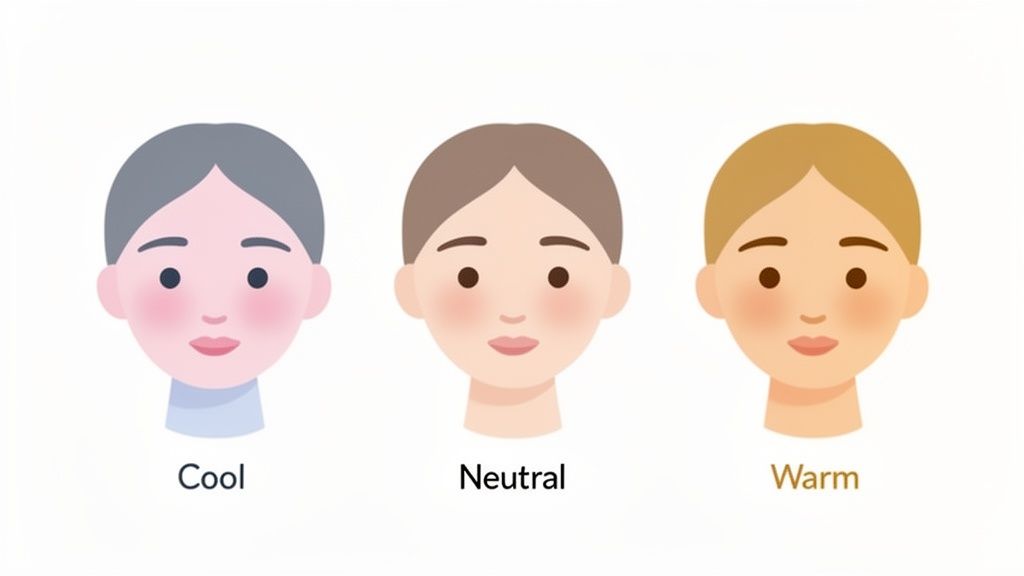
Did your tests point you in this direction? If so, your skin has subtle hints of pink, red, or blue just beneath the surface. It’s why people with cool undertones often find that crisp, pure white makes their skin pop and silver jewelry gives them a noticeable glow.
You might also be someone who burns pretty easily in the sun before getting a tan. When you’re shopping for foundation, look for formulas described with words like "rose," "porcelain," or anything with a slight pinkish base.
Understanding a Warm Undertone
A warm undertone means your skin has a natural golden, peachy, or yellow hue shining through. This is probably you if the veins on your wrist looked more green and gold jewelry made your complexion come alive. Instead of stark white, you’ll look amazing in off-white, cream, and earthy shades.
Folks with warm undertones often tan easily, getting a lovely golden-brown color in the sun. For makeup, your perfect match will be in foundations with yellow or golden bases, often labeled with terms like "beige," "golden," or "tan."
Key Insight: Understanding your undertone is about more than just foundation. It empowers you to make smarter choices across your entire beauty routine, from blush to eyeshadow. This knowledge allows you to build a more effective and sustainable collection of products you'll truly use.
The Versatility of a Neutral Undertone
What if your results were kind of a mixed bag? Veins that look both blue and green? Both gold and silver jewelry look great on you? That’s a classic sign of a neutral undertone. It just means you have a balanced mix of both cool and warm hues.
This balance gives you incredible versatility—you can pull off a huge range of colors without much fuss. For foundation, you’ll have the best luck with products that aren’t obviously pink or yellow. Look for shades described simply as "neutral" or "natural." It’s a great starting point when looking for a clean, vegan formula like Axiology’s Fungdation.
To make it even easier, here’s a quick cheat sheet to compare what you found in your at-home tests.
Undertone Characteristics at a Glance
| Characteristic | Cool Undertone | Warm Undertone | Neutral Undertone |
|---|---|---|---|
| Vein Color | Appear blue or purple | Appear green or olive | Appear blue-green |
| Jewelry Test | Silver looks best | Gold looks best | Both look great |
| White Fabric Test | Pure, stark white is flattering | Cream or off-white is better | Both look fine |
| Sun Reaction | Tend to burn easily | Tend to tan easily | May burn, then tan |
Remember, this is a guide, not a set of hard-and-fast rules.
Of course, undertones are a spectrum, not just three neat little boxes. Research using spectral measurements has found that while most people fall into warm (55%) or cool (35%) categories, a good portion are neutral. Still, representation can get skewed, like on social media where lighter skin types are often overrepresented. You can read more about the complexities of skin color classification.
This knowledge goes way beyond your foundation. Once you're confident about your undertone, it becomes so much easier to choose everything from the perfect blush to your go-to lipstick. You can even check out our guide on how to find your signature lip color to put your newfound discovery into practice.
Choosing Colors That Make You Look Your Best
Okay, this is where all that detective work really pays off. Figuring out your skin's undertone goes from being a fun little experiment to a seriously practical skill. It's the secret to picking colors that make you look alive and feel amazing.
This isn't about boxing yourself into a set of restrictive rules. Not at all. It's about making smarter, more intuitive choices that create a sense of harmony. When the colors you wear vibe with the natural hues in your skin, you get this effortless, healthy-looking glow. Simple as that.
Nailing Your Foundation Match
If there's one place to get your undertone right, it's foundation. A mismatch here can throw off your entire look, creating that dreaded mask effect we all want to avoid. The right shade should melt into your skin, looking and feeling like you're wearing nothing at all.
-
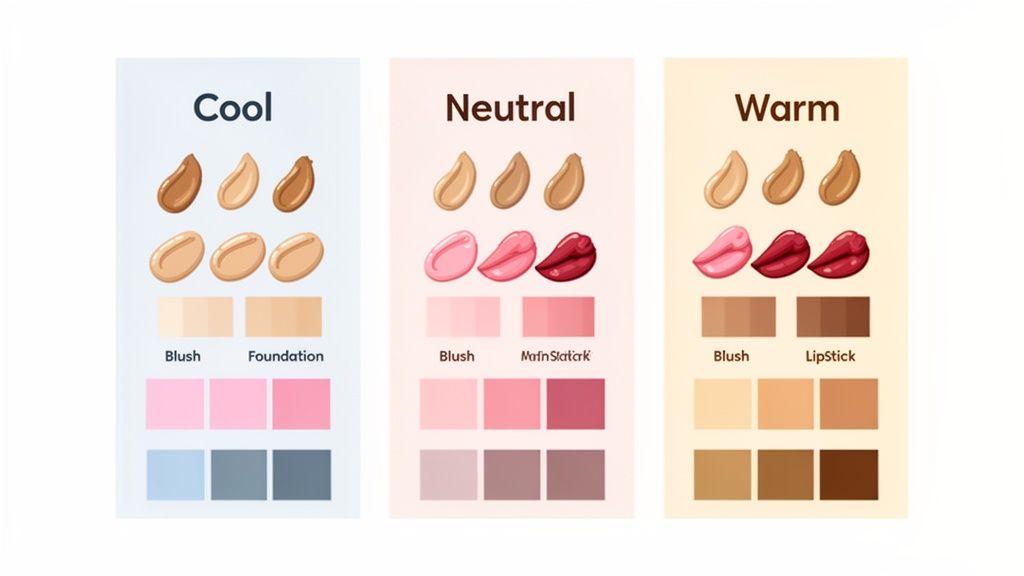
For Cool Undertones: You’ll want to look for foundations with a pink, red, or even slightly bluish base. Shade names like "rose," "porcelain," or "cool beige" are your friends. These will help brighten your complexion and knock out any yellow tones.
-
For Warm Undertones: Your perfect match will have a yellow, golden, or peachy base. Keep an eye out for descriptions like "golden," "tan," "honey," or "warm beige." These will play up your natural warmth beautifully, without ever looking orange.
-
For Neutral Undertones: You've got the best of both worlds and can often borrow from both cool and warm palettes. Still, your most seamless match will be a formula that’s neither super pink nor overly yellow. Look for shades simply called "neutral" or "natural." Axiology’s Fungdation is a fantastic place to start if you're looking for a clean, vegan option that works with your skin, not against it.
Finding the perfect foundation goes beyond just the undertone; it also involves considering your skin type and desired coverage. For a deeper dive, check out our complete guide on how to choose the right foundation shade.
Bringing Your Complexion to Life with Color
Once your base is looking flawless, the real fun begins. Applying what you know about your undertone to blush, lipstick, and eyeshadow can take your look from pretty good to genuinely radiant.
Blush Shades That Flatter
A great blush should look like you just came in from a brisk walk. For cool-toned skin, think rosy pinks, soft mauves, and berry shades. For warm-toned skin, peachy corals, terracotta, and golden-apricot blushes are absolutely stunning. Neutral tones can play around but tend to truly shine in muted rose or soft peach hues.
Lip Colors That Pop
The right lip color is like a magic trick for brightening your whole face.
- Cool Tones: You'll look incredible in blue-based reds, raspberry, and cool-leaning nudes.
- Warm Tones: Orange-based reds, vibrant coral pinks, and warm, peachy nudes will be your go-tos.
- Neutral Tones: You have so much flexibility here! From a classic true red to dusty rose and tawny browns, almost everything works.
Expanding Beyond Makeup to Wardrobe and Accessories
This whole color harmony thing extends way beyond your makeup bag. Just as knowing your undertone helps you pick the perfect lipstick, understanding your features can guide other style choices, like getting expert tips for picking glasses for your face shape.
The same logic applies to your clothes. Cool undertones are flattered by rich jewel tones—emerald, sapphire, ruby—plus crisp whites and cool grays. Warm undertones look amazing in earthy shades like olive green, mustard yellow, and burnt orange, along with creamy off-whites. Neutrals can pull from both palettes, looking just as great in navy as they do in camel. It’s all about building a closet that makes you feel like your best self.
Solving Common Undertone Complications
So what happens when the tests give you conflicting results? Blue veins but gold jewelry looks better? It happens more often than you’d think. Figuring out your skin’s undertone isn’t always a straight shot, and a few things can definitely muddy the waters.
Don’t get discouraged if you don’t fit neatly into a single box. Sometimes, what you see on the surface isn't the whole story. Consider this your troubleshooting guide for those tricky, in-between scenarios.
Distinguishing Surface Redness from Cool Undertones
One of the biggest culprits for confusion is surface redness. If you deal with things like rosacea, acne, or just general sensitivity, you might notice a pink or ruddy look on your face. It's super easy to mistake this for a cool undertone, but that surface color is totally separate from the permanent hue underneath.
If you have some redness going on, try doing the undertone tests on your chest or the inside of your arm, where the skin is often less affected. You might find that while your face looks pink, the rest of your skin is telling a much warmer story. This is a great trick for looking past temporary conditions to see what’s really going on underneath.
Your undertone is constant, even when your surface skin tone is experiencing temporary changes. Focusing on less-affected areas gives a more accurate reading.
Even the pros find identifying undertones complex—but it’s a cornerstone of color cosmetics. In one study, professionals were about 85% consistent when identifying undertones, with yellowness (a warm indicator) helping their accuracy a ton. This just goes to show how challenging and important it is, especially since historical gaps in beauty education—with darker skin tones making up only 4.5% of images in dermatology textbooks—have left many of us in the dark. You can learn more about the ongoing efforts to better classify skin tones by exploring the full research published by PMC.
Navigating Olive Skin Tones
Olive skin is its own special category and often the reason for mixed test results. It doesn't quite fit into the warm, cool, or neutral boxes. Instead, it has this subtle greenish or grayish cast that comes from a unique blend of yellow and blue undertones.
Here are a few signs you might have an olive complexion:
- Foundation often looks too orange or pink on you. Most standard foundations are missing that touch of green pigment needed to perfectly match olive skin.
- You look amazing in earthy greens and muted colors. These kinds of shades vibe perfectly with the natural green in your skin.
- People sometimes think you have a tan, even in the middle of winter. That subtle warmth in olive skin can create a perpetually sun-kissed look.
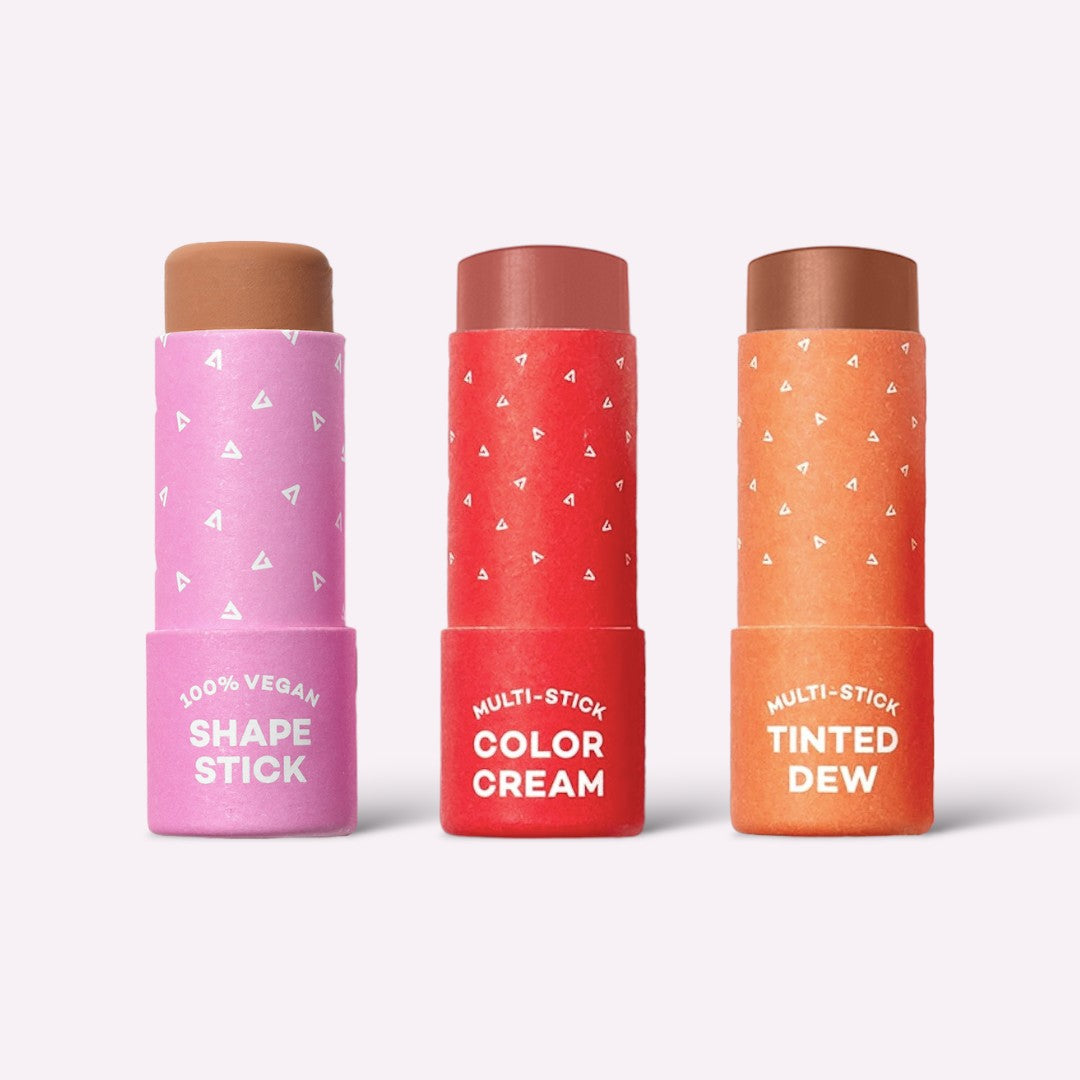
If this is ringing a bell, you’ll want to hunt for foundations specifically labeled "olive" or those with a neutral-warm base. Our multi-use color sticks in muted, earthy shades can also be a game-changer, giving you a natural-looking flush on your cheeks and lips that harmonizes with your unique complexion instead of clashing with it.
Still Have Questions About Skin Undertones?
Okay, so you've done the tests. Maybe you're feeling confident, or maybe you're still a little fuzzy on the details. That's totally normal. Finding your undertone is a new skill, and honestly, some of us are tricky edge cases.
Let's clear up a few of the most common questions that pop up. Think of this as the final piece of the puzzle, the little bit of extra clarity you need to feel like you’ve really got this.
Can My Skin Undertone Change Over Time?
This is a big one, and I'm happy to report the answer is a firm no. Your surface skin tone—how light or dark your skin is—will definitely change. You get a tan in the summer, you might look paler in the winter. That’s all about melanin.
But your undertone? That's the permanent, underlying color you were born with. It stays constant no matter how much sun you get. That’s exactly why it’s such a reliable guide for picking colors that always look good on you.
What If I Got Different Results from the Tests?
If the vein, jewelry, and white t-shirt tests all gave you conflicting answers, don't panic! This happens all the time. More often than not, it's a huge clue that you have a neutral undertone. You’ve got a little bit of both cool and warm going on, so the tests can't give you a straight answer.
It could also mean something like surface redness from rosacea or a recent sunburn is throwing one of the tests off.
When in doubt, go with your gut. If gold jewelry makes you feel amazing but your veins look kinda blue, you might just lean neutral-warm. Trust the result that feels the most you.
Is Olive the Same as Neutral or Warm?
Ah, olive skin. This unique tone really deserves its own category. While it often falls within the neutral-to-warm family, it's set apart by its signature subtle greenish or grayish hue.
It’s a very specific balance of cool and warm tones that standard foundations often miss, which is why people with olive skin frequently complain that foundations look too pink or orange on them. It’s not quite warm, not quite neutral—it's olive.
Now that you've got the inside scoop, it's time to have some fun with it. Axiology makes clean, vegan, and plastic-free makeup that’s designed to work with your true undertone, not against it.
Find your perfect match in our multi-use color sticks and mushroom-infused Fungdation. Your face will thank you.