If you have skin that gets angry at the drop of a hat, you know the struggle. Finding makeup that won't leave you red, itchy, or broken out can feel like a full-time job. But I’ve got good news: mineral makeup is often a total lifesaver for sensitive skin. It's all about its stripped-back formulas and gentle, natural ingredients. Think of it less like a heavy mask and more like a light, breathable shield that gives you coverage without causing a meltdown.
Why Mineral Makeup Is a Game Changer for Sensitive Skin
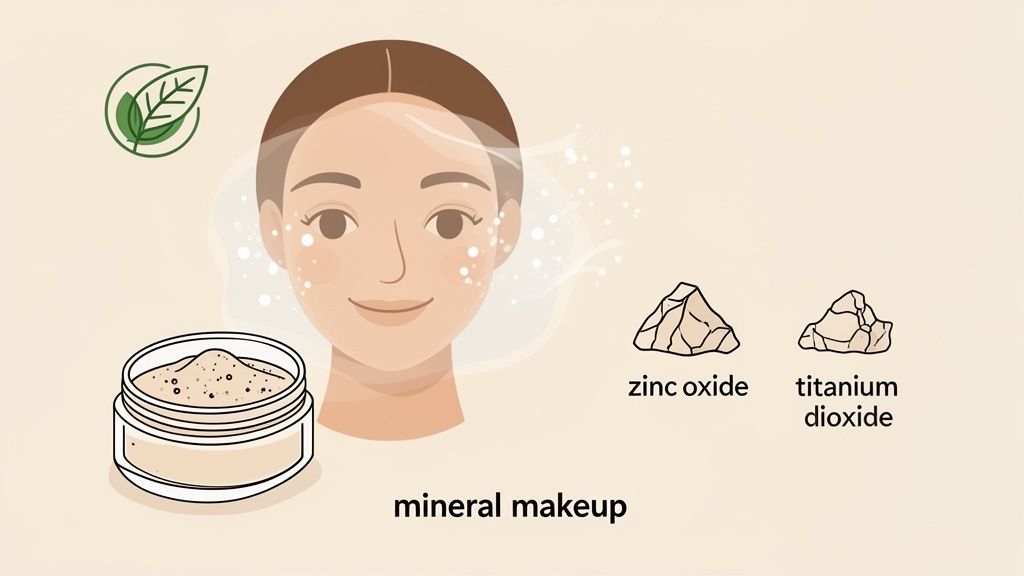
Here’s an analogy: imagine your skin is a delicate garden. Piling on conventional makeup, with its laundry list of synthetic chemicals, fragrances, and dyes, is like dousing that garden with harsh pesticides. It might look okay for a minute, but you're messing with the ecosystem. Mineral makeup? That’s more like a nourishing, protective layer of mulch made from the earth itself.
At its heart, mineral makeup is just finely milled, earth-derived minerals. These formulas typically ditch the usual suspects that irritate skin—preservatives, perfumes, oils, and chemical dyes.
A Breathable Barrier for Your Skin
Unlike those heavy liquid foundations that can feel like they're suffocating your pores, mineral makeup sits lightly on the skin's surface. This creates a barrier that’s breathable, letting your skin do its thing naturally while still offering protection. It’s a huge plus for anyone dealing with acne or rosacea, since it won’t trap oil and bacteria.
The star players in these formulas are usually:
- Zinc Oxide: This is a true skin hero. Zinc oxide is known for its anti-inflammatory powers, which can help calm down redness and soothe irritation.
- Titanium Dioxide: A gentle giant in sun protection. This mineral physically blocks UV rays, so you get sun protection without the chemical absorption.
- Mica: This is what gives you that luminous, soft-focus glow. Mica creates a flawless finish without that heavy, caked-on shimmer.
- Iron Oxides: These are the natural pigments that give mineral makeup its color, allowing for a whole spectrum of shades to match any skin tone.
This gentle approach isn't just a niche thing; it's a huge movement in the beauty world. The global mineral cosmetics market was worth a whopping USD 3.46 billion in 2023 and is expected to jump to USD 4.97 billion by 2030. That growth is massively driven by people with sensitive skin looking for kinder options. You can read more about this growing market trend to see just how big it is.
To get a clearer picture, let's break down the main differences.
Conventional vs. Mineral Makeup for Sensitive Skin
This quick table shows why mineral makeup often wins out for easily irritated skin.
| Feature | Conventional Makeup | Mineral Makeup |
|---|---|---|
| Ingredients | Long lists with synthetic chemicals, preservatives, fragrances, and dyes. | Short, simple lists with natural, earth-derived minerals. |
| Feel & Finish | Can feel heavy, occlusive, and may clog pores. | Lightweight, breathable, and sits on the skin's surface. |
| Skin Benefits | Rarely offers benefits beyond coverage; can sometimes worsen issues. | Often has anti-inflammatory and soothing properties (thanks, zinc!). |
| Sun Protection | Usually relies on chemical sunscreens that can cause irritation. | Provides physical sun protection from titanium dioxide and zinc oxide. |
| Irritant Potential | High. Preservatives, fragrances, and dyes are common triggers. | Low. Free from most common irritants. |
It's pretty clear why so many are making the switch.
Clean Beauty That Cares
This whole "less is more" philosophy is exactly what we're about here at Axiology. Our commitment to clean, vegan, and planet-friendly beauty is built on this idea. By creating products without the junk and focusing on ingredients that are actually good for your skin, we make makeup that feels amazing to wear.
We take the core principles of mineral makeup—gentleness, minimalism, and skin-loving ingredients—and push them even further. We believe makeup should do more than just cover things up; it should actually care for your skin. That's the idea behind every single product we make, including our innovative, mushroom-infused Fungdation.
Decoding Makeup Labels for Sensitive Skin
Trying to read a makeup label can feel like you need a degree in chemistry. But when you have sensitive skin, it’s not just about curiosity—it’s about survival. You absolutely have to know what you’re putting on your face to avoid a full-blown meltdown.
Think of yourself as a label detective. Once you know the good guys from the bad guys, you can walk down any makeup aisle with total confidence. The goal is to find super simple formulas that skip the junk and are packed with only the good stuff. This is where high-quality mineral makeup for sensitive skin should shine, but spoiler alert: not all "mineral" products are your friends.
The Good Guys: Ingredients to Look For
When you flip over a product, you want to see a short, sweet, and recognizable ingredient list. These are the heroes that calm, protect, and make your skin look amazing without causing drama.
- Zinc Oxide: This is a true MVP. Zinc oxide is famous for its anti-inflammatory powers, making it a rockstar for calming down redness and irritation. Bonus: it also acts as a physical barrier against UV rays, giving you gentle sun protection.
- Titanium Dioxide: Another mineral sunscreen heavy-hitter, titanium dioxide offers great sun protection and is incredibly gentle. Seeing this on a label is a good sign the product was made with sensitive skin in mind.
- Iron Oxides: This is how you get color without the chaos. Iron oxides are natural pigments and a much safer bet than the synthetic dyes found in a lot of conventional makeup, which can be major irritants.
- Mica: This is what gives you that subtle, lit-from-within glow. It’s a mineral that creates a soft-focus effect, blurring imperfections without the chunky, synthetic glitter.
The demand for these gentle ingredients is blowing up. The mineral cosmetics market was valued at $2,105.5 million in 2019 and is on track to hit $2,916.4 million by 2026. That’s because formulators are finally catching on that nearly one in three people worldwide have sensitive skin. You can get more details on this shift at Allied Market Research.
The Red Flags: Ingredients to Avoid
Knowing what to steer clear of is just as important as knowing what to look for. Some ingredients are notorious for causing reactions, even when they’re hiding in products labeled "natural" or "mineral-based."
Axiology’s Promise: Our philosophy is simple: if an ingredient doesn’t do something good for your skin, it doesn’t belong in our products. That’s why we’re 100% talc-free, fragrance-free, and always cruelty-free.
Here’s a quick checklist of common irritants to keep an eye out for on any makeup label:
- Bismuth Oxychloride: Okay, it's technically a mineral, but it’s a big-time troublemaker. This ingredient is a common culprit behind itchiness, redness, and even cystic acne for sensitive folks. It’s often used for a shimmery finish, but it can get stuck in pores and cause a world of hurt.
- Talc: Talc is often used as a cheap filler in powders, but it can be super drying and irritating. Even worse, it can sometimes be contaminated with asbestos—a known carcinogen. Yeah, it’s a hard pass from us.
- Fragrance (Parfum): This is one of the biggest offenders out there. "Fragrance" is a sneaky umbrella term that can hide dozens of undisclosed chemicals, many of which are powerful allergens. To really get into the weeds on this, check out our guide on the importance of fragrance-free beauty products.
- Synthetic Dyes: You’ll see these listed as "FD&C" or "D&C" followed by a color and number. These are petroleum-derived colorants known to cause sensitivity and clog pores. Natural pigments are always the way to go.
How to Apply Mineral Makeup for a Flawless Finish
The secret to getting that amazing, natural, second-skin finish with mineral makeup isn't just about the product itself—it’s all in the technique. The right moves will make your makeup melt right into your skin, giving you beautiful, buildable coverage without a hint of irritation. If you're used to heavy liquids, you can forget all that. Working with minerals is a much lighter, more intuitive process.
Everything starts with a well-prepped canvas. Mineral powders and creams love to stick to hydrated, happy skin, so whatever you do, don't skip your moisturizer. Think of it like painting a wall—you wouldn’t dream of starting without a good primer. A hydrated base stops patchiness in its tracks and gives the minerals a smooth surface to cling to, which means a flawless, lasting look for you.
The Swirl, Tap, Buff Method
For loose mineral powders, the classic “swirl, tap, buff” method is your absolute best friend. It’s a simple, three-step dance that spreads the product perfectly for an airbrushed effect.
- Swirl: Tip a tiny amount of powder into the lid of your container. Swirl a soft, dense kabuki brush into the powder until the bristles have picked it all up.
- Tap: Give the handle of the brush a firm tap on the side of the lid. This gets rid of any excess and, more importantly, works the minerals down into the bristles. This is the key to avoiding a messy application.
- Buff: Using gentle, circular motions, buff the makeup onto your skin. Start where you feel you need the most coverage and blend your way out. Build it up in light layers until you get the finish you want.
And remember, a little bit goes a very long way. It's always easier to add more product than it is to take it away. This layering approach is perfect for mineral makeup sensitive skin because you’re not overloading your face with too much product all at once.
The chart below shows a similar mindful approach, walking you through how to scan, find, and avoid certain ingredients when you're shopping.
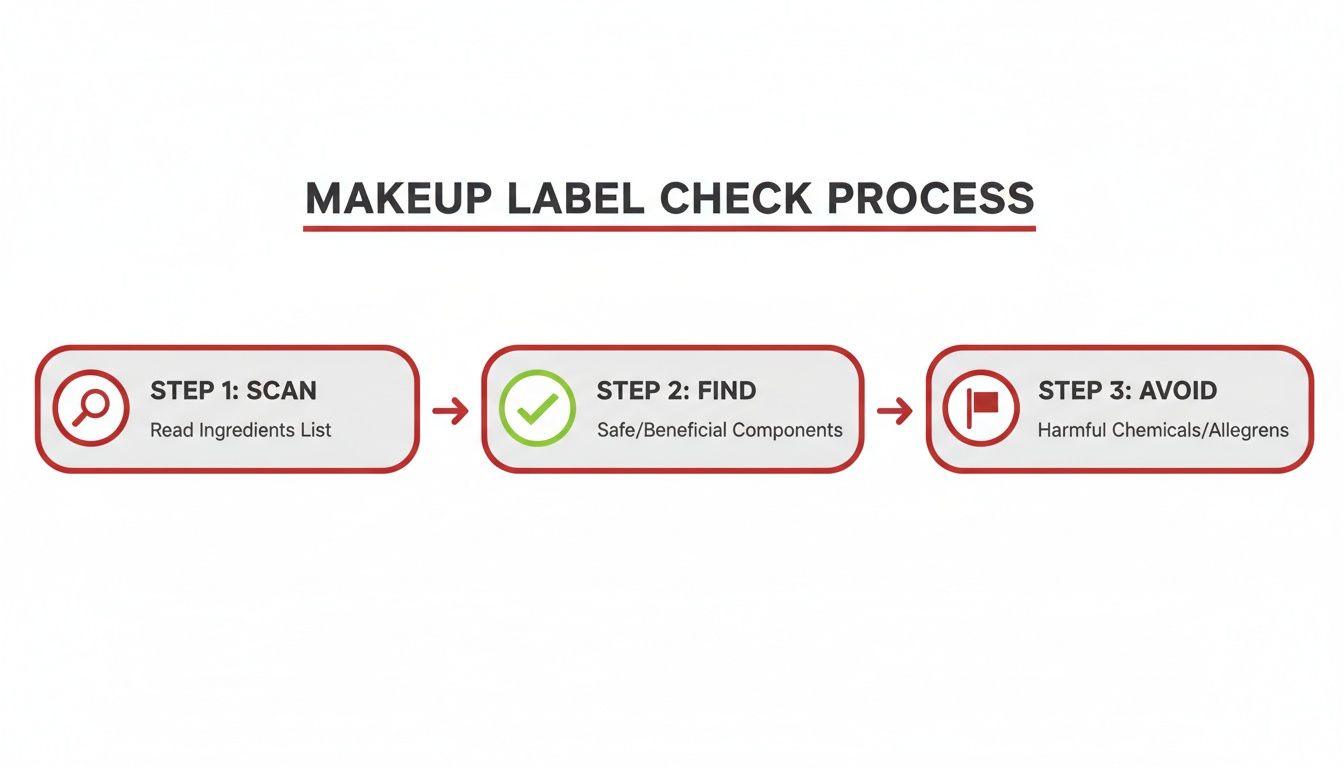
When you're this careful about what you choose, your application experience is bound to be better, because you know what you’re putting on your skin is safe from the get-go.
Applying Modern Stick and Balm Formulas
Newer formulas, like our Fungdation balm, give you a streamlined, totally mess-free option. The same rules apply—prepped base, light layers—but the technique is even simpler. You can apply the stick directly to your face in key spots like your cheeks, forehead, chin, and nose, then blend it out. Use your fingertips, a brush, or a damp sponge. The warmth from your fingers really helps melt the product into your skin for an incredibly natural look.
For a deeper dive, our guide on how to apply foundation for beginners has even more great tips.
Ultimately, the whole point is to let your skin shine through. The beauty of mineral makeup is that it enhances your natural complexion, it doesn’t hide it. With the right prep and a gentle hand, you can get a radiant finish that feels just as good as it looks.
The Smart Way to Test New Makeup
When your skin is reactive, trying a new product can feel like a high-stakes gamble. Is this my new holy grail, or am I about to trigger a week-long breakout? That’s why patch testing isn't just a smart suggestion—it's a non-negotiable step for your skin's health and your own peace of mind.
Think of it as a dress rehearsal. Instead of slathering a new mineral foundation all over your face and just hoping for the best, you’re giving your skin a tiny, controlled preview in a discreet spot. This one simple move can save you from a world of potential irritation by letting you see how your skin feels before you commit.
The Simple Protocol for Patch Testing
Figuring out if a new mineral makeup for sensitive skin is a friend or foe is super easy. Just follow this straightforward process to see how your skin really feels about a new formula.
-
Choose Your Spot: Dab a small amount of the product somewhere inconspicuous. The side of your neck just below your ear, along the jawline, or even your inner wrist are all great choices. These spots are sensitive enough to react but easy to cover up if they do.
-
Apply a Small Amount: You really don't need much. A tiny bit of foundation or a quick swipe of a balm is more than enough to get a read on the ingredients. Gently blend it in and then just let it be.
-
Wait and Watch: Okay, this is the most important part. As long as you don't have an immediate, major reaction, leave the product on for at least 24 to 48 hours. Some skin sensitivities are slow to show up, so giving it time is key.
During the waiting game, keep an eye out for any changes. You're looking for even the most subtle signs of irritation.
Be on the lookout for minor redness, a little itchiness, small bumps, or any feeling of heat. These are your skin’s way of telling you that an ingredient in the product just isn't the right match.
Catching these signals early is how you build a makeup bag you can actually trust. It ensures every single product you use is a true ally for your sensitive skin.
Beyond Coverage With Planet-Friendly Formulas
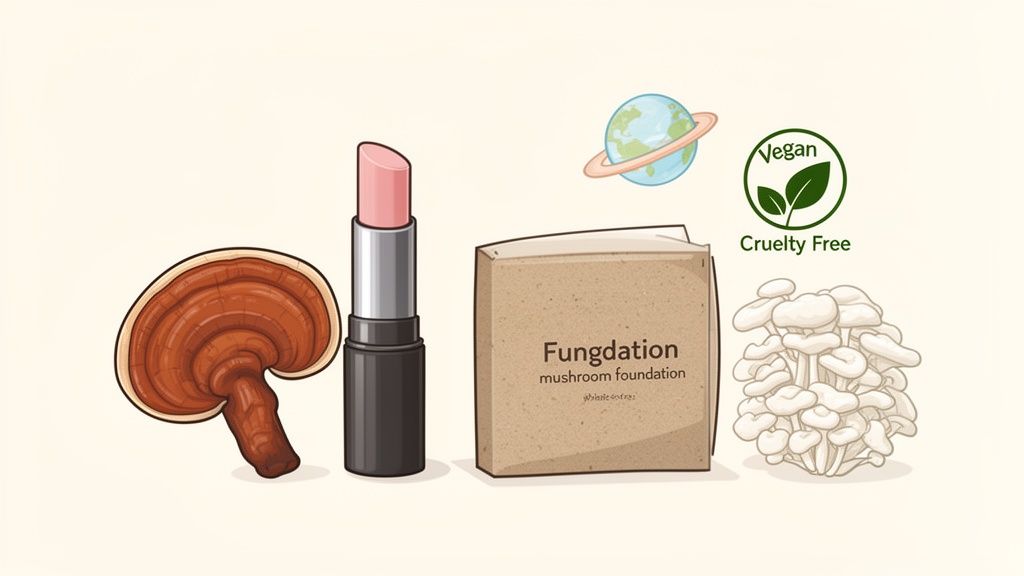
Choosing makeup isn’t just about finding the right shade anymore, is it? For a lot of us, it’s a direct reflection of our values. It’s about being kind—to our skin, to animals, and to the planet we all share. This is where a brand’s story becomes just as important as the ingredients in the bottle.
Axiology was actually born from this exact idea. We’re firm believers that what’s left out of a formula is just as crucial as what goes in, especially when you have sensitive skin. It’s all about creating makeup that lets you feel genuinely good, inside and out.
A New Standard in Conscious Beauty
For anyone trying to shop consciously, the checklist can feel a mile long: vegan, cruelty-free, sustainably packaged… the list goes on. We get it. That's why we decided to take a firm stance against some of the more wasteful industry norms. We are proudly 100% plastic-free, opting for smart, innovative packaging that cuts down on our environmental footprint.
And it seems like we’re not alone. The mineral cosmetics market is on track to hit USD 5.01 billion by 2032, and that growth is being pushed by people just like you who are demanding clean, ethical, and skin-safe options. Brands that are transparent, vegan, and ditching plastic are leading the charge by proving you don’t have to compromise.
This commitment to doing better is woven into every single product we make, so you know your beauty routine lines up with what you believe in.
Makeup That Doubles as Skincare
Real innovation in mineral makeup for sensitive skin isn't just about covering things up. It’s about packing formulas with ingredients that actually nurture your skin and improve its health over time. This belief is what led us to create Fungdation, the world's first foundation balm made with skin-renewing mushrooms.
Fungdation is more than just a foundation; it’s a skincare-makeup hybrid. By harnessing the power of adaptogenic mushrooms, it delivers tangible benefits that support a calm, healthy complexion with every application.
We’ve packed it with powerful, earth-sourced ingredients that are total game-changers for sensitive skin:
- Reishi Mushroom: This celebrated adaptogen is a powerhouse of anti-inflammatory and antioxidant properties. It’s incredible for soothing redness, protecting your skin from daily stressors, and promoting a more even, happy complexion.
- Snow Mushroom: Think of it as nature's hyaluronic acid. This super-hydrator can hold up to 500 times its weight in water, delivering deep, lasting moisture that leaves skin looking plump and dewy—without ever clogging your pores.
By blending these super-ingredients with a clean, mineral-based formula, Fungdation gives you buildable coverage that feels completely weightless while actively caring for your skin. It’s makeup that acts like an extension of your skincare routine. To see how our packaging and formulas work together, check out our guide on eco-friendly makeup choices.
We've put together a quick look at how our standards directly benefit you and your sensitive skin.
The Axiology Standard for Sensitive Skin
| Feature | Axiology's Commitment | Benefit for Sensitive Skin |
|---|---|---|
| Clean Ingredients | We use a minimal list of 10 or fewer recognizable, vegan ingredients. | Fewer ingredients mean a lower risk of irritation and allergic reactions. |
| Vegan & Cruelty-Free | Our entire line is 100% vegan and is never tested on animals. | Avoids common animal-derived irritants like lanolin and carmine. |
| Skincare-Infused | Formulas feature nourishing botanicals like adaptogenic mushrooms and natural oils. | Ingredients actively soothe, hydrate, and protect skin, reducing redness and sensitivity. |
| Palm Oil-Free | We are 100% palm oil-free to protect wildlife and rainforests. | Aligns with ethical values and avoids an ingredient tied to environmental damage. |
| Plastic-Free Packaging | Our products are housed in innovative, 100% plastic-free packaging. | Eliminates exposure to potential toxins from plastic and supports a healthier planet. |
It's a simple philosophy: create beautiful, effective makeup that's kind to everyone—your skin, animals, and the Earth.
Your Smart Shopping Checklist for Gentle Makeup
Walking down the beauty aisle can feel like a pop quiz you didn't study for, especially when your skin reacts to everything. But finding gentle mineral makeup doesn't have to be a guessing game. Think of this as your cheat sheet for making confident, skin-loving choices every single time.
First thing’s first: flip that product over and scan the ingredient list. The goal is a short, sweet, minimalist formula. Why? Fewer ingredients simply mean fewer chances for something to irritate your skin.
The Only Checklist You'll Need
Here’s how to cut through the noise and make sure you’re picking a winner:
- Confirm It's Talc-Free and Bismuth Oxychloride-Free: Seriously, these two are often the villains behind itching and breakouts, even in formulas that call themselves "mineral." A quick check to make sure they're MIA is your best first move.
- Look for Vegan and Cruelty-Free Certifications: This is a big one. When a brand goes the extra mile to be vegan and cruelty-free, it usually means they’re deeply committed to clean, conscious formulas all around, steering clear of common animal-derived irritants.
- Prioritize Skincare-Infused Formulas: Great mineral makeup should do more than just cover up; it should actively care for your skin. Look for products loaded with soothing goodies, like the reishi and snow mushroom in Axiology’s Fungdation. This way, your makeup is actually working for your complexion all day long.
Following these simple steps means you're not just buying makeup. You're investing in your skin’s long-term health and comfort. It's about finding products that actually fit into your wellness goals, not work against them.
Got Questions? We've Got Answers.
When you're trying to find the perfect mineral makeup for sensitive skin, a lot of questions can pop up. It's totally normal. Here are some of the most common ones we hear, with answers to help you navigate the world of mineral beauty.
Will Mineral Makeup Clog My Pores?
Generally, no. One of the best things about high-quality mineral makeup is that it's non-comedogenic, which is just a fancy way of saying it won’t block your pores. Think of it this way: heavy liquid foundations can sink into the skin, but mineral powders sit gently on the surface, letting your skin breathe.
This is a huge win for anyone with acne-prone or reactive skin. A word to the wise, though: always scan the ingredient list for potential troublemakers like talc or bismuth oxychloride. Even though they're mineral-based, they can still cause issues for some people.
Is Mineral Makeup a Better Choice for Rosacea?
For so many people dealing with rosacea, mineral makeup is a game-changer. The formulas are usually super simple and skip common triggers like fragrances, synthetic dyes, and harsh preservatives that are known to cause flare-ups.
The secret weapon here is often zinc oxide. It's known for its anti-inflammatory properties, which means it doesn't just provide gentle coverage—it can actually help calm redness and soothe the irritation that comes with rosacea.
How Can I Tell if I'm Allergic to Mineral Makeup?
Even the most natural products can cause a reaction in some people. If you’re allergic, you might notice redness, itching, tiny bumps, or even a burning sensation after application. This is exactly why patch testing is your best friend.
Before you go all-in and apply a new product to your entire face, just test a tiny amount on your jawline or behind your ear. Give it 24-48 hours and see what happens. It's a simple step that can save you from a whole lot of irritation later on.
Can I Actually Get Good Coverage with Mineral Makeup?
You bet. The buildable nature of mineral makeup is one of its superpowers. You can go for a sheer, your-skin-but-better tint or build up to full, flawless coverage—all without it ever feeling heavy or looking cakey.
The trick is to apply it in thin layers, buffing each one into the skin before adding the next. This technique helps you reach your desired finish while keeping things feeling totally weightless and natural.
Ready to try makeup that feels as good as it looks? At Axiology, we're all about clean, vegan, and plastic-free formulas designed to be kind to sensitive skin. Come see what our mushroom-infused Fungdation can do for you.