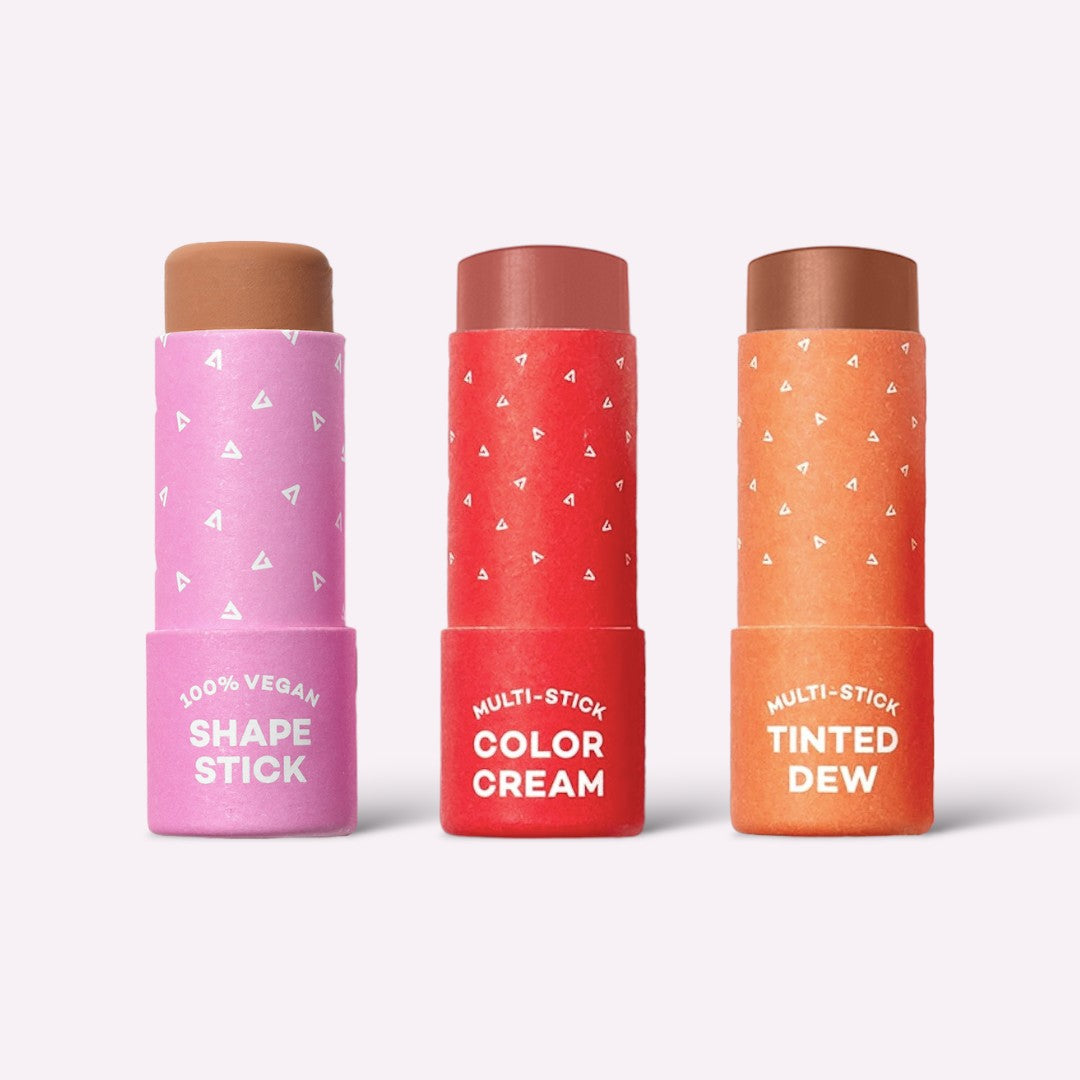
So, what is an organic lip balm, really? At its core, it’s a lip balm made with ingredients grown the old-fashioned way—without synthetic pesticides, weird GMOs, or artificial fertilizers. It’s all about using pure, nourishing ingredients to actually heal and protect your lips, not just slap a temporary layer over them.
What It Means for a Lip Balm to Be Truly Organic
Have you ever thought about lip balm the same way you think about food? It’s kind of like choosing between a vibrant, farm-fresh berry and some artificially flavored candy. One gives you genuine, earthy goodness, while the other is just a quick, synthetic fix. That’s the real difference between an organic lip balm and the regular stuff you see everywhere.
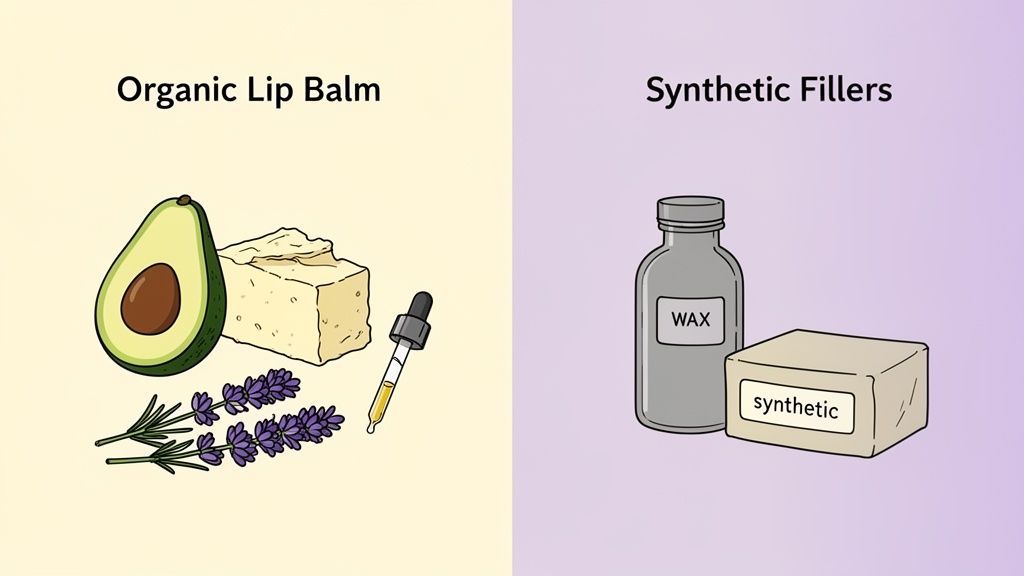
The idea behind organic skincare is pretty simple: what you put on your body should be just as clean and wholesome as what you put in it. For a lip balm to get the "truly organic" badge of honor, its ingredients have to come from nature and be grown using sustainable farming practices.
The Heart of an Organic Formula
At the center of any good organic lip balm, you'll find ingredients that play nice with your skin's own biology. We’re not talking about complex chemicals cooked up in a lab. We’re talking about powerful botanicals people have been using for centuries to soothe and heal.
Think of ingredients like:
- Avocado Oil: It's loaded with fatty acids and vitamins that seriously moisturize and help repair that delicate skin barrier on your lips.
- Kokum Butter: A heavy-hitting emollient that just melts into your skin to soften and fight off dryness, all without feeling greasy.
- Moringa Oil: This one is packed with antioxidants, which help shield your lips from environmental bullies like wind and cold.
These plant-based powerhouses deliver real, lasting hydration because your skin actually absorbs them, healing from the inside out. This is a totally different game than what many conventional lip balms are playing.
Conventional Balms: A Whole Different Philosophy
So many of the lip balms out there lean on synthetic fillers and petroleum-based ingredients. The most common culprit is petrolatum (yep, petroleum jelly), which is a byproduct of refining oil.
Petrolatum-based products create an occlusive barrier. Basically, they just sit on top of your skin to keep moisture from escaping. While that gives you a fleeting sense of relief, it doesn't actually add any nutrients or real hydration back into your lips.
Sound familiar? This is why you might feel like you’re constantly reapplying those kinds of balms. Your lips feel dry again the second the product wears off because the root cause was never fixed. It’s like putting a plastic sheet over a wilting plant instead of just watering its roots. The organic approach? Water the roots directly with nutrient-rich goodness.
Picking an organic lip balm is more than just a preference—it’s a conscious choice to feed your body with pure, effective ingredients. When you go for formulas grown without synthetic pesticides or GMOs, you’re making sure that what you put on your lips is safe, gentle, and genuinely good for you and the planet.
The Real Deal: Why Organic Ingredients Are So Good for Your Lips
Switching to an organic lip balm isn't just a trend; it's a choice that does your body good, inside and out. When you break it down, the upsides are pretty clear. We're talking about next-level nourishment for your lips, ditching synthetic chemicals, and giving the planet a little love. It's a small swap with a big impact.
And it seems like a lot of people are catching on. The global organic lip balm market hit a value of USD 1,951.2 million recently, which just goes to show that millions of us are looking for lip care that's safer and actually works. This isn't just a blip; it's a huge shift toward products that are kind to us and the earth.
Deep Nourishment That Actually Heals
Ever notice how some lip balms feel like they're just sitting on your lips? Many conventional balms create a waxy shield using ingredients like petrolatum. Think of it like shrink-wrapping a thirsty plant—it might stop it from losing more water, but it's not giving it the drink it desperately needs.
Organic lip balm, on the other hand, is like giving that plant's roots a nutrient-packed smoothie.
Ingredients such as avocado oil, shea butter, and kokum butter are loaded with essential fatty acids, vitamins, and antioxidants. This is the stuff your skin knows what to do with and can actually absorb.
- Vitamins A, C, and E: These are antioxidant powerhouses. They help protect the super-delicate skin on your lips from things like wind and sun that can cause damage and premature aging.
- Essential Fatty Acids: Think of these as the building blocks for healthy skin. They help reinforce your lips' natural barrier, making them better at holding onto moisture and healing from the inside out.
Instead of just creating a slick surface, these organic ingredients get to work conditioning, repairing, and strengthening your lips. You'll probably find you don't even need to reapply as often because your lips are becoming genuinely healthier, not just temporarily coated. To get the full scoop on what makes these ingredients so amazing, check out our guide on powerful natural lip balm ingredients.
Here's the bottom line: conventional balms often just cover up dryness, while organic ingredients work to fix it. The result is lips that are not only softer but way more resilient.
To make it even clearer, let's look at a side-by-side comparison of what you typically find in organic versus conventional lip balms.
Organic Ingredients vs Conventional Ingredients
| Ingredient Type | Common Organic Examples (e.g., Avocado Oil, Shea Butter) | Common Conventional Examples (e.g., Petrolatum, Mineral Oil) | Primary Benefit/Function |
|---|---|---|---|
| Moisturizers | Avocado Oil, Shea Butter, Coconut Oil, Kokum Butter | Petrolatum, Mineral Oil, Dimethicone | Organic: Deeply nourishes and heals. Conventional: Creates a surface barrier. |
| Waxes | Candelilla Wax, Carnauba Wax, Sunflower Seed Wax | Synthetic Beeswax, Microcrystalline Wax | Organic: Plant-based waxes provide structure and protection. Conventional: Petroleum-derived waxes create a seal. |
| Preservatives | Vitamin E (Tocopherol), Rosemary Extract | Parabens (e.g., Methylparaben), BHA/BHT | Organic: Natural antioxidants that protect the product and skin. Conventional: Synthetic chemicals used to extend shelf life. |
| Flavors/Scents | Essential Oils (e.g., Peppermint, Orange), Fruit Extracts | "Fragrance" or "Parfum," Artificial Flavors | Organic: Natural, plant-derived aromas and flavors. Conventional: Undisclosed chemical mixtures. |
This table really highlights the fundamental difference: organic balms use ingredients that actively work with your skin, while many conventional options rely on synthetic fillers.
Putting Your Personal Safety First
Let's be real: whatever you put on your lips, you end up eating some of it. It’s just a fact of life. Whether you're sipping coffee, having lunch, or just licking your lips, a little bit of that product is going to be ingested. This simple truth makes your lip balm's ingredient list super important.
When you choose an organic lip balm, you're consciously skipping a daily micro-dose of potentially sketchy synthetic ingredients often found in other products.
These can include:
- Parabens: Chemical preservatives that have raised health concerns.
- Synthetic Fragrances: Often hidden under "parfum" or "fragrance," this one word can mask dozens of mystery chemicals, many of which are known allergens.
- Artificial Dyes: Totally unnecessary additives that can cause irritation.
- Petroleum Byproducts: Think petrolatum and mineral oil, which offer zero nutritional value for your skin.
Opting for a formula with certified organic ingredients means your lip care is clean, pure, and free from all that questionable stuff. It’s a simple move that reduces your body's chemical load and gives you some well-deserved peace of mind.
Supporting a Healthier Planet
The good vibes from choosing an organic lip balm go way beyond your own lips. That "organic" label isn't just about the finished product in the tube; it's about the entire journey, from the farm right to your pocket. Organic farming is all about working with nature, not against it.
This means the plants that become the oils and butters in your balm are grown without synthetic pesticides, herbicides, or fertilizers. Keeping these chemicals out of the equation has a huge positive impact, preventing toxic runoff from polluting our soil and water.
Sustainable farming also boosts biodiversity and keeps our soil healthy, which contributes to a stronger ecosystem for everyone. When you buy an organic product, you're basically casting a vote for these responsible farming practices and supporting a system that puts the environment first.
How to Decode Labels and Certifications
Walking into the beauty aisle to find an organic lip balm can feel like you're trying to crack a secret code. You're hit with a wall of words like "natural," "green," and "eco-friendly" splashed across every package, and it's easy to get turned around. Let’s cut through the marketing fluff so you can become a confident label-reader and spot the products that are genuinely clean.
Think of yourself as a detective, and the packaging is your crime scene. The clues are all there, but you need to know what to look for. Vague claims are just distractions; the real evidence lies in official certification logos.
The Power of Official Certifications
Certifications are your best friend here. They’re the most reliable shortcut to know if a brand is walking the walk. These logos aren't just pretty pictures; they represent a legal and ethical promise to meet specific standards, all checked out by an independent third party. When you spot one, you know the product has passed some pretty tough tests.
Here are the key seals to keep an eye out for:
- USDA Organic: This is the big one for organic products in the US. If you see this seal, it means at least 95% of the ingredients are certified organic. That means they were grown without synthetic pesticides, GMOs, or artificial fertilizers. It’s a powerful guarantee of purity.
- Leaping Bunny: This little rabbit is the internationally recognized symbol for cruelty-free. It’s your assurance that no animal testing happened at any point—not on the individual ingredients, and not on the final product.
- Certified Vegan: Usually shown as a 'V' symbol from groups like Vegan Action, this seal confirms a product has zero animal-derived ingredients. This is a big deal for lip balms, where sneaky ingredients like beeswax and lanolin (from sheep's wool) often pop up.
Here's the thing: a product can be organic but not vegan (hello, beeswax), or it can be cruelty-free but not organic. For the cleanest, most ethical lip balm, you’ll want to find products that hit all three.
How to Read an Ingredient List Like a Pro
Logos are great, but the ingredient list tells the whole story. You’ll often see it labeled as INCI (International Nomenclature of Cosmetic Ingredients). The list is always in descending order of concentration, so whatever’s first is what you're getting the most of.
Your first scan should be for the usual suspects—those red-flag ingredients that are best left on the shelf.
Common Ingredients to Avoid
- Fragrance/Parfum: This one-word wonder can legally hide hundreds of undisclosed chemicals, including potential allergens. A truly organic lip balm will use essential oils or fruit extracts for its scent.
- Parabens (Methylparaben, Propylparaben, etc.): These are synthetic preservatives used to give products a longer shelf life. Clean beauty brands have ditched them entirely due to health concerns.
- Petrolatum and Mineral Oil: These are byproducts of petroleum and offer zero nutritional value for your skin. They just create a barrier on top of your lips without providing any real, deep-down hydration.
- BHA and BHT: Butylated hydroxyanisole (BHA) and butylated hydroxytoluene (BHT) are synthetic antioxidants used as preservatives. They're another category of chemicals that conscious shoppers often choose to skip.
Figuring out what "organic" means in the beauty world can be a little tricky since the rules are different than they are for food. To get the full scoop, you can read more about the problem with searching for organic makeup and why certifications are so important. Once you learn to spot these key logos and red-flag ingredients, you’ll be able to tell the truly clean formulas from the ones just pretending.
Finding the Right Organic Lip Balm for Your Needs
Okay, you’ve got the basics down on reading labels and spotting good ingredients. Now it’s time to move from detective to personal shopper. Finding the perfect organic lip balm isn’t about discovering one holy-grail product for everyone. It’s about finding the one that’s just right for your lips.
Think of it like skincare. The moisturizer that works wonders for your friend might not be the best fit for you. The goal here is to find a formula that tackles what you’re dealing with, whether that’s flaky dryness, annoying sensitivity, or you just want a hint of natural color. When you match the ingredients to your specific needs, lip care stops being a quick fix and becomes a real solution.
Tailoring Your Choice to Your Lip Concerns
Let's get into the specifics of how to pick a balm based on what your lips are trying to tell you. Every pair of lips is different, and the right ingredients can make all the difference.
-
For Chronically Dry or Chapped Lips: If your lips feel constantly tight and parched, you need something heavy-duty. Look for rich, buttery ingredients like kokum butter or shea butter. These are the champs at sealing in moisture and softening up rough patches. When you see them paired with deeply hydrating oils like avocado or moringa, you’ve found a powerhouse combo for rebuilding your lips’ natural barrier.
-
For Sensitive or Allergy-Prone Skin: When your skin tends to react to everything, simple is always better. A shorter ingredient list is your best friend. Vegan formulas are a fantastic place to start because they automatically ditch common irritants like beeswax and lanolin (that waxy stuff from sheep’s wool). Soothing extras like calendula extract are also great for calming down redness and irritation.
-
For Antioxidant Protection and Anti-Aging: Our lips are out there facing the elements every single day. To give them a little help, you'll want a balm packed with antioxidants. Ingredients like elderberry extract, vitamin E, and moringa oil act like a shield, fighting off damage from UV rays and pollution that can cause fine lines.
This little decision tree can help simplify things when you’re staring at a wall of products.
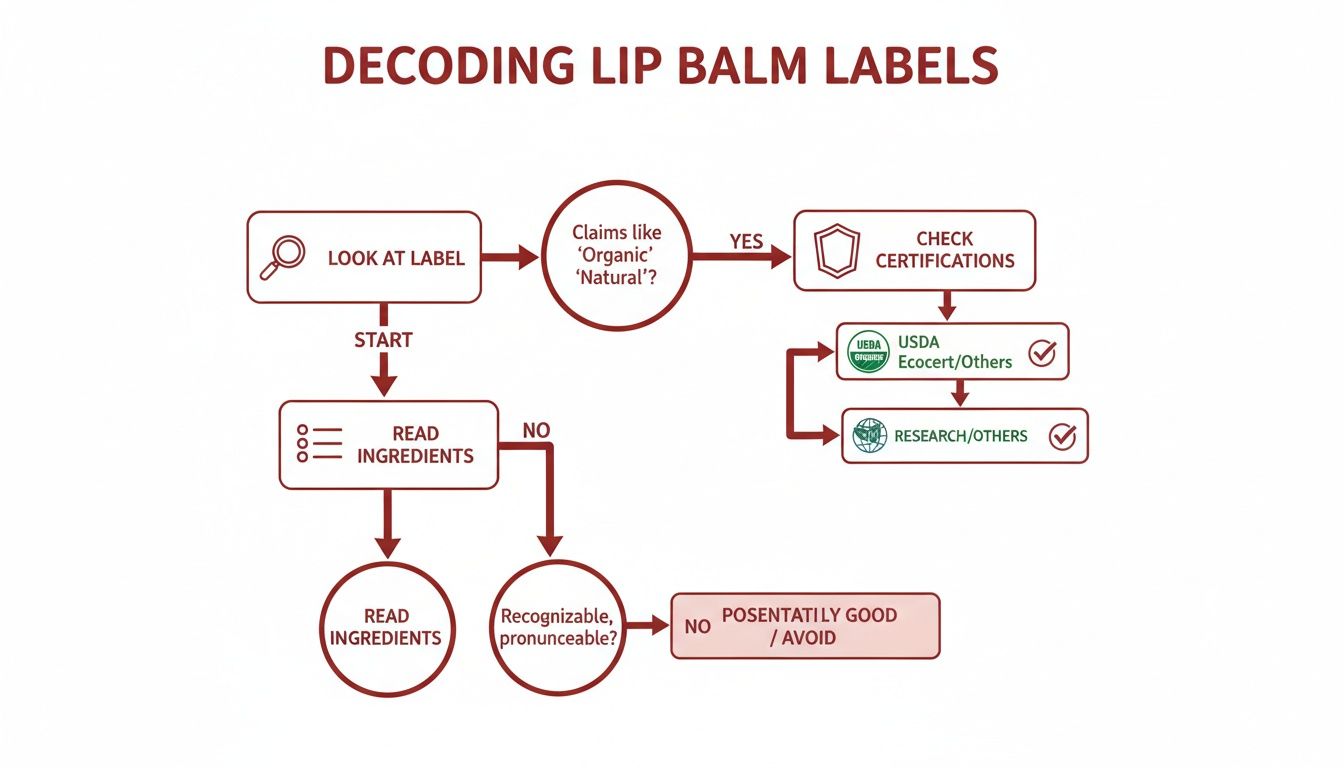
It really just boils down to this: a truly great organic lip balm has the certifications to prove it and an ingredient list you can actually understand.
Why Vegan Formulas Are Often a Superior Choice
For a lot of people, especially those with sensitive skin, a vegan organic lip balm is the total package. By their very nature, these formulas skip the animal-derived ingredients that can sometimes trigger a reaction. When you’re trying to find quality organic products, it helps to know what to look for, a topic covered well in these tips for choosing authentic organic products.
Instead of beeswax, which can be irritating for some, vegan balms use plant waxes like candelilla or carnauba. These create a protective barrier that still lets your skin breathe.
By choosing a vegan formula, you’re not just making an ethical choice; you’re often selecting a gentler, more hypoallergenic option that delivers pure, plant-powered nourishment without compromise.
This shift toward clean, plant-based ingredients is a big deal. More and more, people are flipping over products to read the labels because they want to avoid questionable chemicals. It's a trend that’s especially strong in North America, where shoppers aren't just looking for natural ingredients, but also for sustainable, eco-friendly packaging. It’s all part of a more conscious way of shopping that makes sure you end up with a product you truly love.
Why Sustainable Packaging Is a Critical Part of Your Choice
Picking out a great organic lip balm is an awesome first step, but the journey to a truly conscious product doesn't stop with the ingredients. A really good product considers its impact from beginning to end, and that definitely includes the tube it comes in. The packaging is just as critical as the formula inside, connecting your healthy choice to the well-being of our planet.
Let's be real: the beauty industry generates a ton of plastic waste every year. And lots of small items, like lip balm tubes, are a big part of that problem. These plastics often end up in landfills or oceans, where they can stick around for centuries. This reality reframes your purchase—it's not just self-care, it's an act of environmental stewardship.
Beyond the Balm: What to Look for in Packaging
When you’re checking out an organic lip balm, taking a second to look at its packaging can make a huge difference. Forward-thinking brands are ditching traditional plastic and getting creative with earth-friendly materials. Knowing what to look for empowers you to make a more informed and impactful choice.
Here are a few key terms and materials to keep an eye out for:
- Plastic-Free: This is the gold standard. It means the whole thing—tube, wrapper, everything—has zero plastic. It’s the most direct way to make sure your purchase doesn’t add to plastic pollution.
- Post-Consumer Recycled (PCR): This stuff is made from plastic that’s already been used and recycled. Using PCR materials helps cut down the demand for new plastic and gives existing plastic a second life.
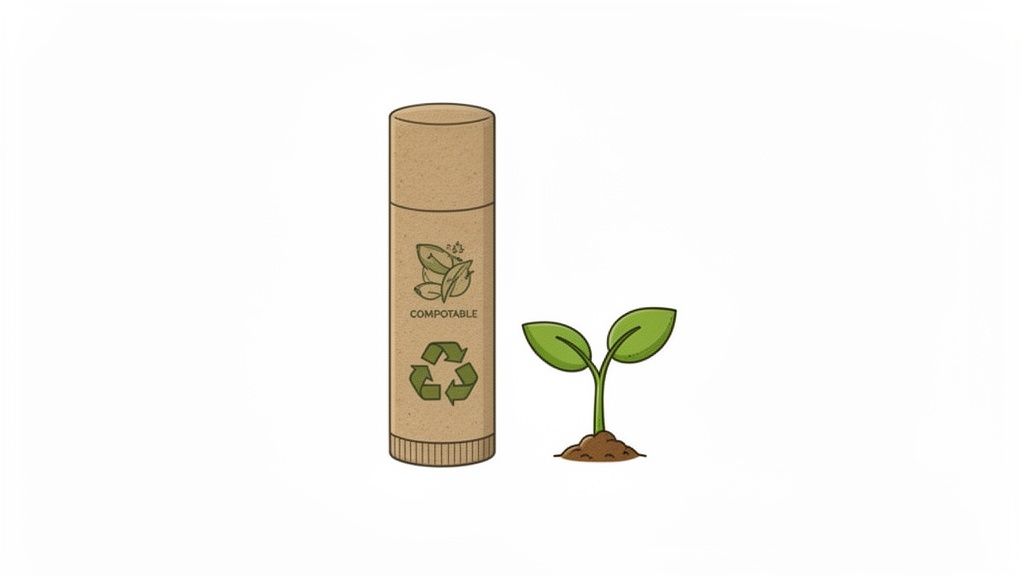
- Compostable: This tells you the packaging can break down into natural elements in a compost pile. Paper-based tubes are a fantastic example, as they can return to the earth without leaving nasty stuff behind.
Getting a handle on the bigger picture of packaging materials is a game-changer for making conscious choices. You can explore more Sustainable Packaging insights to dive deeper. Making these small shifts in what you look for really does add up to a major positive change.
How Your Purchase Becomes a Vote
Every time you choose a product in sustainable packaging, you’re sending a clear message to the beauty industry. You’re telling brands that you care about environmental responsibility and you're ready to support companies that put the planet first. This is powerful stuff—consumer demand is what pushes more brands to innovate and ditch plastic for good.
Think of it this way: your wallet is one of the most effective tools you have for advocacy. By investing in brands committed to plastic-free solutions, you are directly funding a cleaner, more sustainable future for the beauty industry.
Innovative solutions like push-up paper tubes prove that high-quality lip care doesn't need plastic. These tubes are often handcrafted, surprisingly sturdy, and fully compostable, offering a totally guilt-free experience from the first swipe to the last. They show that luxury and sustainability can absolutely go hand-in-hand. You can learn even more about what is sustainable packaging and why it's becoming a non-negotiable for conscious consumers.
Ultimately, opting for an organic lip balm in eco-friendly packaging turns a simple purchase into a meaningful action. It’s a choice that lines up your personal health with planetary health, ensuring that your commitment to clean ingredients extends to a cleaner world. It's a way to support the brands that are dedicated to making real, measurable change.
Your Top Questions About Organic Lip Balm
Diving into the world of clean beauty can definitely bring up a few questions. As you get ready to make the switch to a healthier lip care routine, it's totally normal to have some last-minute thoughts. I put this section together to give you clear, straightforward answers to the most common questions I hear about organic lip balm, so you can feel completely confident in your choice.
The goal here is to clear up any lingering uncertainties, whether they're practical things about daily use or bigger questions about what certain labels really mean. Think of it as your final checklist before starting your journey to genuinely nourished, healthy lips.
Is Organic Lip Balm Actually Better for Sensitive Skin?
Yes, it absolutely is. For anyone with sensitive skin, grabbing an organic lip balm is one of the smartest things you can do for your lips. The reason is simple: it’s all about what the formula doesn't have in it. Mainstream lip balms are often packed with synthetic fragrances, artificial dyes, and harsh chemical preservatives like parabens—all of which are notorious for causing irritation, redness, and even allergic reactions.
Organic formulas, on the other hand, lean on gentle, plant-derived ingredients that are naturally soothing. Things like kokum butter, avocado oil, and calendula extract are known for their calming properties, not their potential to cause a flare-up. They work with your skin to dial down inflammation and help it heal itself.
For an extra layer of safety, a vegan organic lip balm is often the best possible choice for highly sensitive folks. By ditching potential animal-derived allergens like beeswax and lanolin (a waxy substance from sheep's wool), these formulas offer the purest, most gentle care you can find.
How Should I Store My Organic Lip Balm?
Good question! Proper storage is key to keeping your organic lip balm fresh and effective, especially since it doesn't rely on synthetic preservatives. The natural oils and butters that make these balms so amazing are more sensitive to big temperature swings. To keep your balm in perfect shape, just store it in a cool, dry place away from direct sunlight.
A purse, desk drawer, or bedside table is perfect. Extreme heat—like leaving it in a hot car—can cause the natural ingredients to soften or melt. While it'll solidify again once it cools down, repeated melting and hardening can mess with its smooth texture. Keeping it stable helps preserve all those vitamins and fatty acids for longer, making sure you get the good stuff with every swipe.
Does "Organic" Also Mean It's Vegan and Cruelty-Free?
This is such a great question and a really crucial distinction to get. The terms "organic," "vegan," and "cruelty-free" are three different standards, and one doesn't automatically mean you're getting the others.
- Organic: This certification, like the USDA Organic seal, is all about the farming. It guarantees the ingredients were grown without synthetic pesticides, GMOs, or chemical fertilizers. But, an organic product can still contain animal-derived stuff like beeswax.
- Vegan: This confirms a product has absolutely no animal products or byproducts. This is where ingredients like beeswax, honey, lanolin, and carmine (a red pigment from insects) get the boot.
- Cruelty-Free: This label, most reliably shown by the Leaping Bunny logo, guarantees that no animal testing happened at any point in the product's development—from the raw ingredients to the final formula.
So, to make sure your lip balm checks all the boxes, you have to look for a product that's explicitly labeled as organic, vegan, and cruelty-free. It’s the only way to be certain you’re getting something that's pure, kind to animals, and completely plant-based.
How Often Should I Be Applying Organic Lip Balm?
Honestly, let your lips be your guide. There’s no strict rule here. A good starting point is to apply it in the morning to protect against the day, after meals to replenish moisture, and right before bed to let the ingredients work their magic overnight. You might also need it more often when you're dealing with harsh conditions like cold wind, dry air, or intense sun.
One of the biggest differences you might notice is that you'll probably need to apply a high-quality organic balm less often over time compared to the conventional stuff. That’s because petroleum-based products just create a temporary barrier, which can make you feel like you need to reapply constantly.
In contrast, an organic lip balm with nourishing oils and butters actually heals and strengthens your lips’ natural moisture barrier. As your lips get healthier, they'll get better at retaining hydration all on their own. This is what truly sets organic lip balms apart: they contain no synthetic chemicals and are often free of animal-based ingredients, which is great for vegan consumers and anyone looking for natural alternatives. As noted in a recent lip balm market report from Zion Market Research, recent product innovations are reinforcing this trend, with brands introducing premium organic formulas with natural ingredients and eco-friendly packaging that appeal to health-conscious and sustainability-minded people.
Ready to experience the difference of truly clean, effective lip care? Axiology is committed to creating 100% vegan, cruelty-free, and plastic-free beauty products that nourish your skin and protect our planet. Discover our collection of multi-use Balmies and other eco-friendly makeup at https://www.axiologybeauty.com.