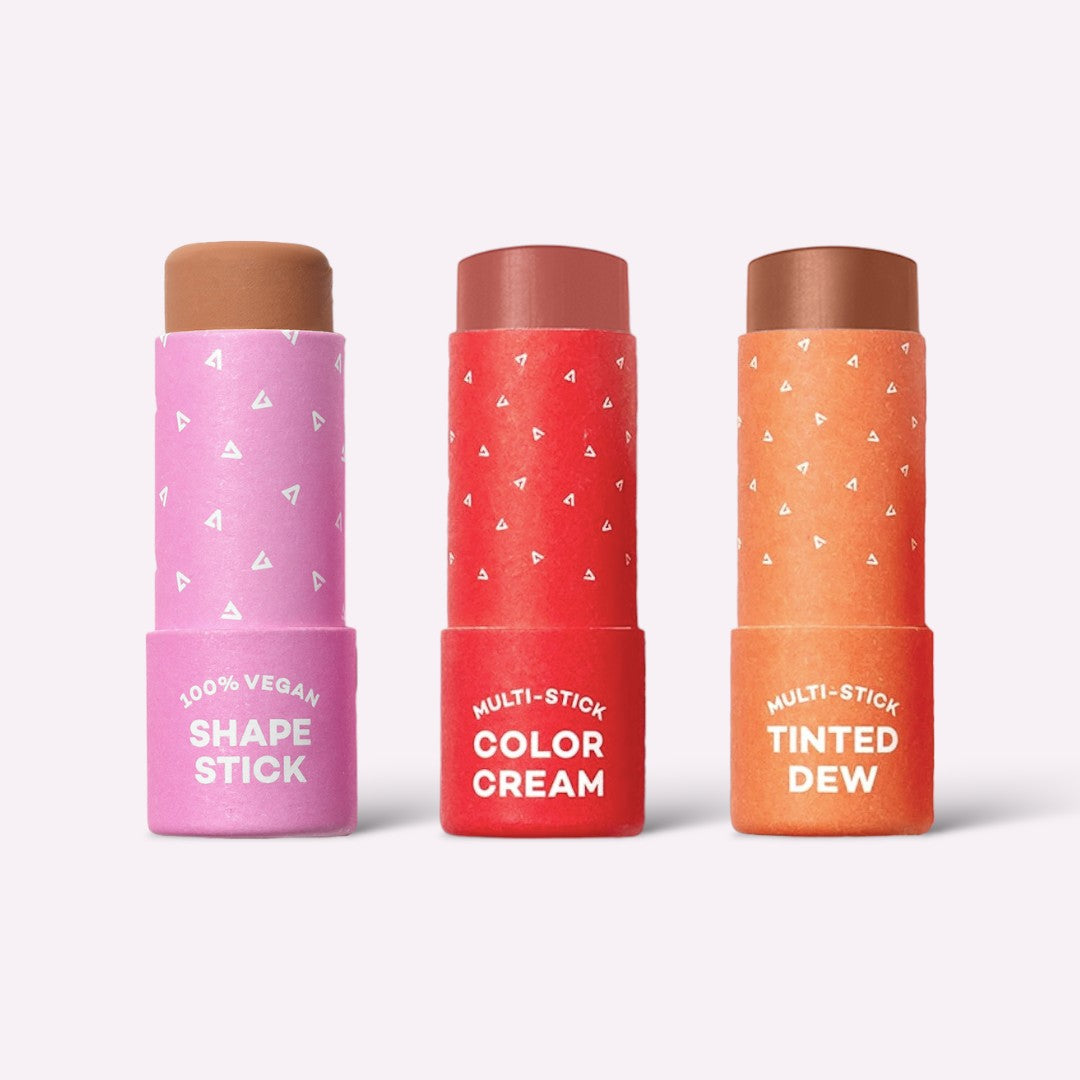
Let's be real: toxin free cosmetics are simply beauty products made without ingredients that have been linked to potential health issues like skin irritation, allergic reactions, or even hormonal disruptions. It’s about choosing makeup and skincare that puts your well-being first, right alongside getting the results you want.
What Are Toxin Free Cosmetics Really
Let’s cut through all the marketing hype. "Toxin-free" isn't some fleeting trend. It's a major shift in how we think about the products we put on our skin every single day.
Think of it this way: it’s like the difference between grabbing a highly processed snack and eating whole, organic food. One might give you a quick fix, but the other offers real, long-term nourishment without any of the questionable additives.
This whole movement is powered by a growing understanding that what goes on our bodies is just as important as what goes in them. We’re just not settling for vague promises anymore and are starting to demand real transparency and safety from the brands we buy from.
The Driving Force Behind Clean Beauty
So, why is everyone suddenly talking about this? It boils down to having more information at our fingertips and a collective push toward healthier living. We're learning more about what's actually in our favorite products and actively looking for safer options. This isn’t a niche thing anymore; it’s a full-blown movement that's shaking up the entire beauty industry.
The clean beauty market, which is all about toxin-free cosmetics made without harmful chemicals, is expected to grow by a whopping USD 7,654.5 million between 2025 and 2029. That kind of growth shows a huge global demand for products that are good for our skin without messing with our health.
The big idea behind toxin-free beauty is simple: you shouldn't have to pick between makeup that works and your well-being. High-performance products can—and should—be made with ingredients that are safe for both you and the planet.
More Than Just Ingredients
Beyond just skipping certain chemicals, the toxin-free philosophy usually comes with a bigger set of values. It's an approach that helps you make smarter, more mindful choices for your beauty routine. Getting a handle on the basics of non-toxic makeup is the perfect place to start.
This deeper commitment often includes:
- Ethical Sourcing: Making sure ingredients are gathered responsibly, without harming local communities or ecosystems.
- Cruelty-Free Practices: A non-negotiable promise to never test products or their ingredients on animals. Ever.
- Sustainable Packaging: Ditching single-use plastics for materials that are recyclable, compostable, or reusable—like the plastic-free packaging we use here at Axiology.
When it comes down to it, choosing toxin-free products means you're casting a vote with your wallet for a healthier, more honest, and more sustainable beauty industry.
Identifying Common Culprits in Your Makeup Bag
Diving into the world of toxin-free cosmetics can feel a bit like learning a new language. But instead of memorizing verb conjugations, you're learning to spot the ingredients that just don't belong in your daily routine. Think of this as your personal field guide to the sneaky culprits hiding in most makeup bags.
Reading an ingredient label shouldn't require a chemistry degree. The goal is to make it simple, turning that tiny print on the back of the bottle from a source of confusion into your best tool for making confident, healthy choices. Let’s break down some of the big ones you'll want to watch out for.
The Preservative Problem: Parabens
Parabens are a family of synthetic preservatives used to stop bacteria, mold, and yeast from growing in cosmetic products. You'll see them in everything from foundation to moisturizer, usually listed as methylparaben, propylparaben, or butylparaben.
Their job is to extend a product's shelf life, which sounds great on paper. The problem? There's a growing concern that parabens can mimic estrogen in the body. This potential for endocrine disruption is a major reason why so many people are looking for safer alternatives.
Parabens are effective at what they do, but their potential to interfere with the body's natural hormone systems is a significant reason why the toxin-free movement often puts them at the top of the "avoid" list.
For brands truly committed to clean formulas, skipping parabens is non-negotiable. Instead, you'll find natural preservatives like radish root ferment and grapefruit seed extract, or safer synthetics that keep products stable without the hormonal worries.
The Plasticizers: Phthalates
Phthalates (pronounced THAL-ates) are a group of chemicals used to make plastics more flexible. In cosmetics, they often help lotions absorb better and make fragrances stick around longer. But they are notoriously tricky to spot on a label.
Here's why: they're often tucked away in a product's "fragrance" or "parfum" mixture, which means companies don't have to list them individually. This is known as the "fragrance loophole," a huge blind spot for anyone trying to shop clean. If you see "fragrance" on a label without any mention of it coming from natural sources like essential oils, there's a good chance phthalates are in there.
The main issue with phthalates is their link to endocrine disruption. It’s this exact ambiguity that pushes transparent brands to either go fragrance-free or be upfront about using only phthalate-free, natural scents.
The Foaming Agents: Sulfates
Ever enjoyed that rich, bubbly lather from your shampoo or face wash? You've probably met sulfates. The most common ones are Sodium Lauryl Sulfate (SLS) and Sodium Laureth Sulfate (SLES). They’re surfactants, which means they grab onto both oil and water, making them super effective cleansers.
So, what's the issue? They can be a little too good at their job. Sulfates can strip the natural oils from your skin and hair, which can lead to:
- Dryness and Irritation: For anyone with sensitive skin, sulfates can be a one-way ticket to redness, itching, and dryness.
- A Weakened Skin Barrier: By removing those protective oils, sulfates can leave your skin’s moisture barrier compromised.
- Acne Flare-Ups: For some, the intense dryness can trigger the skin to overcompensate by producing even more oil, leading to clogged pores.
Thankfully, there are much gentler, plant-derived cleansers like coco-glucoside or decyl glucoside that get the job done without the harsh stripping effects.
The Mystery Mix: Synthetic Fragrances
"Fragrance," "parfum," "eau de toilette"—these innocent-looking terms on an ingredient list can actually be a catch-all for dozens, sometimes hundreds, of undisclosed chemicals. As we touched on with phthalates, this is a massive transparency problem in the beauty industry.
These unique scent recipes are protected as "trade secrets," but they're also a leading cause of allergic reactions like skin rashes, headaches, and breathing issues. The kicker is that many of the chemicals used to create these fragrances have never even been tested for safety in personal care products.
When a brand commits to being toxin-free, it means saying no to this kind of secrecy. At Axiology, for example, products get their scent from real ingredients like essential oils or fruit extracts—or they’re made totally fragrance-free. This way, you know exactly what you’re putting on your skin. It’s a simple shift that not only cuts down on potential irritation but also makes for a much more authentic, gentle experience.
Feeling a little overwhelmed by all the ingredients to watch out for? Don't be. Here's a quick-reference table to help you easily spot the common culprits and their safer, plant-based swaps. Think of it as your cheat sheet for clean beauty shopping.
Common Chemicals and Their Safer Alternatives
| Ingredient to Avoid | Commonly Found In | Potential Concerns | Safer Alternative |
|---|---|---|---|
| Parabens | Foundation, moisturizers, shampoo | Endocrine disruption, skin irritation | Grapefruit seed extract, radish root ferment, Vitamin E |
| Phthalates | Fragranced lotions, hairspray, nail polish | Endocrine disruption, reproductive health issues | Phthalate-free fragrances, essential oils, unscented products |
| Sulfates (SLS/SLES) | Shampoos, body wash, face cleansers | Skin/scalp irritation, stripping natural oils | Coco-glucoside, decyl glucoside, other plant-based surfactants |
| Synthetic Fragrance | Perfumes, lotions, nearly all scented products | Allergies, skin sensitivity, respiratory issues | Essential oils, fruit extracts, natural fragrances, unscented |
| Talc | Powders, eyeshadows, blushes | Potential contamination with asbestos, respiratory concerns | Arrowroot powder, rice powder, mica, corn starch |
| Formaldehyde-releasers | Nail polish, hair straightening products | Carcinogenic, skin allergies | Products formulated without these specific preservatives |
Learning to spot these ingredients is the first step. Once you get the hang of it, you'll be able to navigate ingredient lists with total confidence, knowing you're choosing products that are genuinely good for you and the planet.
How to Read Labels and Spot Greenwashing
Walking down the beauty aisle can feel like you need a special decoder ring. Brands love to toss around appealing words like "natural," "clean," and "eco-friendly" to grab your attention, but here’s the thing: these terms aren't regulated. This marketing trick, known as greenwashing, can make a product seem way healthier and more earth-friendly than it actually is.
The secret to seeing past the hype? Ignore the flashy claims on the front of the bottle and flip it over. The real story is always in the ingredient list and the official certification seals. Once you learn to focus on these, you can make choices based on facts, not just clever advertising.
This diagram breaks down a few of the most common chemical culprits often hiding behind those vague marketing terms.
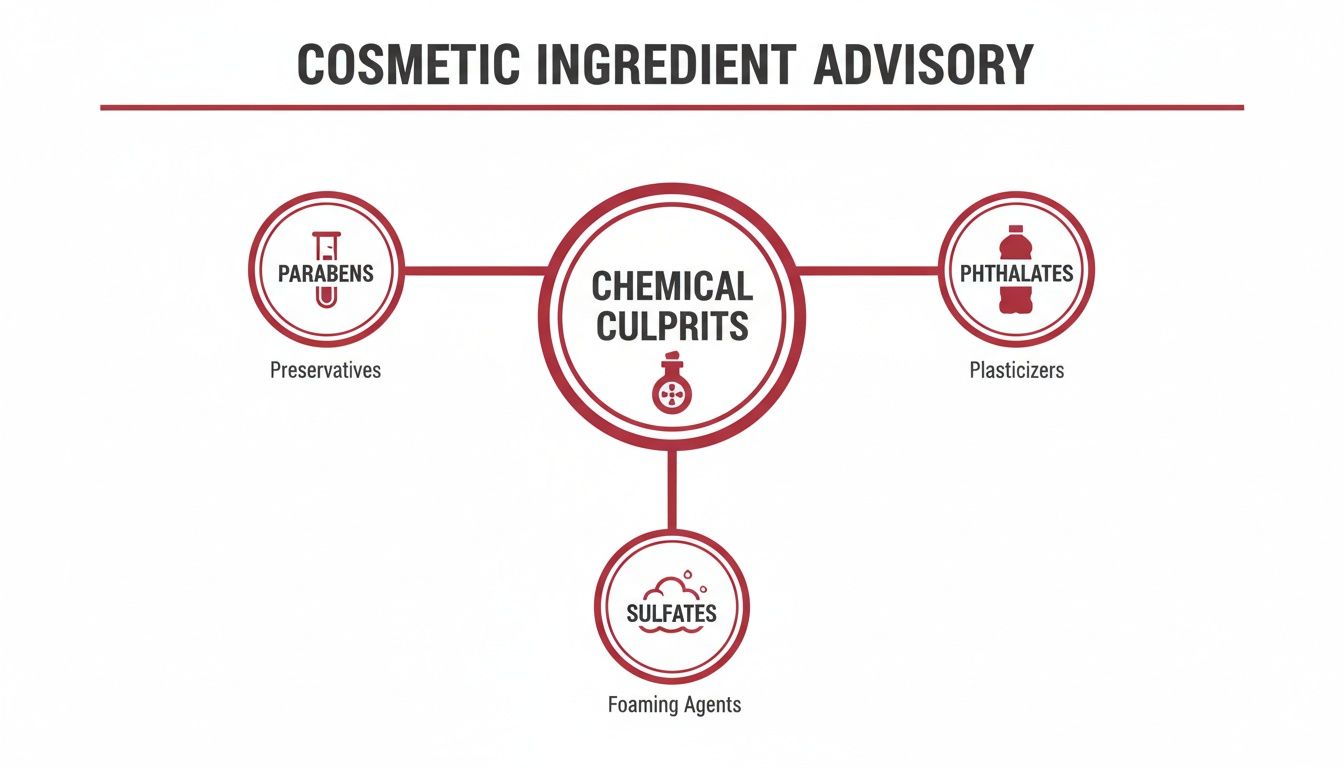
Getting familiar with key ingredients to avoid—like parabens, phthalates, and sulfates—means you can scan a label in seconds and spot potential red flags.
Look for Trustworthy Third-Party Certifications
The absolute best way to know if a brand is truly committed to being toxin-free is to look for third-party certifications. Think of these seals as a stamp of approval from an independent group that has done all the detective work for you, digging into the product's ingredients and how it's made.
Here are a few of the most respected seals to keep an eye out for:
- EWG VERIFIED™: This seal from the Environmental Working Group is a gold standard for health. It means the product avoids EWG's ingredients of concern, passes strict health standards, and is fully transparent.
- MADE SAFE®: This certification goes deep, confirming a product is made without over 6,500 substances known or suspected to harm human health, animals, or ecosystems. It's one of the most comprehensive seals you can find.
- Leaping Bunny Certified: This is the internationally recognized logo for cruelty-free cosmetics. It’s your guarantee that no new animal testing was used at any point in product development—not by the company, its labs, or its suppliers.
Spotting these logos on a package gives you instant peace of mind that you're picking a product that aligns with a clean, ethical philosophy.
Decoding Unregulated Marketing Terms
While certifications are your best friend, it's also smart to know which words are basically meaningless. Because there’s no legal definition for them in the cosmetics world, terms like "natural" or "clean" can be slapped on any product, no matter what’s inside.
A product labeled "natural" might have just one plant-based ingredient swimming in a sea of synthetic chemicals. And "dermatologist-tested"? That just means a dermatologist was involved at some stage; it says nothing about whether the product is actually safe or right for your skin.
The most powerful tool you have as a shopper is a healthy dose of skepticism. Always question vague claims and look for the proof—like a transparent ingredient list and credible certifications—to back them up.
This push for proof is making a real difference. A 2025 Global Cosmetics Industry survey found that 37% of consumers now prioritize 'no animal testing,' and 41% demand natural ingredients. It’s a clear signal that people are tired of the fluff and are forcing brands to validate their claims with real, third-party seals.
When you consciously choose to support companies that offer genuinely environmentally friendly beauty products, you’re helping build a more honest and responsible industry for everyone. By learning to spot greenwashing and recognize trustworthy certifications, you take back control of your beauty routine and make sure your choices truly reflect your values.
Building Your Toxin Free Routine Without the Overwhelm
Making the switch to toxin-free cosmetics can feel like a monster of a project. But it doesn't have to be. The real secret is to ditch the idea of perfection and just focus on small, steady progress. You don’t need to trash your entire makeup bag overnight.
A really simple (and sane) way to start is with just one product. Think about what you use every single day, something that covers a lot of skin. Your daily body lotion, foundation, or face wash? All perfect candidates for your first swap.
By replacing one thing at a time, you give yourself the breathing room to learn and adjust without the stress. This approach turns a massive task into a series of small, satisfying wins, making your transition to a cleaner routine totally manageable and sustainable.
Start with Smart Research
Once you've picked your first product to replace, it's time to find a worthy substitute. This is where a little digging goes a long, long way. Instead of just falling for flashy marketing claims, turn to trusted, independent resources to vet brands and products for you.
One of the most valuable tools out there is the EWG Skin Deep® database. It’s this huge online resource that rates tens of thousands of personal care products based on how safe their ingredients are. You can look up what you’re using now or search for cleaner alternatives, giving you a clear, science-backed picture of what’s truly good.
When you find a brand that looks promising, pop over to their website and look for a few tell-tale signs of a real toxin-free philosophy:
- Full Ingredient Transparency: Does the brand proudly show you a complete ingredient list for every single product? A commitment to transparency is a massive green flag.
- Clear "Free Of" Lists: Most genuinely clean brands will tell you exactly which common chemicals they skip, like parabens, phthalates, and synthetic fragrances.
- Third-Party Certifications: Look for credible seals like EWG Verified™, MADE SAFE®, or Leaping Bunny Certified to confirm they’re walking the talk on health and ethics.
What to Look for in a Toxin Free Brand
As you explore, you'll start to get a feel for what separates a truly clean brand from one just throwing around buzzwords. A brand that’s genuinely all-in on being toxin-free has a holistic approach that goes way beyond what’s inside the bottle.
For example, a brand like Axiology doesn’t just focus on vegan, cruelty-free ingredients—we’re obsessed with getting rid of plastic in our packaging, too. This shows a deeper commitment to both personal health and the health of the planet. Looking for these comprehensive values helps you find companies that truly line up with what you care about.
The goal is to find brands that don't make you choose between your health, your ethics, and the environment. The best toxin-free companies understand that these values are all connected and build their entire philosophy around them.
This thoughtful approach is thankfully becoming more common as we all demand higher standards. By supporting companies that put these values first, you're helping shape a better, more responsible beauty industry. If you need some recommendations, our guide to the best non-toxic makeup brands is a great place to discover companies leading the charge.
Your Step-by-Step Transition Plan
Ready to jump in? Here’s a simple, four-step plan to get you started on building your toxin-free routine. It’s designed to be gradual, educational, and completely stress-free.
- Choose Your First Swap: Pick one product you use every day. A leave-on product like a moisturizer or foundation is a great starting point, since its ingredients hang out on your skin for hours.
- Research and Replace: Use tools like the EWG Skin Deep® database to find a highly-rated, clean alternative. Read some reviews and choose a product that fits your skin type and budget.
- Evaluate and Learn: After you’ve used your new product for a few weeks, check in with yourself. Do you love the results? How does your skin feel? This little bit of experience will make your next swap even easier.
- Repeat the Process: When you run out of another one of your old products, just repeat the cycle. Over time, your collection of toxin-free cosmetics will grow naturally, without a huge upfront cost or that feeling of being totally overwhelmed.
The Benefits for Your Skin and the Environment
When you choose toxin-free cosmetics, you’re creating a positive ripple effect that goes way beyond your makeup bag. Every product you pick is a vote—not just for your own well-being, but for the health of our planet, too. It’s a simple, daily choice that connects your personal routine to a much bigger global picture.
Think of your skin as a garden. When you use products packed with harsh stuff like sulfates or synthetic fragrances, it’s like dousing that garden with pesticides. Sure, you might get a quick fix, but you’re also messing up its delicate ecosystem, which can lead to irritation, dryness, and a weaker natural defense system.
Making the switch to toxin-free cosmetics means you’re choosing to nurture that garden with gentle, nourishing ingredients instead. This one change can lead to a calmer, more balanced complexion and a much stronger skin barrier.
Calmer Skin and a Stronger Barrier
For anyone dealing with sensitive or acne-prone skin, cutting out potential irritants can be a total game-changer. Harsh chemicals often strip the skin of its natural oils, kicking off a frustrating cycle of dryness and oil overproduction that leads to breakouts and redness.
Clean formulas, on the other hand, are designed to work with your skin. They support its natural functions instead of fighting against them, helping to bring back balance and resilience over time.
A healthy skin barrier is your body's first line of defense. Toxin-free products help fortify this barrier, making your skin less susceptible to environmental stressors and irritation.
This shift is a huge reason why the vegan cosmetics market is booming—it’s projected to hit USD 32.56 billion by 2032. People are actively looking for natural, plant-based ingredients that hydrate and nourish without causing issues. They're connecting the dots between their health and the products they use every day. You can discover more insights about this consumer-driven trend toward safer, more sustainable options.
A Lighter Footprint on the Planet
The good stuff doesn’t stop at your skin. Many conventional cosmetics contain ingredients that cause some serious environmental harm once they get washed down the drain.
Just think about the ingredients that don't simply disappear. Chemical UV filters in some sunscreens, for example, have been linked to bleaching coral reefs. And those tiny plastic microbeads once used as exfoliants? They pollute our waterways and harm marine life. These substances build up in ecosystems, causing long-term damage.
The toxin-free beauty movement champions a much more responsible approach. This includes:
- Biodegradable Formulas: Choosing ingredients that break down safely in the environment without leaving nasty residues behind.
- Sustainable Sourcing: Prioritizing raw materials that are harvested ethically and responsibly, which protects biodiversity and supports local communities.
- Eco-Conscious Packaging: A huge emphasis on cutting down waste by using materials that are recyclable, compostable, or reusable—like Axiology’s commitment to being totally plastic-free.
By consciously choosing products with clean formulas and sustainable practices, you’re directly contributing to a healthier planet. It’s a pretty powerful example of how small, everyday choices can add up to create a massive, positive impact for a greener future.
Your Top Questions About Toxin-Free Cosmetics, Answered
Dipping your toes into the world of toxin-free beauty can feel like learning a new language. You’re unlearning old habits and trying to figure out what’s actually good for you versus what’s just clever marketing. It brings up a lot of questions.
Don't worry, we've got you. Think of this as your personal cheat sheet for navigating clean beauty. We're tackling the biggest myths head-on to help you feel totally confident in your choices.
Are Toxin-Free Cosmetics as Effective as Conventional Products?
Yes! Let's just put this myth to bed right now. The clean beauty world has seriously grown up. Gone are the days of patchy formulas and pigments that faded in an hour.
Today’s toxin-free products are packed with high-performance botanicals and innovative, safe synthetics that deliver incredible results. Brands are pouring tons of resources into R&D to create formulas that not only rival but often blow their conventional counterparts out of the water.
You’ll find powerful, clean ingredients that are now staples for a reason:
- Bakuchiol: A plant-based powerhouse that works like a natural retinol alternative, smoothing fine lines and texture without the usual irritation.
- Hyaluronic Acid: This miracle hydrator, often derived from fermentation, holds up to 1,000 times its weight in water for plump, dewy skin.
- Stabilized Vitamin C: A brilliant antioxidant that brightens, fades dark spots, and helps boost collagen for firmer skin.
The real difference? Toxin-free cosmetics get you there without cheap fillers or questionable chemicals. They focus on concentrated, skin-loving ingredients. So many people find their skin actually gets healthier over time because it’s not constantly fighting off irritants.
Is "Natural" or "Organic" the Same as "Toxin-Free"?
This is a fantastic question, and the answer is a hard no. It’s one of the most confusing parts of shopping for cleaner products because brands often use these terms interchangeably. Let's clear it up.
"Natural" is basically the wild west of beauty marketing—it's a completely unregulated term. A product can slap "natural" on the label with just one plant ingredient swimming in a sea of synthetic preservatives. It gives you zero guarantee of safety.
"Organic" has more teeth, especially if it has a real certification like the USDA Organic seal. This means the agricultural ingredients were grown without synthetic pesticides. But, the final product can still contain other non-toxic synthetic ingredients that aren't organic.
"Toxin-free" is the goal. It means the entire, finished product was formulated without any ingredients linked to health risks. This is key, because some natural things can be irritating or toxic, while some lab-made ingredients are perfectly safe.
The sweet spot is finding a product that checks all the right boxes: made with high-quality natural and organic ingredients and verified as free from harmful stuff by a source you trust.
Does Switching to Toxin-Free Cosmetics Cost a Lot More?
It’s true that some clean beauty comes with a luxury price tag, but going toxin-free is totally possible on any budget. The market has exploded, and you can now find amazing, affordable options pretty much everywhere—from drugstores to online shops.
Plus, you often get more bang for your buck in the long run. Toxin-free products are usually more concentrated with fewer filler ingredients, meaning a little goes a long way. That bottle of serum or foundation might just last you longer.
Think of it as an investment in your well-being. By skipping ingredients known to cause irritation or allergic reactions, you might save money on calming treatments or dermatologist visits down the road. The best way to start? Just swap out one thing you use every single day, like your lip balm or foundation, for a cleaner option. Build from there.
How Long Does It Take to See a Difference After Switching?
This really depends on your skin and what you were using before. Some people see an almost immediate change—less redness, fewer random breakouts—within the first week. This happens a lot if your skin was quietly freaking out over synthetic fragrances or harsh sulfates in your old routine.
For others, the glow-up is more gradual. Your skin has a natural renewal cycle that takes about 28 to 40 days to bring fresh, new cells to the surface. So, giving your new routine at least a full month is the best way to really see what it can do for your skin's clarity and texture.
People sometimes call this a "skin detox." Your skin is basically recalibrating and learning to thrive without the chemicals it was used to. Patience is your friend here. You’re giving your skin the support it needs to do its own thing and heal itself.
Ready to start your journey with beauty that’s kind to both your skin and the planet? Axiology creates high-performance, toxin-free cosmetics that are always vegan, cruelty-free, and 100% plastic-free. Explore our collection of multi-use makeup to simplify your routine without compromising on your values. Discover clean beauty at Axiology.