When you hear "toxin free makeup," think of it as clean eating for your skin. It’s a simple, conscious choice to use beauty products made without ingredients that have been linked to potential health concerns, like parabens or phthalates. It's all about bringing more transparency and wellness into your daily routine.
What Toxin Free Makeup Actually Means
Navigating the beauty aisle can feel like trying to decipher a secret code. Words like "natural," "green," and "clean" get thrown around a lot, often meaning different things to different brands. "Toxin free makeup," however, has a sharper focus. It’s about intentionally avoiding specific chemical ingredients that have raised red flags for anything from skin irritation to hormone disruption.
This isn't about creating fear; it's about empowerment. It’s a nudge to look past the pretty packaging and really understand what you’re putting on your skin every day. Imagine a chef who insists on fresh, whole ingredients instead of highly processed ones. That’s the vibe. The goal is to nourish your body, not expose it to stuff it doesn’t need.
The Core Idea: Ingredient Awareness
The whole philosophy behind toxin-free beauty is pretty straightforward: prioritize ingredients that are known to be safe and beneficial while skipping the questionable ones. This isn't just a niche idea anymore—it's a movement that's gaining serious momentum as more of us demand honesty from the brands we buy from.
And the industry is listening. The global clean beauty market, which is really built on these toxin-free principles, was valued at a huge USD 8.25 billion in 2023. It’s expected to shoot up to USD 21.29 billion by 2030, all because people are actively looking for products that don't contain controversial chemicals like parabens, phthalates, and sulfates. You can see more data on this growth over at stellarmr.com.
The goal isn’t about achieving some impossible standard of 100% purity. It's about reducing your overall "toxic load." By mindfully choosing products with cleaner ingredient lists, you minimize your daily exposure to potentially iffy substances, which helps your body's natural detoxification systems do their job more easily.
To give you a clearer picture, here’s a quick breakdown of the core principles driving the toxin free philosophy.
Core Principles of Toxin Free Makeup
| Principle | What It Means for Your Makeup Routine |
|---|---|
| Ingredient Scrutiny | Actively avoiding ingredients with known or suspected health risks (e.g., parabens, phthalates). |
| Transparency | Brands are open and honest about every single ingredient in their formulas. No hidden surprises. |
| Safety Over Origin | An ingredient's safety is more important than whether it's "natural" or "synthetic." |
| Holistic Health | Recognizing that what you put on your skin can impact your overall well-being, not just your appearance. |
Ultimately, it's about making informed choices that align with a healthier lifestyle, from the food you eat to the lipstick you wear.
Natural vs. Safe: A Key Distinction
Here’s one of the most important things to get your head around: natural does not automatically mean safe. Poison ivy is 100% natural, but you definitely don’t want it in your concealer. On the flip side, not all synthetic ingredients are bad guys; some lab-made compounds are incredibly effective and perfectly safe for your skin.
Toxin free makeup zeroes in on the safety and impact of every single ingredient, no matter where it came from. It's about looking at each component and asking, "What effect could this have on my health?" This is why getting a handle on the basics of natural makeup ingredients is such a great starting point. It’s the first step on a journey toward making choices that feel good, inside and out.
Decoding Labels and Finding Safe Alternatives
Stepping into the world of toxin-free makeup means becoming a bit of a label detective. But don't worry, this isn't about memorizing complex chemical names or getting overwhelmed by long ingredient lists.
It’s about learning to spot a few key players so you can make confident, informed choices. Think of it like learning to read a nutrition label—once you know what to look for, the whole process becomes surprisingly simple and empowering.
The real heart of toxin-free makeup is a commitment to transparency, wellness, and informed choices. It’s about moving beyond marketing claims to what's actually in the bottle.
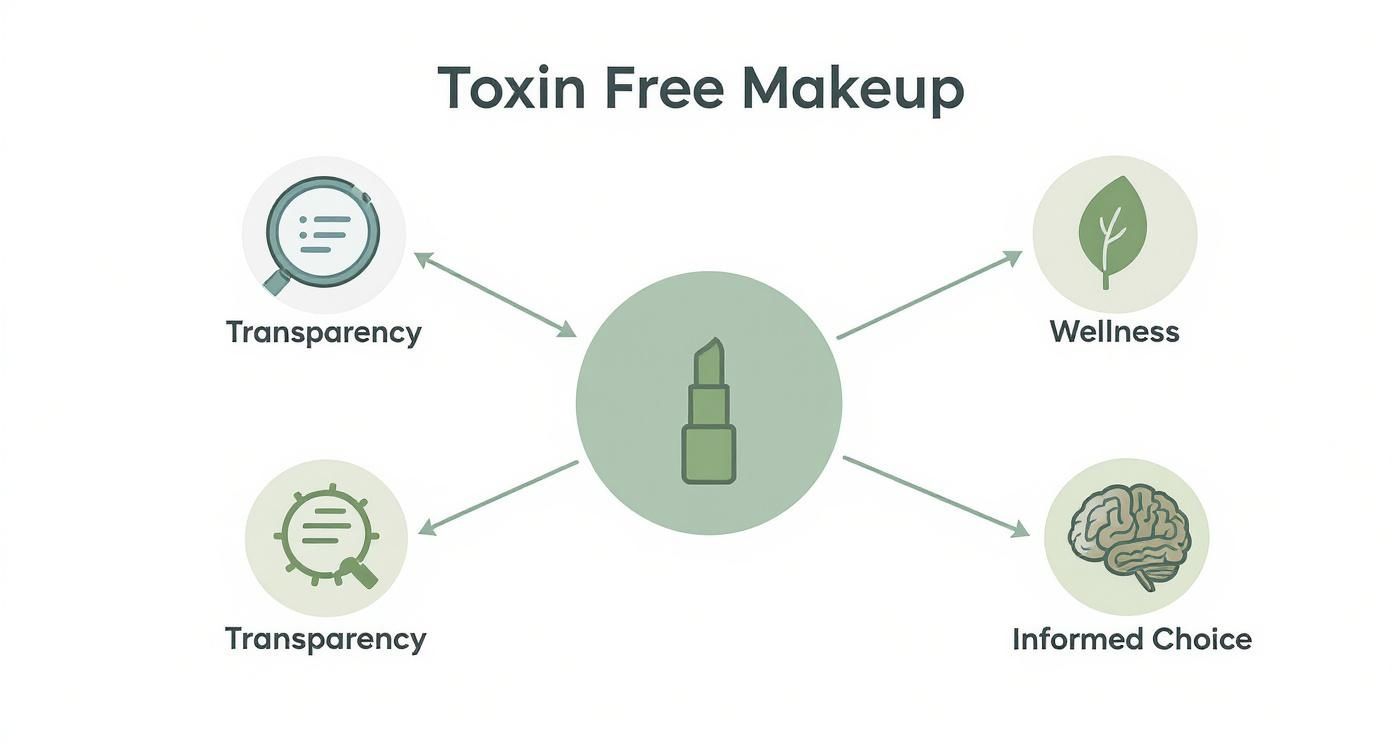
This really breaks it down: true toxin-free beauty is built on these three pillars, helping you choose products that support both your health and your values.
Common Ingredients to Avoid and Their Safer Swaps
Instead of just rattling off a list of chemicals, let’s look at some of the most common ingredients to watch out for and, more importantly, the wonderful, effective alternatives that clean beauty brands are using instead.
| Ingredient to Avoid | Potential Concern | Example of a Safer Alternative |
|---|---|---|
| Parabens | Used as preservatives but can mimic estrogen in the body. | Natural antioxidants like Vitamin E (tocopherol) and plant-derived options like radish root ferment filtrate. |
| Phthalates | Often hidden under "fragrance," these make scents last longer but are linked to endocrine disruption. | Pure essential oils, botanical extracts, and natural fruit essences for a subtle, clean scent. |
| Coal Tar Dyes | Petroleum-derived colorants (often listed as "CI" plus a number) that can be skin irritants. | Mineral pigments like iron oxides and mica; plant-based pigments from fruits and vegetables. |
| Heavy Metals | Contaminants like lead sometimes found in conventional colorants. | Strictly sourced and tested mineral and plant-based pigments to ensure purity and safety. |
| Talc | Can sometimes be contaminated with asbestos, a known carcinogen. | Absorbent and silky alternatives like corn starch, rice powder, or arrowroot powder. |
| Sulfates (SLS & SLES) | Harsh foaming agents that can strip the skin's natural moisture barrier. | Gentle, coconut-based cleansers and surfactants that clean without causing irritation. |
| Chemical Sunscreens | Ingredients like oxybenzone that absorb UV rays but are linked to hormone disruption and reef damage. | Mineral sunscreens like zinc oxide and titanium dioxide that physically block UV rays. |
This isn't an exhaustive list, but it covers the big ones you'll see most often. Swapping these out makes a huge difference.
The challenge with many of these ingredients is not just their presence, but a shocking lack of transparency. For instance, PFAS, often called "forever chemicals," can show up in cosmetics without being explicitly listed. This is why understanding the importance of PFAS and supply chain transparency is so crucial for any conscious consumer.
Your Quick-Reference Ingredient Checklist
When you're scanning a label, just keep an eye out for these general categories. Pretty soon, you'll start to recognize them instantly.
- Parabens: Look for anything ending in "-paraben," like methylparaben or propylparaben.
- "Fragrance" or "Parfum": This catch-all term can hide phthalates. Opt for brands that are upfront about how they scent their products.
- Formaldehyde-releasers: These are potent allergens often found in mascaras and eyeliners.
- Chemical Sunscreens: Ingredients like oxybenzone and avobenzone absorb UV rays. If you’re cleaning up your makeup, it makes sense to extend that to your other products, too. For example, understanding the difference between mineral and chemical sunscreens is a great next step for your clean beauty journey.
The goal isn't perfection or fear. It’s about gradually reducing your exposure to questionable ingredients by choosing products formulated with your health and well-being as the top priority. Every time you swap an old product for a cleaner alternative, you're making a positive choice for your body.
How to Spot Genuinely Clean Products
Navigating the world of toxin-free makeup can sometimes feel like trying to find a quiet street in a bustling city. With buzzwords like "natural" and "eco-friendly" splashed across beautiful packaging, how can you tell which products are the real deal and which are just clever marketing?
The secret isn’t on the front of the box. It’s hidden in plain sight on the back.
Your most powerful tool is the ingredient list, often labeled as the INCI (International Nomenclature of Cosmetic Ingredients). This isn't just a jumble of scientific terms—it's the absolute source of truth for any product. No matter what claims a brand makes, the INCI list never lies.

Reading an INCI List The Right Way
Understanding an INCI list is much simpler than it looks. There’s one fundamental rule that unlocks everything: ingredients are listed in order of concentration, from highest to lowest. Easy, right?
This means the first five or six ingredients typically make up the bulk of the formula. If you see nourishing oils, butters, and botanical extracts at the top, that's a fantastic sign. On the flip side, if you spot an ingredient you’re trying to avoid near the beginning, you know it's a major player in that product.
Think of it like a recipe. If the first ingredient is sugar, you know it's a dessert, not a health food. Similarly, if the first few ingredients on your foundation are water, coconut oil, and shea butter, you know its base is hydrating and plant-derived.
Certifications: Your Trusted Guides
While reading labels is empowering, you don't have to do all the detective work alone. Think of third-party certifications as your trusted allies—they give you a quick visual cue that a brand has met rigorous standards for safety and ethics, going way beyond a brand's own promises.
Here are a few of the most respected seals to look for:
- EWG VERIFIED™: This seal from the Environmental Working Group means a product avoids EWG's ingredients of concern, provides full transparency, and follows good manufacturing practices. It’s pretty much the gold standard for health and safety.
- Leaping Bunny Certified: This is the internationally recognized standard for cruelty-free products. It's a guarantee that no animal testing was used in any phase of product development—not by the company, its labs, or its suppliers.
- Certified Vegan: This logo ensures a product contains zero animal ingredients or animal-derived byproducts. This is a big deal, especially as the demand for vegan cosmetics—which is closely linked to the toxin-free movement—explodes.
In fact, the global vegan cosmetics market is projected to reach USD 71.51 billion by 2025. This shows a massive consumer shift toward products that are kinder to animals and often skip the harsh chemicals.
Beyond the Seals: Brand Ethos Matters
A certification is a fantastic shortcut, but it's also smart to look at a brand's overall philosophy. The true leaders in the toxin-free makeup space are transparent about their entire process, from how they source ingredients to their packaging choices.
They’re usually happy to provide detailed info on their websites and answer customer questions about their formulas. When you're searching for your next favorite lipstick or foundation, check out what other clean beauty advocates recommend. Our own guide to the best clean beauty brands is a great place to start finding companies that truly live up to their promises.
Ultimately, spotting genuinely clean products is a skill you build over time. Start by flipping the box over to the INCI list, keep an eye out for trusted certifications, and support brands that value transparency. With these tools in your back pocket, you can confidently choose makeup that aligns with your health and your values.
Building Your Toxin-Free Routine Without the Overwhelm
The idea of a complete makeup overhaul can feel... intense. Visions of tossing every single product into the bin and starting from scratch with a massive price tag are enough to make anyone second-guess the whole thing. But here's the secret: switching your routine doesn't have to be stressful, expensive, or happen all at once.
The key is to take it slow. Think of it less like a dramatic, overnight makeover and more like tending to a garden—you add one healthy, happy plant at a time. This approach is not only way gentler on your bank account, but it also gives you the breathing room to actually figure out what works for you and your skin.
Prioritize for Maximum Impact
If you want to get the most bang for your buck right away, start with the products that hang out on your skin the longest. These "leave-on" goodies get absorbed over hours, making them the perfect candidates for your first clean beauty swap.
This simple strategy means you’re cutting down your daily exposure where it counts the most, right from day one.
- Foundation and Concealer: These guys often cover a lot of real estate on your face and stick around all day. Swapping to a clean formula here is a huge first step.
- Lipstick and Lip Balm: Let's be real, you end up eating a little bit of whatever you put on your lips. Choosing a toxin-free option for your pout is a total no-brainer.
- Moisturizer and Serums: Okay, technically skincare, but these are the base camp for your makeup and stay on for the long haul. They’re definitely high-priority items to switch out.
Products that you wash off in a minute, like cleansers or makeup removers, can wait. Focus your energy (and your budget) on the stuff that lingers.
Adopt the One-In, One-Out Rule
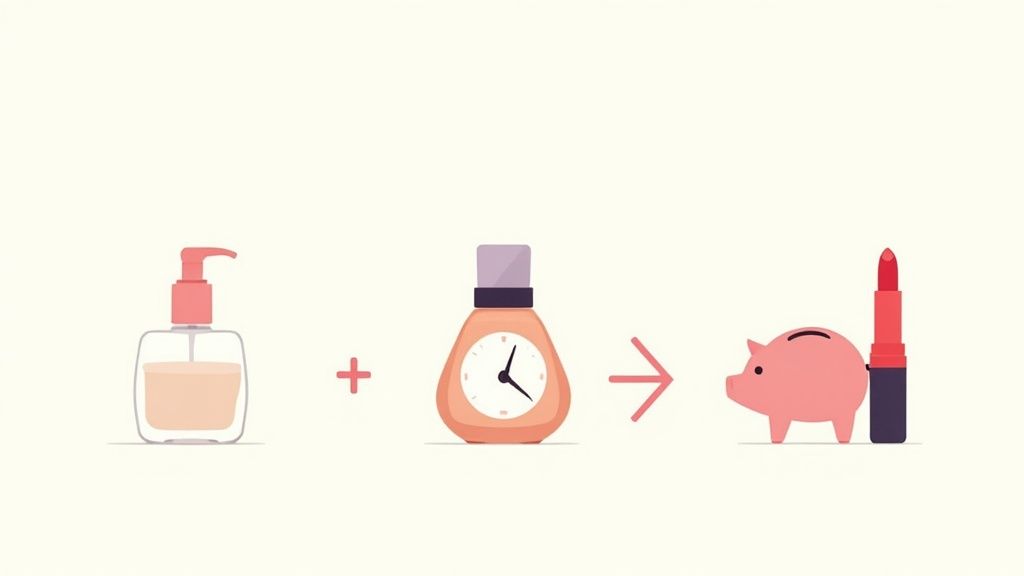
Here’s the most budget-friendly, no-waste tip for building your new collection: don’t throw anything out until it’s empty. When your old mascara finally gives up the ghost, replace it with a clean one. Hit the pan on your blush? Time to find a toxin-free alternative you love.
This method completely avoids waste and spreads out the cost, making the whole transition feel easy and manageable. It turns what could be a pricey, stressful project into a series of small, intentional upgrades.
Going toxin-free isn’t about hitting some impossible standard of perfection overnight. The real goal is just to lower your overall toxic load by making smarter swaps whenever you can. By replacing products as they run out, you avoid overwhelming your system and your wallet.
This patient, one-at-a-time approach also gives you the space to do your homework and find the perfect clean replacement, instead of just grabbing something in a panic.
Find Your Perfect Toxin-Free Makeup Match
As you start replacing items, you get the perfect chance to find formulas that are truly made for you. Whether you have sensitive skin, want products that align with your values, or just love things that do more with less, the world of clean beauty has you covered.
Here’s a simple game plan for finding products you'll adore:
- Get to Know Your Skin: Is your skin oily, dry, or a bit of a drama queen? Look for brands that create products specifically for your skin type. If your skin is on the dry side, for instance, look for foundations with hydrating helpers like hyaluronic acid or squalane.
- Look for Multi-Use Heroes: To simplify your routine and save some cash, embrace multitasking products. A great lip-to-cheek stick can be your blush, lipstick, and even a quick wash of eyeshadow. This kind of minimalist thinking is the heart and soul of sustainable beauty.
- Start with Samples: So many clean beauty brands offer sample sizes or trial kits. It’s a genius way to test drive a product’s shade, feel, and performance before you commit to the full-size version.
An Example of Toxin-Free Beauty in Action
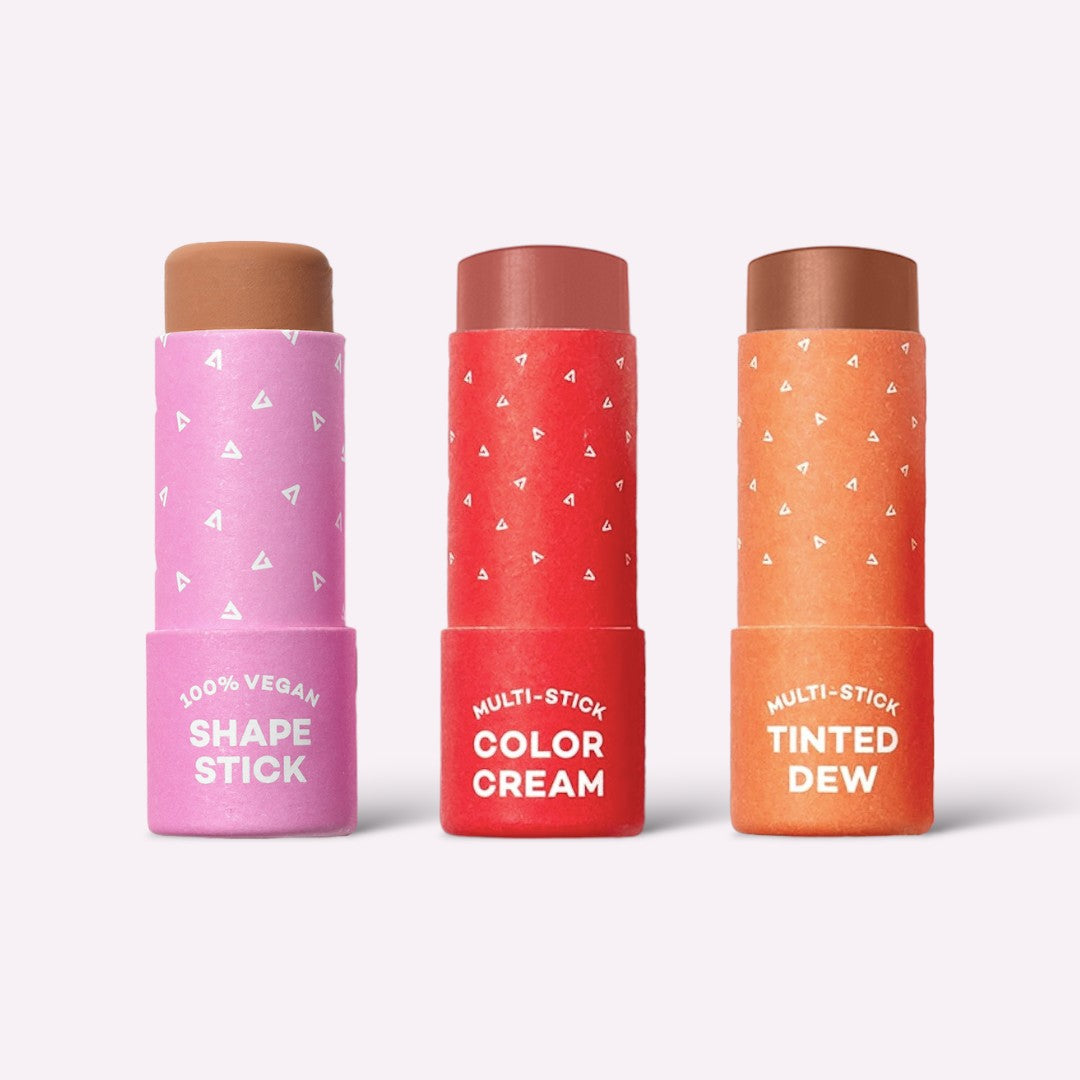
A fantastic real-world example of this whole vibe is Axiology. The brand was literally founded on the idea that makeup should be kind to our bodies and our planet. Their entire lineup is vegan, cruelty-free, and famously plastic-free, using super cool paper and aluminum packaging instead.
Their multi-use Color Cream Crayons are the perfect illustration of the "less is more" philosophy. You can use these crayons on your lips, cheeks, and eyes, which means you can create a whole look with just one little eco-friendly product. They’re the perfect example of how toxin-free makeup can be high-performing and incredibly mindful—an ideal starting point for anyone building a clean routine from the ground up. By choosing brands like Axiology, you’re not just cleaning up your makeup bag; you’re voting for a better, more sustainable beauty industry.
Busting Common Myths About Clean Makeup
Dipping your toes into the world of toxin-free makeup is exciting, but let’s be real—it often comes with a healthy dose of skepticism. Misinformation can make the switch feel like a risky leap. It’s time to clear the air and tackle some of the biggest myths head-on.
A lot of these ideas come from the early days of natural beauty, when the formulas were, frankly, not great. But the industry has come a long way since then. Green chemistry has totally changed the game, giving us products that are both safe and seriously effective. Let’s separate the outdated fiction from the modern facts.
Myth 1: It Doesn't Perform as Well
This is probably the biggest and most tired myth out there. The idea that clean makeup just can't compete with the pigment, staying power, or flawless finish of conventional brands is a total holdover from a bygone era. We're so past the days of chalky mineral powders and lipsticks that disappeared before you finished your coffee.
Today’s toxin-free brands are using incredible, high-performance botanicals and safe, lab-perfected minerals. They’re delivering rich, vibrant pigments from things like fruit and earth, long-lasting formulas powered by natural waxes and oils, and foundations that melt right into your skin.
Modern toxin-free makeup isn't about sacrificing performance; it's about achieving it differently. Brands are pouring money into research to find plant-based alternatives that give you professional-level results without the questionable chemical baggage. You really don't need harsh additives for makeup that wows.
Myth 2: It's Always Too Expensive
Sure, you can find some seriously luxe clean beauty brands, but the market has exploded to include a whole range of price points. Thinking a toxin-free routine is only for the super-wealthy just isn't true anymore. The demand for cleaner options has created more competition and made these products way more accessible.
You can now find fantastic, affordable clean makeup at your local drugstore and all over the internet. Plus, a lot of brands in the toxin-free space are all about multi-use products.
- Multi-Use Products: Think about things like Axiology's Color Cream Crayons. They work as lipstick, blush, and eyeshadow, which means you buy fewer products and save money in the long run.
- Direct-to-Consumer Savings: A ton of online brands skip the retail middleman, passing those savings straight to you.
- Focus on Quality: Sometimes, investing in a slightly pricier but higher-quality clean product means a little goes a long way. It often outlasts a cheaper, filler-heavy alternative.
If you adopt a "one-in, one-out" strategy for replacing products and focus on versatile staples, a clean routine can easily be as budget-friendly as your old one.
Myth 3: If It's on a Shelf, It Must Be Safe
This is a really dangerous assumption. The cosmetics industry, especially in the United States, is famously under-regulated. Unlike food or drugs, makeup products and their ingredients do not need FDA premarket approval before hitting store shelves.
This huge regulatory gap puts the responsibility right on our shoulders as consumers to be our own advocates. A product can be legally sold in major retail stores even if it contains ingredients linked to skin irritation, hormone disruption, or other health issues.
Seeing a product on a shelf is a sign of its marketability, not its safety. This is exactly why the toxin-free makeup movement even exists—it was born from people demanding more transparency and accountability from brands. Choosing certified, transparent brands isn't just a trend; it's a necessary step to make sure the products you use every single day are actually made with your well-being in mind.
Your Toxin-Free Makeup Questions Answered
Diving into a cleaner beauty routine is exciting, but it’s totally normal for questions to pop up along the way. Think of this as your personal cheat sheet. We’ve rounded up the questions we hear most often to give you clear, simple answers so you can feel confident on your journey.
Does Toxin-Free Mean the Same as Organic or Natural?
Not quite, and this is a big one. Getting the difference is your secret weapon to becoming a smarter shopper. Instead of thinking of them as the same thing, picture them as overlapping circles. Each label shines a light on a different part of what’s in the bottle.
- Organic: This is all about how the ingredients were farmed. If an ingredient is “organic,” it was grown without synthetic pesticides or fertilizers. It’s a legally regulated term, so it has some real weight behind it.
- Natural: Honestly, this is a super broad marketing term that isn’t really regulated. It suggests that ingredients come from nature, but it’s no guarantee they’re safe, unprocessed, or effective.
- Toxin-Free: This is the most specific of the bunch. It’s all about what’s left out of the product—specifically, that long list of ingredients that are known or suspected to be harmful to our health.
So, a product can be toxin-free without being fully organic, and something marketed as "natural" could still contain a naturally-derived ingredient that irritates your skin. At the end of the day, toxin-free makeup puts safety and health first.
How Can I Find Clean Makeup That Matches My Skin Tone?
This is such a great and important question. It’s true that in the past, clean beauty had a pretty disappointing track record when it came to shade ranges. But thankfully, the industry has come a long, long way. Finding your perfect match in toxin-free makeup is easier now than it has ever been.
The trick is to look for brands that truly care about inclusivity—not just as a buzzword, but as a core part of who they are. Lots of modern clean beauty companies now offer amazing foundation and concealer lines designed for a huge spectrum of skin tones.
Pro tip: Look for brands that offer sample kits or trial sizes. This is a game-changer. It lets you test out shades at home, in different lighting, without having to commit to a full-size product right away. No more guessing games.
Will Toxin-Free Makeup Expire Faster?
Often, yes—and that’s actually a good thing! Think about it: conventional makeup can sit on a shelf for years because it's loaded with heavy-duty synthetic preservatives like parabens. Toxin-free formulas skip those harsh chemicals and use gentler, natural alternatives like vitamin E or grapefruit seed extract instead.
This means your product is fresher, but it also means it won’t last forever. To keep track, just look for the Period After Opening (PAO) symbol on the packaging. It’s that little icon of an open jar with a number and an "M" inside (like "6M" for six months). This tells you exactly how long the product is good for once it's open. Storing your makeup in a cool, dark spot will also help it stay fresh.
Is Switching to a Toxin-Free Routine More Expensive?
It really doesn't have to be. Sure, there are some super luxe, high-end clean beauty brands out there, but the massive demand for toxin-free makeup means there are now tons of awesome, affordable options you can find at drugstores and online. You can absolutely build a beautiful, clean routine without blowing your budget.
Here are a few ways to do it smartly:
- Go for Multi-Use Products: Start with hardworking items that do more than one job, like a lip-and-cheek stick. It’s the minimalist approach—fewer products to buy, and a simpler routine.
- Shop Directly from Brands: Many clean brands sell straight from their websites. This often cuts out the middleman retail markup, so they can pass those savings on to you.
- Replace As You Go: Don't feel like you need to overhaul your entire makeup bag overnight. Just use up what you have, and as each product runs out, replace it with a cleaner option. It’s way gentler on your wallet and cuts down on waste.
Making the switch to a safer, cleaner makeup routine can be totally achievable and affordable. It's all about being a little strategic.
For a routine that’s simple, sustainable, and always toxin-free, explore the plastic-free, multi-use products from Axiology. Discover your new favorites at https://www.axiologybeauty.com.