The best foundations for combination skin are true chameleons. They offer buildable coverage, a soft natural or satin finish, and contain ingredients that manage a shiny T-zone while also hydrating dry cheeks. This is the secret to ending that frustrating makeup meltdown that happens halfway through the day.
The Balancing Act of Combination Skin Makeup
If you have combination skin, you know the struggle. Finding the right foundation can feel like an impossible mission. It’s a constant tightrope walk between controlling an oily T-zone that loves the spotlight and soothing dry cheeks that are practically begging for moisture.
One foundation might keep oil at bay but cling to every dry patch, making them look worse. Another might give your cheeks a gorgeous, hydrated glow but have your forehead looking like an oil slick by noon. This is the classic combination skin conundrum: your face has completely different needs in different areas.
The dream is to find a foundation that just gets it. It needs to be a master multitasker, smart enough to mattify the shiny spots without sucking the life out of the drier parts of your face. Think of it as an intuitive formula that knows exactly what each zone needs to look balanced and fresh all day long.
Why Your Skin Needs a Specialized Approach
A one-size-fits-all foundation just won't cut it. The goal is a seamless, unified finish, and that requires a product specifically designed for the job.
Here’s a quick breakdown of what makes a great combination skin foundation so special:
- Hydration Without the Weight: It provides moisture to dry patches using light-as-air ingredients like hyaluronic acid, so your skin never feels tight or flaky.
- Oil Control Without the Dryness: It gently absorbs extra oil in the T-zone with ingredients like silica, but avoids that harsh, chalky feeling some mattifying formulas can leave behind.
- A Natural, Skin-Like Finish: The best formulas create a satin or natural finish that looks like real skin—not too dewy, not too flat. Just right.
This need for smarter, balanced products is making waves in the beauty world. The global market for foundation was valued around USD 12.5 billion in 2023 and is expected to jump to USD 20.8 billion by 2032, with formulas for tricky skin types like combination skin leading the charge.
To give you a quick reference, here's a summary of what to keep an eye out for.
Key Features of a Foundation for Combination Skin
This table breaks down the essential features your foundation should have to keep your combination skin happy and balanced.
| Feature | Why It Matters for Combination Skin | What to Look For On The Label |
|---|---|---|
| Buildable Coverage | Lets you apply a sheer layer on cheeks and add more to cover redness or oil in the T-zone. | "Buildable," "Light-to-Medium Coverage" |
| Natural or Satin Finish | Avoids emphasizing dry patches (like matte formulas can) or adding too much shine (like dewy formulas). | "Satin Finish," "Natural Finish," "Semi-Matte" |
| Oil-Free & Non-Comedogenic | Prevents clogged pores and breakouts, especially in the oily T-zone. | "Oil-Free," "Non-Comedogenic" |
| Hydrating Ingredients | Nourishes dry areas like cheeks to prevent flakiness and tightness. | Hyaluronic Acid, Glycerin, Squalane |
| Oil-Absorbing Ingredients | Controls shine in the T-zone without over-drying the rest of the face. | Silica, Kaolin Clay, Bamboo Powder |
Finding a product with these features is the key to achieving that flawless, long-lasting finish you're looking for.
Great Makeup Starts With Great Skincare
At the end of the day, a perfect foundation application starts long before you reach for a makeup brush. The real secret to making your makeup look incredible lies in a solid skincare routine that's tailored to your skin's unique needs.
By balancing your skin first, you create a smooth, happy canvas for your foundation to do its best work. For a deep dive, check out this guide to building a comprehensive skincare routine specifically designed for combination skin. When your skin is properly cleansed, hydrated, and prepped, your foundation will go on smoother and last so much longer.
Decoding Foundation Formulas and Finishes
Walking down the foundation aisle can feel like trying to learn a new language. You're hit with terms like "water-based," "silicone-based," and finishes that run from "matte" to "satin," and it's easy to get overwhelmed. But trust me, getting a handle on these concepts is the secret to knowing how a product will act on your combination skin before you even spend a dime.
Think of it like a painter choosing the right primer for a tricky wall. If a surface has some slick, glossy spots and some dry, porous areas, you need a primer that can grip everywhere without making things worse. Your foundation's base works the exact same way—it dictates the texture, how long it'll last, and how it'll play with both your oily T-zone and your drier cheeks.
This little chart can help you visualize that first big decision.

As you can see, simply knowing you have 'combination' skin is the first step that points you toward the right formulas and finishes.
The Great Debate: Water vs. Silicone Bases
The first ingredient or two on the list will tell you almost everything you need to know about a foundation's base. This is the foundation's foundation, and for combination skin, the choice between water and silicone is a big one.
-
Water-Based Formulas: These list water (aqua) right at the top. They feel lightweight, breathable, and almost refreshing when you put them on. This makes them amazing for hydrating dry cheek areas without feeling heavy or greasy, giving you a really fresh, natural look.
-
Silicone-Based Formulas: You'll spot these by looking for ingredients ending in "-cone," "-siloxane," or "-methicone" near the beginning of the list. Silicones create this incredibly smooth, almost blurred film over the skin. That effect is fantastic for making pores look smaller and keeping T-zone oil in check, leaving you with a soft-focus finish that really lasts.
So, what's the verdict for the best lightweight foundation for combination skin? Often, it's a silicone-based formula that also has hydrating ingredients mixed in. This hybrid approach gives you the pore-blurring, oil-taming magic of silicone with the dose of moisture your dry spots are craving.
The Role of Finishes on Combination Skin
Once you've got a handle on the base, the next piece of the puzzle is the finish—what the foundation actually looks like once it dries down. The wrong finish can either scream "dry patch!" or "oil slick!," throwing your skin's delicate balance completely out of whack.
For combination skin, the holy grail is a finish that mimics healthy, balanced skin—not too shiny, not too flat. This is where "satin" and "natural" finishes are absolute superstars, giving you a soft, skin-like glow without looking oily.
Let's break down the usual suspects:
-
Matte Finish: A matte finish has zero shine and offers the most oil control. While that sounds great for a slick T-zone, a totally matte formula can look chalky and cakey on your cheeks, clinging to any and all texture. It's usually best left for very oily skin types or for targeted application.
-
Dewy or Radiant Finish: This finish gives skin a luminous, almost-wet glow. It's beautiful, but it can make an oily T-zone look greasy in record time. It works best if your skin is mostly dry with just a little bit of oiliness.
-
Satin or Natural Finish: This is the sweet spot. A satin finish gives you a gentle, candlelit glow that just looks healthy and real. It blurs imperfections and handles moderate oil without sticking to dry patches, creating the most believable, balanced look you can get.
The Power of Mineral and Oil-Free Foundations
Beyond the base and finish, two other categories are worth knowing about, especially if your combination skin is also sensitive or prone to breakouts.
Mineral Foundations
These are made from finely milled minerals like titanium dioxide and zinc oxide. They're famous for being super gentle and non-irritating, often skipping potential triggers like fragrance and preservatives. Their light, breathable feel makes them a fantastic choice if your skin gets congested easily.
Oil-Free Foundations
It’s right there in the name! These formulas steer clear of heavy oils that can clog pores and make a shiny T-zone even shinier. Most modern foundations for combination skin are oil-free anyway, using things like water, silicones, and hydrators like glycerin to get that smooth, comfortable texture.
Always keep an eye out for "oil-free" and "non-comedogenic" on the label. That's your insurance policy that your foundation won't be the cause of your next breakout. Once you can decode these labels, you're well on your way to picking the perfect formula for a flawless, happy complexion.
Decoding the Ingredient List for Your Skin
Knowing a foundation's base and finish is a great start, but the real secret to finding "the one" is learning to read the ingredient list. Think of it like a product's DNA—it tells you exactly how it will behave on your combination skin. Once you can spot the heroes and the villains, you can pick a foundation that actually gets your skin's unique needs.
This is more important now than ever. The global makeup foundation market is massive—valued at around USD 13.24 billion—and it's being shaped by a huge trend: hybrid skincare-foundation products. In fact, nearly 45% of companies recently rolled out formulas that blend makeup coverage with legit skincare benefits. This is fantastic news for combination skin, because it means more products that can hydrate dry zones and manage oil at the same time.
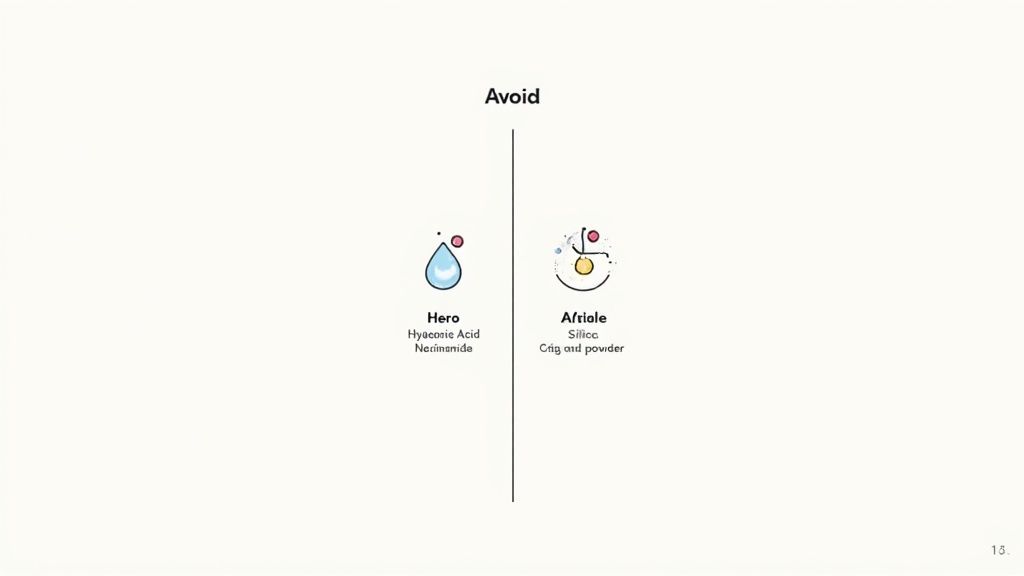
Hero Ingredients Your Combination Skin Will Love
These are the ingredients you want on your team. They work behind the scenes to keep your complexion balanced, hydrated, and shine-free all day. When you see these names high up on an ingredient list, you know you’re on the right track.
Hyaluronic Acid for Weightless Hydration
This one's a hydration superstar. Hyaluronic acid is a humectant, which is a fancy way of saying it pulls moisture from the air and locks it into your skin. It’s like a tiny magnet for water. For combination skin, it’s a total game-changer because it gives thirsty cheeks a drink without feeling heavy or making your T-zone greasy.
Niacinamide for Oil Control and Pore Refining
Niacinamide (a form of Vitamin B3) is a true multitasker. It helps get your skin’s oil production in check—crucial for managing a shiny T-zone. Over time, it can also help make enlarged pores look smaller and improve your skin's overall texture. A total win-win.
Silica for a Soft-Focus Finish
If you want a soft, matte look without feeling chalky or dry, silica is your new best friend. This mineral is brilliant at soaking up excess oil and creating a blurred, soft-focus effect. It diffuses light to make pores and fine lines less noticeable, all while feeling like nothing on your skin.
Ingredients to Approach with Caution
Just as there are heroes, there are some ingredients that can throw your combination skin off balance. They aren't universally "bad," but for skin that’s already doing a balancing act, they can cause more problems than they solve—like breakouts in oily areas or irritation on dry patches.
The goal is to keep things in equilibrium. Ingredients that are too heavy, too drying, or just plain irritating can disrupt your skin's delicate balance, undoing all the hard work of your skincare routine.
Here are a few common culprits to watch for on the label:
- Heavy Oils and Butters: Things like coconut oil, shea butter, or mineral oil can be too much for combination skin. While they’re great for very dry skin, they can easily clog pores in the T-zone, leading to congestion and breakouts.
- Certain Drying Alcohols: Be wary of simple alcohols like SD alcohol, denatured alcohol, or isopropyl alcohol, especially when they’re near the top of an ingredient list. They give that quick-dry, matte feeling but often strip the skin of its natural moisture. This can make dry patches even drier and, ironically, kick oil production into overdrive to compensate.
- Strong Synthetic Fragrances: Added fragrance might make a product smell nice, but it’s one of the most common causes of skin irritation. For skin that’s already juggling different needs, it can trigger redness and discomfort, especially on more sensitive cheeks.
By learning to spot these key players, you can scan an ingredient list and make a choice you feel good about. And if you want to go deeper, check out our guide on natural makeup ingredients to get a better handle on what you're putting on your skin. This knowledge puts the power back in your hands to choose a foundation that works with your skin, not against it.
Application Techniques for a Flawless Finish
Okay, so you’ve found the perfect lightweight foundation for your combination skin. That’s a huge win! But the battle isn’t quite over yet. How you put it on is the difference between a seamless, second-skin look and one that just… highlights the tricky parts.
With combination skin, a one-size-fits-all approach to application just doesn’t work. Your skin literally has different needs in different spots.
This is where zone-based application becomes your secret weapon. Think of your face like a map with different climates. Your T-zone (forehead, nose, and chin) is often the humid, oily region, while your cheeks can be as dry as a desert. A truly flawless finish means treating each zone with a technique that suits its unique environment.
Prep Your Canvas with Strategic Priming
Before a single drop of foundation touches your skin, you need to prep. Just like an artist primes a canvas, you need to get your face ready so the foundation glides on smoothly and actually lasts all day.
-
For the Oily T-Zone: Grab a mattifying primer and apply it to your forehead, nose, and chin. These primers often have ingredients like silica that create a velvety-smooth base, blurring the look of pores and stopping shine before it even starts.
-
For the Drier Cheeks: On the outer parts of your face, switch to a hydrating primer. Look for formulas with goodies like hyaluronic acid. This adds a crucial layer of moisture that stops foundation from clinging to dry patches and creates a plump, happy surface.
This two-primer trick ensures every part of your face is perfectly prepped, preventing that dreaded 3 p.m. makeup meltdown.
Master Your Tools for a Seamless Blend
Once you’re prepped, your application tools take center stage. You can forget about swiping foundation on with your fingers—that’s a recipe for streaks and can transfer unwanted oils. For that airbrushed effect on combination skin, a damp beauty sponge is your new best friend.
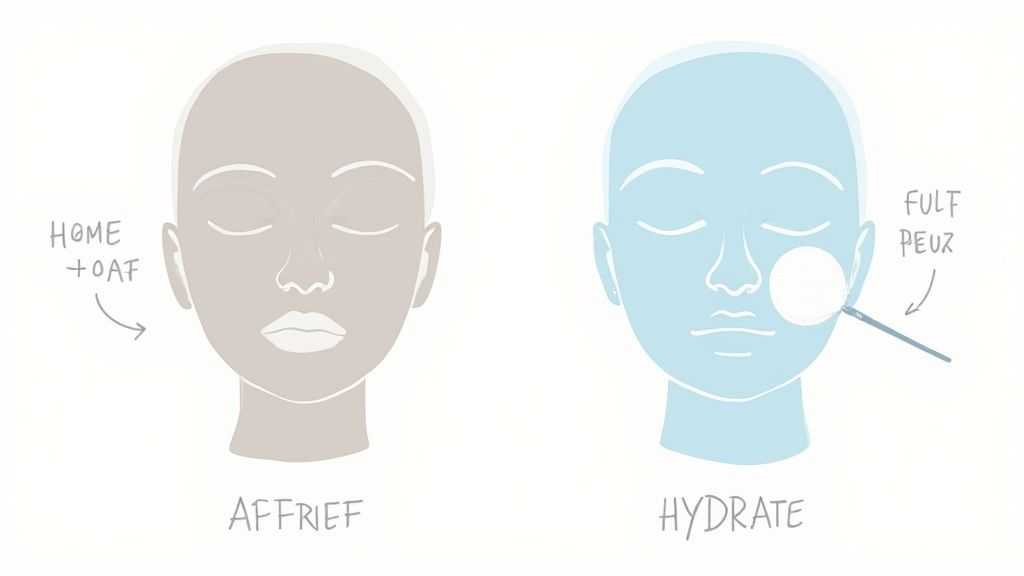
A damp sponge is magical. It presses foundation into the skin in thin, even layers, giving you sheer, buildable coverage that looks like your skin, not like makeup sitting on top of it. It’s especially great for preventing cakeiness on dry cheeks. For a deep dive, you can learn more about how to apply foundation with a sponge to really nail the technique.
Pro Tip: Squeeze a pea-sized amount of foundation onto the back of your hand. This warms up the product and lets you pick up a little at a time, so you don’t go overboard. Always start in the center of your face and blend outwards for the most natural finish.
Building Coverage and Matching Your Shade
The beauty of the best lightweight foundation for combination skin is that it's often buildable. This means you’re in control. You can apply a sheer layer where your skin is happy and then add a little more only where you need it, like over redness or a blemish.
- Start Sheer: Apply one light, even layer all over your face with your damp sponge.
- Assess and Build: Take a step back. See where you might want a bit more coverage.
- Target and Tap: Use the pointy tip of the sponge to gently tap a bit more product onto those specific spots, making sure to blend the edges so everything is seamless.
When it comes to shade matching, please don’t test on your hand or wrist! The skin there is a totally different color. The best spot is your jawline, blending slightly down onto your neck. The right shade will practically disappear. Always, always check your match in natural daylight to see the real story.
How to Make Your Foundation Last All Day
You’ve totally nailed the application, and your makeup is looking flawless. Awesome. But let’s be real, the true test for combination skin isn't how it looks at 8 AM—it's the 3 PM check-in.
Keeping that fresh, just-applied look from morning to night takes a few smart moves to lock everything in place. Longevity really starts with great skin prep. Think of your skin like a canvas; a smooth, primed surface helps the foundation stick properly and wear down evenly. So, before any makeup touches your face, make sure your skin is clean and moisturized. This simple step stops foundation from clinging to dry patches and helps keep oil in check as the day goes on.
This need for targeted solutions is exactly why the beauty world is booming. The market for foundations made for oily skin was valued at a huge USD 4 billion in 2023 and is expected to hit around USD 6.54 billion by 2031. This isn't just a random trend—it shows a real demand for formulas that can finally offer the balance and staying power that combination skin desperately needs. You can dig into the numbers and drivers behind this growth in this detailed industry report.
Choosing the Right Setting Spray
A setting spray is the final seal on your masterpiece, but not all mists are created equal. For combination skin, picking the right one is everything.
-
Mattifying Sprays: These are your T-zone’s best friend. They’re usually packed with oil-absorbing goodies that kick shine to the curb and lock your makeup down for hours. A light mist over your forehead, nose, and chin is all you need.
-
Hydrating Mists: These are perfect for the drier parts of your face, like your cheeks. They keep your makeup from looking cakey or settling into fine lines by giving those areas a little boost of moisture.
And yes, you can totally use both! Try a quick spritz of a mattifying spray down the center of your face, followed by a hydrating mist on the outer perimeter. It's a customized finish that actually lasts.
Smart Touch-Up Strategies
When that midday shine inevitably shows up, your first instinct might be to pile on more powder. Please, don't! Layering powder over oil is a recipe for a thick, cakey mess that just highlights the problem.
The real key to a successful touch-up is to remove, not add. Your goal is to gently lift away excess oil without messing up the foundation underneath.
This is where blotting papers become your secret weapon.
- Gently Press: Grab a single blotting sheet and press it gently against any oily spots.
- Lift, Don't Rub: Lift the paper straight up to soak up the oil. No smudging allowed.
- Assess and Reset: Only after you’ve blotted should you even think about a light dusting of translucent powder, and only if you really need it.
This little trick keeps your foundation looking seamless and your skin looking naturally fresh, not caked in powder. For more pro tips, check out our complete guide on how to make makeup last all day. With the right prep, a strategic setting routine, and smarter touch-ups, you can keep your foundation looking just as perfect at 5 PM as it did at 8 AM.
Got More Questions About Foundation for Combination Skin?
Let's be real, navigating makeup for combination skin can feel like a pop quiz you didn't study for. Even after you think you've got the formulas and ingredients figured out, a few tricky questions always pop up.
We've got you. Here are the clear, no-fuss answers to the questions we hear the most, so you can feel totally confident in your foundation game. Think of this as your personal cheat sheet for those final "what-if" moments.
Can I Actually Use a Dewy Foundation?
Yes! You absolutely can—it just takes a little strategy. The secret is to be selective about where that dewy glow goes. Think drier areas like the high points of your cheeks, and keep it away from the center of your face.
First, lay down a mattifying primer on your T-zone. Then, after applying your foundation, set your forehead, nose, and chin with a super light dusting of translucent powder. This "zoning" trick lets you get that gorgeous, radiant finish where you want it without turning your oily spots into a disco ball.
How Do I Stop Foundation From Looking Cakey on My Dry Patches?
Ah, the dreaded cakey patches. This is almost always a skin prep issue, not a foundation one. A smooth application needs a smooth canvas to work with. Before any makeup touches your face, make sure you've gently exfoliated and moisturized like you mean it.
Slather on a hydrating serum or moisturizer and—this is key—give it 5-10 minutes to really sink in. When you're ready for foundation, use a damp beauty sponge to press and bounce the product into your skin. This technique creates thin, seamless layers. And please, avoid packing powder over those dry spots! A spritz of a hydrating setting spray is a much better move to lock everything in without highlighting texture.
A damp sponge is your secret weapon against cakeiness. It sheers out the product and actually pushes it into the skin for a seamless finish, instead of letting it just sit on top of dry areas. Game-changer.
Should I Match My Foundation to My Neck or My Face?
For a look that's truly natural, you should always match your foundation to your neck and chest. Our faces can be a totally different shade from the rest of our body, thanks to things like redness or a bit of sun. If you only match your face, you risk that obvious, unflattering foundation line along your jaw.
The best way to find your match is to swatch two or three shades on your jawline, blending them down slightly onto your neck. Then, and this part is crucial, go stand in natural daylight to see how they really look. Give it a few minutes, too, since some formulas oxidize and darken as they dry. The right one will be the shade that basically disappears, blending perfectly into both your face and neck.
Ready to find a foundation that loves every single part of your skin? Discover Axiology's skin-renewing Fungdation, the perfect ethical and effective choice for a balanced, beautiful complexion. Find your ideal match at www.axiologybeauty.com.