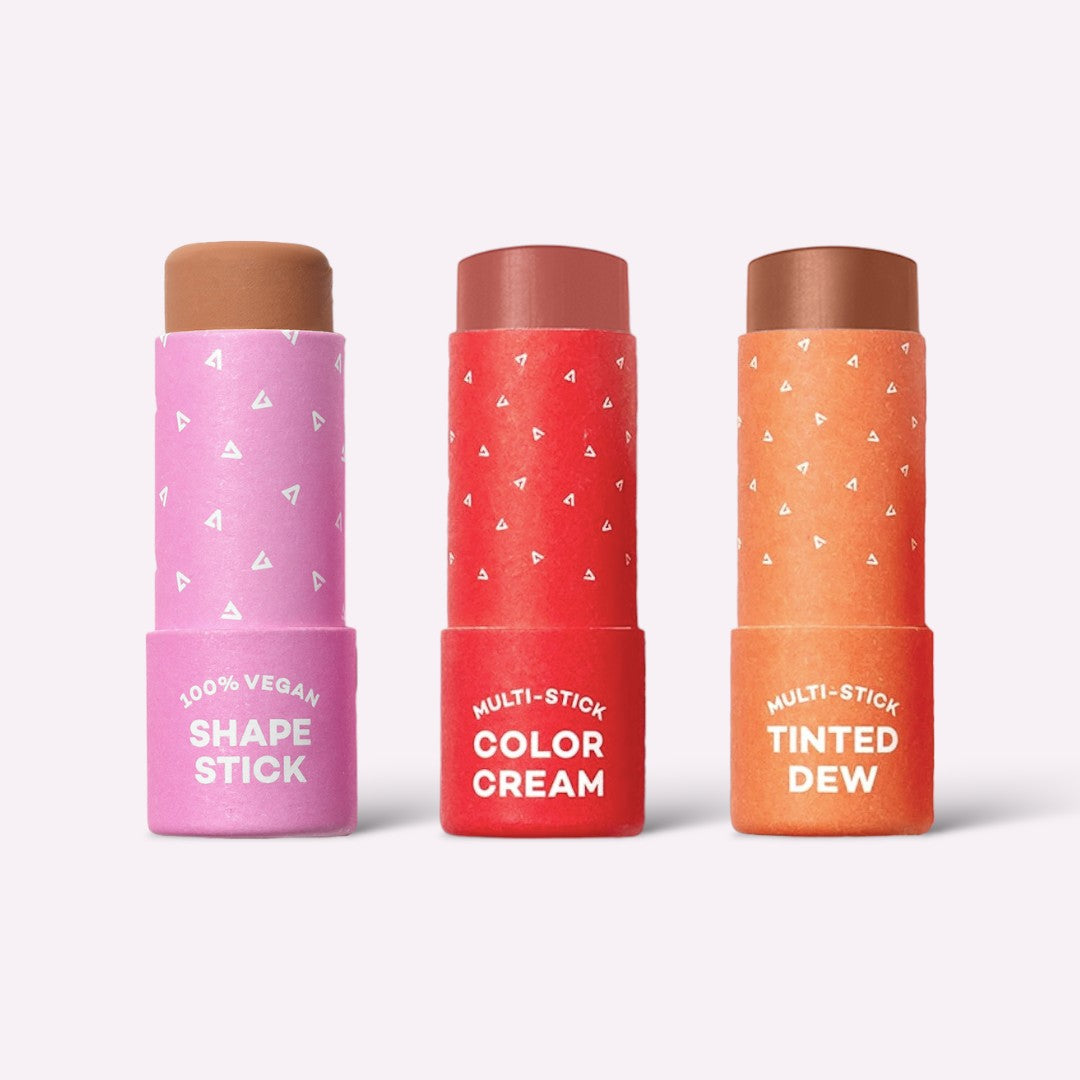
When you hear "good organic makeup," what comes to mind? If it's just a label slapped on a product, let's dig a little deeper. True organic makeup is so much more than a list of certified ingredients. It’s a whole philosophy.
Think of it as a promise—a commitment to formulas that are genuinely good for your skin, sourced with integrity, and created with the planet in mind. It's where top-notch performance and solid principles finally meet, ensuring what you put on your face is as wholesome as the food on your plate.
What Does Good Organic Makeup Actually Mean?
Let's call it "farm-to-face" beauty. You know how you might pick a crisp, local apple over some processed snack with a crazy long list of chemicals you can't pronounce? That’s the exact same thinking behind good organic makeup. It’s all about prioritizing pure, plant-powered ingredients.
This isn't just about dodging a few questionable synthetics. It’s a full-on embrace of nature's best stuff to actually nourish and improve your skin. And it's not a niche thing anymore, either. This movement is huge. The global organic makeup market is expected to hit a massive $15,500 million by 2025. People are actively seeking out safer, plant-based options that work—no compromises. If you're a data nerd, you can dive into the numbers on this wild market growth from Data Insights Market Research.
The Three Pillars of Good Organic Makeup
To really get what makes organic makeup "good," it helps to break it down into three core ideas. These are the pillars that separate the real deal from the clever marketing.
- Skin Health and Performance: First off, the formula has to work. It should be loaded with things like beneficial botanicals, antioxidants, and vitamins that support your skin, not just hide it. The best modern organic makeup, like the incredible mushroom-infused foundations from Axiology, proves you don't have to sacrifice amazing, long-lasting performance for clean ingredients.
- Eco-Conscious Practices: This goes way beyond what’s inside the bottle. It’s about everything from responsibly sourced ingredients to smart, sustainable packaging. Genuinely committed brands are tackling the beauty industry's massive waste problem by choosing plastic-free, recyclable, or even biodegradable materials.
- Ethical and Cruelty-Free Standards: This one’s a non-negotiable. Good organic makeup is never tested on animals. Period. Many brands take it even further, making sure their entire supply chain is free from exploitation and that every single formula is 100% vegan.
At its heart, good organic makeup isn't just another product category; it's a conscious choice. It's a brand's promise that what you're buying is safe for you, kind to animals, and gentle on our planet.
So, when you're looking around, you want to find brands that live and breathe all three pillars and are totally open about it. When you find one that clicks with these values, you're doing more than just buying a new lipstick or foundation—you're voting with your wallet for a healthier, more sustainable future for beauty. And this guide is here to help you make that choice with total confidence.
How to Read Labels and Certifications Like a Pro
Walking down the makeup aisle can feel like trying to decipher a secret code. You’re met with a barrage of logos, seals, and buzzwords—all screaming for your attention. But what do they actually mean?
Learning to read these labels is your key to moving beyond marketing hype and making truly informed choices for good organic makeup.
Think of a certification seal as a brand’s report card. It’s not just a pretty logo; it’s proof that an independent, third-party organization has audited the brand’s entire process, from sourcing ingredients to final production. This verification ensures they meet specific, rigorous standards for organic content, ingredient purity, and ethical manufacturing.
Without that recognized seal, a product's claim of being "organic" is just words on a bottle.
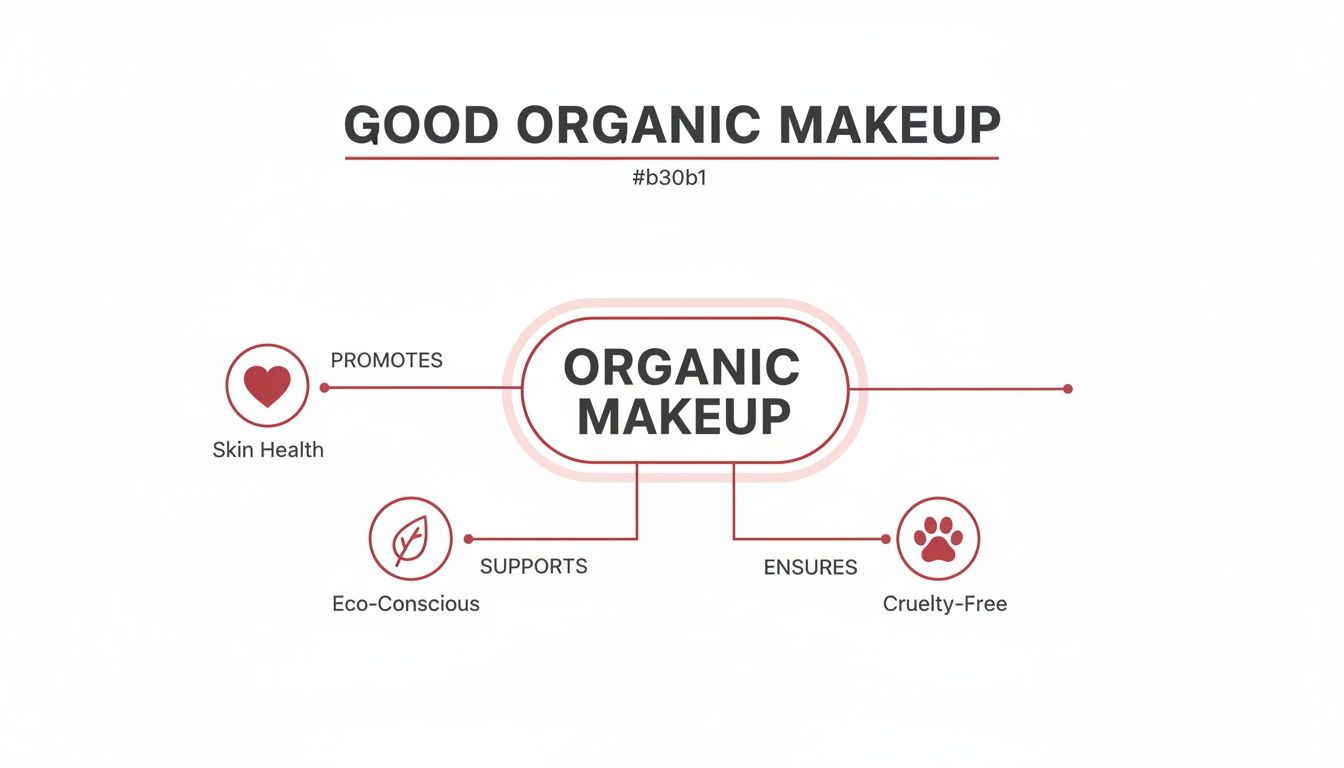
As you can see, it's not just about one thing. The best products create an interconnected system where skin health, eco-consciousness, and cruelty-free values all work together.
Decoding the Most Common Seals
While tons of certifications exist globally, a few key players are consistently recognized for their high standards. Getting familiar with them is the first step to becoming a label-reading pro.
The table below breaks down some of the most common seals you'll find on organic and natural makeup. It's a quick cheat sheet to help you understand what each logo actually guarantees when you're shopping.
Organic Makeup Certifications At A Glance
| Certification Logo | Governing Body | Minimum Organic Content | Key Prohibited Ingredients |
|---|---|---|---|
| USDA Organic | U.S. Department of Agriculture | 95% of ingredients (excluding water & salt) must be certified organic. | Synthetic fertilizers, pesticides, GMOs. |
| ECOCERT | ECOCERT (France) | 95% of plant-based ingredients must be organic. | Parabens, phenoxyethanol, synthetic fragrances, silicones. |
| COSMOS | COSMOS-standard AISBL (International) | 95% of plant ingredients must be organic; 20% of total product must be organic. | Petrochemicals, GMOs, synthetic colors and fragrances. |
| NSF/ANSI 305 | NSF International (USA) | 70% of ingredients must be certified organic to use the "contains organic ingredients" seal. | Petrochemicals, parabens, sulfates, silicones. |
Knowing these key players helps you quickly sort the genuinely organic from the wannabes. Each seal has slightly different rules, but they all represent a commitment to transparency that goes way beyond simple marketing claims.
Spotting Red Flags and Greenwashing
Unfortunately, not all claims are backed by legitimate certifications. "Greenwashing" is a super common marketing tactic where brands use fuzzy terms like "natural," "eco-friendly," or "plant-based" to imply they are organic without any real proof.
The term "natural" is not regulated by the FDA in the context of cosmetics. This means a product can contain just one natural ingredient alongside a host of synthetic chemicals and still be marketed as "natural."
Always, always look for an official certification logo from a recognized body. If a brand just prints the word "organic" on its packaging without a corresponding seal, that’s a major red flag. True transparency comes from third-party validation, not self-proclaimed titles.
If you want to dive deeper, our guide on how to identify genuinely non-toxic makeup can help you dodge these marketing traps.
By learning to spot these key seals and recognize the empty promises of greenwashing, you empower yourself. You’re no longer just a consumer; you become a conscious shopper who can confidently pick products that align with your health and ethical values. Every purchase becomes a step toward a cleaner beauty routine.
The Best and Worst Ingredients in Your Makeup Bag
Okay, so you’ve learned to spot legit certifications. Now it's time to peek behind the curtain and get to the real heart of what makes good organic makeup work its magic—the ingredients.
Think of an ingredient list like a recipe. Just like in cooking, you can have the fanciest kitchen in the world, but if your ingredients are junk, the final dish will be, too. The same goes for your makeup.
Some ingredients are total skin-loving powerhouses that nourish and protect. Others? They’re just cheap fillers or sketchy chemicals that can cause irritation, clog pores, or worse. Knowing who’s who on the ingredient list is the key to making choices that your skin will thank you for.
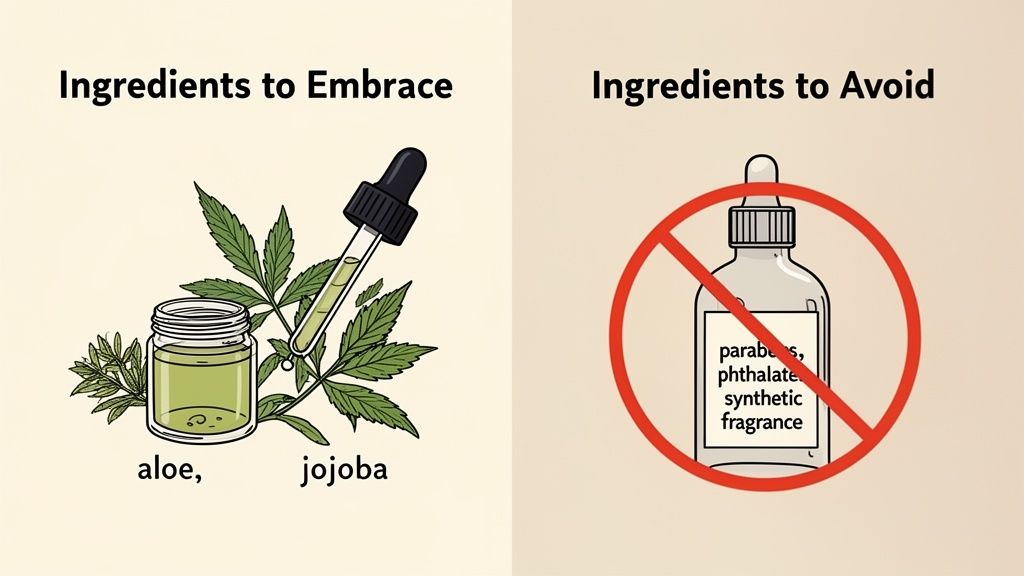
This whole movement toward cleaner formulas isn't just some passing trend, either. It’s a massive market shift. Demand for natural cosmetics is expected to leap from $45.61 billion in 2025 to over $103.23 billion by 2034. Why? Because more and more of us are tired of the skin issues that come with chemical-heavy products and are actively seeking out non-toxic, eco-friendly alternatives.
Ingredients to Embrace
The best organic makeup is basically skincare and cosmetics all rolled into one, packed with botanicals that are actually good for you. When you see these on a label, you know you’re on the right track.
- Plant-Based Oils and Butters: Think jojoba, argan, and avocado oils, plus shea and cocoa butters. These guys are fantastic because they mimic your skin's natural oils, offering deep moisture without clogging pores. They're what give clean makeup that smooth, dreamy texture.
- Botanical Extracts: Look for goodies like aloe vera for soothing hydration, green tea for its antioxidant punch, and chamomile to calm things down. They're like a little protective shield for your skin against daily environmental stress.
- Natural Waxes: Carnauba and candelilla wax are plant-based heroes that give structure to products like lipsticks and mascaras, minus the petroleum-based synthetics.
- Mineral Pigments: This is where the color comes from! Iron oxides and mica create rich, beautiful shades naturally, so you don't need the artificial dyes that can often irritate sensitive skin.
These ingredients work with your skin, not against it. That’s why they’re the foundation of so many amazing organic products. To see how these elements come together in a real formula, check out this deep dive on natural makeup ingredients.
Ingredients to Avoid
Knowing what to look for is half the battle. The other half is knowing what to run from. So many conventional makeup products are loaded with synthetic ingredients that can be a real problem for your skin and your overall health.
Here are some of the most common culprits to keep an eye out for:
- Parabens (Methylparaben, Propylparaben, etc.): These are preservatives used to give products a ridiculously long shelf life. The downside? They’ve been linked to hormonal disruption and skin irritation. No, thanks.
- Phthalates (DBP, DEHP): Often hiding under the vague term "fragrance," these chemicals are known endocrine disruptors. They're used to make scents last longer and plastics more flexible.
- Synthetic Fragrances: This is a huge red flag. "Fragrance" is a catch-all term that can legally hide hundreds of undisclosed chemicals, and it’s one of the top causes of allergic reactions.
- Talc: While not always harmful, talc deposits can be contaminated with asbestos, a known carcinogen. It's a risk many clean brands aren't willing to take, opting for safer alternatives like cornstarch or arrowroot powder.
- Silicones (Dimethicone, Cyclomethicone): They give products that super silky, smooth feel, but they can also create a film on the skin that traps dirt and oil. For anyone prone to breakouts, that’s a recipe for disaster.
Pro Tip: Reading an ingredient list can feel like trying to decipher a secret code. Just focus on the first five ingredients. They make up the bulk of the formula and give you the clearest snapshot of what the product is really about.
To make things even easier, here's a quick cheat sheet to keep handy.
Organic Makeup Ingredient Cheat Sheet
This little guide is your shortcut to scanning labels like a pro.
| Ingredient Category | Embrace These (Examples) | Avoid These (Examples) |
|---|---|---|
| Moisturizers & Oils | Jojoba oil, Avocado oil, Shea butter, Kokum butter | Mineral oil, Petrolatum, Silicones (Dimethicone) |
| Preservatives | Vitamin E (Tocopherol), Rosemary extract, Grapefruit seed extract | Parabens, Formaldehyde-releasing agents |
| Colorants | Iron oxides, Mica, Fruit & vegetable pigments | Artificial dyes (e.g., FD&C Blue No. 1), Carbon black |
| Waxes & Thickeners | Carnauba wax, Candelilla wax, Arrowroot powder | Polyethylene Glycol (PEGs), Paraffin wax |
| Fragrance | Essential oils (used sparingly), Unscented formulas | "Fragrance," "Parfum," Phthalates |
Once you get the hang of spotting these key players, you'll be able to tell what's truly nourishing and what's just marketing fluff. This simple bit of knowledge turns you from a regular shopper into a savvy advocate for your own skin.
Matching Organic Makeup to Your Skin Type
One of the biggest myths floating around about organic makeup is that you have to give up performance for clean ingredients. That couldn't be further from the truth. Today's formulas are made to deliver stunning, long-lasting results, but the secret is choosing products that work with your skin, not against it.
Finding the right good organic makeup is like playing matchmaker. You have to pair the right ingredients with your unique skin profile to create a perfect, harmonious relationship. A foundation that gives a dry complexion a dewy glow might be a total disaster for someone with oily skin. It’s all about understanding what your skin is craving.
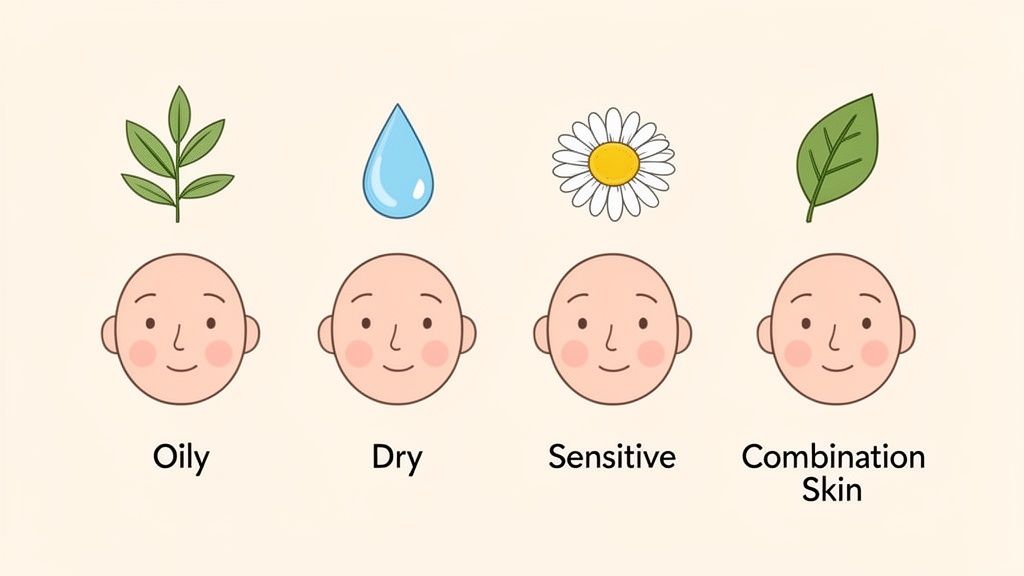
This personalized approach makes sure you get a finish that looks and feels incredible, proving that nature-powered cosmetics can absolutely compete with their conventional counterparts.
For Oily and Acne-Prone Skin
If your skin tends to produce excess oil or is prone to breakouts, you need ingredients that balance and clarify without stripping it dry. Look for lightweight, non-comedogenic formulas that let your skin breathe.
Think of it this way: you want to gently absorb excess oil, not completely parch your skin, which can actually kick oil production into overdrive.
-
Hero Ingredients to Look For:
- Tea Tree Oil: Known for its natural antibacterial properties, it can help keep blemishes at bay.
- Willow Bark Extract: A natural source of salicylic acid that gently exfoliates and helps unclog pores.
- Kaolin Clay: This gentle clay absorbs excess sebum without causing dryness, leaving a soft matte finish.
- Best Product Types: Opt for mineral-based powder foundations or oil-free liquid formulas. A mattifying primer with natural silica can also create a smooth, shine-free canvas to build upon.
For Dry or Mature Skin
Dry and mature skin types are thirsty for hydration and nourishment. Your goal is to find makeup that plumps, moisturizes, and provides a luminous, dewy finish instead of settling into fine lines.
Creamy, hydrating formulas will be your best friends, acting like an extra layer of moisture throughout the day.
-
Hero Ingredients to Look For:
- Hyaluronic Acid (Plant-Based): A hydration superstar that can hold up to 1,000 times its weight in water, giving skin that plump, supple look.
- Jojoba & Avocado Oils: These rich, nourishing oils deeply moisturize and are packed with skin-loving vitamins.
- Shea Butter: An excellent emollient that locks in moisture and creates a protective barrier.
- Best Product Types: Look for liquid or cream foundations, tinted moisturizers, and cream-based blushes and highlighters. Products with a satin or radiant finish will give you a healthy, youthful glow.
When figuring out the best organic makeup for your skin type, especially after specialized procedures, insights from things like Hydrafacial treatments can be really valuable in understanding your skin's unique needs.
For Sensitive and Reactive Skin
Sensitive skin requires the gentlest touch. The number one priority here is avoiding common irritants and choosing formulas with soothing, anti-inflammatory ingredients. Fewer ingredients often mean less risk of a reaction.
-
Hero Ingredients to Look For:
- Aloe Vera: Incredibly soothing and calming, perfect for dialing down redness and irritation.
- Chamomile: Known for its anti-inflammatory properties, it helps to calm reactive skin.
- Calendula: A gentle botanical extract that helps heal and soothe distressed skin.
- Best Product Types: Mineral makeup is often a safe bet since it typically contains minimal ingredients. Always look for products labeled "fragrance-free" and "hypoallergenic."
For Combination Skin
Combination skin can be tricky, with an oily T-zone (forehead, nose, chin) and drier cheeks. The secret is balance. You need products that can hydrate the dry areas without adding extra shine to the oily spots.
Buildable coverage is your superpower. Brands like Axiology excel here with products like their Fungdation, a mushroom-infused serum foundation. Its lightweight, buildable formula lets you apply more coverage where needed (like over red areas) while keeping it sheer elsewhere, creating a perfectly balanced complexion. This adaptability is exactly what combination skin needs to look flawless.
Looking Beyond Ingredients at a Brand's Ethics
A truly great makeup product is about so much more than what’s in the tube. While a stellar, clean formula is non-negotiable, the ethics behind the brand—its commitment to the planet, animals, and people—is what separates the good from the truly great.
Choosing a brand that aligns with your values means your purchase is more than just a purchase. It's a vote for the kind of beauty industry you want to see. It means looking at the bigger picture. How is it packaged? Was it tested on animals? Does the brand actually care about being inclusive? These are the questions that show you which companies are walking the walk.
Sustainability Beyond the Formula
Let’s be honest: the beauty industry has a massive packaging problem. We’re talking millions of tons of plastic waste every single year. But the best brands are tackling this head-on, shifting from a disposable mindset to a circular one.
They’re doing this by prioritizing materials that are:
- Plastic-Free: Using smart alternatives like aluminum, glass, or recycled paper.
- Refillable: Designing cool systems where you keep the case and just buy the product refills.
- Biodegradable or Compostable: Creating packaging that can break down and return to the earth, leaving no trace behind.
This focus is a big deal to a lot of us. In the U.S., the number of organic skincare and makeup users is expected to hit 15 million by 2025, with 21% of adults saying they primarily buy organic versions. Brands like Axiology have been leading this charge for years, with plastic-free, biodegradable packaging and vegan formulas that are exactly what this growing movement is looking for. If you want to dive deeper into the numbers, you can explore detailed reports on organic product consumption.
Cruelty-Free and Vegan: What's the Difference?
You’ll often see "cruelty-free" and "vegan" used together, but they actually mean two different things. Getting the distinction is key to supporting the causes you really care about.
Cruelty-Free is all about animal testing. It means that a product, and all its ingredients, were not tested on animals at any point. The gold standard here is the Leaping Bunny logo, which is a serious guarantee that no new animal testing happened anywhere in the brand’s supply chain.
Vegan, on the other hand, means the product has zero animal-derived ingredients or byproducts. None. This includes common stuff like beeswax, carmine (a red pigment made from crushed insects), lanolin (from sheep's wool), and collagen. A product can be cruelty-free but not vegan (if it has beeswax, for instance), or vice-versa, though most truly ethical brands today aim for both.
Inclusivity and Accessibility in Beauty
A brand's ethics also show up in how it treats its customers. Real inclusivity is more than just offering a wide range of foundation shades—though that’s hugely important! It’s also about representing different ages, skin tones, genders, and abilities in their marketing and product design.
Accessibility is another critical piece of the puzzle that often gets overlooked. This means things like making sure a website works for people with disabilities, like those who use screen readers. When a brand invests in being accessible to everyone, it shows they believe everyone deserves a welcoming and easy shopping experience.
By looking at all these pieces together, you can find a brand that you don't just love to wear, but also feel genuinely proud to support. To learn more about what to look for, you can check out our guide on ethical beauty brands.
Your Cheat Sheet for Buying Good Organic Makeup
Let’s be real, navigating the world of clean beauty can feel like a pop quiz you didn't study for. But it doesn't have to be that complicated. Once you know what to look for, you can make confident choices that are good for your skin and your conscience.
Think of this as your personal cheat sheet. It boils everything down into a super simple, step-by-step guide you can use whether you’re scrolling online or standing in a store aisle.
Step 1: Look for Official Seals
Before you even flip the product over, do a quick scan of the packaging for official logos. These are your best friends for spotting brands that are truly committed to clean and ethical standards.
- Organic Certifications: Keep an eye out for logos like USDA Organic, ECOCERT, or COSMOS. These are the big ones. They guarantee a high percentage of certified organic ingredients and ban a whole laundry list of sketchy synthetic chemicals. Without a seal like this, any "organic" claim is just marketing fluff.
- Cruelty-Free Verification: Spot the Leaping Bunny logo. This is the gold standard, confirming that no animal testing happened at any point—from the raw ingredients to the final lipstick you’re holding.
Step 2: Scan the First Five Ingredients
The ingredients list is your secret weapon. It's always ordered by concentration, so the first five ingredients pretty much tell you what the product is made of. This five-second scan gives you a surprisingly accurate snapshot of a product’s quality.
Is the list full of things you recognize, like nourishing jojoba oil, shea butter, or aloe vera? Or is it loaded with silicones, mineral oil, or vague terms like "fragrance"? If the top ingredients are powerhouse plants, you’re probably in good hands.
Quick tip: "Fragrance" or "parfum" on a label can be a Trojan horse for hundreds of undisclosed chemicals. Always go for products scented with essential oils or, even better, nothing at all—especially if your skin is on the sensitive side.
Step 3: Check for Planet-Friendly Packaging
A brand’s commitment to sustainability is often right there on the shelf. The best brands get that the beauty industry has a waste problem and are actively trying to fix it.
- Is it Plastic-Free? Look for materials like glass, aluminum, or recycled paper. We love seeing brands ditching plastic altogether.
- Is it Refillable? Some cool brands are creating refill systems that seriously cut down on waste.
- Is it Minimal? Does the product come in a box, inside another box, wrapped in plastic? Or is the approach simple and eco-conscious?
Choosing brands that care about their packaging helps push the whole industry in a better, more sustainable direction. With this little checklist, you're ready to shop like a pro, knowing exactly how to find makeup that’s genuinely good for you and the planet.
Got Questions About Organic Makeup?
Dipping your toes into the world of good organic makeup can definitely bring up a few questions. It’s totally normal to wonder about things like price, how well it actually works, and the best way to make the switch. Let's clear up some of the most common ones.
Is Organic Makeup Way More Expensive?
Sometimes, but not always. While you might see a higher price tag on some organic products—usually because of high-quality ingredients and pricey certifications—the clean beauty world has exploded with affordable options.
It also helps to think about long-term value. When products are packed with potent, pure ingredients, a little often goes a long way. You might find you use less product overall, making it a great investment in your skin and the planet.
How Long Does Organic Makeup Last?
This is a big one. Organic makeup typically has a shorter shelf life, usually around 6-12 months after you open it. That’s because it relies on natural preservatives like vitamin E or grapefruit seed extract instead of synthetics like parabens.
Always check for the Period After Opening (PAO) symbol on the packaging. It looks like a little open jar with a number and an 'M' inside (like '6M' for six months). This tells you exactly how long the product is good for once you've started using it.
Honestly, a shorter lifespan is a good thing—it's a sign that you're using a formula that's fresh and free of harsh chemicals.
Do I Have to Switch My Whole Makeup Bag at Once?
Definitely not! While you could do a full overhaul, a gradual switch is way easier on your wallet and less overwhelming.
A smart way to start is by replacing products as they run out. Many people begin with foundation or lipstick, since those sit on your skin the longest. This slow-and-steady approach lets you figure out which brands and formulas you love without the pressure. It’s a journey, not a race.
Seriously, Does Organic Makeup Perform as Well?
Absolutely. The old idea that organic makeup is chalky or fades in an hour is a total myth.
Modern formulas have come such a long way. Brands are now using incredible mineral pigments and innovative plant extracts to create products with rich, vibrant color and serious staying power. The best organic brands today are obsessed with performance, creating makeup that easily competes with—and often beats—conventional options. You really don't have to choose between a flawless look and clean, skin-loving ingredients anymore.
Ready to make the switch to high-performance, planet-friendly beauty? Explore the full collection at Axiology and discover makeup that’s as good for you as it is for the Earth. Find your new favorites at Axiology